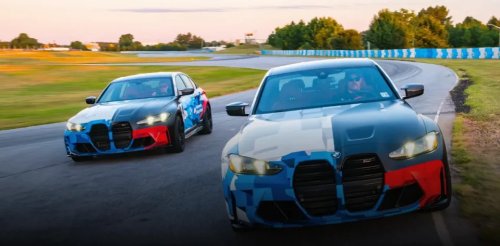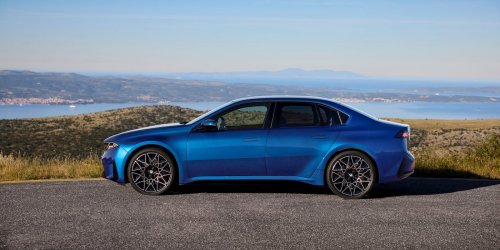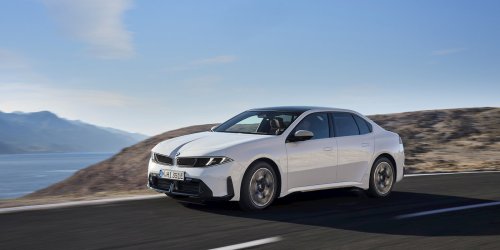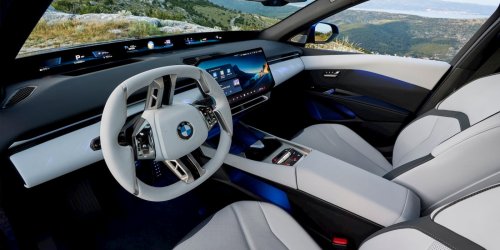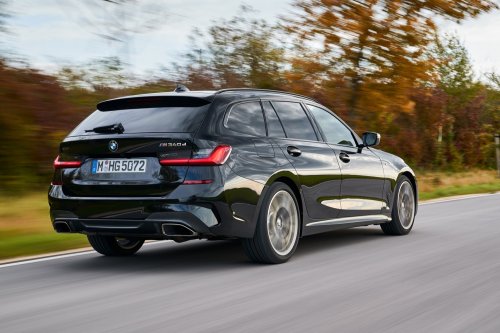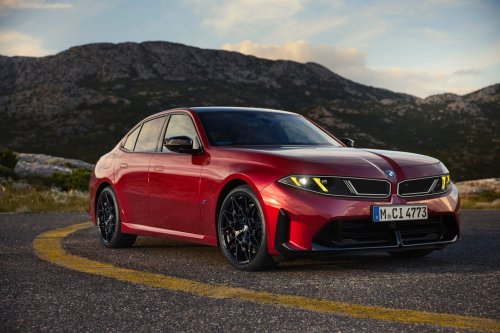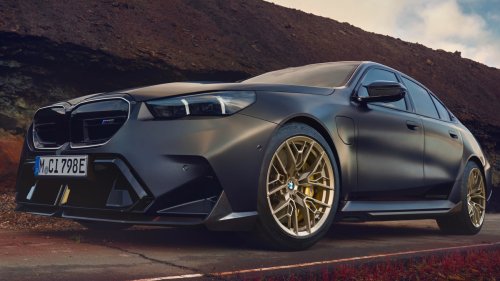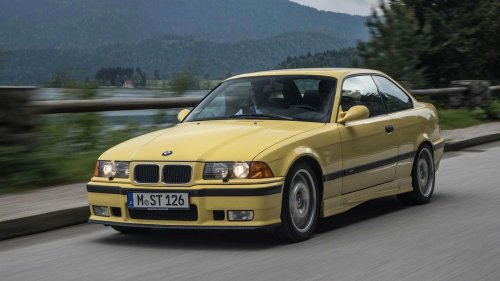
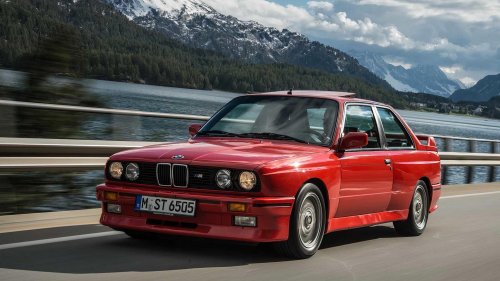
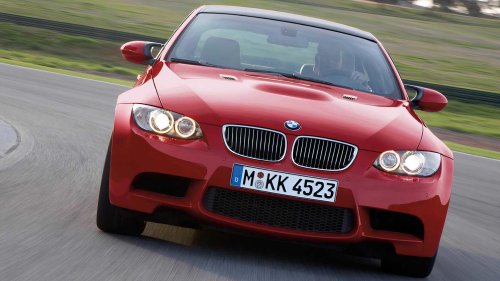
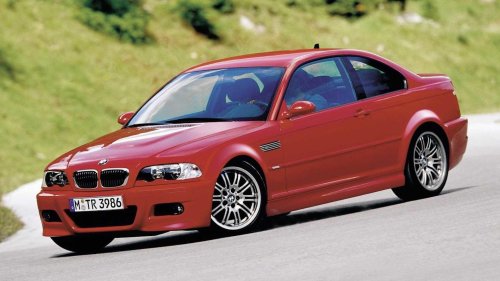
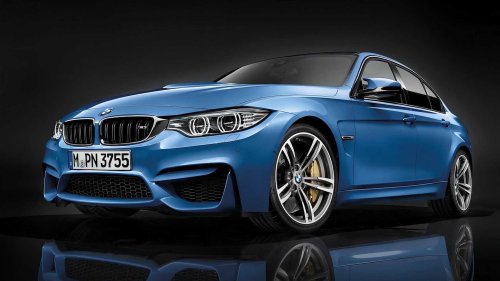
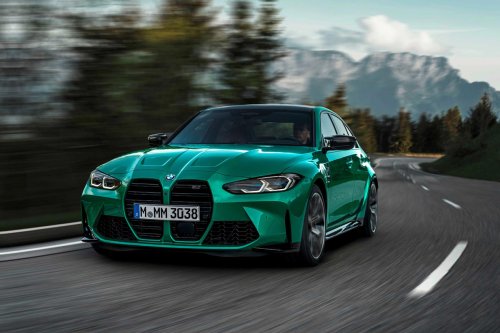



















The BMW M3 has evolved over 30 years into its latest iteration - the G80 M3. The Munich-based manufacturer has never been afraid to experiment with its performance sedan. Over the years, we have seen the M3 feature straight four-cylinder engines, V8s, or the iconic straight six-cylinder engine, and a plethora of gearbox options - from a manual to an automatic and even a dual-clutch.The best metric that tells the story of an evolution of a model is specific output, which is an engine's horsepower per liter. It is not a given that the biggest engine gets the most performance from its displacement, as we will see from this list. Let's rank all the BMW M3 generations based on their specific output - from the lowest to the highest.This list ranks all the generations of the BMW M3 based on their specific output - horsepower divided by engine displacement. This list only ranks the BMW M3 models and engine options that were sold in the USA from the factory. 1995–1999 BMW M3 E36 Highest Specific Output: 80 hp/L 1992 BMW M3 Coupe front, three-quarterThe lowest specific output of any BMW M3 is actually the second-ever M3 - the E36. It had a rough start, especially in the United States, as it was delayed for North America, only to go on sale three years after Europe, in 1995. It was the first M3 to feature a six-cylinder engine, but in the US, it got a de-tuned version of the straight-six, producing 240 hp, which is only 50 hp more than the E30. Another notable feature of the E36 was the addition of a M3 Lightweight model, that was 200 pounds lighter than the regular M3. This made the E36 M3 Lightweight extremely rare in the US as well, with only 125 units produced for the country. 1989–1991 BMW M3 E30 Highest Specific Output: 83.5 hp/L 1987 BMW M3 E30 Red Front Angle DrivingThe first ever M3 has the second-lowest specific output at 83.5 hp/L, but that is still a commendable effort considering it beat its immediate successor. The E30's specific output is helped by it being the only four-cylinder M3 ever. Much like the E36, the E30 went on sale late in America, in 1989. In the European markets, it was on sale from 1986. Only the roof and hood were shared between the standard 3 Series and the more aggressive M3. To meet stricter emission regulations, the E30 in the US never got the most powerful engine tunes, hence the sub-200 horsepower. The US also did not get the upgraded 2.5-liter S14B25 engine in the M3 Sport Evolution, which was reserved for European markets. 2008–2013 BMW M3 E92 Highest Specific Output: 103.5 hp/L 2008 BMW M3 Coupe E92 Red Front View DrivingThe first and only V8-powered M3, known as the E92 M3, is next on the list. More cylinders do not always mean a higher horsepower number, as this list will prove. However, the Formula-1-derived S65 engine was praised for its 8,400 rpm redline and acoustic soundtrack. It is also the first BMW M3 that came with three different body styles - sedan (E90), coupe (E92), and convertible (E93). The shift to the V8 also came with some negatives: the engine was much heavier and less efficient than the following inline six-cylinders. The most desirable version of this V8 M3 was the sedan with the six-speed manual gearbox, as the dual-clutch automatic gearbox was not the best. However, it is still beaten by its predecessor, the E46 M3, in terms of specific output. 2001–2006 BMW M3 E46 Highest Specific Output: 104.1 hp/L 2001 BMW M3 front, three-quarterOften called the best M3 BMW has ever made, the E46 is no slouch either, as it is the third best M3 ever in terms of specific output. Featuring the S54 naturally aspirated straight-six that revved to 8,000 rpm, this was the last ever straight-six without any forced induction in an M3. It is also widely regarded as the best inline six-cylinder ever made, with a perfect balance between analog feel and modern performance. The E46 was also available as a convertible, although it was heavier and less rigid than the coupe versions, making it worse in the eyes of purists. The automatic or SMG (sequential manual gearbox) was not the fastest at shifting either, so the manual E46 coupe is widely regarded as the best BMW M3 ever made. 2015–2018 BMW M3 F80 Highest Specific Output: 151 hp/L 2015 BMW M3 Sedan F80 Blue Front Angled ViewThe F80 M3 was a monumental shift for the brand. It was the first M3 to feature forced induction - with the M3 now equipped with twin turbos to feed air into the straight-six. The F80 generation also saw the BMW M3's horsepower numbers skyrocket, with the base model now featuring 425 hp. With a peak specific output of the M3 CS at 151hp/L, it is almost 50 hp/L more powerful than the previous generations. The F80 also had more power than the V8-powered E92, while providing better fuel efficiency. This was also when BMW separated the M3 body styles into two different ranges - the M3 would be the sedan and the M4 would be the coupe. The most powerful version of the F80 generation would be the M3 CS in 2018, which saw an increase in power from 425 hp to 453 hp. The CS was also available only with the dual-clutch gearbox, making it the fastest M3 at the time, sprinting from zero to 60 mph in 3.7 seconds. 2021–Present BMW M3 G80 Highest Specific Output: 181 hp/L 2021 BMW M3 G80 Green Front Angle DrivingThe latest generation of the BMW M3 is the G80, which is also the most controversial in its design. It features BMW's recent design philosophy in the vertical kidney grilles, which split opinion. Internally, the G80 is more of an evolution to the F80. It still features a twin-turbo straight-six engine, but now is even more powerful, breaking the 500 horsepower barrier in the Competition trim. The most powerful BMW M3 in terms of horsepower is the CS trim, featuring 543 hp that brings the specific output of the G80 to 181 hp/L. This makes it the fastest of all BMW M3 models. The CS, just like the F80, is only available with the automatic gearbox, this time a torque converter unit instead of a dual-clutch. This is also the first CS model to be all-wheel drive, though it can electronically distribute power to be rear-wheel drive when needed.Sources: BMW