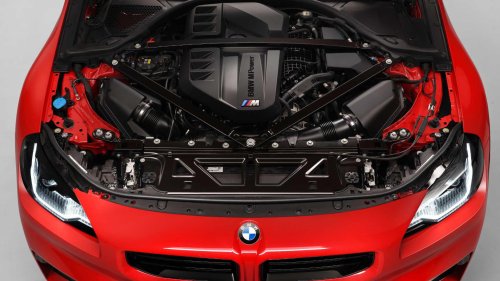
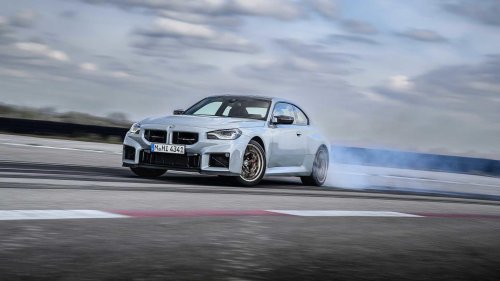
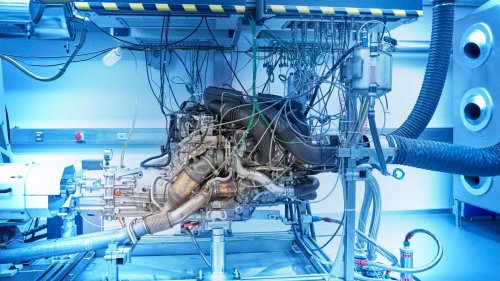
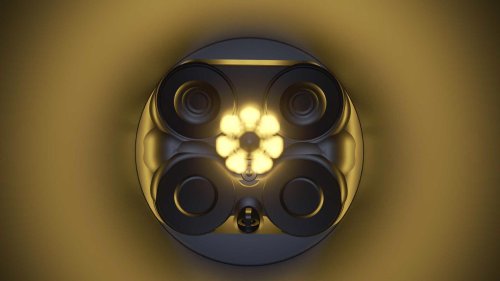
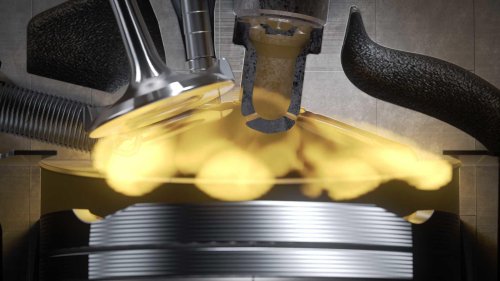
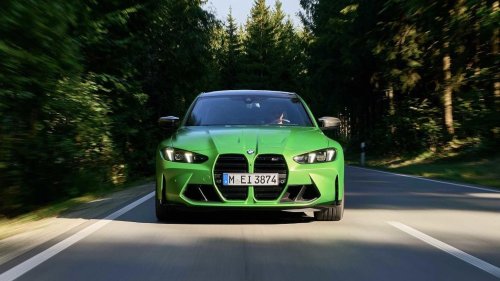
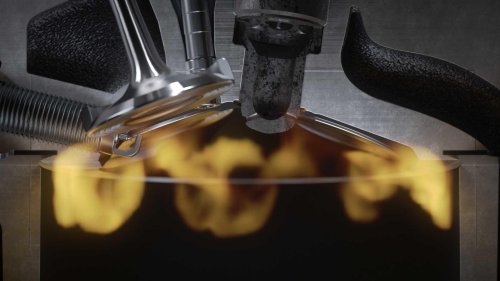
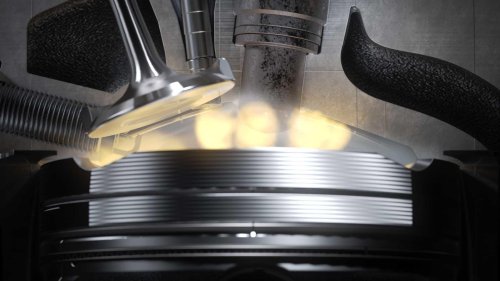
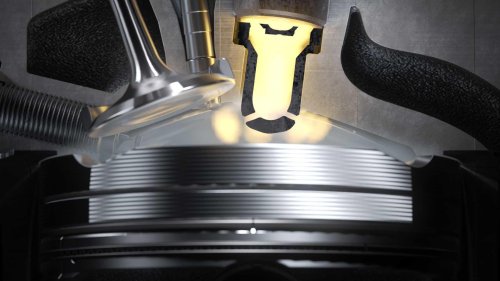
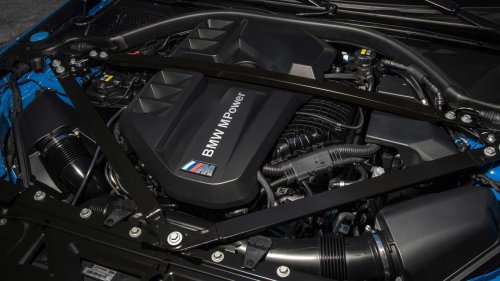
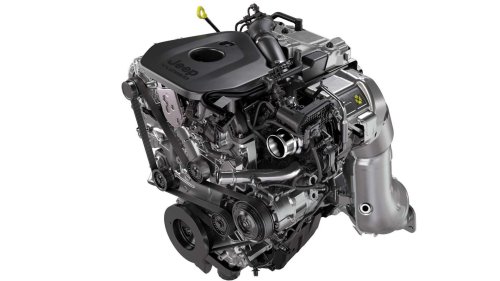
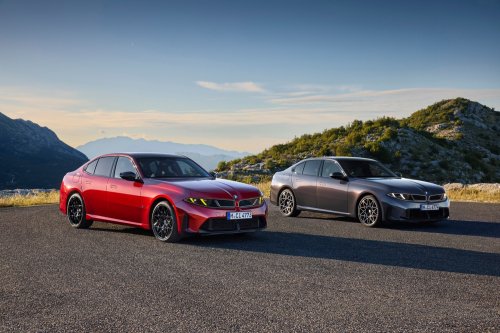
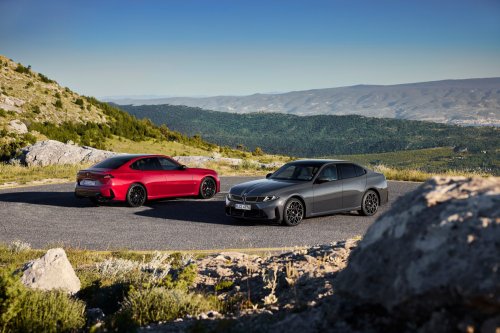
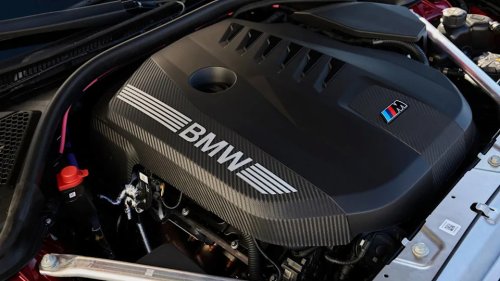
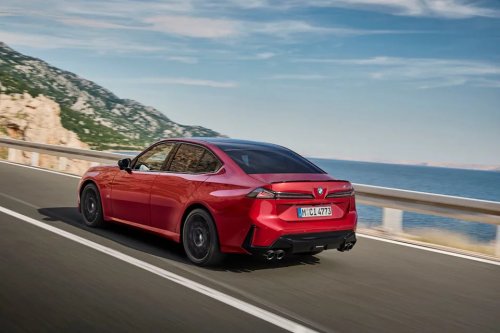
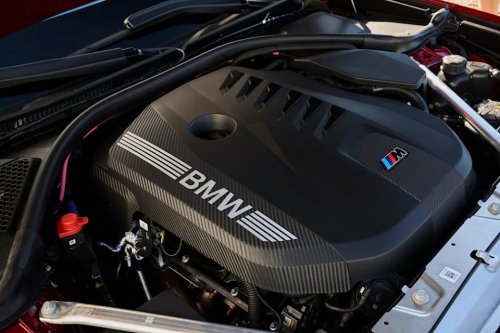
An incredible new technology is about to make its way into some of the most potent BMW straight-six engines on the road. With its roots in racing applications, the patented new BMW "M Ignite" pre-chamber combustion system has officially been unveiled. By mid-2026, shoppers will find it under the hood of the BMW M2, M3, and M4.The M Ignite system is the most recent technology transfer from the world of racing engines to a roadgoing M car, and a new generation of turbocharger and emissions-related benefits are both up for grabs. What Is M Ignite, And Why Are They Adding It? BMW When someone buys a BMW M car, it’s often not their first one. In fact, many BMW M car owners like to drive the latest model for a few years, then trade it in and try something new. This shopper is brand loyal, but they expect models like the M3 to deliver advances with every generation.Usually, these advances are performance-oriented and come with a boost to power and torque. The M Ignite system is such a major technical leap that its enhancements are multi-dimensional.According to BMW, a major advantage of M Ignite in the S58 engine is a reduction in fuel use under high loads, particularly during track use, where M engines often see extended periods of high-rev, full-throttle operation at, or near, maximum load.It’ll also help meet the stringent requirements of the Euro 7 standard, which requires gasoline engines to be cleaner than ever across a wider range of more challenging situations, such as cold starts and short trips.BMW With M Ignite on board, drivers partaking in motorsports can expect big fuel efficiency gains that’ll let them lap longer on the same tank of fuel. The engine becomes more efficient than ever when pushed to its limits, helping it meet fuel economy requirements while simultaneously benefiting drivers. More horsepower? Nope. More torque, then? Nuh-uh. According to BMW, “the displacement and power outputs of all the models with BMW M Ignite technology will be unchanged from those of the corresponding outgoing engines”.That’s not to say performance hasn’t been improved. “Through extensive technical modifications, we have succeeded in maintaining the engine’s performance at its familiar high standard, and even improving it in certain situations,” said Alexander Karajlovic, head of development at BMW M GmbH. M Ignite Keeps The Straight Six Hybrid-Free For The Purists BMW When emissions standards tighten, automakers have a variety of tools at their disposal. One of these is to build hybrid engines, adding additional hardware and batteries that can tip the scales. In BMW’s lightest M cars, which are commonly loved for their "pure" driving feel, this wasn’t the way to go. Instead, the M Ignite system was the weapon of choice, and its implementation means that the highest-performing BMW straight-sixes can carry on without electrification.“With M Ignite in the S58, we are offering our customers a purist combustion engine without hybridization that meets our high standards for an M powertrain, while also complying with future regulatory requirements such as Euro 7 in Europe or C7 for the Chinese market,” Karajlovic said.BMW Importantly, this means the new M Ignite system promises to leave the engine’s well-known character fully intact. Though power and torque figures on paper remain unchanged, Karajlovic notes that the updated engines respond much more progressively, thanks to the use of a new turbocharger with Variable Turbocharger Geometry (VTG).If you’re curious, this style of turbocharger uses a built-in array of pitch-adjustable vanes to shape the exhaust flow into the compressor, for a boost to efficiency and response. Along with the new pre-chamber ignition system and new VTG turbocharger, there’s a higher compression ratio, a completely redesigned ignition system, and a modified intake camshaft. Sonic-Speed Flame Jets Actually Keep Things Cooler BMW Though gas engines have advanced at breakneck speeds in recent decades, most have handled igniting their fuel the exact same way: a direct injector in the cylinder blasts a super-pressurized mist of gasoline straight into the combustion chamber, and a spark plug ignites it with a tiny little electric arc, not unlike the kind you notice when furiously removing an itchy sweater in the dark. This worked well enough for a very long time, but there was room for improvement.BMW Lighting up a compressed air-fuel mixture with a little spark means the resulting combustion starts at a single point and expands outwards to consume the rest of the fuel. That’s a relatively slow way to combust a cylinder’s worth of gas.If you could instead ignite that compressed air fuel mix with, say, multiple jets of fire traveling roughly the speed of sound, you’d be able to combust the air fuel mixture much more quickly. This would fundamentally change how the engine works and unlock numerous benefits, including that all-important boost to fuel efficiency at full throttle that keeps hybrid motors out of the S58’s engine bay. How Does M Ignite Work Exactly? BMW In addition to the standard anatomy of the S58 engine, there’s now a new pre-chamber housed within the cylinder head, one for each cylinder. It's basically just an opening of dead space, about the size of your thumb. Most of this is contained within the cylinder head, but the pre-chamber is connected to the combustion chamber by small, fixed overflow openings that live in the very top of the combustion chamber, between the valves. Also, there's a spark plug inside with its own dedicated ignition coil. This is all separate from the standard spark plug and ignition coil, which remain as well. Put simply, M Ignite engines have two ignition systems.BMW On the compression stroke, the piston squashes that air-fuel mixture into the very top of the combustion chamber to ready things for ignition by the spark plug. Some of that air-fuel mixture is forced into the pre-ignition chamber during the process. In lower load situations, the conventional spark plug in the combustion chamber fires before the spark plug in the pre-chamber. The result is, pretty much, a typical combustion event. Under higher load, the dedicated pre-chamber spark plug fires first instead. Since the pre-chamber is full of compressed air and gas from the compression stroke, the resulting high-speed ignition within a tiny space blasts multiple jets of fire out of the overflow openings in the top of the combustion chamber at nearly the speed of sound.BMW Now, instead of a single-source, relatively slow combustion event, the air-fuel mixture in the combustion chamber is ignited from multiple points at once, making combustion much faster. By manipulating spark control between the two sources, the S58 can switch from slow combustion to fast combustion on the fly.There’s an additional benefit too: a notable drop in exhaust gas temperatures. Not only can this contribute to knock resistance, it also helps reduce heat buildup in the hottest parts of the engine and makes life easier on the turbochargers. Reducing cylinder head temperatures is a gift for engineers tasked with improving engine efficiency, too: lower temperatures means compression ratios can be safely raised, and a corresponding increase in efficiency results. But What About The Sound? BMW The smooth, sonorous wail of an S58 escalating to full song while squishing the fluid in your eyeballs is an experience not to be missed. Along with its surging power curve and deep well of torque, the sound is a fundamental part of the experience of this engine. Though now fitted with a new style of turbocharger and a highly modified cylinder head, Karajlovic reckons fans will be happy with the results, and even has some listening notes.“Particularly at higher revs and under heavy load, we achieve a more throaty and even more emotive sound,” he explains. “It is precisely in these performance-oriented driving situations that the sporty character of the engine is audibly enhanced. In the lower rev and load ranges, however, the sound differs hardly at all from the familiar S58. This means the engine retains its familiar characteristics in everyday use, while a clear acoustic improvement is noticeable during dynamic driving.” Haven’t We Seen This Before? Stellantis Pre-chamber technology has its roots in the world of racing, with F1Technical.net reporting in 2016 that Ferrari had recently emerged as an early adopter looking to push the efficiency of their racing power units forward. Later, we'd see pre-chamber technology hit the road for the first time in the Maserati MC20 supercar, and more recently, in the Jeep Grand Cherokee.Regular readers may note that the M Ignite system sounds familiar to the Maserati-derived TJI system in the new Hurricane 4 Turbo engine from Stellantis. This engine is also using pre-chamber technology to boost power and efficiency, and it’s currently commencing rollout in the Jeep Grand Cherokee. Is it the same thing? Nope, not exactly. Instead, it’s two different takes on how to apply a similar principle.While M Ignite’s pre-chamber can ignite a portion of the air-fuel mixture pushed in during the compression stroke to create sonic flame waves, the Stellantis approach goes a step further: their TJI system’s pre-chamber has a fuel injector inside, with a conventional fuel injector used separately. JeepThe M Ignite system pre-chamber doesn’t contain a fuel injector and instead relies on fuel forced in during the compression stroke. Not to get too technical, but this is the difference between "passive" (BMW) and "active" (Jeep) pre-chamber systems, which we’ll likely be seeing more of soon.