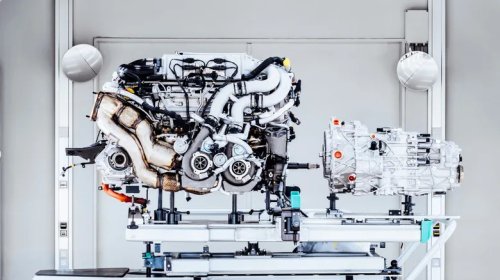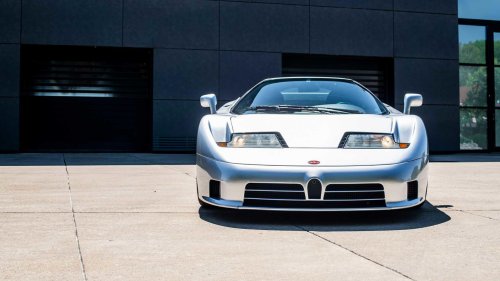
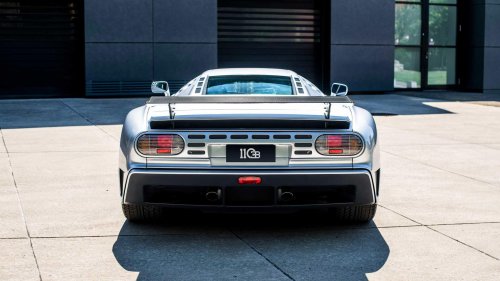
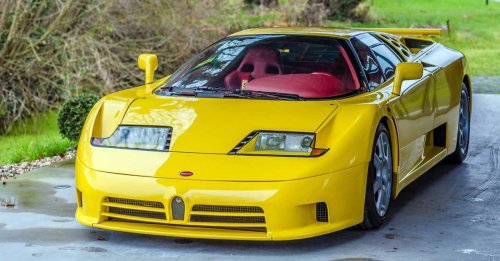
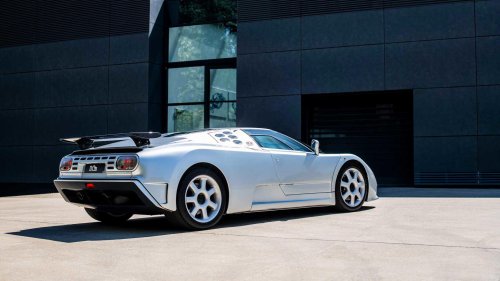
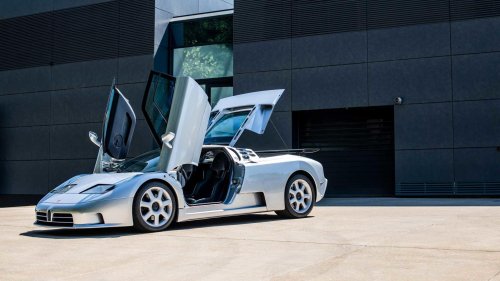




















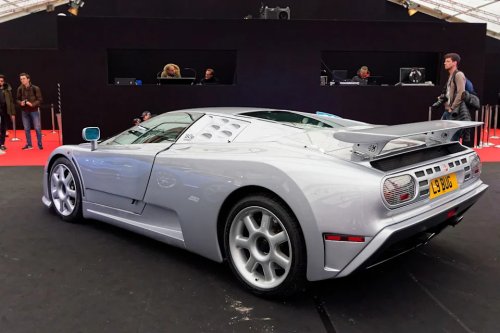
Bugatti has to be one of the most prestigious brands in the world these days. The name was a byword for class and luxury back in the early 20th century, and in more recent times, it's synonymous with some of the world's best hypercars. However, there is a period of Bugatti's history that doesn't usually get talked about now. UPDATE: 2026/03/31 05:02 EST BY JARED SOLOMON This article has been updated with additional context on the supercar's long-term impact and how its engineering compares to modern hypercars.In the '80s and '90s, it was an Italian-owned and based brand struggling to survive. While this version of Bugatti had an unfortunate end, it managed to achieve an incredible engineering feat. It created the world's first quad-turbocharged hypercar. The rest, as they say, is history. The EB110 Brought Bugatti Back When Italian entrepreneur Roman Artoli acquired the rights to the Bugatti brand back in 1987, he had big plans. He wanted to bring the Bugatti name back to prominence, relocating it from France to Italy in the process. This meant that he not only wanted to develop a new car, but he also wanted to create an entirely new factory. By 1989, we finally got an idea of what Artoli's full plan for Bugatti was.Former Lamborghini designer Marcello Gandini and former Lamborghini engineer Paolo Stanzani were hired by Artoli to develop a new supercar. That ended up being the Bugatti EB110. In many ways, the Bugatti EB110 was a classic supercar of its time. It had bold, wedgy styling, it was mid-engined and rear-wheel drive, and that engine was a glorious, screaming V12. It was quite different from most other V12s you'd find in supercars back then, though. This one was only a 3.5-liter unit, and it had four turbochargers.BugattiBugatti EB110 Specs The EB110 was available in two different variations. The EB110 GT was a more road-focused car that had a speed-sensitive rear wing that would raise at higher speeds. The EB110 SS was lighter (thanks to the use of carbon fibre body panels both inside and out) and more track-focused, with a fixed rear wing and distinctive vents replacing the side windows behind the driver. The two variants also had a power difference. The EB110 GT produced 553 hp, while the EB110 SS produced 603 hp. This gave both versions of the EB110 fantastic performance for their era. The EB110 SS had a 0-62 time of 3.2 seconds, and could reach a top speed of 221 mph. This made it one of the fastest supercars you could buy back in the early '90s., and a car that can still keep up with modern supercars in 2025. Possibly the only car that could genuinely compete with the Bugatti EB110 SS at the time was the McLaren F1, which had a top speed of 221 mph with its standard gearing and managed to reach over 240 mph with some modifications. Why It Was Quad-Turbocharged Bugatti Even in today's world of ultra-powerful supercars and the downsizing of engines, quad-turbocharged cars are still very rare. It must have seemed space-age to have a quad-turbo car back when the EB110 was unveiled to the world! So, why did it have four turbochargers in the first place? Well, it's because its engine wasn't powerful enough at first. Bugatti chose a 3.5-liter V12 to mirror the size that V12s were allowed to be under Formula 1 regulations in the '80s. While that sounds great in theory and gives the EB110 a cool link to a golden era of motorsport, in practice things didn't work out so well. The original naturally aspirated version of the engine just didn't produce supercar levels of power. It Was Way Ahead Of Its Time Looking back today, what’s wild about the Bugatti EB110 isn’t just that it had four turbochargers—it’s how closely its formula matches modern hypercars. A relatively small-displacement engine boosted to extreme levels, all-wheel-drive grip, and a focus on balancing luxury with outright performance is basically the blueprint Bugatti still uses today.In many ways, the EB110 walked so cars like the Veyron and Chiron could run. Back in the early ‘90s, most supercars were still relying on big, naturally aspirated engines and rear-wheel drive. The EB110 flipped that script completely, proving that forced induction and advanced drivetrains were the future of going fast.Even today, quad-turbo setups are incredibly rare, which makes the EB110 feel just as outrageous now as it did when it first debuted. It wasn’t just competing with its rivals—it was quietly setting the direction for the next generation of hypercars. It Caused A Lot Of Internal Disputes BugattiRe-launching a historic brand is never easy. That was certainly the case with Bugatti. Roman Artoli had a very different vision than many of the people who worked with him did. Marcello Gandini and Paolo Stanzani wanted a bold and futuristic supercar that would be technologically advanced. If they'd got their way, the Bugatti EB110 would have been an all-wheel drive monster that probably would have eaten every other supercar on the road for breakfast. But, Artoli didn't like Gandini's original styling, and he wanted the EB110 to be more focused on luxury than advanced technology. This caused big disagreements, and meant Gandini and Stanzani completely left the project.Artoli managed to hire Nicola Materazzi to save things and re-shape the Bugatti EB110 more to what he wanted. But, that didn't last either. Materazzi thought very differently about the project to Artoli as well, and he ended up leaving in 1992 during the early stages of the EB110's production run. Michael Schumacher Owned One The Bugatti EB110 is the kind of ultra-exclusive supercar that you'd expect any wealthy gearhead to want back in the '90s. But, it seems like a lot of well-known enthusiasts actually didn't buy one! One of the ones who actually did, though, was Michael Schumacher. His one was a bright yellow EB110 SS, and he owned it from 1994-2003. His particular EB110 SS actually became a bit infamous. Not long after he took delivery of it, he ended up crashing it into a truck! Thankfully, it was able to be repaired, and it's still around to this day. A Lack Of Funding Killed It BugattiThe Bugatti EB110 really should have changed the supercar world. If things had been rosy in the Bugatti camp, maybe it would have. But, mismanagement took its toll. That mismanagement wasn't just down to the constant disputes Roman Artoli seemed to have with the people he hired to help him bring Bugatti back. It also extended to the company's finances. This came to a head with Artoli's purchase of Lotus, payments to suppliers being missed, and the aborted development of the EB112 super sedan.All that spending forced Artoli's Bugatti into bankruptcy, ending the EB110's production and seemingly sending Bugatti back into extinction for good. Thankfully, the Volkswagen Group came in, purchased the rights to the Bugatti name, and set the path in motion for it to produce the legendary Veyron. This included bringing Bugatti back to its ancestral homeland in Molsheim, France. Perhaps most importantly, though, the EB110's legacy of quad-turbocharging carried over into the Veyron and the Chiron. Even though the Volkswagen-era version of Bugatti isn't the same company as Artoli's Italian version, VW's engineers clearly never forgot the EB110's vision of what a supercar engine could be.Source: Bugatti