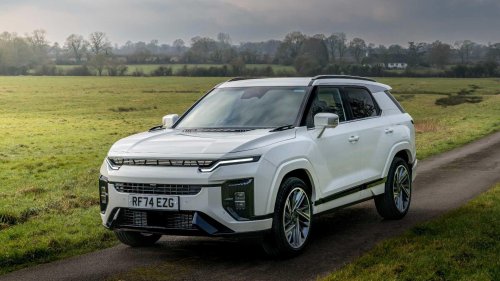
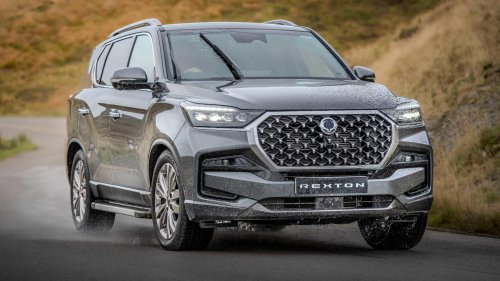
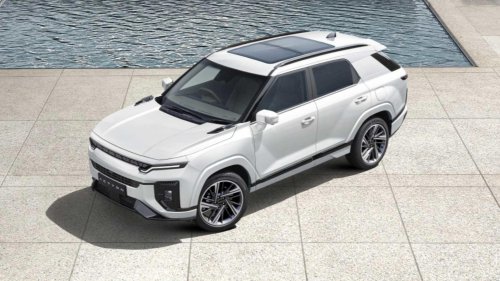
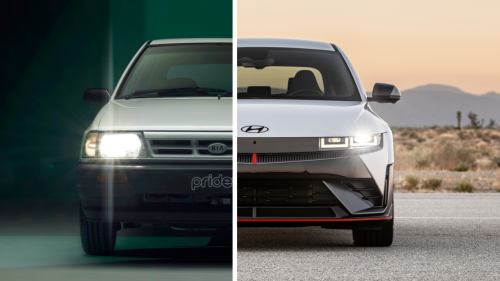



















Most car enthusiasts in the US will not be familiar with the name SsangYong. Those who are will associate the name with cars exclusively sold outside the US, of dubious cosmetic quality; the lumpy, aesthetically challenged Rodius MPV comes to mind. A couple of years ago, SsangYong also raised eyebrows in the automotive world when it released an SUV called the Torres, which was called out as a copycat version of the Jeep Grand Cherokee.What many don’t know, however, is that the brand did attempt to enter the American market, only a few years ago. Although the plan eventually failed, the latest incarnation of the brand (now named KG Mobility after the latest corporate takeover) may very well try again in the future, depending on the success of its efforts to shed its former image. SsangYong's Failed US Debut: The Edison Takeover That Never Was KGM SsangYong Actyon 1KG Mobility (or SsangYong, as it was then known) failed to enter the US market, but not for lack of trying. The company was involved in an attempted takeover by Edison Motors, which had plans to introduce SsangYong’s vehicles to the United States (and other markets such as Mexico and Canada). The company also had electrification plans for SsangYong, with ideas to move away from combustion completely by 2030.Although the acquisition plan was legally approved by Korean courts in 2022, Edison failed to make the necessary payments; later that year, SsangYong announced the takeover deal had failed to go through because of the aforementioned financial issues. A few months later, SsangYong was acquired by Korean firm KG Mobility, and all plans for an introduction to the American market were shelved as the company focused on its rebrand.The high degree of competitiveness of the American car market, as well as the well-established presence of other Korean carmakers in the US, all contributed to the difficulties that made it impossible for SsangYong to break through. The company’s lack of a strong global presence outside its home market was also likely to be a contributing factor. A Brief History Of SsangYong SsangYong logoThe company known as SsangYong until 2023, now rebranded as KG Mobility, has a long history that stretches back to the 1950s. Aside from the failed Edison deal, it has also gone through several other mergers and corporate takeovers throughout its history. The Early Days Although SsangYong was the name associated with the company for decades, in the very early years, the brand was known under different names. Its origins lie in two different automotive companies that merged to form a single entity. SsangYong’s oldest ancestor was the Ha Dong-hwan Motor Workshop, founded in 1954. In 1963, this company merged with the Dongbang Motor Company, which had only been created a year prior.The resulting company was initially named the Ha Dong-hwan Motor Company; its main focus was the production of commercial vehicles such as buses and trucks, as well as the production of Jeeps under license for the US Army. Later on, in 1977, the firm changed its name to Dong-A Motor. In the early 80s, Dong-A Motor acquired another company that was producing Jeeps under licence, Keohwa. This company had originally been a joint venture between AMC and the now-defunct Shinjin Motors, but once AMC abandoned the project, Keohwa needed new ownership. Dong-A Motors stepped in, further expanding in size. The Creation Of The SsangYong Motor Company Two years after the 1984 Keohwa acquisition, Dong-A Motors was taken over by the SsangYong Business Group. Its name was changed accordingly, and the company became known as SsangYong Motor. In 1987, the company expanded further with the acquisition of a small British luxury automaker, Panther West Winds.A turning point arrived in 1991 when SsangYong struck a partnership deal with Daimler-Benz. The deal brought several benefits for the company, which was able to draw from Mercedes-Benz’s expertise, engineering and network. The partnership resulted in the creation of the Musso, a model still in production today. Mercedes-Benz designs were also used in several other SsangYong vehicles, such as the Rexton and the Korando.Over the course of the following two decades, SsangYong was the subject of three major corporate takeovers, first by Daewoo Motors, then by Chinese firm SAIC, and then by Indian firm Mahindra Automotive. The attempted takeover by Edison happened shortly after Mahindra cut funding to SsangYong in 2020 due to financial difficulties. Looking To The Future: The KG Mobility Rebrand In 2023, the company underwent its most recent takeover; unlike Edison’s attempt, the KG takeover was not only successful but also resulted in a major overhaul for the brand. The SsangYong name was dropped to reflect the company’s new ownership; the brand became known as KG Mobility, or KGM for short. The company saw the takeover as an opportunity to shed its previous negative reputation, which was strongly associated with the SsangYong name. The KGM rebrand was seen as an opportunity for the company to reinvent its image. Current KGM Models Around The World KGM SsangYong Rexton 1The current KGM lineup includes five cars. On the smaller side, we have the Tivoli (along with its larger sibling, the Tivoli XLV), and the Korando, both compact crossovers. The Tivoli has been in production since 2015 but is still in its first generation, while the Korando is much older (the nameplate was first introduced in 1982) but is now in its fourth generation.Further along in the lineup, we have the Torres, a mid-size crossover produced since 2022. The Torres is available with an internal combustion engine (a 1.5-liter inline-four) or in electric guise under the name of Torres EVX.The largest car in the family is the Rexton, a mid-size SUV first introduced in 2001 and currently in its second generation. The Rexton was at the center of a legal dispute in 2005, when Chinese firm SG Automotive released a copycat version of it called the Huanghai Aurora.KGM Ssangyong Australia There is also one pickup truck in the current KGM lineup: the Musso, also known as the Rexton Sports in its home market of Korea. The Musso was originally designed as a mid-size SUV as part of the SsangYong partnership with Daimler-Benz and sold with this body style from 1993 until 2005. The pickup truck version was first introduced in 2002.The brand's most recent models have been particularly surprising, as they've completely bucked the brand's historic tendency of being odd-looking and now look genuinely appealing. The Actyon midsize SUV got a major glow-up last year and now looks like a Range Rover more than anything else, although its 1.5-liter turbo four-cylinder making only 161 horsepower is hardly Range Rover-esque.KGM And then there's the new Musso, the midsize pickup that managed to beat Hyundai and Kia to full electric power in November 2025, with appealing looks to boot. With an 80.6 kWh battery, it claims between 236 and 261 miles of range on the WLTP cycle, the latter only capable in the single-motor variant. That variant is particularly interesting, as it's font-wheel drive - an anomaly in the midsize segment since the Honda Ridgeline ditched the layout several years ago. Korean Automakers That Made It In America kia and hyundai evolutionWhile KG Mobility has struggled to find a suitable entry point into the American market, other Korean brands have famously achieved a high degree of commercial success, most notably Kia and Hyundai (plus Hyundai’s luxury spin-off, Genesis). The Korean automakers that did make it to the States have become well-known for their build quality, reliability, and accessibility to drivers on a budget.Kia first arrived in the United States in 1986, after having been through a difficult period as a company back in Korea. A military dictatorship had shut down its car production division, leading the company to focus exclusively on light trucks; Kia, however, eventually started producing cars again and struck a deal with Ford that facilitated its arrival in the US. During its first year exporting cars to the States, Kia only built 26 cars; by the following year, it was producing 95,000 cars a year.Although Kia’s early US-market cars were sold with Ford badging, the company soon found its feet and began selling vehicles under its own name. Early models included the Kia Pride, a rebadged version of the first-generation Ford Festiva. Kia later began handling its own design and sales process without input from Ford; commercial success followed, and the company gradually gained a foothold in the US market, which it still enjoys today.Hyundai, meanwhile, also started its global journey in the 80s, exporting its vehicles to various markets worldwide and eventually arriving in the States in 1986, the same year as Kia. Early Hyundais sold in the US include the Sonata (which is still in production today and one of Hyundai’s longest-running nameplates) and the Excel, which was nominated by Fortune magazine as “Best Product #10” due to its budget-friendliness. The Excel was instrumental in cementing Hyundai’s reputation as a brand that combined affordability with quality.WhereSources: KGM, Hyundai, Kia