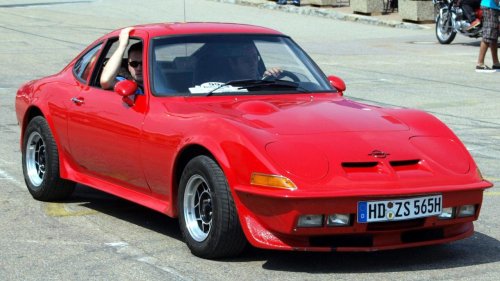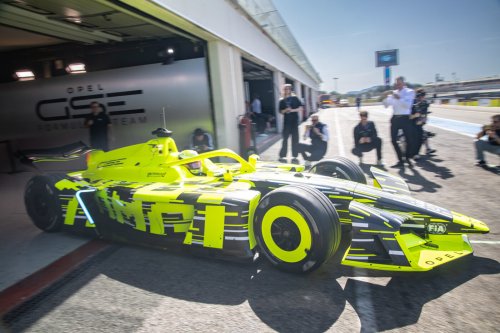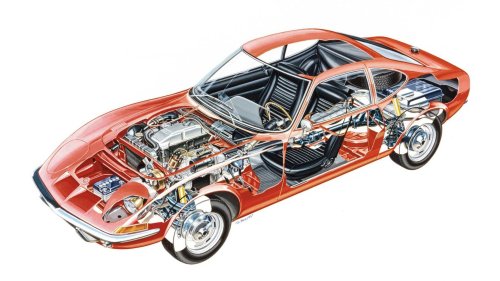
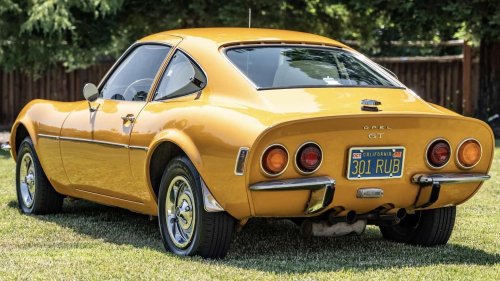
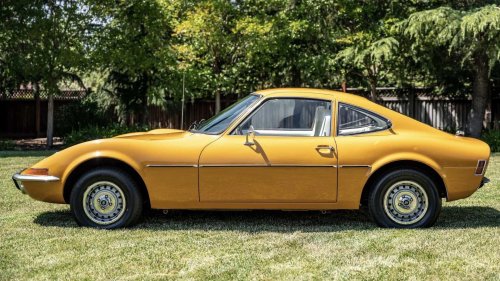
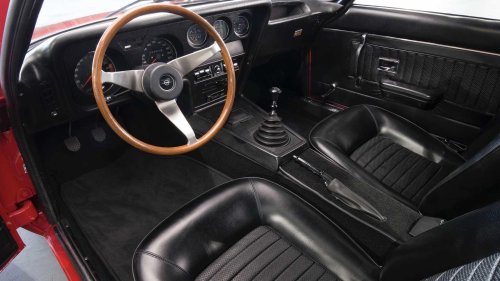

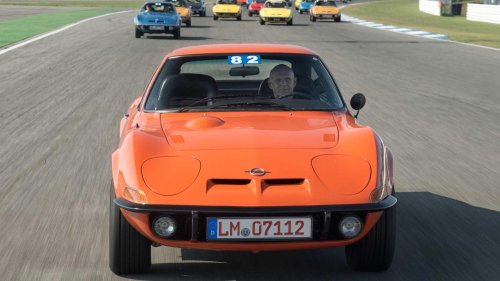
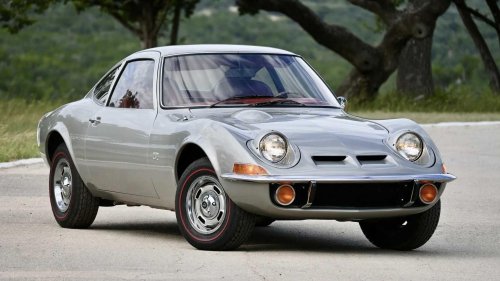
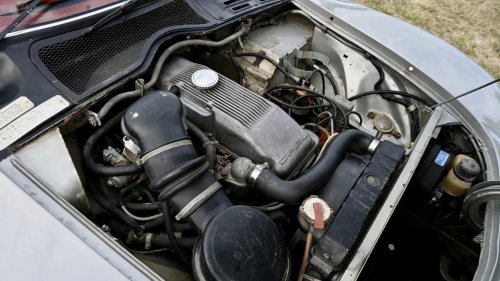



















In the 1960s, the Chevrolet Corvette was as popular in the USA as free purple hair dye in cities affected by protest actions. Clearly, Chevrolet's sports car recipe was a good one. So, instead of reinventing the wheel, German automaker Opel, as part of the General Motors (GM) group, decided to use the Corvette as its canvas, and create a, well, a smaller, lighter and more European version of the Corvette. They called the new sports car the GT.History now shows that Opel's decision to head down this route was a sound one, with the Opel GT proving a popular and more affordable alternative to the iconic Chevrolet Corvette. This is its story. A German GT With Some Big Plans StellantisThe Opel GT sports car made its debut in 1968. Based on the Opel Kadett saloon platform, designed by a German stylist and put together by a French contractor, the small sports car was as light as a feather, weighing less than 2,000 pounds, enhancing the car's performance in the corners. The GT base engine was a 1.1-liter four-cylinder, delivering just 67 hp. The engine is front-mid mounted, so it is located as far back from the front axle as possible to improve weight distribution and, in effect, handling.Thanks to the low weight and the rev-happy little engine, performance is palatable, but this Opel certainly won't blow your hair back and make the driver scream, "This is better than a Corvette, baby!" Not that Chevrolet minded. Parent company General Motors (GM) acquired the Opel brand in 1929, so it was all about keeping it in the GM family.Essentially though, the GT 1.1-liter version was light-years behind the Chevrolet Corvette in the performance game. So Opel offered an optional 1.9-liter four-cylinder engine for the GT, and the vast majority of customers, not surprisingly, ticked this option box.Bring A TrailerThe 1.9-liter version added a few pounds to the deal, but with more than 100 hp under the hood, the GT 1.9 was a regular rocket ship compared to the 1.1-liter car. As a result, only about 3,500 Opel GTs of the 100,000 cars made between 1968 and 1973 were GT 1.1 models. So the vast majority of GT owners went for the 102-hp option. Interestingly, the rare GT 1.1 is now the more collectible version of the two.Opel also offered a GT/J version in European markets. Powered by the stock 1.9-liter engine, this model was introduced as an entry-level version of the GT, and it came with virtually no chrome garnish and had less standard luxury features than the full-fat GT 1.9. Around 10,700 GT/Js were made. But Was It Any Good? Bring A Trailer Yes. And then some. The good-looking little open sports car is really fun to hustle through a mountain pass, providing a level of analog driver involvement few modern cars can equal. No, it won't break the land speed record, but this GT is not so much about the speed. Instead, it is the cool driving experience and the familiar yet cool look of it (yep, like a Temu Corvette), that are the main drawcards.Another cool party trick that owners can deploy at car meet-ups is the unique headlight operation. The hidden lights are not your typical pop-up items, as found in most sports cars. In the Opel GT, the units are manually operated via a lever in the center console, which sees both headlamps rotate on their own axis, and effectively flip around and not up to be activated.Stellantis The GT came with a four-speed manual gearbox, driving the rear wheels. The GT 1.9 was also available with an optional three-speed automatic gearbox. The four-speed manual version, connected to the 102-hp 1.9-liter engine, is the apex Opel GT, and the one to have if you are into fun driving experiences.Thanks to more stringent emission regulations introduced in the USA in 1971, Opel was forced to make some telling changes to the 1.9-liter engine to ensure the GT remained legal.The company reduced the engine's compression ratio by quite a way, resulting in less harmful emissions being emitted. But it also impacted the power of the engine, and the maximum horsepower was reduced to 83 hp... a drop of nearly 20. If you are into the business of counting every horsepower under the hood of your sports car, best make sure you get the pre-emission version, with the full-fat 102 hp on tap. A Great Track Record StellantisIn the 1970s, the Opel GT proved to be quite the motorsport weapon. Thanks to its compact size, light weight, excellent handling and inherently solid drivetrain, it fared really well in European rallies and touring car races. Back in the day, the four-cylinder engine was reliably modified to produce around 200 hp. Combined with a featherweight body, and great handling, the GT proved to be a real handful to beat, and it gave the vaunted Porsche and Alfa Romeo racing cars a tough time on racetracks around Europe.Today, the Opel GT makes for a great platform for historic racing. Like the 1971 Opel GT-A, which produces up to 280 hp at 9,000 rpm, and competes in European circuit racing events, including sprint and endurance events. The GT-A gets a sequential gearbox, the weight distribution has been optimized for a perfect 50/50 balance between the front and rear, there's a Gripper limited-slip rear differential that puts down the power more effectively through the racing slick tires, Brembo brakes do service in each corner, and it weighs just 1,680 lbs.Want yourself a GT-A racing car? After watching this video, you may very well start selling off random stuff to get oner. Mind, you'll need around $100,000 to get a 280-hp Opel GT goodness. Buying Into The GT World Stellantis With just over 100,000 Opel GTs made, and with the cars really well put together back in the late 60s and early 70s, there are quite a number of GTs on the market today. And thanks to the mechanical robustness, many of them are still in pretty good shape.So here's the good news: You can buy a solid Opel GT sports car for not a heck of a lot of money. According to the Bring A Trailer online platform, the average going rate for an Opel GT 1.9 is around $15,484. As for the car the Opel GT was based on, the Chevrolet Corvette, you can expect to pay an average of $55,416 for a 1969 model, powered by a big, powerful and not-so-efficient V8 engine.Bring A Trailer The Opel GT platform has also become a very popular basis for bigger and better drivetrains. You'll find Opel GTs with turbocharged Mazda Miata engines, a 2.7-liter four-cylinder engine, a Nissan 3.5-liter V6 installation, and even a Honda S2000 V-Tec engine, revving to 9,000 rpm and adding all the right sounds and feels to the already highly capable GT package.Problems to look out for? You bet. Rust can be a major issue, with areas like the rear corners, floor plan, rockers, the underbelly pan, nose, floorboards and headlight buckets potentially affected. Some European sports cars hailing from the late 60s came with light fiberglass bodies, but the GT got a one-piece steel body. Sorting out the rust is not the end of the world, but it will require some potentially expensive metal fabrication to get it back in top shape.Bring A Trailer Electrical issues can also come into play, and relocating the battery appears to be an almost essential modification owners do, as The Drive found out after buying a GT project car. Mechanically, the GT is normally solid, with carburetor issues appearing to be a regular (but relatively small) culprit.But if you can get your hands on an Opel GT in great condition, it is certain to provide you with years of happy, smile-inducing fun.