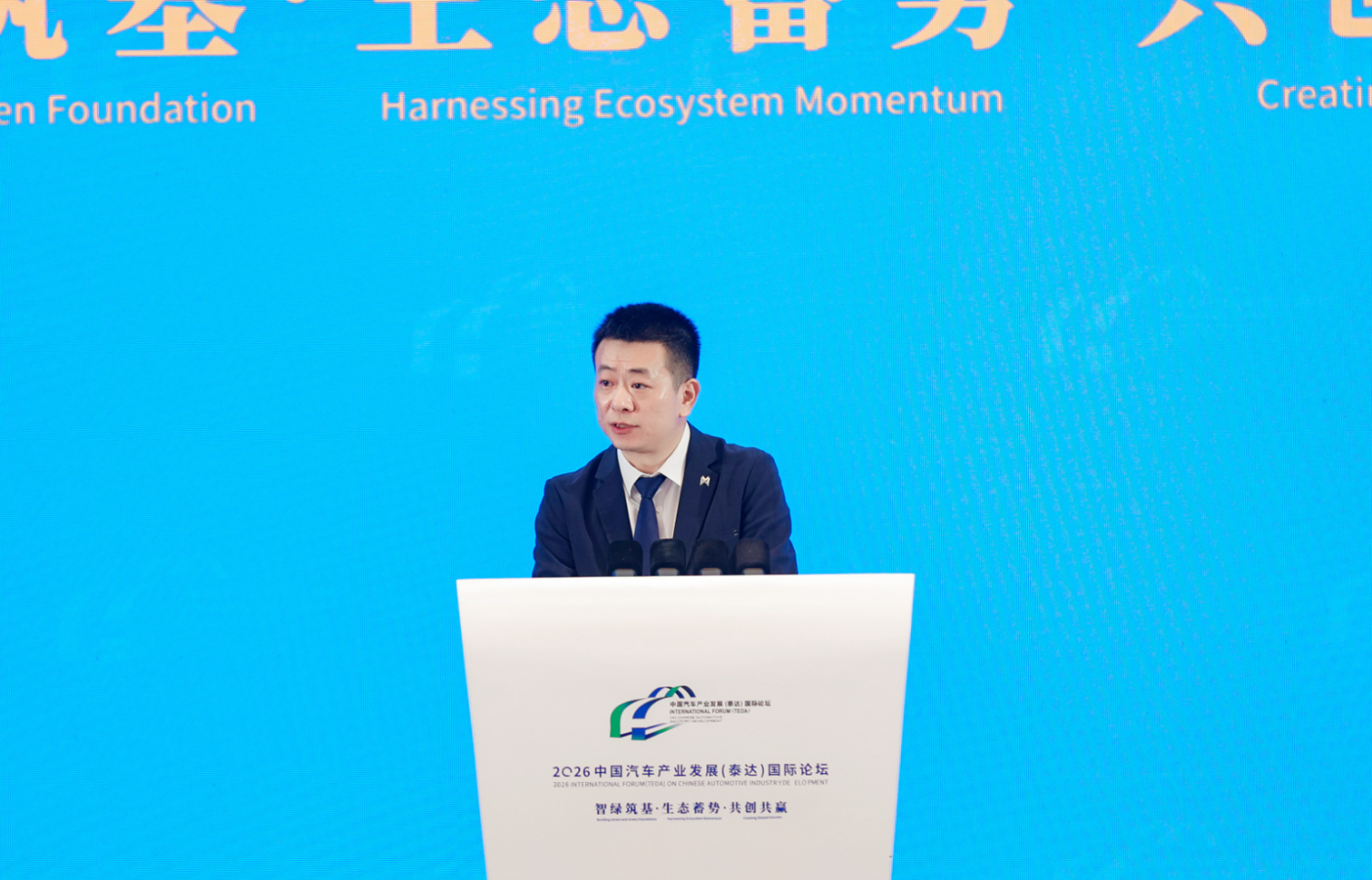
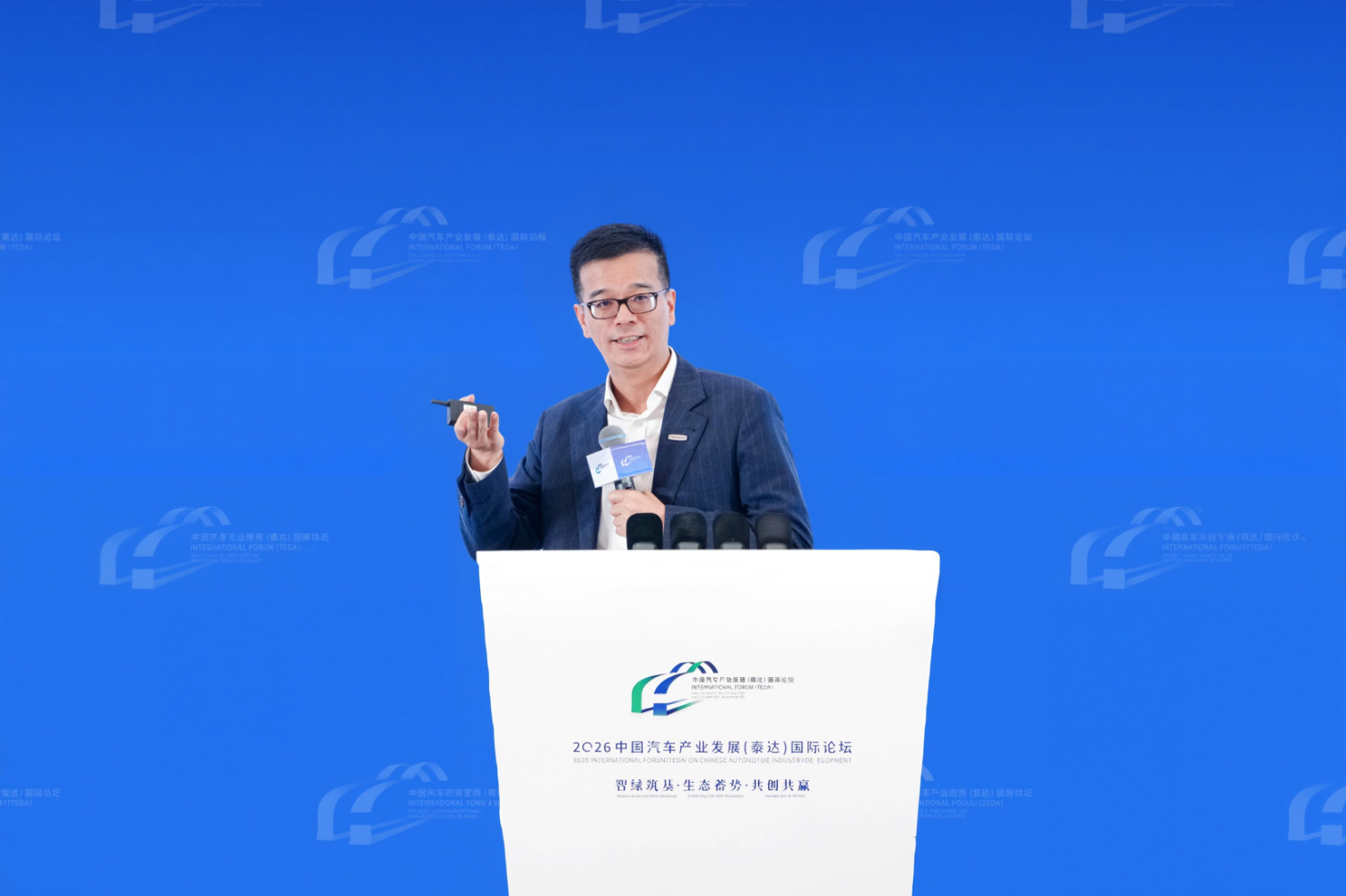
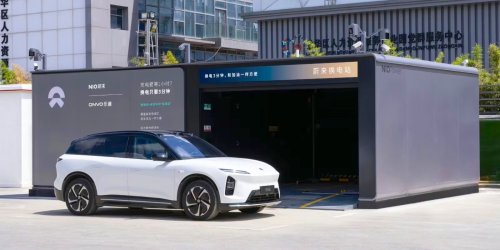
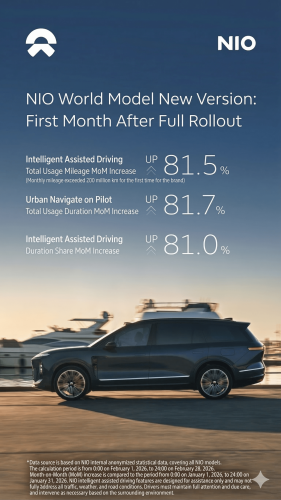
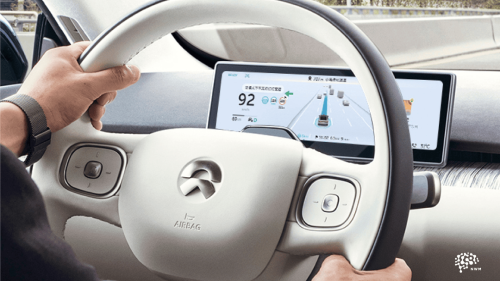
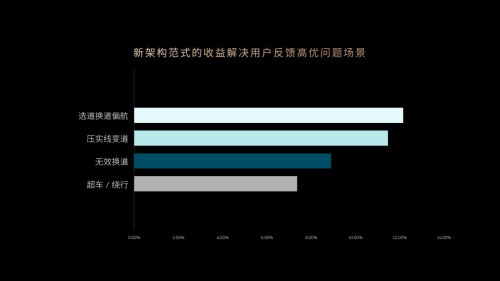
NIO plans to continue iterating the NWM, with two major updates scheduled for the second and fourth quarters this year. On March 16, NIO released the first full month of operational data following the rollout of its new intelligent driving system, NIO World Model (NWM) 2.0. The data show that user engagement with intelligent driver assistance increased significantly after the update. According to the statistics, total usage mileage using intelligent assisted driving functions rose 81.5% month-on-month, surpassing 200 million kilometers in a single month for the first time. NIO World Model’s performance one month after rollout The total usage duration of urban navigate on pilot increased by 81.7%, while the share of intelligent driving time within overall driving time rose 81.0% compared with the previous month. User engagement depth also changed significantly. The number of users whose intelligent driving mileage accounted for more than 50% of their total driving increased by 115.4% month-on-month. NIO’ Smart Driver Meanwhile, the number of users whose intelligent driving usage time exceeded 50% of total driving time increased by 210.6%. NWM 2.0 began rolling out on January 28 and represents a major upgrade to NIO’s algorithm architecture. The new version is the first in China to fully adopt a “world model + closed-loop reinforcement learning” development paradigm, continuously improving decision-making through data training and feedback optimization. At the functional level, the new version addresses several scenarios that previously generated user feedback, including lane selection and lane-change drift, lane changes across solid lines, unnecessary lane changes, failure to overtake slower vehicles and occasional false braking on highways. Ren Shaoqing, NIO Vice President of Intelligent Driving elucidates on the NWM 2.0 Based on user experience, the upgraded system makes more decisive decisions in lane selection, intersection navigation and lane-changing. It also identifies opportunities to overtake slow vehicles earlier. Acceleration, deceleration and steering coordination have also become smoother, reducing discomfort caused by sudden braking or frequent acceleration. In complex scenarios such as roads without clear lane markings or construction zones, the system has improved its ability to detect pedestrians, cyclists and road obstacles. Overall driving behavior is now closer to that of human drivers. User feedback after using the NWM 2.0 NIO said that as intelligent driving technology enters a more comprehensive model-based stage, evaluation standards are shifting from whether a vehicle can complete a scenario to broader metrics such as predictive decision-making, trajectory smoothness and passenger comfort. According to the company’s roadmap, NIO will continue to upgrade its intelligent driving capabilities this year. Two major version updates are expected in the second and fourth quarters, alongside increased investment in computing power and data to further improve the system’s generalization ability in complex road environments.




















 +67 others