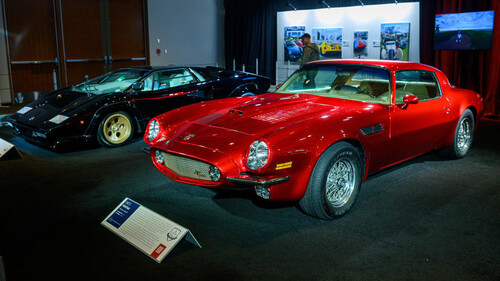
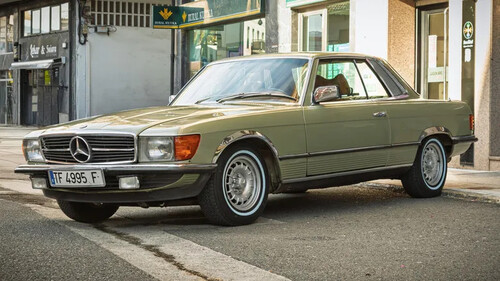
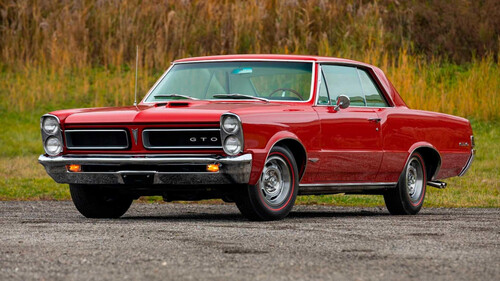
Minnesota classic-car weekday driving limits stall as bill fails to advanceMinnesota lawmakers have shelved a contentious proposal that would have sharply limited when classic cars could be driven, leaving vintage vehicle owners relieved for now but uncertain about what might come next. A bill that sought to restrict collector cars to weekends and certain holidays failed to advance at the Capitol, halting a debate that had pitted preservation and hobby culture against safety and environmental concerns. The measure’s stall keeps current rules in place for thousands of Minnesotans who register their vehicles as classics, but it also signals that the fight over how much freedom those owners should have on weekday roads is not over. Advocates on both sides are already recalibrating their strategies for the next legislative round. What happened The proposal centered on vehicles registered under Minnesota’s “collector” and “classic car” categories, which typically cover older models maintained for exhibition, shows, and occasional pleasure driving. Under existing law, those registrations come with some limitations, but weekday use for errands, commuting, or leisure is still possible as long as the vehicle is not used as a daily commercial workhorse. The new bill would have tightened that framework by limiting classic and collector plates to weekend and holiday operation, with narrow exceptions. Supporters framed it as a way to align the law with the original intent of special registration: cars meant primarily for display and hobby use, not regular weekday transportation. Opponents saw something very different, describing the measure as a sweeping restriction that would effectively sideline cherished vehicles from Monday through Friday. According to legislative advocates who tracked the measure, the bill emerged in a session already crowded with transportation and environmental priorities. It was introduced, assigned to committee, and quickly drew the attention of car clubs, restoration shops, and insurance agents who specialize in collector vehicles. Once those stakeholders mobilized, lawmakers began hearing from constituents who own everything from 1960s Chevrolet Impalas and Ford Mustangs to 1980s Pontiac Firebirds that qualify under Minnesota’s age and condition criteria. During early discussions, opponents highlighted the practical consequences of a weekend-only rule. Many classic car owners rely on weekday driving for maintenance shakedowns after major repairs, or to reach midweek club meetings, charity events, and school displays. Others occasionally use their collector vehicles for workday commutes when weather is clear and roads are dry. The bill would have placed all of those trips in jeopardy. As the session moved forward, the proposal failed to secure the committee votes it needed to advance. Lawmakers did not bring it to the floor for a full chamber debate, effectively stalling the measure for the year. The setback came after classic car owners organized letter-writing campaigns, in-person visits, and testimony that emphasized both the limited annual mileage many of these vehicles see and their role in Minnesota’s car culture. Some of that organizing coalesced around coverage that spelled out how the plan would have allowed most classic vehicles on public roads only on Saturdays, Sundays, and a short list of holidays. That reporting, including one widely shared description of weekend-only, helped galvanize owners who had not realized their weekday drives to a coffee shop or a repair shop could be affected. Key committee members signaled that the bill’s language was too rigid and that its enforcement provisions were underdeveloped. Law enforcement representatives raised questions about how officers would verify whether a vehicle on the road on a Tuesday was using a collector plate within legal bounds or violating a weekend-only rule. Without clear answers, momentum faded. Why it matters On the surface, a technical tweak to Minnesota’s classic car registration might sound like a niche concern. In practice, it touches a surprisingly large community and a set of values that extend beyond nostalgia for chrome bumpers and carburetors. There is, first, the sheer number of vehicles and owners involved. Minnesota has thousands of cars registered as classics or collectors, representing decades of automotive history. These range from prewar Fords and Packards to postwar icons like the Chevrolet Bel Air and more recent favorites such as early Mazda RX-7s or BMW 2002s that now meet age thresholds. For many owners, the vehicles are long-term projects, family heirlooms, or rolling investments that require regular exercise to stay mechanically sound. Restricting those cars to weekends would have reshaped how that community operates. Car clubs often schedule weekday cruises, tech nights, and charity events that depend on flexible driving windows. A Tuesday evening meet-up in a supermarket parking lot or a Wednesday visit to a retirement home car show would suddenly be off-limits for anyone trying to stay within the letter of the law. There are economic stakes as well. Minnesota’s classic car ecosystem supports restoration shops, upholstery specialists, machine shops, paint and body businesses, parts retailers, and event organizers. Many of those businesses schedule appointments and test drives during the workweek. If owners cannot legally drive their collector-registered cars to a shop on a Wednesday, that complicates scheduling and could discourage some projects altogether. Insurance is another layer. Specialty insurers typically base premiums on limited annual mileage and careful storage, not on a strict weekend-only rule. A state law that codifies a narrow driving window could force policy adjustments, potentially raising rates for owners who want more flexible coverage or pushing some to abandon collector plates in favor of standard registration. That shift would undercut one of the incentives that drew owners into the special registration category in the first place. Supporters of the bill have their own set of concerns, and those will not disappear just because the measure stalled. They argue that classic and collector registration is meant for vehicles used sparingly and that too many owners treat those plates as a way to avoid regular fees while still using the car as a quasi-daily driver. From that perspective, a weekend and holiday rule is a straightforward way to keep the program honest and to reduce congestion and emissions from older, less efficient vehicles on weekday roads. Environmental advocates also see older vehicles through a different lens. Many classic cars predate modern emissions controls, and even well-tuned engines can emit more pollutants per mile than newer vehicles with catalytic converters and advanced fuel management. Limiting their operation to weekends, when commuter traffic is lighter, is seen by some as a modest step to reduce cumulative impact. Yet opponents counter that classic cars make up a tiny fraction of total vehicle miles traveled in Minnesota. They argue that the average collector car might see only a few thousand miles per year, far less than a typical daily driver, and that the environmental gains from sidelining those vehicles on weekdays would be marginal at best. From their view, the proposal targeted a highly visible but numerically small group while leaving far larger sources of emissions untouched. The debate also touches on questions of personal freedom and how far the state should go in regulating hobby activities. For many owners, driving a 1970 Dodge Charger to work once a week in summer is part of the joy of ownership. They see that limited use as a harmless expression of automotive history and individuality. A weekday ban feels, to them, like an unnecessary intrusion into a lifestyle that already operates on the margins of mainstream transportation. Law enforcement and administrative capacity round out the stakes. Any new restriction would require clear guidance for officers, Department of Public Safety staff, and the courts. Without precise definitions and practical enforcement tools, a weekday ban could lead to inconsistent treatment on the roadside and in traffic courts, which in turn would erode trust in the rule. What to watch next Although the classic car restriction bill failed to advance this session, few at the Capitol expect the issue to vanish. Lawmakers who supported the idea may come back with revised language that tries to address the concerns that sank the first attempt. One possible path is a mileage-based compromise. Instead of strictly confining collector vehicles to weekends, legislators could explore annual mileage caps tied to odometer readings, affidavits, or periodic verification. That approach would align more closely with how specialty insurers already structure policies, though it would raise its own enforcement and privacy questions. Another option is a clearer definition of “occasional use” that gives owners some weekday flexibility while drawing a line against daily commuting. For example, a revised bill might specify that collector-registered vehicles cannot be used for more than a certain number of workday trips per month, or that they may not be primary commuter vehicles. Such language would be more complex than a simple calendar rule but might better reflect how owners actually use their cars. Stakeholders are also watching whether Minnesota’s Department of Public Safety or Driver and Vehicle Services division proposes any administrative changes that do not require new legislation. Adjustments to registration forms, clearer disclosure about existing limits, or targeted enforcement against obvious abuses of collector plates could be pitched as a middle ground that addresses concerns without a full statutory overhaul. Classic car organizations are unlikely to stay quiet. Many are already encouraging members to keep lines of communication open with legislators, share data on actual annual mileage, and invite policymakers to events where they can see how these vehicles are used in practice. If lawmakers experience a weekday cruise-in or a midweek charity show firsthand, they may be less inclined to support blanket weekday bans. At the same time, environmental and safety advocates are refining their arguments. Some are expected to push for broader transportation policies that go beyond classic cars, such as incentives for electric vehicle adoption, investments in public transit, or regulations on high-polluting commercial fleets. In that context, classic car restrictions could resurface as one small piece of a larger package, rather than a standalone flashpoint. Regional developments could also influence Minnesota’s next steps. If neighboring states adjust their own collector car rules, lawmakers may look to those examples as models or cautionary tales. A state that successfully implements a flexible mileage cap or a nuanced weekday rule could give Minnesota reformers a template that is easier to defend than a strict weekend-only proposal. For owners, the immediate task is vigilance. The failure of this bill preserves weekday driving freedom for now, but it does not guarantee that future proposals will be as blunt or as easy to oppose. A more carefully drafted measure, framed as a compromise and backed by broader environmental legislation, might be harder to stop if it reaches the floor. In the meantime, the episode has already had one clear effect: it reminded Minnesota’s classic car community that their hobby depends not only on mechanical know-how and careful storage, but also on engagement with policymakers. Whether the next chapter involves mileage caps, refined definitions of occasional use, or an entirely different approach, the debate over how and when vintage vehicles can share the road with modern traffic is likely to return to the Capitol. For now, the weekday rumble of a 1967 Pontiac GTO or a 1985 Toyota Supra on a Minnesota side street remains legal under existing collector registration rules. How long that remains true will depend on what kind of compromise, if any, lawmakers and enthusiasts can forge when the issue inevitably returns. More from Fast Lane Only Unboxing the WWII Jeep in a Crate 15 rare Chevys collectors are quietly buying 10 underrated V8s still worth hunting down Police notice this before you even roll window down