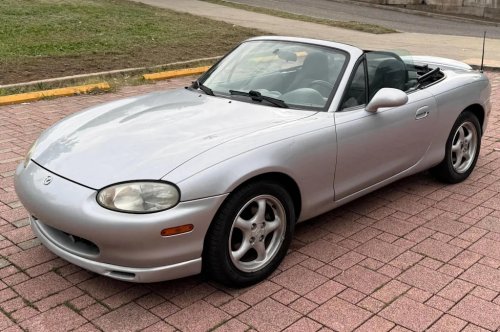
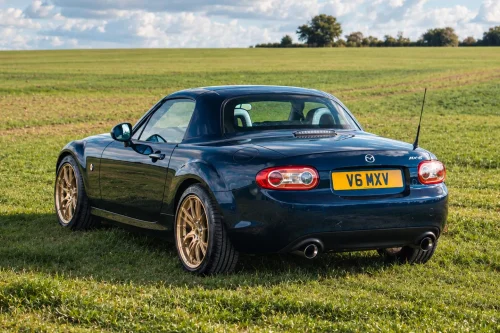
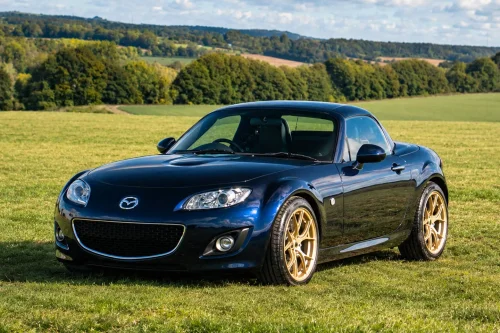
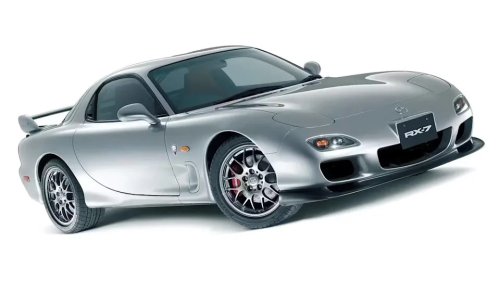
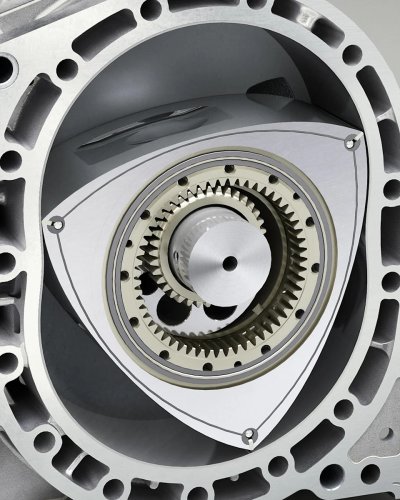
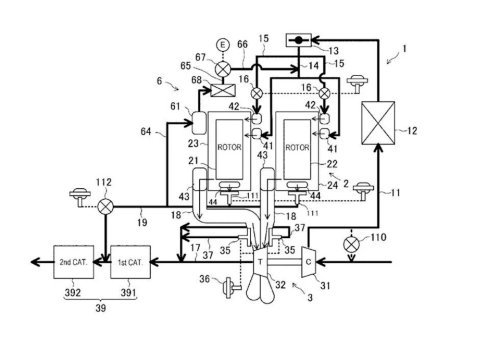
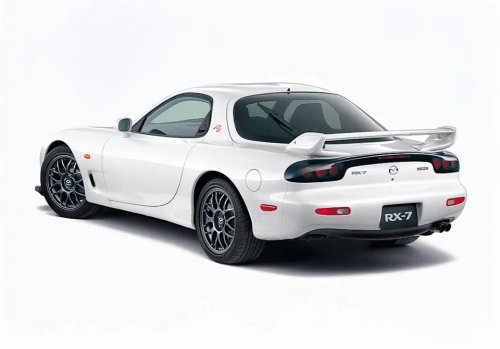
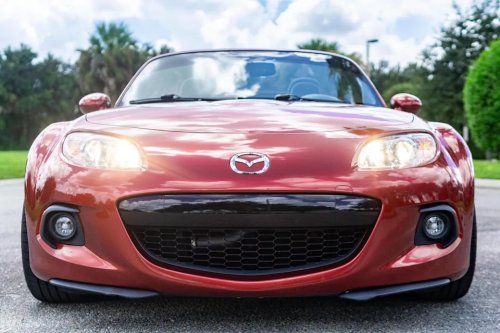
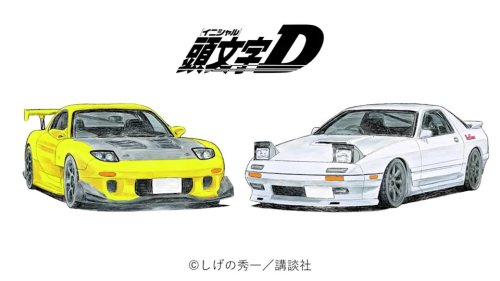
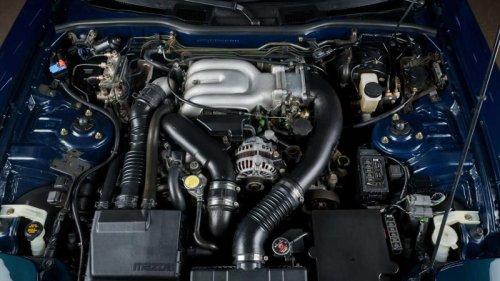
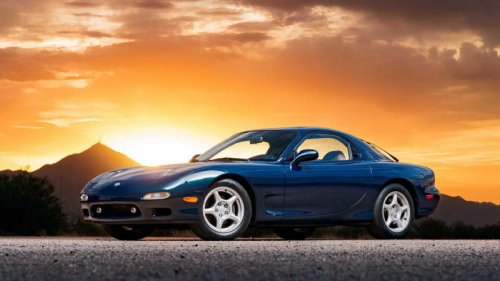
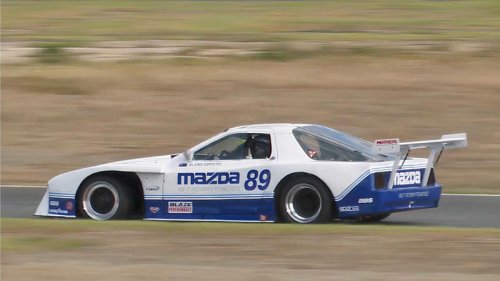
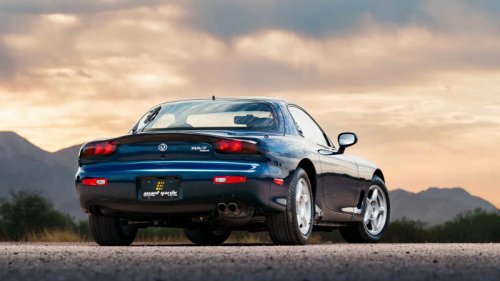
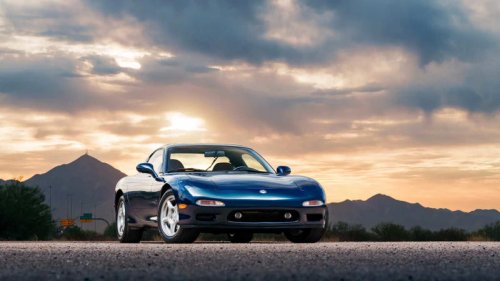
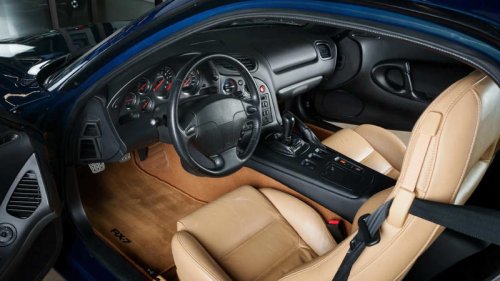
Getting the balance right in a sports car is harder than it sounds. Power without handling produces something fast in a straight line and terrifying everywhere else. Handling without power produces something engaging to drive and irrelevant to own. The cars that genuinely get both right are rare, and they tend to share a common trait: the engineers started with the chassis and worked backward, rather than dropping an engine in and hoping for the best.In the early 1990s, Mazda built a car around a power source so compact and so light that the engineers had freedoms most of their competitors simply did not. The engine displaced just 1.3 liters. The numbers on the spec sheet were not what made it extraordinary. What made it extraordinary was where those numbers ended up and what the chassis built around them was capable of. The Recipe Nobody Else Was Cooking Bring A Trailer The problem most sports car manufacturers face is the engine. Conventional piston engines are long, heavy, and package badly. Move them far enough forward to fit under a hood and you compromise the weight distribution. Move them back and you gain balance but lose practicality. The compromises stack up before a single suspension component has been specified.Mazda had been working around this problem since the 1960s using Wankel rotary technology. A twin-rotor Wankel engine has no pistons, no connecting rods, and no crankshaft in the conventional sense. The rotors spin directly, producing a unit that is roughly half the size and significantly lighter than an equivalent piston engine. In a sports car application, the implications of that compactness are significant. The engine can be mounted farther back in the chassis, closer to the front axle, allowing the weight it represents to be positioned where it does the most good for handling balance.By the time Mazda developed the third-generation RX-7, the FD, they had refined this approach to something close to an art form. The 13B-REW’s 1.3-liter displacement allowed it to sit entirely behind the front axle, delivering a 50/50 front-to-rear weight distribution and a low center of gravity that no comparable front-engined sports car of the era could match without significant ballast or engineering contortion. The Lotus Elise achieved similar balance through an obsessive pursuit of lightness with a mid-engine layout. The Honda S2000 came close with a high-revving naturally aspirated four-cylinder mounted as far back as packaging allowed. The Mazda MX-5 Miata prioritized balance above all else but gave up power to get there. The FD RX-7 was the car that refused to give up anything. What a 1.3-Liter Mazda Engine Had No Right Doing Bring A TrailerThe FD Mazda RX-7 launched in late 1991 for the Japanese market, with US sales following in 1993. The engine was the 13B-REW, a twin-rotor Wankel unit running a sequential twin-turbocharger system that was the first of its kind to be exported from Japan in a production car. The sequential arrangement was deliberate: the primary turbo built boost from low in the rev range, with the secondary coming online above 4,000 rpm to maintain power delivery all the way to the redline. The result was a power curve with none of the dead zones that characterized most turbocharged engines of the period.The performance figures tell part of the story. A 5.3-second 0-60 mph time from a 1.3-liter engine was not supposed to be possible, and for any conventional engine architecture, it wouldn't have been. But the numbers explained only what the FD could do in a straight line. The more important figure was the curb weight: 2,800 pounds for the US-spec car, making it significantly lighter than a contemporary Corvette or any of its Japanese rivals running larger-displacement engines. Weight is the enemy of both performance and handling, and the rotary engine's compactness was the primary tool Mazda used to keep weight in check.The suspension was a double-wishbone setup at all four corners, chosen specifically for its ability to maintain consistent camber throughout suspension travel. Combined with the 50/50 weight distribution, the FD handled with a precision and neutrality that was genuinely unusual for its era. While most sports cars of the period pushed toward understeer as a safety margin, the FD was balanced enough to be adjustable at the limit without becoming threatening, a quality that experienced drivers recognized immediately and that made it a natural tool for touge circuit work in Japan, where chassis balance and corner-entry precision matter far more than peak power. What the Racetrack Confirmed Image Via Blend Live TV YouTube Channel The FD RX-7’s credentials on the road were backed by a race record that confirmed the underlying design from the second-generation FC was genuinely competitive. The FC ran in the IMSA GTO championship, winning four races in 1991 on the way to both the drivers' and manufacturers' titles. That championship came in the same year Mazda won the 24 Hours of Le Mans outright with the 787B, making 1991 the most decorated year in the company's motorsport history. The FC-based GTO car even returned to Le Mans in 1994, run by Japanese privateer Team Artnature with rotary legend Yojiro Terada behind the wheel. This motorsport experience and expertise went hand-in-hand with the development of the third-generation RX-7, the FD, allowing engineers to build a sports car geared toward performance.Away from organized competition, the FD’s reputation on Japan’s touge circuits became as significant as its race results. Touge driving, the art of running mountain-pass roads at speed, places a premium on chassis balance and driver communication above all else. Grip levels are inconsistent, corner radii are unpredictable, and the weight transfer demands on a chassis are severe. The FD’s 50/50 distribution and double-wishbone geometry made it one of the most celebrated touge tools of its generation, a reputation that was cemented by its starring role in the Initial D anime series, where rival driver Keisuke Takahashi’s yellow FD became one of the most recognized cars in Japanese car culture.The broader point is that the FD's balance was validated in conditions that exposed any weakness in a chassis. Race circuits reward mechanical grip and aerodynamic stability. Touge driving rewards feedback, adjustability, and the ability to place a car precisely under varying conditions. The FD performed in both environments because the engineering that underpinned its road manners was not a compromise between performance and handling. It was the result of starting with balance as a non-negotiable and building everything else around it. Where the RX-7's Rivals Fell Short Bring A Trailer The cars that came closest each had a reason they could not quite close the gap. The Lotus Elise, arriving in 1996, was lighter and arguably more focused, but its Rover K-Series produced around 118 hp, and the performance envelope was narrow. The Honda S2000 offered one of the finest naturally aspirated engines ever fitted to a road car—240 hp from 2 liters with a 9,000-rpm redline—but its high-revving character rewarded commitment and punished hesitation.The Mazda MX-5 Miata prioritized driver engagement over outright performance and made no apology for it. None of these were wrong answers. What the FD offered that none could match was turbocharged-sports-car performance inside a driver's-car chassis, at a weight that undercut both categories. It remains one of the few 1990s sports cars that collectors have consistently valued above its contemporaries, which is the market confirming what the spec sheet already suggested. What a Mazda RX-7 FD Costs Today Bring A TrailerMarket data shows the FD's excellent-condition value has risen 363 percent over the past decade, outpacing every other 1990s Japanese sports car benchmark including the Supra Mk IV Turbo, the Acura NSX, and the Nissan 300ZX Turbo. The US-spec 1993 to 1995 cars represent the accessible entry point for American buyers, with good examples at $41,300 and excellent examples approaching $57,000. The Spirit R, of which only 1,500 were built as the final FD produced in 2002, is the collector-grade outlier. A 1993 low-mileage example sold at auction for $137,000 in 2023, confirming that the top of the market has moved well beyond what the spec sheet alone would predict. What To Look For When Buying a Mazda RX-7 Bring A TrailerSources: Hagerty, Classic.com, Fast Car, FastestLaps, Inside Mazda, Blend Line TV YouTube Channel, Bring a Trailer.


















 +43 others