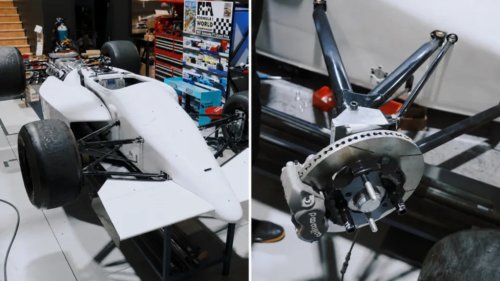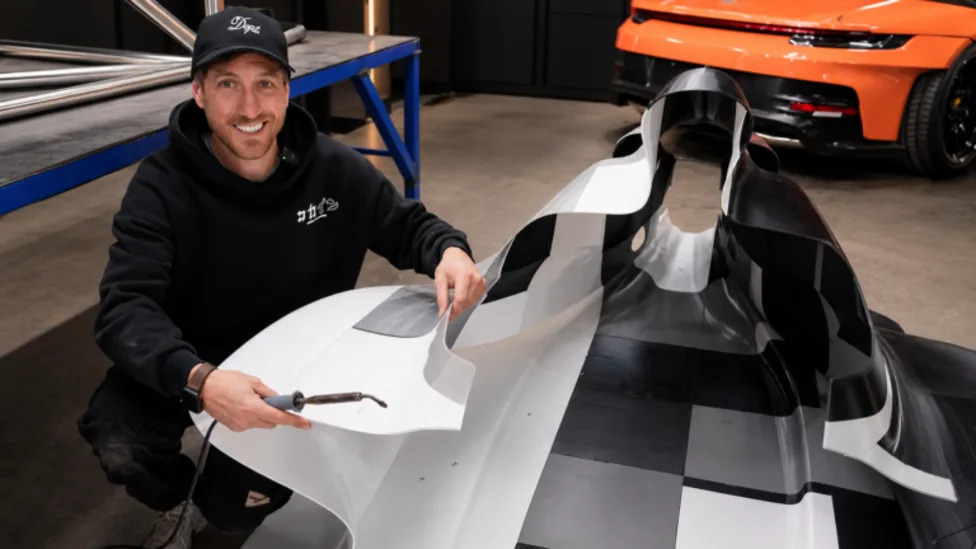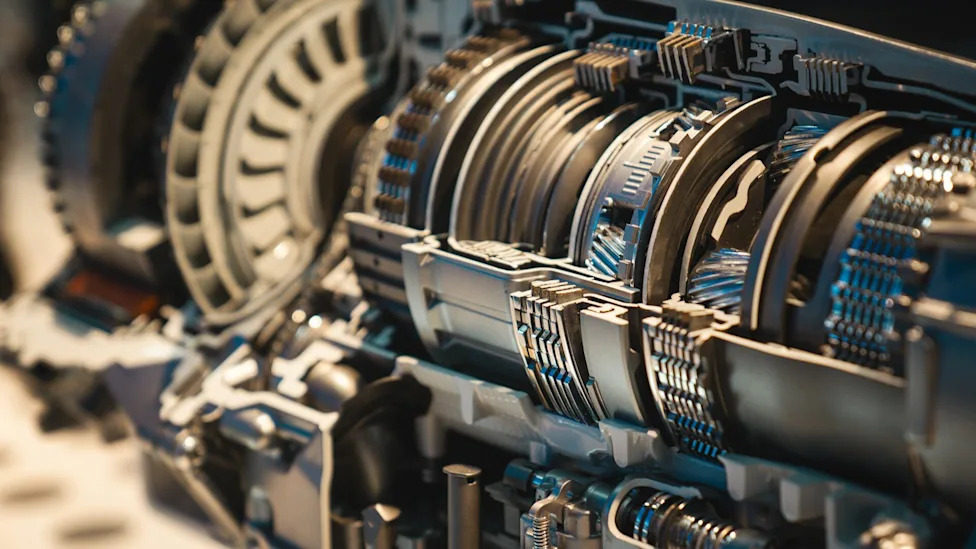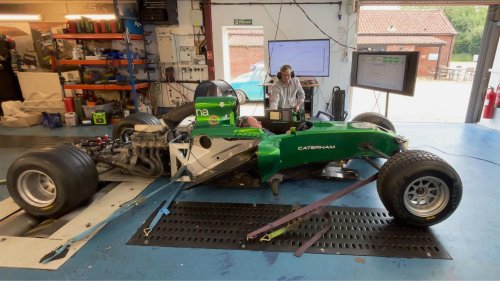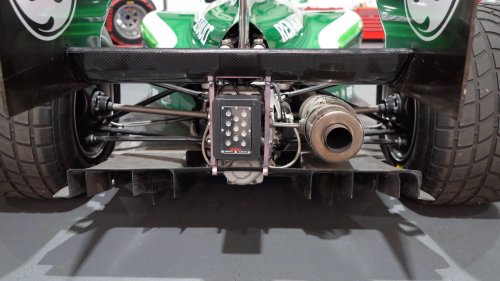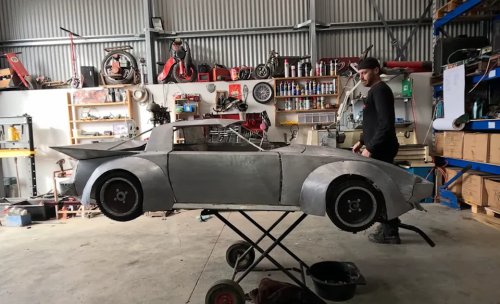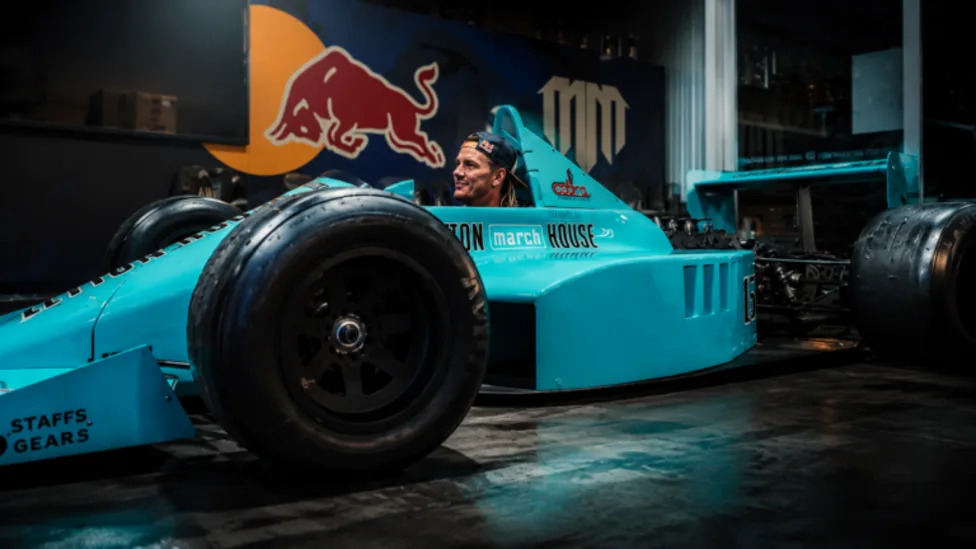


















Mad Mike Is Turning a Sacred F1 Car Into a Rotary Drift WeaponTen years of pitching. Ten years of "probably impossible." And now a genuine 1980s Formula 1 chassis is sitting in Mad Mike Whiddett's MadLab workshop in Hampton Downs, New Zealand, waiting to become something the sport's rulebook never anticipated.Whiddett has announced his most ambitious project yet: transforming a 1986 March 87P Formula 1 chassis into a rotary-powered drift car – the first of its kind.The project has been in the back of his mind since 2016, nursed through years of rejection before Red Bull finally made the delivery happen. "We are building by far the most insane project Toni and I have ever tackled," Whiddett said alongside motorsport manager and partner Toni Cook.AdvertisementAdvertisementWhiddett's catalog of previous builds includes a quad-rotor FD RX-7, a rotary-powered McLaren 650S, and the five-rotor MADAZ 787D – a homage to Mazda's legendary Le Mans winner.By any measure, those are serious machines. This one apparently renders them warm-up acts.Why This Particular Car Is a Bigger Deal Than It LooksThe March Engineering chassis started life in 1986 as a Formula 3000 car before being developed into a Formula 1 entry for the 1987 season under the Leyton House team. Powered by a Ford Cosworth DFZ V8 and driven by Ivan Capelli, it achieved a best finish of sixth at Monaco and is recognized for its teal livery and compact carbon fiber monocoque.That teal color and the open engine bay – no cover, fully exposed – is exactly what drew Whiddett to it over any other period chassis. The plan is to call it the 87D, for drift, a deliberate echo of the team's own naming logic and a nod to his 787D build.AdvertisementAdvertisementIn August 1987, Adrian Newey joined March F1 and designed the March-Judd 881 for the following season, a car that scored 22 points in 1988 including a second place at the Portuguese Grand Prix.The 87P predates all of that – it's the raw, pre-Newey version of the team, modified from an F3000 machine with a bigger fuel tank and revised aerodynamics just to get Capelli to the grid.Whiddett is working alongside engine builder Alec Bell and fabricator and engineer Brendon Thomas.The build will be documented across a six-part YouTube series, covering everything from the teardown to the shakedown.The Engineering Headaches Are Already Stacking UpNothing about this is straightforward. The rear of the car needs to be completely re-engineered to accept a rotary engine, and the H-pattern gearbox and compact cockpit present their own set of complications.AdvertisementAdvertisementThe cockpit is so tight that Whiddett discovered it has a foot clutch already – which is either a small miracle or a cruel joke, depending on how the rest of the fabrication goes.The transaxle situation is the central puzzle. All the rear suspension geometry – control arms, shocks, pickup points – ties back to the original gearbox housing. Swap the gearbox, and you're essentially building a custom subframe that bolts directly to the carbon monocoque, then fabricating a new rear end around whatever transaxle they land on. The team has sourced an Elite transaxle from someone in New Zealand who has one sitting in a GT40 project and is willing to lend it for 3D scanning.The build is taking place at the MadLab workshop in Hampton Downs, where fabrication and engineering work is now underway.On the engine side, the preferred option (if the geometry works out) is a five-rotor naturally aspirated setup running around 700 horsepower at the wheel. A turbocharged four-rotor would push past 1,000 horsepower and likely destroy whatever gearbox they bolt behind it. The monocoque has already been fully stripped, painted ice white, and is sitting ready for assembly. The original iconic teal livery is gone, which stings a bit, but Whiddett's argument is that this car deserves his team's identity rather than a replica of someone else's.AdvertisementAdvertisementThe completed build will be revealed as "FORMIDABUL."Whether it ends up with three rotors, four, or five, and whether the gearbox survives the first shakedown, are questions that will play out over the coming months. What isn't a question is whether this is the most structurally complicated thing Whiddett has attempted. It clearly is, and he knows it. The only real mystery is how something this loud and sideways took ten years to get approved.