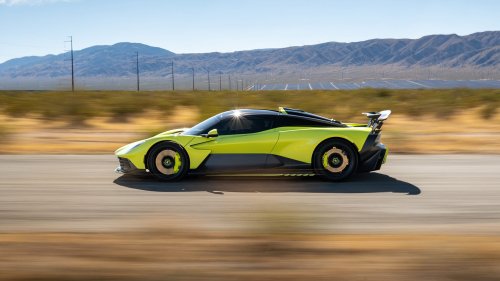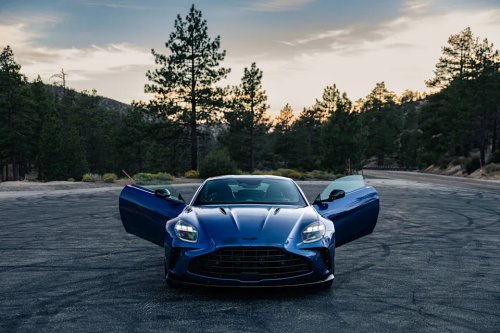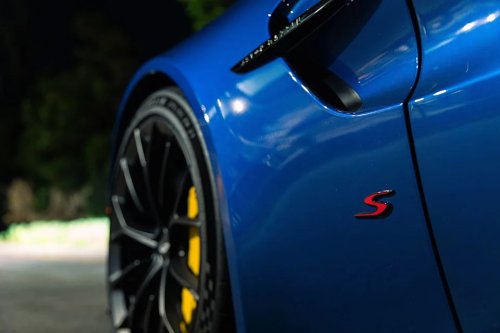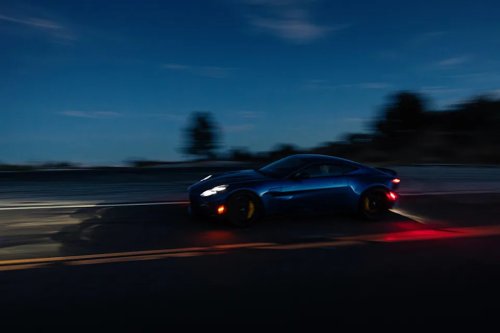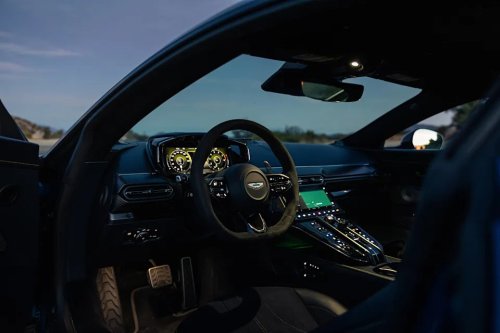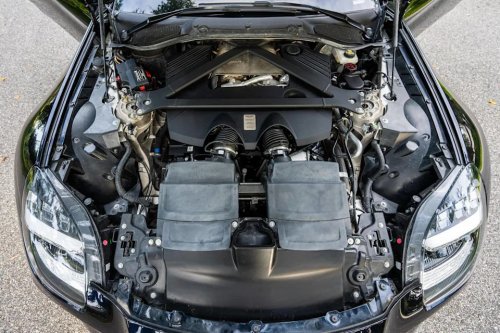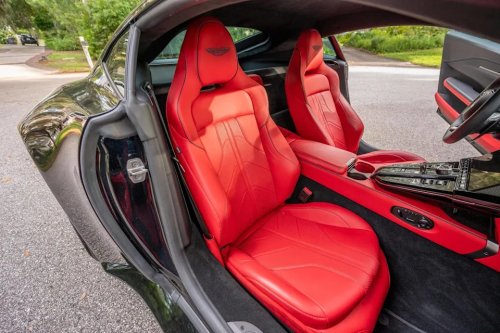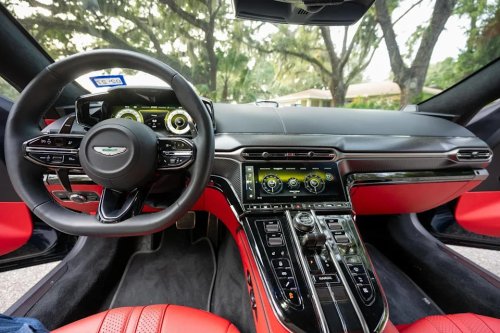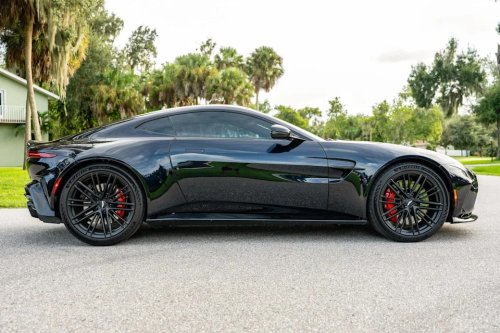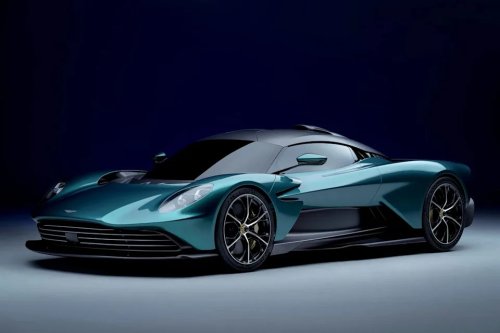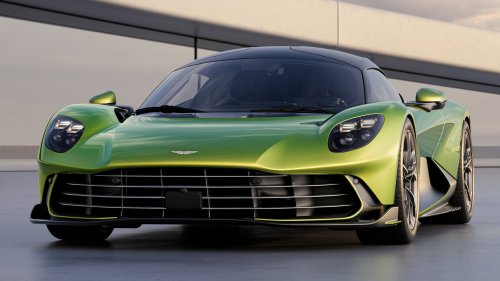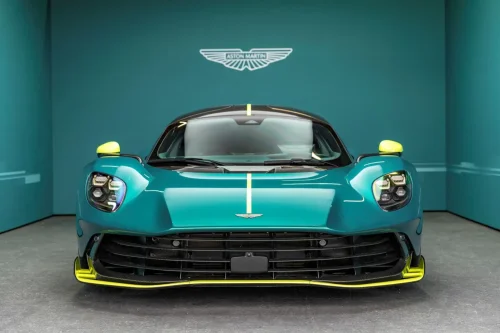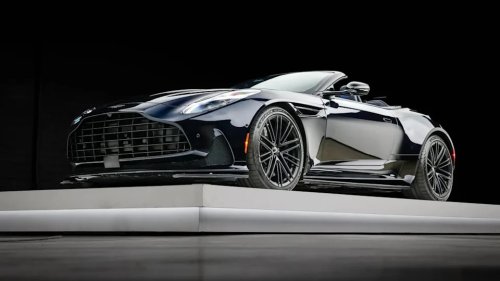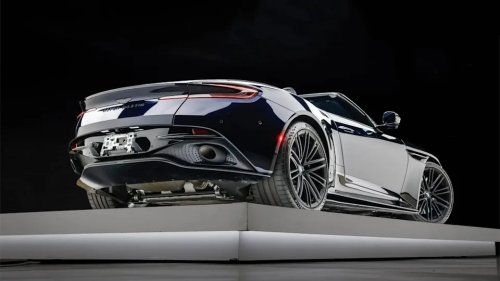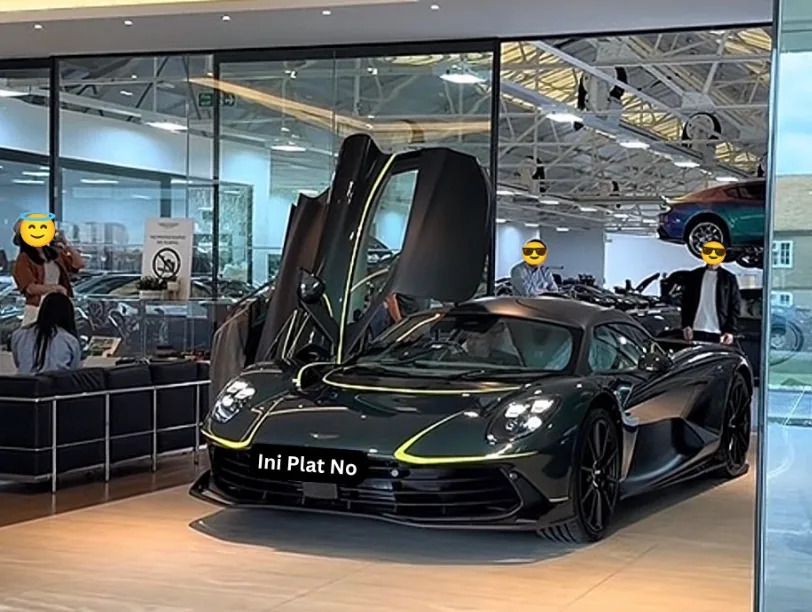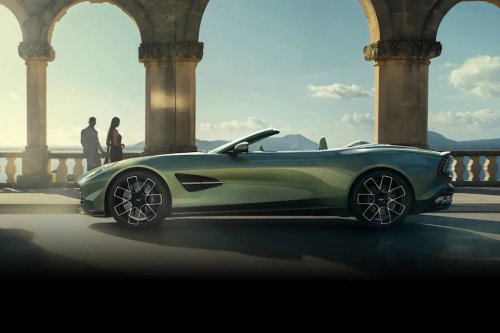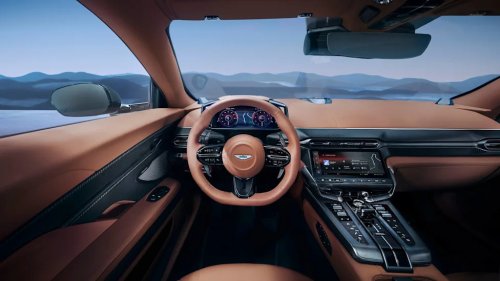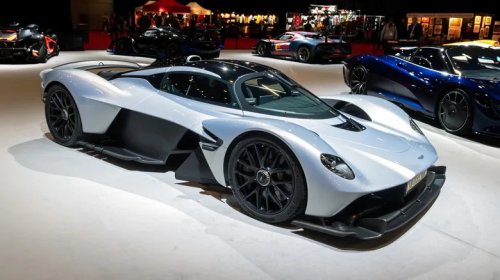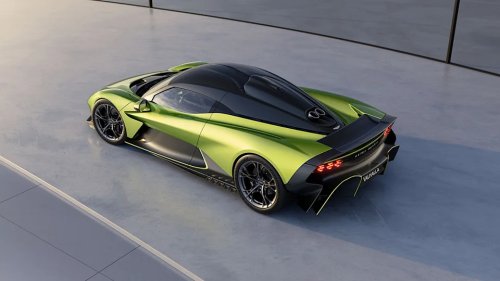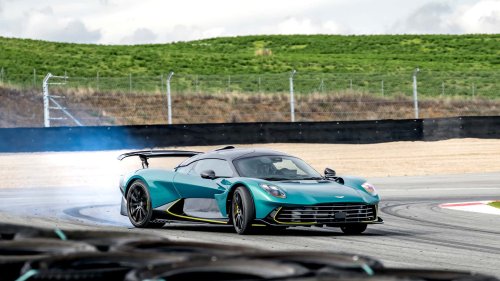
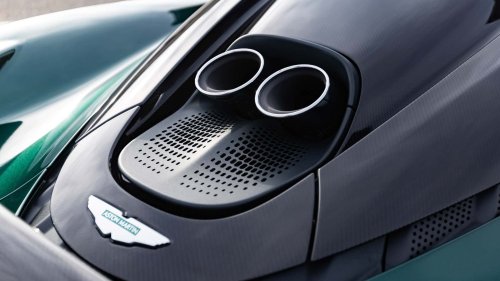
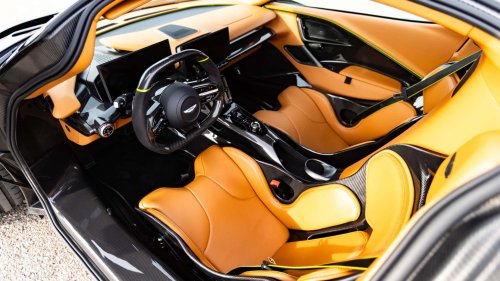
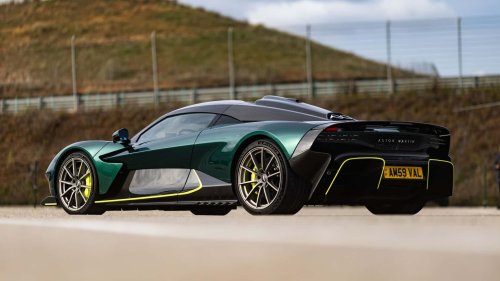
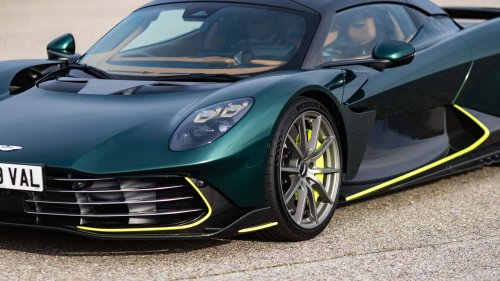
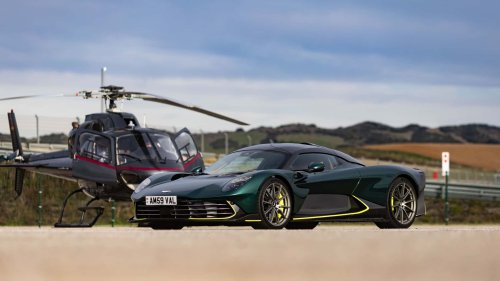
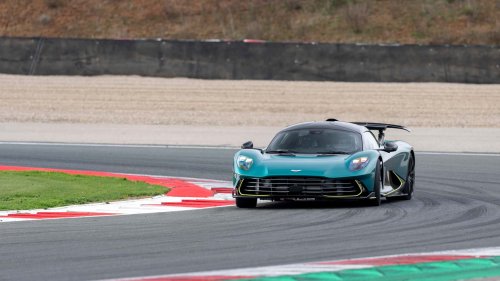
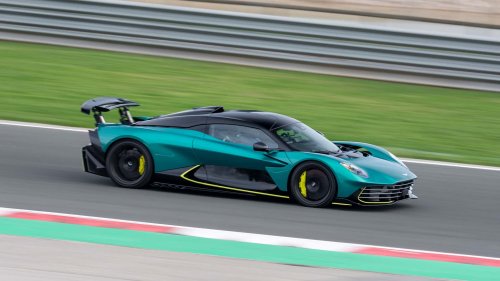
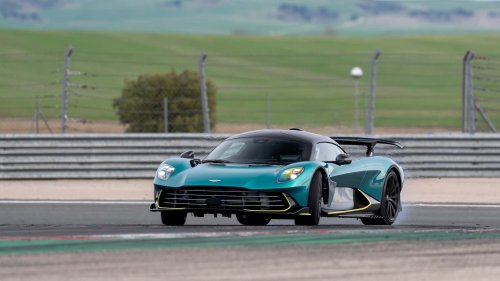
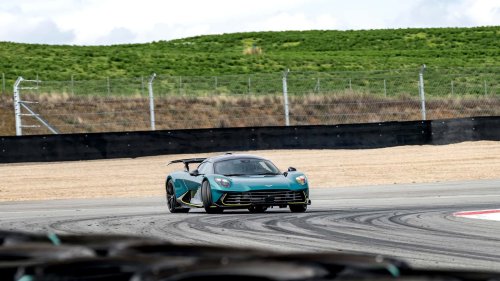
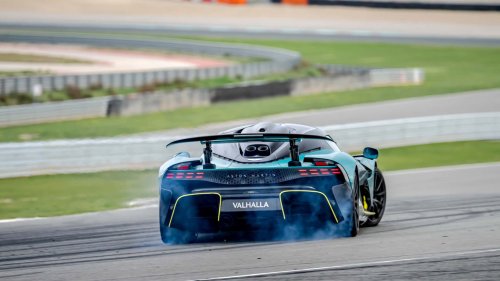
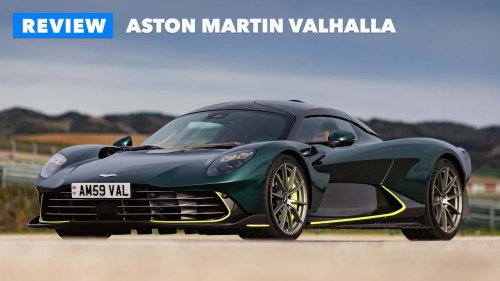



















I’m starting to think that 1,000-horsepower, mid-engined, twin-turbocharged V8 hybrid supercars are the new black. It’s almost becoming the cookie-cutter formula for a "halo" car—something that is ferociously fast and a technological representation of a brand, yet also meets strict European emissions standards. In short, it’s the path of least resistance. Which, historically, is not Aston Martin. Yet, its new Valhalla is formulated exactly as described above. You could almost mistake its spec sheet for that of the Lamborghini Temerario, which costs about half as much, although Aston insists it competes with the likes of the Ferrari F80 in terms of technological deployment and performance. But it doesn’t really do the Aston thing. It isn’t obtuse in execution and opulence. It doesn’t have a V12 in the front. It isn’t a big, bruising GT car. It’s a (relatively) lightweight, dainty, aerodynamically supported hypercar with a V8 in the middle. The Valhalla is something completely new for Aston—even if it isn’t an entirely new idea in the broader market. Critically, however, the battle is won in the subtleties, which I explored on some of Spain’s finest Basque Country roads and on the lovely Circuit de Navarra. This, folks, is what Aston can do with a fistful of Lawrence Stroll’s cash, and no guardrails. Meet the "Son of Valkyrie." Quick Specs Aston Martin Valhalla Engine Twin-turbocharged 4.0-Liter V8 Hybrid Output 1,064 Horsepower / 811 Pound-Feet 0-60 MPH 2.5 Seconds (est.) Weight 3,648 Pounds (dry) Base Price $1,000,000 (est.) Tremendous Power Of course, the Valhalla makes a healthy glob of horsepower: 1,064 with 811 pound-feet of torque supporting the endeavor. A whole 816 of that output comes from an AMG-derived 4.0-liter twin-turbocharged V8 with a flat-plane crank. Yes, it is indeed a version of the AMG GT Black Series’ engine, but it has all-new heads, camshafts, and turbochargers to make the extra 100 or so horsepower over the Black Series. This engine is also not built by AMG, but by an external contractor hired by Aston. The hybrid system is almost entirely of Aston’s creation, however. It uses AMG’s high-discharge 6.1-kilowatt-hour battery pack from its P3 hybrid system, but the three motors and eight-speed dual-clutch transmission are developed in-house. There’s a motor for each front wheel, both worth about 250 horsepower, while the gearbox-mounted motor makes up the rest. The rear motor’s engineering is novel in that it’s a hybrid configuration. Aston calls it “P2.5,” which is hybrid nomenclature for where the motor adds torque to the powertrain. For example, a P2 electric motor lives between the engine and flywheel, meaning it has to drive through the gearbox to offer assist. A P3 motor delivers power after the gearbox, meaning it acts directly on the driveline. The Valhalla’s motor drives the gearbox directly through the even-numbered gears (2nd, 4th, 6th, and 8th) and can choose gears independently of the V8 engine. Photos by: Chris Rosales / Motor1 The Valhalla Is Quite Complicated Don’t try to think about that calibration exercise too hard, because even Aston’s engineers acknowledge the work that went into simply making the Valhalla drive. Chief Engineer Andrew Kay, who left McLaren to lead the Valhalla project, took on the immense task of making it feel seamless. Alongside Director of Vehicle Performance Simon Newton, who led Vantage and Vanquish, they made the Valhalla’s myriad of acronyms speak to one another in harmony. And like any modern car, there are many acronyms. The Valhalla runs on the latest Bosch dynamics hardware (called 6D-IMU), but with software rewritten by Aston. Newton explained that the hybrid system added even more layers of possible refinement–and more places to mess up. The front motors are especially leveraged for handling, with cornering attitude adjustment dubbed "unbelievably powerful" by Newton. Pros: Superb Inputs, Surprising Amount Of Mechanical Sounds, Reassuring Handling Then, there’s how the thing looks. It’s bristling with aerodynamic purpose. The floor edges feature serrations that generate sealing vortices, providing extra downforce on the floor. Hidden beneath an already complex front lip is a genuine F1-style active front wing with triple elements. Just behind the front wing are a series of floor strakes that energize and direct the air out from behind the front tires, increasing front downforce. The least interesting part of the package is the active rear wing, which does the normal tricks like air braking and trimming at speed. Raw purpose oozes from the thing. And sitting inside drives the point home. The front suspension is mounted on pushrods for only two purposes: Lowering the hoodline and because it’s cool. The resulting view out of the windshield is exceptional, with low side windows that offer perfect apex visibility. It’s Aston Martin inside, but only just. It uses the same switchgear and infotainment as a Vantage, but every surface may as well be from Mars. Acres of carbon fiber cover the interior, while the seating position is preposterously low and reclined. My knees sat as high as my belly button, and the steering wheel met me perfectly. Before I knew it, the engine was fired to life, and I had the car to myself. Immediately, the engine is present and alert. The rough, thrashy character of the flat-plane eight resonates thoroughly through the cabin. A surprising supporting cast of sounds follows the initial fire-up. Somewhere in the car, a small pump whirrs to life, vibrating a touch. A constant whir above my left ear. Definitely another pump. Setting off, the soundscape gets even more lush. A hint of gearbox whine rises in frequency with speed. The high-pitched whistle of the electric assist joins in as I feed it more throttle. Then I bury it. Cons: Engine Lacks Character, Steering Wheel Is Square Hell rose from within the Valhalla. The initial accelerative force scrambled my mind, and right as the sound of electricity screamed and the V8 started building revs, the turbochargers began to gasp, generating boost. Redline came far too quickly, and a massively torque-interrupted shift heightened the sense of acceleration. In speed, the Valhalla is far from lacking. If anything, it is fucking excessive. It was so unbelievably powerful that it never quite got old. But it was also, thankfully, the least interesting thing about the Valhalla. Corner after corner, I learned something stellar. The Valhalla is a momentum car in Hellcat’s clothing. Communicative And Surprisingly Easy To Push Hard The steering built effort in a deliciously linear way and had a nice, medium ratio. The brakes were progressive, taking a good amount of pedal pressure to stop, but never overcompensating with electrical regeneration. And the throttle was long, allowing me to carefully parse its immense capabilities. I could glide the Valhalla from corner to corner and find reward, a delightful front-axle response with a brush of brake pressure, or a wag from the rear with a demanding mid-corner steering input. I didn’t need the power to enjoy the thing. It felt like a sports car first, and a hypercar second. It’s bizarre to say about such an alien object, but it felt completely natural. And that attitude only continued on the track. I found it downright easy, if not all that playful. For the road, our test cars were equipped with Michelin Pilot Sport S 5 tires. The track cars featured Michelin Cup 2s, which Aston factory driver (and three-time Le Mans winner) Darren Turner said were tuned for stability over outright hooliganism. It was indeed stable. The Valhalla accepted inconsiderate amounts of brake pressure, never quite rotating as well as I wanted, but never threatening to step out either. But moments during and after the apex were sublime. Once I rolled off the brakes, its low nose tucked beautifully into the corner, finding the extra grip no matter how hard I overdrove the entry. During a moment of coast, the Valhalla did exactly what I needed it to do, and it harnessed all 1,064 horsepower at the exit. Oversteer was gracefully delivered upon request, with the wheel tracing the front tires beautifully upon initiation. Rotating the Valhalla into a slide pre-apex took finesse, but brutalizing the rears with a small increase in steering input and a smack of throttle reliably put the Aston sideways. With a little more restraint, it would simply commit to a four-tire spinning rally-style exit, with the wheel straight in perfect neutral steer. Pre-apex, my dynamic options were, frankly, limited. But beyond that vertex, it would accept any input with enthusiasm. And it did again, again, and again. Aston Martin Valhalla Verdict The Valhalla is, in formula, like all of the other supercars. It’s hugely powerful, hybrid, and a bit heavy at 3,648 pounds dry (that’s without fluids or other important stuff). But it isn’t like the rest of them in that it turned immense horsepower and capability into a metronomic, meditative exercise in driving pleasure. The Temerario and Reveulto are no slouches, but they do not achieve the connectedness and fluidity of the Aston. That’s where it makes the difference. It may be the first of its kind to feel completely unhybridized, or to at least make its assistance completely invisible. If you told me the Valhalla simply had a big engine and great suspension, I’d believe you. It’s always in the subtleties, and modern Aston Martin owns the subtleties. Thus, the Valhalla is a spectacular execution of a well-trodden formula. Valhalla Competitors Chevrolet Corvette ZR1X Ferrari 849 Testarossa Lamborghini Revuelto Lamborghini Temerario Aston Martin Valhalla Engine Twin-Turbocharged 4.0-liter V8 Hybrid Output 1,064 Horsepower / 811 Pound-Feet Transmission 8-Speed Dual-Clutch Automatic Drive Type All-Wheel Drive Speed 0-60 MPH 2.5 Seconds (est.) Maximum speed 217 Miles Per Hour Weight 3,648 Pounds (dry) Seating Capacity 2 As-Tested Price $1,000,000 (est.) On Sale Now We want your opinion! What would you like to see on Motor1.com? Take our 3 minute survey. - The Motor1.com Team