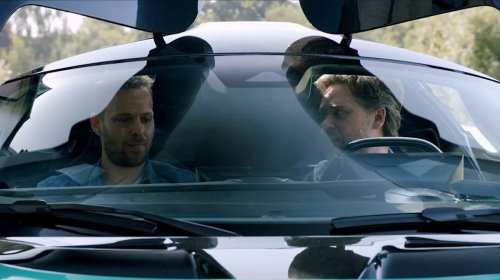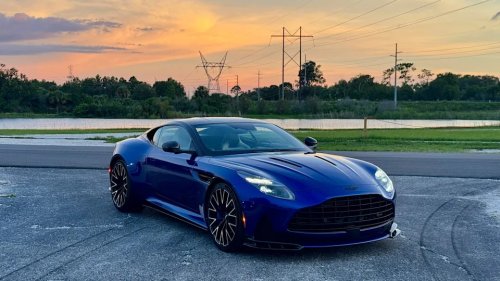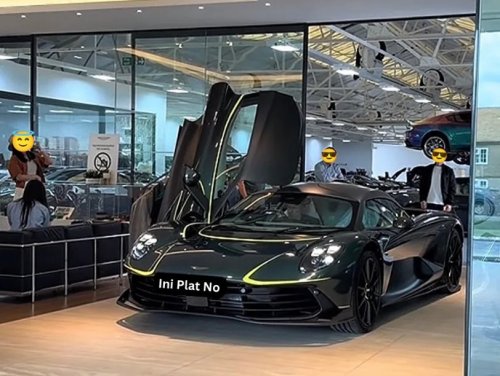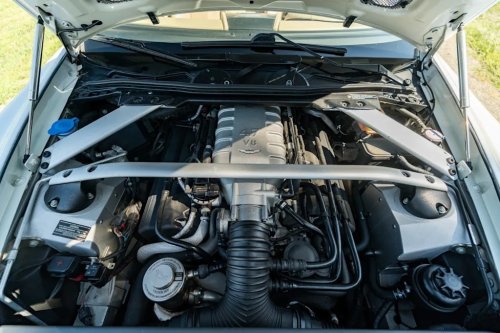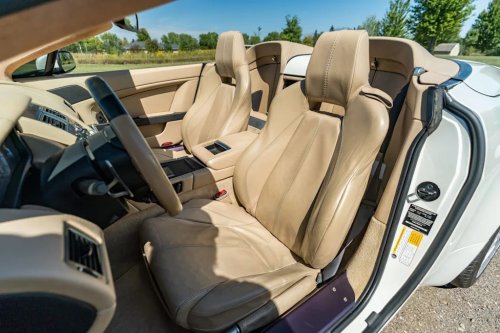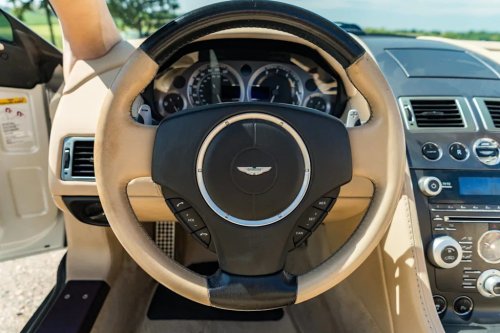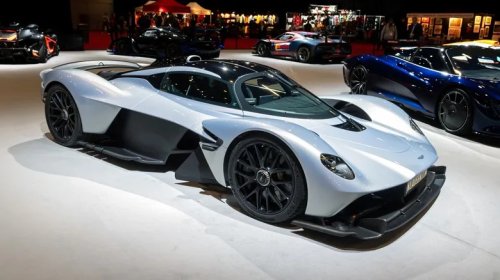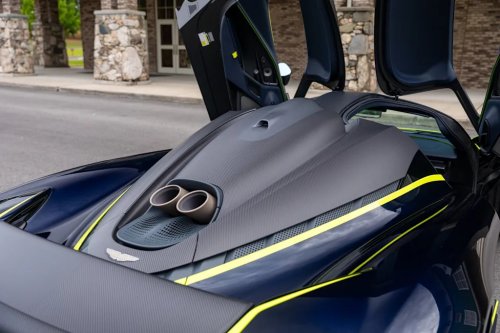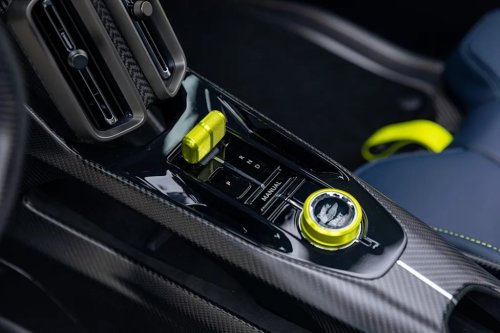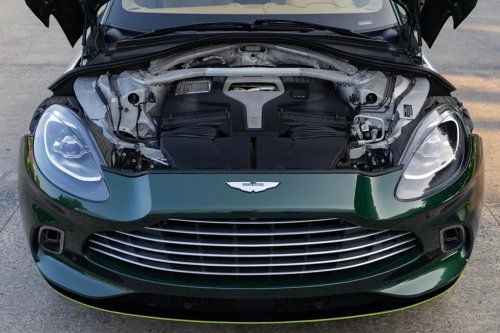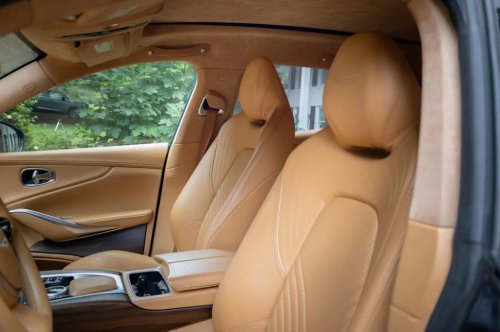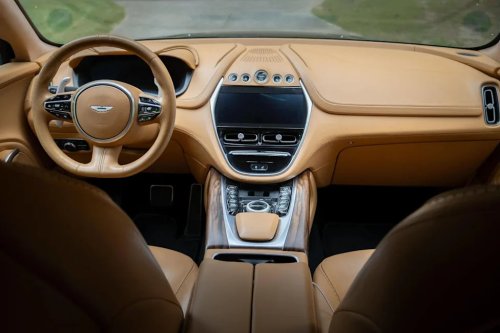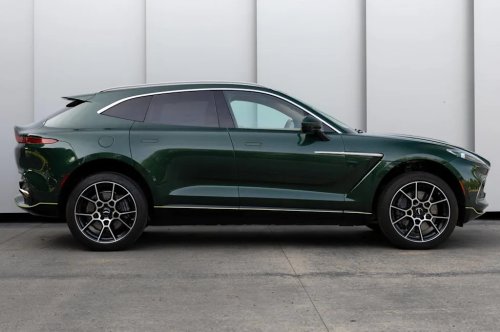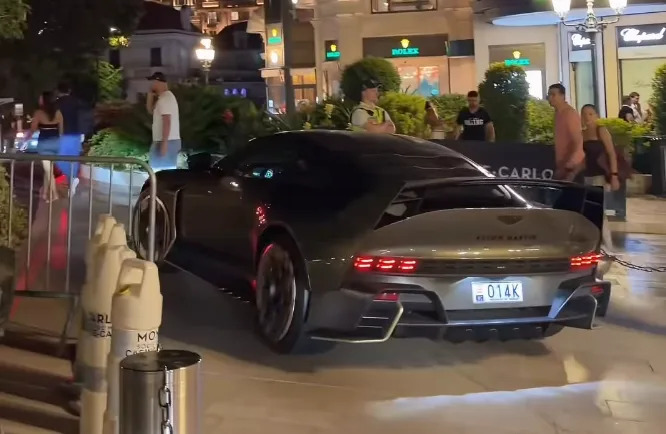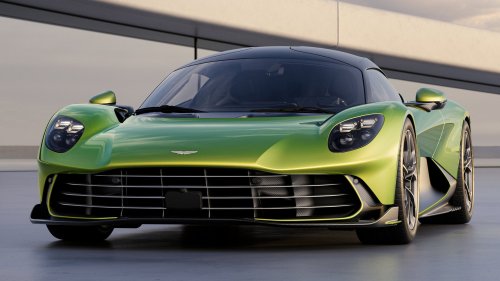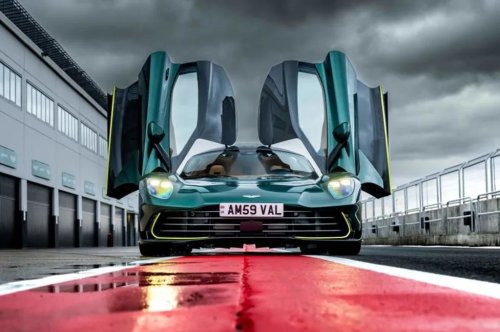
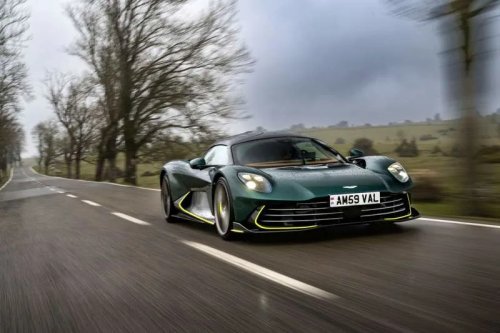
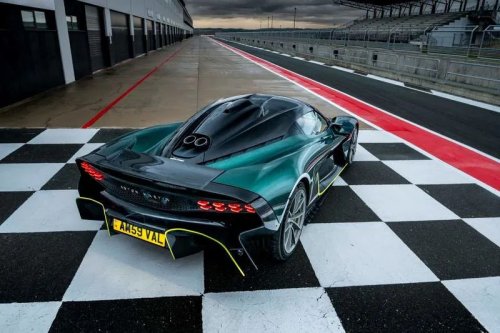
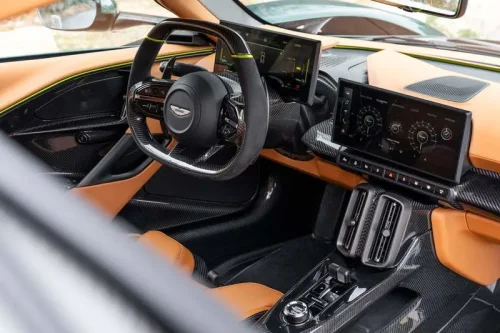
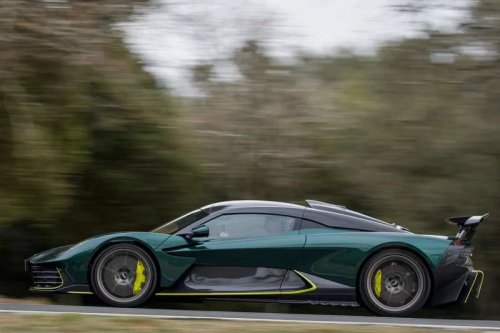
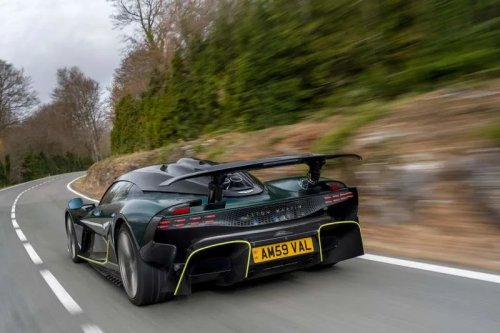



















It's a joy to drive but wickedly expensive. Aston Martin's new Valhalla supercar does not need any links with this brand's loyal driver James Bond to make it feel like a high-tech ride ready for high-speed chases. Andy Morgan/Aston Martin/dpa-tmnSupercar manufacturer Aston Martin is getting serious about its future and in order to do so it is breaking with an illustrious engineering past.With the Valhalla, the British manufacturer is not only launching its first plug-in hybrid supercar, but also its first production model with a mid-engine layout.After an agonisingly long six years in the making, dragged out by the pandemic and funding shortages, the two-seater has emerged, limited to 999 units and priced at just under a million euros.AdvertisementAdvertisementIt is finally gleaming in dealership windows and propelling the brand into a new league.For the first time in a long while, this Aston Martin does not immediately bring Mr Bond to mind. Instead, the car is so impressive in terms of design and even more so on paper that it’s a star in its own right.This two-seater with the heavenly name is powered by an uncannily powerful engine unlike anything Aston Martin has ever produced before.The 4.0-litre V8 from German supplier AMG remains at the heart of the car. However, for the first time, it is not positioned at the front but behind the occupants, and has been significantly tuned by the British manufacturer. The biturbo now delivers 728 hp (535 kW) on its own, which in itself justifies the coveted supercar label.AdvertisementAdvertisementAdded to this are three electric motors – two on the front axle and one in the dual-clutch transmission. Together, this delivers a system output of 1,079 hp (793 kW), around 1,100 Newton metres of torque, and membership of the unofficial club of so-called hypercars.With this configuration, the Valhalla is not only set to become the brand's most powerful production model below the extremely limited-edition Valkyrie (essentially an F1 racing car with road-legal status).It also marks a technological turning point, since alongside the hybrid powertrain, Aston Martin is introducing several new features for the first time: dual-clutch transmission, an electric front axle, active aerodynamics in the front end for the first time and even a small plug-in battery. The latter allows for at least short journeys in pure electric mode – even if the range of around 12 kilometres is hardly significant in everyday use.What matters more is the electric power during driving. This is because the permanent magnet motors are designed less for fuel economy than for performance. They provide additional traction, lightning-fast torque distribution and a fine-tuning of the driving dynamics that would be virtually impossible to achieve using purely mechanical means.AdvertisementAdvertisementThis is particularly evident on the racetrack. There, the Valhalla transforms from an elegant supercar into an uncompromising cornering machine. When the hidden flaps at the front and the large wing at the rear generate up to 600 kilograms of downforce at high speed and the Michelin tyres stick to the track as if glued, it carves through the bends as if there were no tomorrow.With a 0–100 km/h sprint time of 2.5 seconds, you’re practically on a collision course with the horizon, and the electric front axle steers the car effortlessly even through tight bends, whilst regenerative braking recharges the battery after just a few hard braking manoeuvres.The result is a driving experience characterised less by traditional physical limits and more by an almost continuous thrust. Lap after lap, confidence grows, whilst the technology works tirelessly in the background.But the Valhalla has another side to it. Off the track, it proves far more approachable than the raw figures might suggest. Despite its enormous power, it accelerates not with brute force but with confident composure. The power delivery feels almost effortless, gear changes are imperceptible, and the suspension is well-mannered too.AdvertisementAdvertisementWhereas the kerbs on the racetrack feel like cobblestones, on country roads it glides over bumps with a pleasantly relaxed ease. You can loosen your grip on the small steering wheel a little and let your mind wander for a second. At least, as long as you’re not in the left-hand lane and trying to reach the 350 km/h top speed.Despite all the excitement, there is no provision for luggage in this car but then it is not a grand tourer. It's worth noting though that even the Ferrari Testarossa and Lamborghini Revuelto have a frunk.As a result, the Aston feels less like an uncompromising racing car constrained by road traffic regulations – and more like a tower of power with enormous reserves at its disposal.This sets it apart from many of its competitors, who tend to make a bigger show of their performance. And it also sets it apart from its own legendary status: whereas others often rely on theatrics, the Valhalla remains, surprisingly, true to itself.AdvertisementAdvertisementThat is precisely where its unique role lies. Compared to Italian rivals such as Ferrari or Lamborghini, the Valhalla comes across as more refined and less challenging to drive, without losing any of its edge on the racetrack.And in the car park, it isn't quite as provocative or embarrassing as the Italian top dog cars.At the same time, it moves closer to the radical Valkyrie from the same stable, yet remains significantly more suitable for everyday use and also a little more affordable.Although, with a base price of €979,965 and enough options to double that figure, "affordable" is probably the wrong word to describe it.AdvertisementAdvertisementNormally, James Bond is seen behind the wheel of an Aston Martin. And there’s hardly a model that doesn't immediately bring to mind tuxedos, martinis and car chases.Yet with the Valhalla, of all cars, it’s different. The break with tradition is too radical, the technological leap too great, and its own personality too dominant. The brand’s first mid-engine hybrid no longer needs a myth to shine.And there's the rub. Precisely because the Valhalla breaks away from the old narrative, it is that very narrative that springs to mind in the end. Not because it is reminiscent of Bond – but because it shows that Aston Martin can stand on its own even without this icon.Specifications: Aston Martin ValhallaAn uncompromising racing car constrained by road traffic regulations? No, this Aston Martin feels more like a Gran Turismo with enormous reserves of power. Andy Morgan/Aston Martin/dpaBehind the passengers, at the rear of the Valhalla, lies a 4.0-litre V8 engine from AMG producing 535 kW/728 hp. This is complemented by three electric motors, resulting in a combined output of 1,079 hp. Andy Morgan/Aston Martin/dpaAgent with a hypercar: In the Valhalla cockpit, you can feel like 007. Max Earey/Aston Martin/dpaThe electric motors deliver exceptional performance on the road, providing additional traction, lightning-fast torque distribution and fine-tuning of the driving dynamics – something that would be virtually impossible to achieve using purely mechanical means. Max Earey/Aston Martin/dpaAdvertisementAdvertisementTogether with the hidden flaps in the nose, the large wing at the tail generates up to 600 kilograms of downforce at high speeds. Max Earey/Aston Martin/dpa