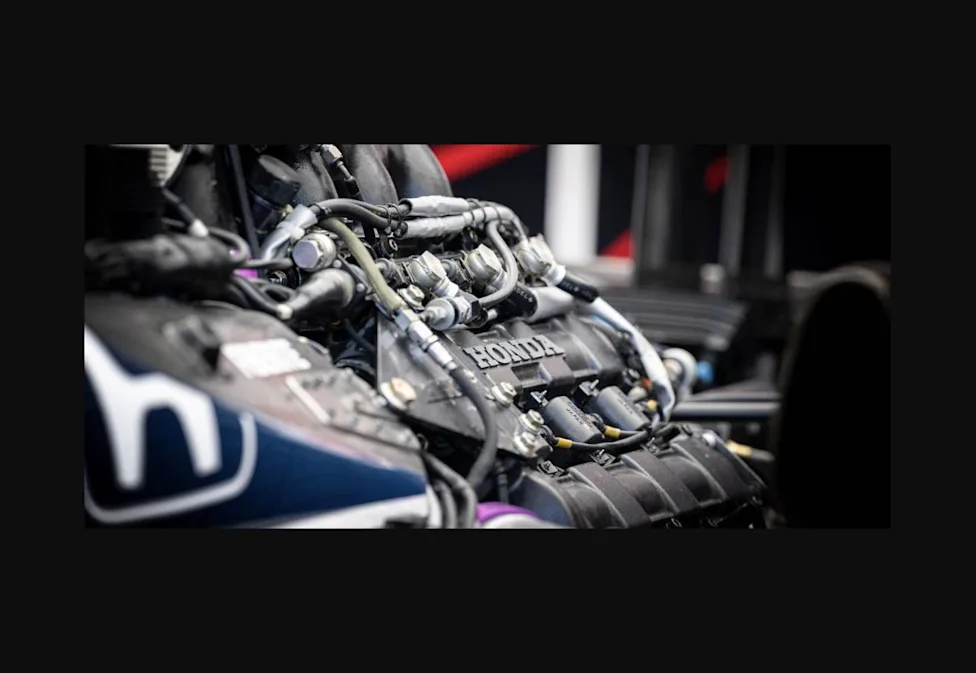
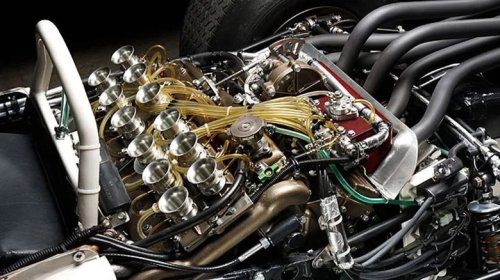
Honda's First F1 Championship Car Is Climbing Goodwood Hill Again, 40 Years LaterForty years ago, Honda's turbocharged V6 was busy rewriting the rulebook on what a Formula 1 engine could get away with, and this July it's headed back up an English hillside to make the same point again. Honda has confirmed it's running the Williams FW11 — the car that delivered the company's first FIA Formula One World Championship Constructors' title in 1986 — at the 2026 Goodwood Festival of Speed, with 1996 World Champion Damon Hill sharing driving duties alongside Japanese racer Ryo Michigami.Goodwood built this year's event around the theme "The Rivals – Epic Racing Duels," and Honda didn't need to reach far for material. While the current grid slugs it out over the 2026 championship, Honda's marketing team is looking backward at five decades of feuds across F1, MotoGP and IndyCar — and the FW11 program is where the company's most consequential rivalry story began.The Engine That Ended the ArgumentThe FW11 rode on Honda's 1.5-liter V6 twin-turbo RA166E, an engine built during the wildest regulatory window in F1 history — the mid-1980s stretch before the FIA started strangling turbo boost with fuel limits and boost caps that eventually killed the format outright by 1989. In 1986 there was still no leash on the RA166E, and Honda used that freedom to go 9-for-16 in Grands Prix that season, clinching the Constructors' Championship and kicking off what's still remembered as the company's golden era in F1.AdvertisementAdvertisementJust how much power these engines actually produced in full qualifying trim is still argued about in paddocks and forums decades later, since manufacturers never published honest numbers and boost knobs got turned well past anything a durability run could survive. We've dug into that arms race before — a 950-horsepower Ferrari V6 from the same turbo era recently surfaced for sale, and even that was reportedly detuned compared to what it saw on a qualifying lap. The RA166E ran in the same company.Same Car, New Driver, Same Old RivalryPairing the FW11 with Damon Hill is a bit of a historical mashup, and it's worth untangling. Hill made his name at Williams in the 1990s and won his World Championship in 1996, but that title came in a Renault-powered FW18, not a Honda. Hill never raced the Honda turbo cars in period — his Williams career began after Honda had already walked away from the team to go supply McLaren. For Goodwood, he's driving as a Williams legend and Honda brand ambassador rather than reliving an old cockpit, which is exactly the kind of pairing a demonstration run allows and a real championship never would.The rivalry angle Honda is leaning into runs deeper than marketing copy, too. The FW11 delivered Honda's Constructors' title in 1986, but Williams lost the drivers' championship that same year in one of the most replayed moments in F1 history: Nigel Mansell's rear tire exploded at speed in the season finale at Adelaide while he was leading the standings, handing the crown to McLaren's Alain Prost and leaving Honda's own engine program watching a rival team celebrate a title its car had been fast enough to win. Beating everyone else on the grid and still losing the championship to your own teammate is the kind of rivalry story Goodwood's theme was practically written for.Why Owners Actually Drive These Things Instead of Parking ThemGoodwood's hillclimb isn't a race in any formal sense — it's a timed run up a narrow, hay-bale-lined driveway with thousands of spectators standing closer to the action than any modern circuit would ever allow. Running a 40-year-old turbo car anywhere near its original pace up that hill is a genuine mechanical risk: period-correct parts are scarce, a rebuild on a turbo F1 engine from this era runs well into six figures before anything even breaks, and insuring a piece of works history to be driven in anger, rather than displayed under rope, takes a specialist policy that most collector-car insurers won't touch. Owners and manufacturers do it anyway because a static museum piece doesn't sell the story the way a screaming twin-turbo V6 does at speed on a public road.AdvertisementAdvertisementGoodwood has a habit of turning its hillclimb into more than a parade lap — we've seen it happen with genuinely strange machinery before, like the fan-powered McMurtry Speirling that used the course to prove its downforce trick actually works. The FW11's run will be a quieter kind of statement: proof that Honda's turbo-era engineering still holds up, four decades and one company museum later.For collectors, the appearance is also a reminder of how rare these cars actually are outside a manufacturer's own hands. Works turbo-era Formula One chassis essentially never reach the private market, and the handful that do rarely come with a running, period-correct power unit, so most enthusiasts will only ever get close to one at an event exactly like this. Honda says the FW11 program is part of a broader run of 40th-anniversary activity through 2026, alongside the electric and hybrid projects, like its frameless WN7 motorcycle, that make up the company's current road-going lineup. Old rivalries, it turns out, are still good for business.