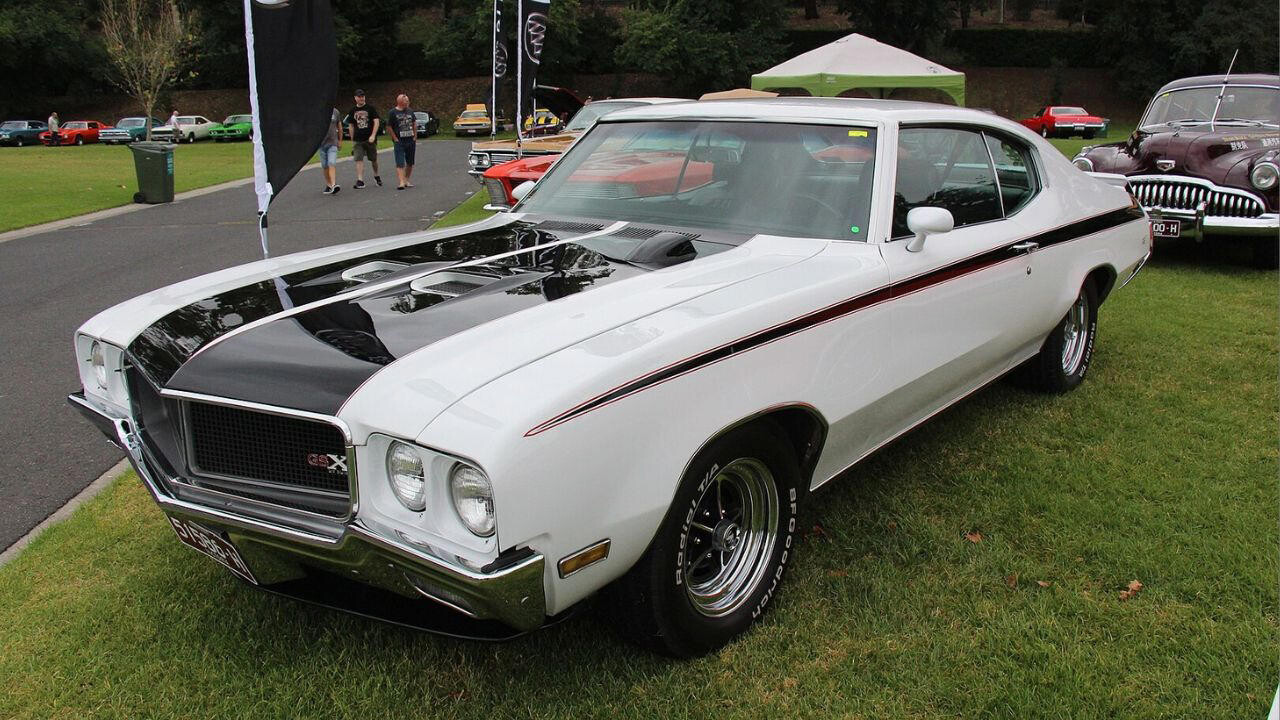
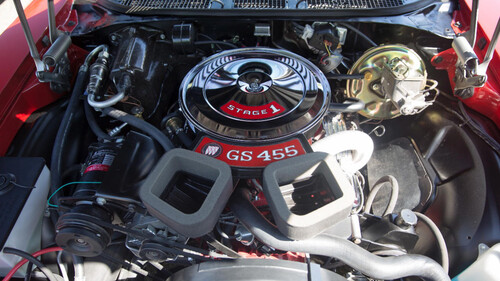
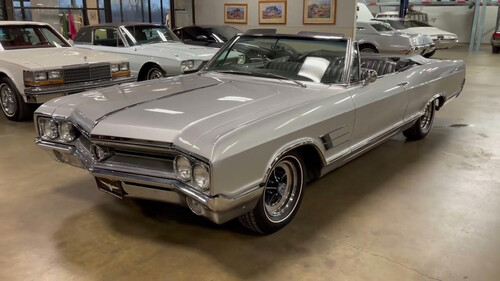
Buick quietly pushed the Skylark GS into the muscle car fightBuick never shouted its way into the muscle car wars. While Detroit rivals plastered wings and stripes on their street brawlers, the division better known for quiet comfort slipped big power and serious hardware into tidy, almost reserved bodies. The Buick Skylark GS became the stealth fighter in that fight, a muscle car that looked like a commuter but hit like a heavyweight. Over just a few years, the Skylark GS line evolved from a rules-bending experiment into some of the most feared stoplight machines of the era. It did it the Buick way, with torque-first engines, subtle styling and a focus on refinement that let owners terrorize drag strips on Saturday, then glide to work on Monday. The Skylark before the storm The Buick Skylark started life far from the drag strip. Early cars leaned heavily on comfort and upscale trim, fitting Buick’s image as a step up from Chevrolet without the flamboyance of some Oldsmobile and Pontiac offerings. The nameplate would eventually span several generations and formats, with later versions like the Seventh Generation Buick targeting younger buyers with front-wheel-drive practicality instead of quarter-mile glory. In the early and mid 1960s, though, the Skylark sat at the center of Buick’s intermediate lineup, a tidy A-body that shared bones with the Chevrolet Chevelle, Oldsmobile Cutlass and Pontiac Tempest. As Pontiac turned its Tempest-based GTO into a sensation, Buick watched from the sidelines, officially constrained by General Motors rules that limited engine displacement in intermediate cars. The Buick Skylark Gran Sport would become the brand’s answer, arriving with a very Buick combination of engineering creativity and corporate rule bending. Skylark Gran Sport Revolution: Buick sneaks into the fight Everything shifted in the middle of the decade. The Skylark Gran Sport began when Buick engineers studied how Pontiac was turning the GTO into a sales and street-racing star. Corporate policy capped intermediate engines at 400 cubic inches, but Buick had a 401 cubic inch V8 in its full-size Wildcat that was simply too tempting to ignore. Jealous of Pontiac’s success with the GTO, Buick pulled that 401 CID V8 out of the Wildcat and dropped it into the A-body Skylark to create the first Gran Sport. The move effectively skirted the internal displacement rule by rounding the 401 down to 400 for official purposes. The result was a car that followed the GTO formula in broad strokes but felt very different in character. Where Pontiac leaned into aggressive marketing and extroverted styling, Buick cloaked its new muscle car in understatement. Contemporary coverage of the Skylark Gran Sport highlights how Buick dodged the GM 400 cubic inch limit and the corporate ban on big engines in intermediate models. The 1965 Skylark lineup suddenly included a sleeper that could run with the era’s best while still wearing the division’s trademark restraint. Period photos show a car that looked more like a well-optioned family coupe than a quarter-mile threat. That dual personality helped the Gran Sport stand apart. The car carried Buick’s brand of smooth power, wrapped in Buick’s trademark refinement, which appealed to buyers who wanted performance without giving up comfort or image. The early Gran Sport did not shout about its capabilities, yet it transformed the Skylark from a nice intermediate into a legitimate muscle car player. From subtle badges to serious intent The first Gran Sports were almost too quiet about their mission. Enthusiasts who study these cars point out that the Gran Sport, also referred to as the Buick Gran Sport, looked much like any regular Skylark. Often it was only a handful of badges and a slightly different stance that signaled the extra power hiding under the hood. By 1966 and 1967, Buick was getting more serious about performance. The GS400 brought bigger power and a more focused setup, even as the exterior still leaned on clean lines rather than wild scoops and spoilers. The 1966 Buick Skylark GS, described in enthusiast accounts as part of Buick Gran Sport story, continued to blend high performance with luxury, reinforcing the division’s refusal to build a stripped-out street racer. Styling followed the same philosophy. Visually, the Skylark GS was defined by sleek lines, subtle chrome accents and specific badging that set it apart from the regular Sky models. There were no cartoonish graphics or towering rear wings. Buyers got a car that looked like a gentleman’s coupe but packed the hardware to embarrass louder rivals. As the late 1960s approached, the broader Skylark range also evolved. The 1968 Buick Skylark brought a fresh new design that highlighted more aggressive proportions. Contemporary descriptions of the 1968 car describe how it growled low and pulled hard, delivering real-world speed with old-school authority and Just raw Buick muscle. The GS versions sat at the sharp end of that lineup, turning the updated body into a more serious performance package. Torque first: how Buick engineered its punch Under the hood, Buick’s approach diverged from many competitors. Instead of chasing high peak horsepower numbers, engineers focused on building big torque at usable engine speeds. Analysis of Buick’s Torque strategy notes that the big-block engines were designed to humiliate rivals with low-end pull rather than headline-grabbing redline figures. Buick engineers went all in on torque, confident that real-world acceleration mattered more than brochure numbers. The Buick GS line showcased that philosophy. The Buick GS proved that performance cars did not need to sacrifice refinement to be genuinely fast, and that while competitors built muscle machines that shouted for attention, Buick created cars that could devastate a stoplight drag then carry their drivers comfortably to work on Monday. That balance is a recurring theme in accounts of The Buick GS and its place in the muscle era. This torque-first mindset set up the Stage 1 performance packages that would arrive at the turn of the decade. Those engines did not always post the highest advertised horsepower, but they made enormous twist that translated into brutal midrange acceleration. On the street, where traction and drivability mattered, that gave Buick an edge that spec sheets could not fully capture. 1969 to 1970: the GSX and a velvet-gloved sledgehammer By 1969, Buick was ready to sharpen the Skylark GS formula even more. The company introduced a high-profile variant that pushed the intermediate platform closer to the limit. Coverage of this period notes that in 1969, Buick introduced enhancements to the Skylark Gran Sport that set the stage for an even more focused model. The GS line was no longer just an option package. It was becoming a distinct performance identity inside Buick’s catalog. The transformation reached its peak with the GSX. The Skylark GS Line of mid-sized Buick coupes was upgraded with large displacement powerplants to create the GSX model cars, and the most extreme versions earned a reputation as some of the quickest American production muscle cars. Period descriptions of the Skylark GS Line GSX models highlight just how far Buick pushed the concept while still holding onto luxury cues. The 1970 Buick Skylark GSX Stage 1 became the definitive expression of this approach. Enthusiast coverage of the car describes how Buick surprised the entire world when it released one of the most enticing and complete street performance packages of the era. The Buick Skylark GSX 1 combined massive torque, a carefully tuned suspension and upgraded brakes in a package that could still pass as a well-appointed Buick coupe. Numbers tell part of the story. The 1970 GSX Stage 1’s 455 cubic inch V8 was factory rated at 360 horsepower and a staggering 510 lb-ft of torque. Video segments that spotlight the car describe how its 455 cubic inch V8 pushing a factory-rated 360 horsepower and a monstrous 510 lb-ft of torque quietly dethroned some of the most feared engines of the era. One widely shared clip refers to how it quietly dethroned the HEMI on the street, underscoring just how potent that combination was in real-world conditions, as seen in coverage linked through Dec. Other detailed looks at the GSX Stage 1 suggest that the official ratings were conservative. One museum description of a 1971 example notes that the 360 horsepower and 510 lb. ft of torque claimed by the builder were widely believed to be underrated, with some estimates putting actual output well over 400 horsepower. That assessment appears in material about the 1971 Buick GSX 1 coupe, reinforcing the idea that Buick’s torque monsters were more dangerous than their window stickers suggested. On the street, the GSX behaved like what one commentator called a velvet-gloved sledgehammer. It could be driven gently, with the quiet composure expected of a Buick, yet a deep stab of the throttle turned it into a ferocious sprinter. Another analysis of the GSX notes that it was a factory freak designed specifically for the stoplight-to-stoplight reality of suburban streets, and that while the Cor rivals leaned on high revs, the Buick used its immense torque to overcome its roughly 3,800 pound curb weight, as described in coverage of the GSX. Street reputation: the most dangerous car nobody noticed Buick’s quiet approach shaped how the Skylark GS was perceived in its own time. One retrospective on the brand’s performance cars opens with the observation that buick was never the one yelling for attention back when Detroit’s muscle car factories were slapping on stripes and bolting giant wings to their latest creations. Instead, Buick quietly built some of America’s most dangerous stoplight terrors, as seen in a video essay on Dec and the broader muscle era. That stealth factor became part of the legend. An enthusiast piece that calls one Stage 1 Buick the car that terrified muscle rivals describes it as the most dangerous muscle car that nobody took seriously. While Chevrolet, Ford Motor Company and Chrysler were fighting public battles for bragging rights, Buick slipped into the background with cars that looked almost anonymous in traffic yet could humiliate the loudest competitors, a theme captured in commentary that begins with the line While Chevrolet, Ford Motor Company and Chrysler fought in the spotlight. Street stories from Woodward Avenue and similar strips reinforce that image. One modern video vignette sets the scene in 1970 on Woodward Avenue on a Saturday night, with a plain brown Buick Skyllark sitting at a stoplight, no stripes and no spoiler, hiding a Stage 1 engine that could flatten expectations. The clip, linked through coverage of Mar, emphasizes how Buick’s restraint in styling made these cars more effective sleepers. Even later GS models, like the 1972 Buick GS (Gran Sport), kept that dual nature. Descriptions of the 1972 car call it a refined muscle car that balanced brute strength with Buick luxury, with a bold grille and sculpted bodywork that still stopped short of the wildest designs of the period. Enthusiast posts that spotlight the Buick GS from that year underline how the Gran Sport badge continued to signal performance wrapped in comfort. Luxury, longevity and the GS legacy What ultimately distinguishes the Skylark GS story is how consistently it fused muscle car performance with luxury. Accounts that look back at the Buick Skylark Gran Sport emphasize that the car evolved more dramatically than most muscle nameplates, starting as a mild intermediate and becoming a sophisticated high-performance machine. Coverage that revisits the Buick Skylark Gran performance history notes that the Skylark name carried this dual character as Buick adjusted to changing tastes and regulations. The GSX and Stage 1 variants are now the headline grabbers at shows and auctions. Museums that feature cars like the 1971 Buick GSX Stage 1 coupe, highlighted in materials connected to the Discovered collections of the Audrain Auto Museum, treat them as more than just American muscle. They are presented as examples of how a luxury-oriented brand interpreted the performance brief differently from its corporate siblings. That difference also shapes how collectors and enthusiasts remember the Skylark GS line. A 1965 Skylark Gran Sport can still be described as The Forgotten Buick Muscle Car That is Still Affordable Today, a reminder that some of these early cars remain accessible compared with more heavily hyped rivals. Enthusiast communities that share stories of Forgotten Buick Muscle and similar themes often point to the same factors that defined the GS from the beginning: understated looks, big torque and surprisingly refined manners. Modern coverage of muscle car history often groups the Skylark GS with the greats, but always with a caveat. The GSX Stage 1 is frequently cited as a car that could beat a Corvette in the real world, while still offering the ride quality and interior comfort expected from a Buick. The 1967 GS400, the 1968 and 1969 Skylark GS models and the early Gran Sports have all gained new appreciation as enthusiasts look beyond the most obvious nameplates. Even social media series that tour high-profile collections, such as segments where hosts like Lou walk through a restored 1970 Buick GSX 455 V8 at the Muscle Car and Corve show, frame the car as a discovery. They highlight how a brand associated with retirees and quiet sedans once built a machine that could dominate any Saturday night cruise, as seen in coverage linked through Lou and his My Car Story episodes. In that context, Buick’s decision to quietly push the Skylark GS into the muscle car fight looks less like an anomaly and more like a logical extension of its values. The division never abandoned comfort or decorum. Instead, it weaponized them, creating cars that looked respectable, rode smoothly and then, with a twist of the throttle, revealed torque-rich engines that could humble the loudest rivals. The result is a legacy that still feels slightly secret, a family of muscle cars that did not need stripes or shouting to earn respect. More from Fast Lane Only Unboxing the WWII Jeep in a Crate 15 rare Chevys collectors are quietly buying 10 underrated V8s still worth hunting down Police notice this before you even roll window down