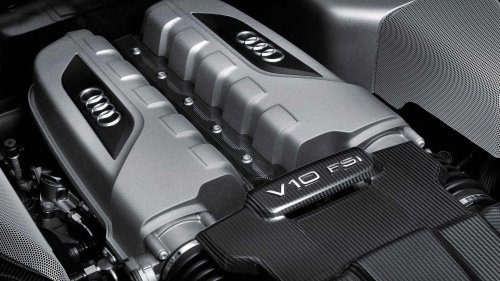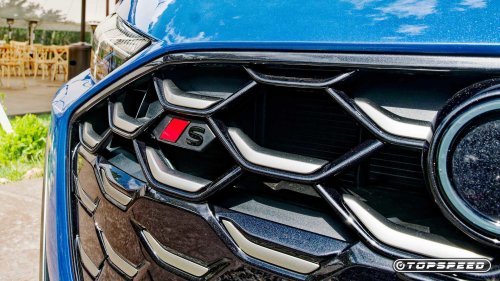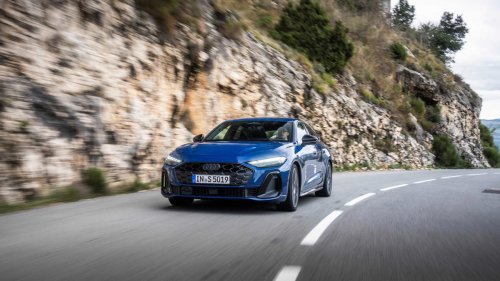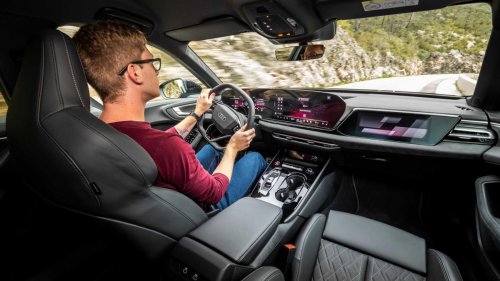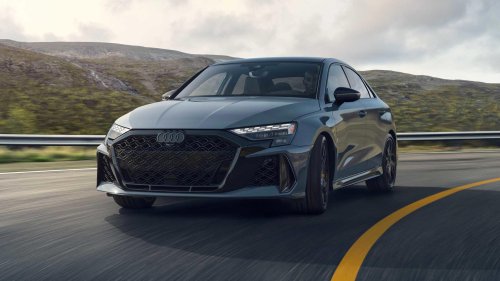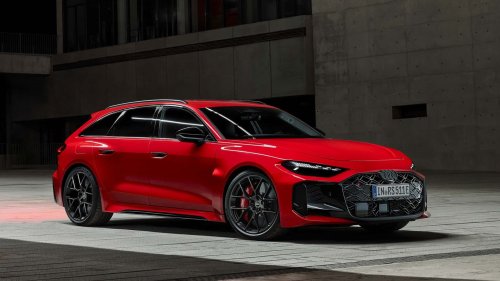
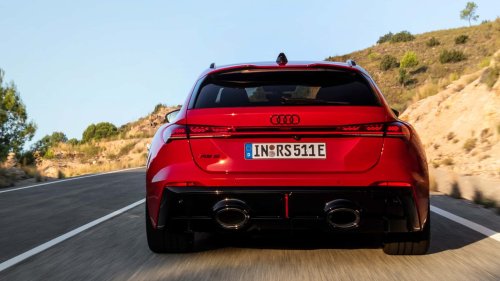
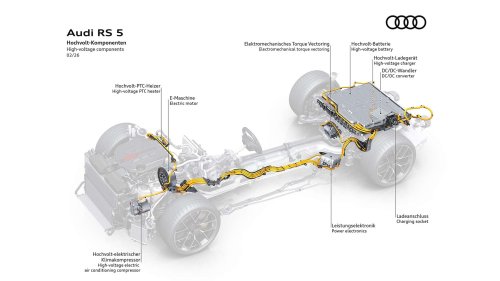
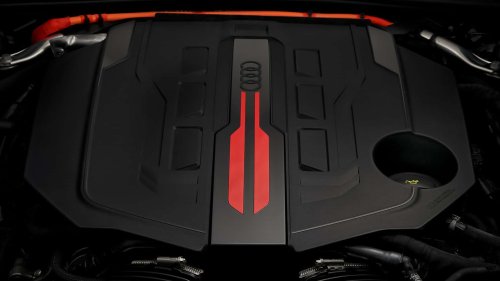
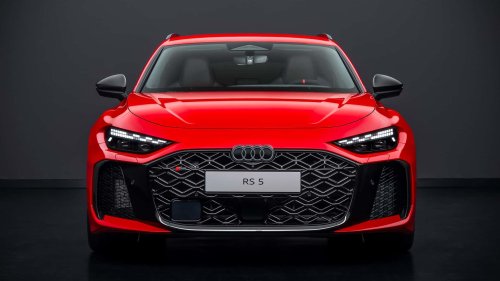
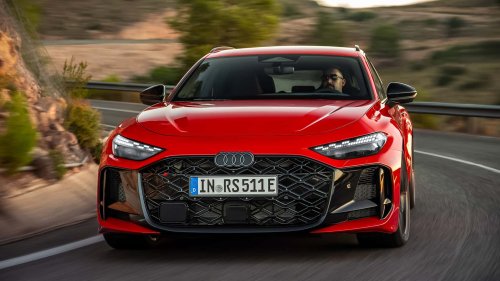
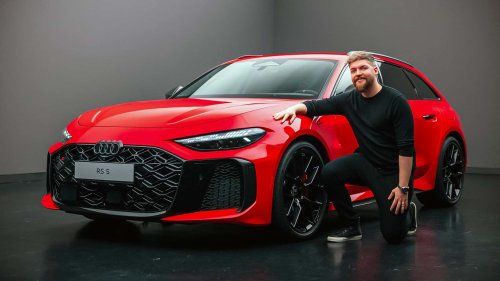
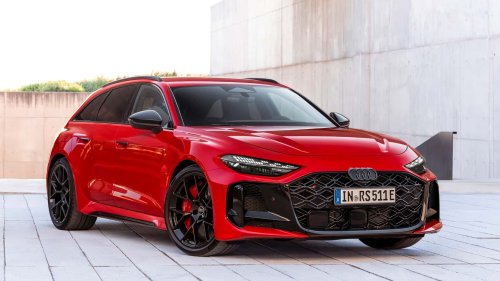
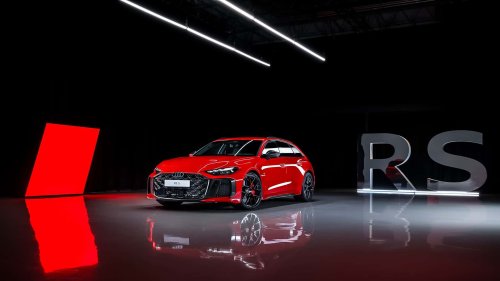
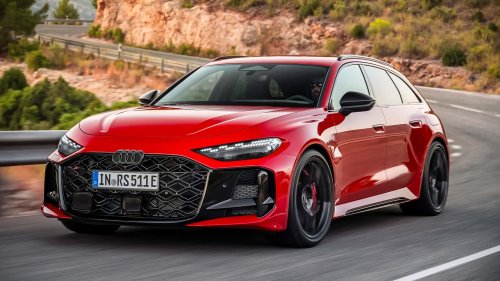
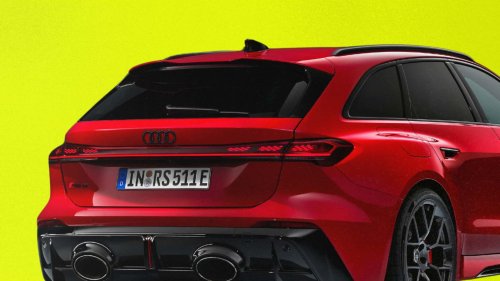



















When the Audi RS5 Avant debuted last week, one key figure from the technical specifications sheet immediately stood out. Not the horsepower, not the torque, or even the performance stats—but the weight. Ingolstadt's super wagon apparently went on a McDonald’s diet, adding a massive 1,378 pounds (625 kilograms) from one generation to the next. For reference, the weight penalty compared to the old RS4 Avant is nearly the equivalent of an entire car: the Audi 50, aka Germany’s first supermini. It’s hard to fathom a car in the Audi A4’s class weighing 5,225 pounds (2,370 kg), but that’s how the cookie crumbles with plug-in hybrids. The fast estate from Audi Sport is the sub-brand’s first PHEV, sparking the same controversy the BMW M5 did a couple of years ago when it paired a gas engine with an electric motor. The reality of 2026, though, is that PHEVs in the performance segment are born out of necessity. We imagine it would’ve been far easier for carmakers to keep refining their gas-only powertrains if not for increasingly tough emissions regulations. To please the EU, cars such as the new RS5 must embrace electrification to survive, especially if the companies building them want to keep all cylinders intact. 2026 Audi RS5 Avant Stricter Emissions Standards Are Inevitable Even though the EU’s plan to outlaw sales of new combustion-engine cars by 2035 is no longer moving forward in its original form, automakers still face immense hurdles to comply with tighter rules. By the middle of the next decade, CO2 levels will have to drop by 90 percent compared to 2021 levels. In the meantime, Audi and its peers must slash emissions by at least 55 percent by 2030. Even before those thresholds come into effect, Euro 7 is looming. Likely the final standard before purely electric vehicles are mandated later this century on the continent, the emissions regulation will apply to vehicles from November 2026. Although the Euro 6 limits will largely carry over, compliance will become significantly more difficult. BMW is already detuning the twin-turbo 4.4-liter V8 in the M5 and XM sold in Europe to comply. The new standard calls for an updated real driving emissions (RDE) test with expanded on-road testing. New cars will be evaluated across a wider range of conditions to better assess their real-world pollution, rather than relying heavily on lab-based test cycles. Euro 7 will also account for pollution from tires and brakes, adding another layer of complexity for carmakers during development. 2026 Audi RS5 Avant Car Bloat: A Necessary Evil With that in mind, I need to play devil’s advocate and defend Audi for launching such a lardy RS5. Had it opted for a smaller four-cylinder instead of retaining the V6 to limit the weight penalty, customer appeal would’ve taken a massive hit. After all, Mercedes-AMG has struggled with the four-pot C63, culminating in the model’s recent cancellation. Going the plug-in hybrid route does wonders for the new RS5’s "green" credentials. Well, at least on paper. Even though it’s much heavier than the car it replaces, CO2 emissions are estimated to drop to as low as 88 g/km in the combined cycle. For context, the old RS4 Avant emitted two and a half times more, at 219 g/km. As you can imagine, fuel consumption has also improved dramatically over the old gas-only performance wagon. The RS5 Avant is estimated to return up to 60.3 miles per gallon (3.9 liters/100 kilometers), according to Audi. The defunct RS4 could muster only 24.2 mpg (9.7 liters/100 km). Whether RS5 owners will actually match those numbers is another story, since maximum efficiency hinges on keeping the battery charged. The Audi RS5 Avant's Hybrid Setup When the battery is depleted, the car’s overall fuel consumption jumps by nearly two and a half times. Running solely on gasoline, the RS5 Avant returns 24.5 mpg (9.6 liters / 100 km), which is still slightly better than the old, much lighter RS4 Avant. The lithium-ion pack has a net capacity of 22.0 kilowatt-hours and is projected to deliver up to 53.4 miles (86 kilometers) of electric range in city driving. It’s reasonable to expect the future RS6 Avant to follow the same formula by adopting a plug-in hybrid powertrain, albeit with two extra cylinders. An electrified V8 seems like a safe bet, considering a twin-turbo 4.0-liter V8 already works with an electric motor in various Volkswagen Group products from Porsche, Lamborghini, and Bentley. The RS5 Avant's New Twin-Turbo V6 Engine Heavier Than Its Bigger Brother In the meantime, we’re living in a strange timeline. The RS5 Avant is 595 pounds (270 kg) heavier than the previous-generation RS6 Avant. At the same time, it’s only 231 pounds (105 kg) lighter than the V8-powered M5 wagon, a car from a superior segment. Then again, Audi Sport’s hybrid wagon is now closer in size to the RS6 Avant and M5 Touring than it is to the old RS4, following this new generation’s growth spurt. It’s unreasonable to expect Audi to engineer two separate versions of the same car: a plug-in hybrid for EU markets and a pure V6 for other regions. That would add development costs to an already niche model. It’s hard to imagine German buyers flocking to dealerships to spend €107,850 on a wagon before options. BMW’s M5 Touring is also a global model offered in a single flavor, and we expect the same strategy for the future RS6 Avant. Predictably Heavy At the end of the day, the RS5 Avant’s lofty curb weight shouldn’t come as a surprise. Lest we forget, the Mercedes-AMG C63 Estate is also a porker at 4,887 lbs (2,217 kg). Sure, it carries 337 fewer pounds (153 kg), but it also uses a smaller combustion engine and a tiny 6.1-kWh battery. Could Audi have offset some of the battery’s weight penalty? In theory, yes. A more extensive use of aluminum, sprinkled with carbon fiber, could have partially compensated for the weight gain. However, those upgrades would have directly impacted an already steep asking price, pushing the RS5 even deeper into niche territory. 2026 Audi RS5 Avant Long story short, the plug-in hybrid RS5 is likely the best Audi can do to keep enthusiasts satisfied while sticking with the twin-turbo 2.9-liter V6 amid an avalanche of stricter regulations. The gas engine isn’t quite the one you remember, as it now runs a revised Miller cycle, closing the intake valves earlier for improved efficiency. Under high loads, the six-cylinder is up to 20 percent more economical. Additional tweaks have boosted output by 59 hp, bringing total power to 503 hp. The Four Rings have already made it clear that Euro 7 will soon claim a victim among the company’s engines: the iconic inline-five. Audi has explained it could upgrade the turbocharged 2.5-liter mill to comply, but doing so would be too costly relative to the expected return on investment. In other words, the RS3 doesn’t sell in high enough numbers to justify the financial effort. The five-cylinder is likely to bow out next year. We want your opinion! What would you like to see on Motor1.com? Take our 3 minute survey. - The Motor1.com Team