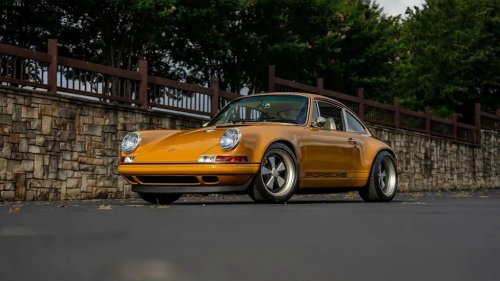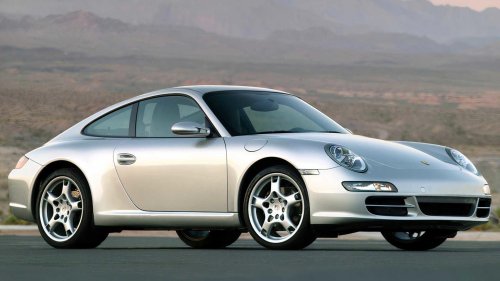
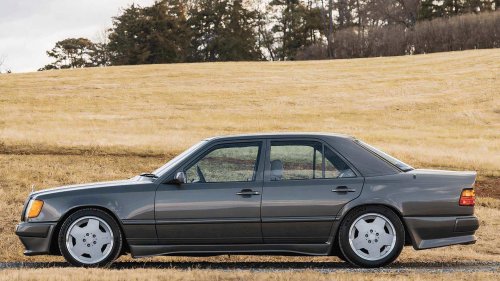
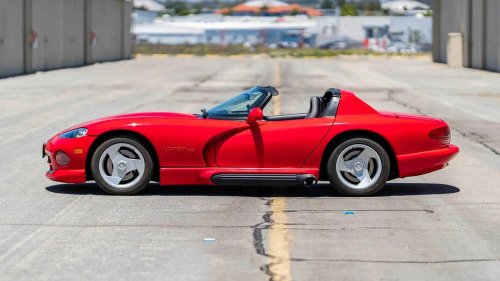
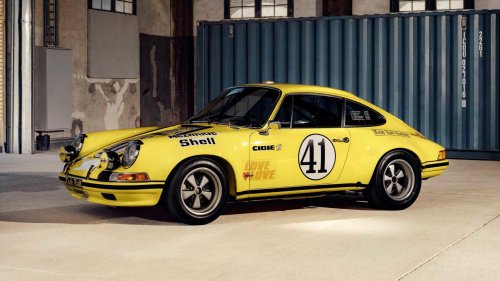
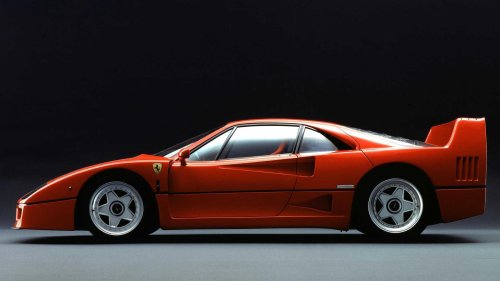
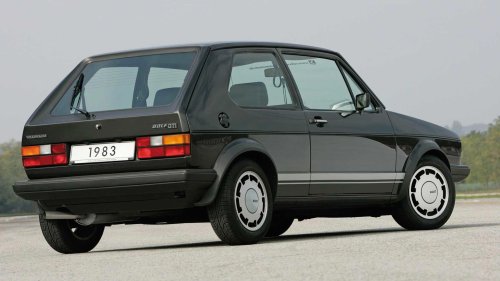
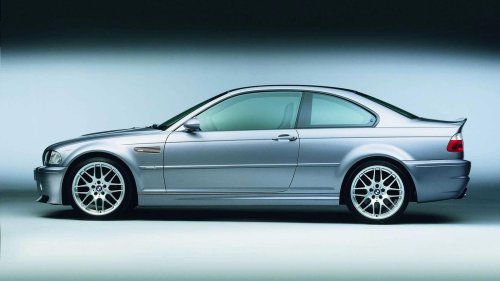
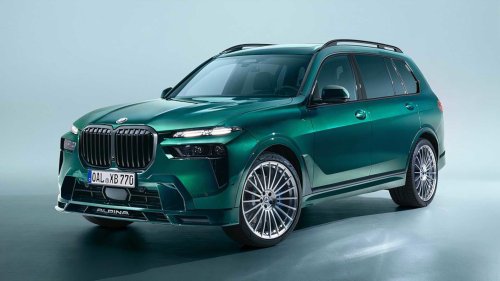
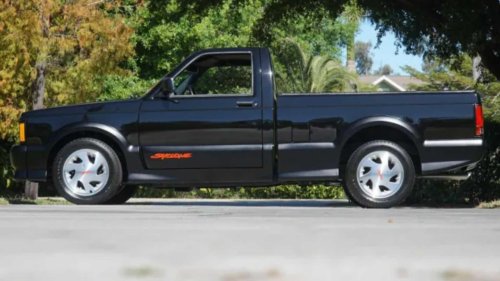


















A good set of wheels can make or break a car's design. While it's the silhouette, color and personality of the car that can be the defining aspect of a car's appeal, like the flowing shape of a Porsche 911, it's the wheels that tie it all together. We know that most enthusiasts who modify their cars end up replacing the wheels, but what if the standard wheels are simply too iconic to get rid of?We've chosen our favorite wheel designs that have become synonymous with the cars they're fitted onto. Whether it's because of their longevity, uniqueness, or their simplicity, sometimes the OEMs do it better than you'd think. Have we missed any of your favorites? Let us know in the comments. 2005 Porsche 911 (997) Lobster Forks 2005 Porsche 911 CarreraCommonly referred to as either Lobster Forks or Lobster Claws, these five-spoke wheels with split ends are famous for looking like the piece of cutlery with which you'd eat a lobster. They were a famous part of the 997.1-generation's design and sold as standard on the Carrera S models at the time. The Carrera S came with a 3.8L flat-six engine producing 355 horsepower.Sitting at 19 inches, these wheels could shelter the uprated braking system with four-piston calipers and larger cross-drilled vented discs. The rear tires on the Carrera S were also bigger at a 305/30 ZR 19 rating, which helped contain the power. While they may have been the butt of the joke when they were launched, these wheels have commanded a loyal following with many fourth-generation Volkswagen Golf owners swapping them into their builds. 1986 AMG Hammer Mercedes-Benz/AMG Monoblocks 1987 AMG Hammer sedan sideKnown as the most brutal sedan of the 80s, the AMG Hammer lives up to its name. While Mercedes had been fettling with its own cars to produce more power and increase driving dynamics, it took AMG (who were separate from Mercedes-Benz at the time) to realize the potential of the platform. It also introduced one of the most famous wheel designs in history.Paired with the angular lines of the Bruno Sacco-period of Stuttgart design, the Monoblock wheels perfectly complement the brutish nature of this sedan. With modern wheel designs getting ever more complicated, it's the Monoblocks that are making a comeback. Unlike multi-piece wheels of the era, these were built from only a single piece of aluminum and contributed to the aero-efficiency of classic AMG cars. 1991 Dodge Viper Three-Spoke Design 1993 Dodge Viper RT10 sideDesign was at the forefront of the Dodge Viper, as the project started through a conversation between Chrysler CEO Tom Lutz and Tom Gale, the company's head of design. They wanted to create a car unlike any other, so a massive eight-liter V10 made 400 hp with little to no driver aids to back you up.Three-spoke wheels are difficult to pull off, but whenever a manufacturer opts for them, they're usually iconic. The Viper's concept forefather was unveiled at the 1989 Detroit Auto Show featuring three-spoke alloys, and, wanting to stay as true as possible to that original look, the wheels were kept for the production model. These wheels remained on all first-generation Vipers but were abandoned in the 1996 second-generation model. 1966 Porsche 911 S Fuchs Wheel 1972 Porsche 911 2.5 S:T Front QuarterPorsche and Fuchs wheels go together like ham and cheese, and they're the default choice for anyone looking at older 911 models. The story with these iconic rims starts in the most Porsche way possible. Just a few years after the release of what would become the most famous sports car of all time, the Stuttgart team were developing a faster and lighter model called the 911 S, and no stone was left unturned in development.To aid performance and driving characteristics, Porsche wanted to lower the unsprung mass at each corner by three kilograms, so they called on German wheel manufacturer Fuchs to develop a lighter wheel that could be made out of a single piece of aluminum. The design, which was thought of by Heinrich Klie, would be an option from 1966 until 1989 on almost all Porsche models. 1988 Ferrari F40 Speedline Split-Rim 1987 Ferrari F40 sideThese 17-inch Speedline rims are almost as recognizable as the Ferrari F40 itself. The five-spoke split rim design is deliciously simple by modern standards, and at eight inches wide at the front and 13 inches wide at the rear, they help contain the twin-turbo V8 engine's 478 hp. They feature a center-lock design.Known as one of the greatest supercars of all time, it was the final car commissioned by Enzo Ferrari himself to represent 40 years of his company. The F40 LM, the most famous race version of the F40, used strong 18-inch BBS wheels, but it was these Speedlines that are celebrated today. 1978 BMW M1 Campagnolo Wheels 1979 BMW M1 sideThe Bavarian manufacturer we know and love has made some incredible wheel designs over the years, but it's the iconic BMW M1's that might be the most recognizable. Built to be a sports car and racecar, the wheels lean into aerodynamics and complement the vents on the buttresses which help cool the specially made 3.5L straight-six engine.A true testament to the wedge supercar era, the M1 was styled by Giorgetto Guigiaro and its chassis was developed by Dallara. The wheels are also made by an iconic Italian brand called Campagnolo, which is known for racing parts. Just 453 examples of this car were produced, making wheels an extremely rare and expensive find. 1983 Volkswagen Golf GTI Pirelli Edition P-Slot Wheels Black 1983 VW Golf GTI rearThe ultimate blue collar performance car started out with a bang in the late 70s, and it's still revered by drivers as an engaging driving machine. Weighing just 1,895 lbs, the four-cylinder could ring out all 112 horses for an eight-second 0–60 mph time. While the base alloys are already legendary, there's a certain special edition that came out in 1983 that has the most famous wheels.Volkswagen teamed up with Pirelli to create the "Pirelli Edition" that featured iconic "P-slots" on all four corners. The result of this collaboration is a relatively simple alloy design that mimics the Pirelli logo and features only a single "Pirelli" badge offset in the center. This brand deal was tastefully done – and it paid off. 2003 BMW M3 CSL BMW Style 163 Wheels 2003 BMW M3 CSL sideKnown as one of the great M cars of all time, the BMW E46 M3 CSL has wheels that complement it beautifully. These Y-spoke wheels are known as "Style 163" and while they debuted in 2003 exclusively on the M3 CSL, they became an option for the regular M3 coupe from 2005. These BBS wheels are also forged to increase rigidity and lower unsprung mass.Every part of the CSL was fettled for more performance, and there's a wider front track and suspension for more driving feel. The brakes were also uprated for a stopping distance of just over 100 feet from 60 mph, which is impressive even today. The Michelin Pilot Sport tires the 163s use were specially designed for this car. 2026 BMW Alpina XB7 Alpina 20-Spoke Alloys 2025 BMW Alpina XB7 ManufakturThe Alpina XB7 is proof that good wheels stand the test of time. While BMW may have just bought the legendary tuning house and its future is slightly uncertain, what we do know is that the 20-spoke alloys featured here are iconic and here to stay. They're slightly redesigned for the future, but the ethos is still there.This design, paired with the pinstripes and Alpina scripture on the front bumper, has been a staple of the company for decades and makes Alpina-branded cars instantly recognizable from BMWs. A key feature of these wheels is the hidden valve stem behind the lockable center cap. 1991 GMC Syclone Syclone Turbo-Fan Wheels 1991 GMC Syclone sideThe famous pick-up truck that could destroy supercars of the time has the wheels to match. These six-spoke wheels look like they're going quickly at a standstill thanks to a turbo-fan design that measures in at 16 inches. The all-wheel-drive transfer case in the Syclone can put 65% of power to the rear wheels, making it a fun truck to drive when paired with the 280-hp V6 engine.Only 2,998 Syclones were ever built, making them an incredibly rare find. You could also have them in any color as long as it was black with red accents, making this truck instantly recognizable. Four-wheel disc brakes helped it brake to a stop from 70 mph faster than a Ferrari 348 after beating it at the quarter mile.Sources: BMWBlog, Porsche, Class & Sports Car, BMW, Ferrari