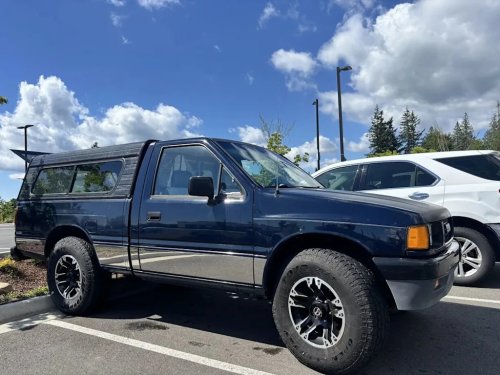
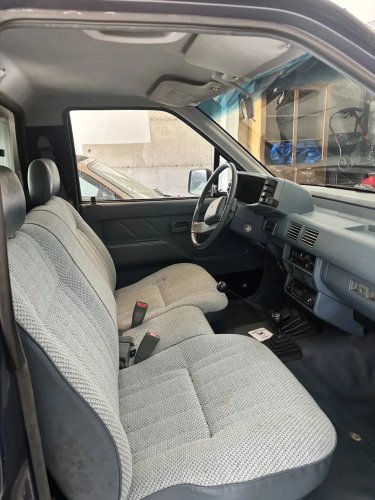
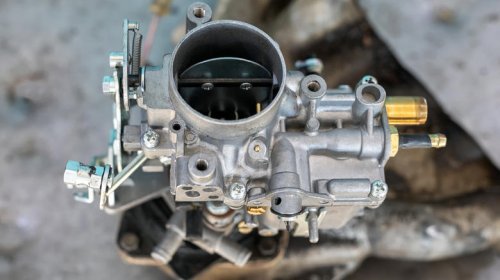
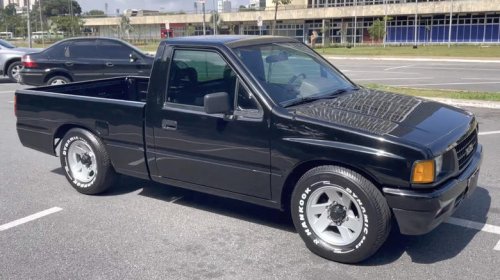
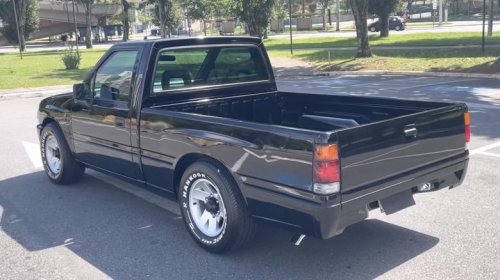
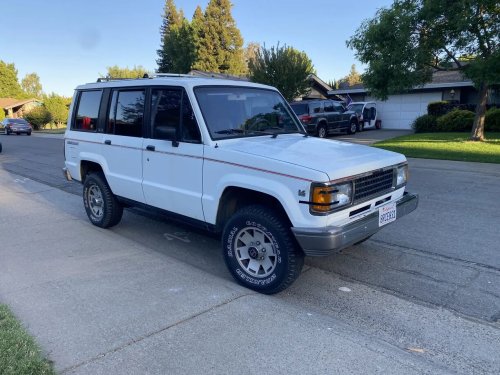
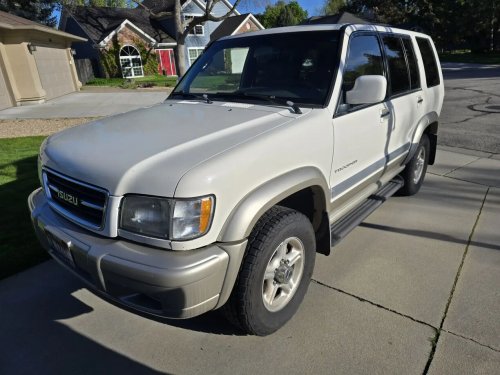
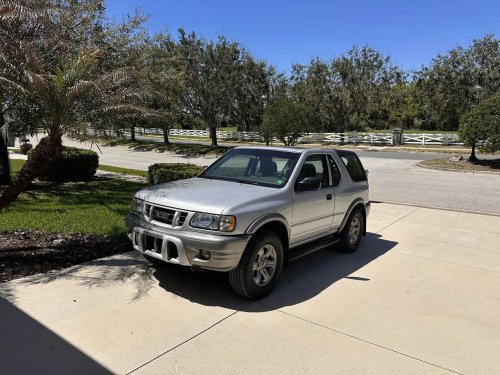
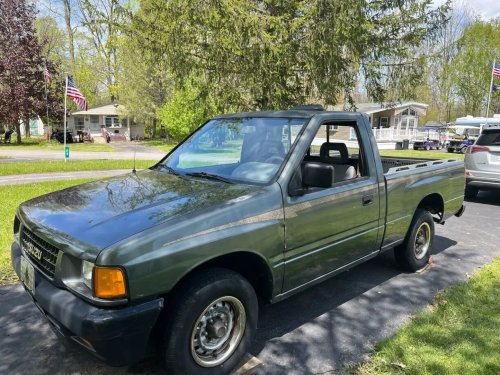
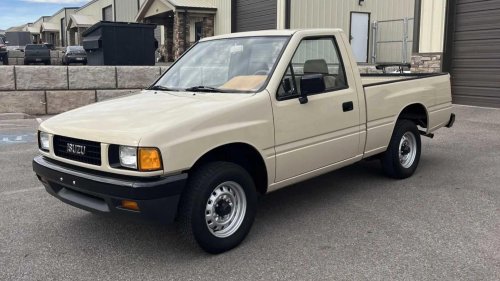
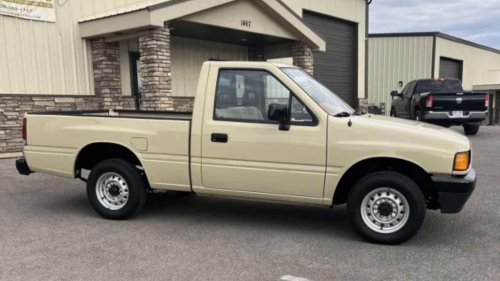
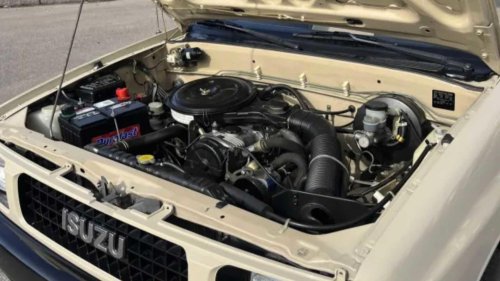
Before gas prices spiraled out of control and people started to frantically worry about the planet, vehicle fuel delivery systems were quite rudimentary. For almost a century, the simple carburetor would sit on top of an engine and decide how much fuel the vehicle would get using air flow, springs, and simple parts.For decades across America, the carburetor just worked and helped power everything from contractor pick-ups to big-block muscle cars, right until the early 90s, when everything changed. Now, gas prices were rising, emissions rules were tightening and designers started to lean heavily on fuel injection systems instead.On-board diagnostics also entered the picture and very quickly carburetors became old-fashioned. Eventually they would disappear altogether and with little fanfare, as one very humble new vehicle became the last carbureted car in the US market.For the purposes of this feature, we used the classic definiton of a car, which is essentially any vehicle used for daily activities. This includes sedans, hatches, SUVs, and small to full-size pickup trucks. We did not consider heavy-duty pickups.This feature was updated to include the upsides of electronic fuel injection. The Last Carbureted Vehicle America Ever Sold Bring a TrailerBy 1994, the carburetor was far too simple, regarded as old technology, and by the late 80s or early 90s, most mainstream brands had ditched the idea in favor of fuel injection. California's Air Resources Board, or CARB, would effectively force manufacturers to design their U.S. market engines around cleaner and electronically controlled fueling.Onboard diagnostics systems were becoming widespread and as we moved into the mid-90s, few manufacturers made any attempt to sell carbureted engines at all. Still, Isuzu held out longer than any other OEM; you could order the Isuzu Pickup – the company's most basic rear-wheel-drive truck – with a 2.3-liter four-cylinder breathing through a two-barrel carburetor through 1994. When Isuzu switched its Pickup over to fuel injection for the 1995 model year, that effectively closed the book on carburetors in the US system. Was It A Good Idea To Move To EFI? A carburetor was easy to manufacture, repair, and provided more performance in the right setup. But electronic fuel injection also has many advantages, including even better performance and power, easier cold starts, automatic adjustments to compensate for wherever your car happens to find itself, and the big ones, less fuel consumption and fewer emissions. Sure, it's fun to tinker with the twin-carb setup on a classic Mini to gain five extra horses, but now that every new car has electronic fuel injection, it's just the new normal. In fact, it's actually quite expensive to go out and buy a carb for a classic car. Was It A Good Idea To Move To EFI? A carburetor was easy to manufacture, repair, and provided more performance in the right setup. But electronic fuel injection also has many advantages, including even better performance and power, easier cold starts, automatic adjustments to compensate for wherever your car happens to find itself, and the big ones, less fuel consumption and fewer emissions. Sure, it's fun to tinker with the twin-carb setup on a classic Mini to gain five extra horses, but now that every new car has electronic fuel injection, it's just the new normal. In fact, it's actually quite expensive to go out and buy a carb for a classic car. A Basic Isuzu Pickup That Outlived An Entire Technology Bring a Trailer Isuzu had been selling small trucks in the US marketplace since the 1970s, both under its own name and by rebadging them for other brands. Its 1994 Pickup epitomized simplicity with its regular cab, rear-wheel drive set-up, five-speed manual, and inline four that still relied on a carb to mix its fuel and air. So, you wouldn't get any fancy intake plumbing, high-pressure fuel rail systems, or precise injectors, but instead you’d get a carb sitting in the airstream and doing what it was supposed to do without any fuss.For fleet buyers and small operators, that kind of setup was quite acceptable, cheap, and proven. Independent mechanics could easily deal with carbureted engines and find parts everywhere. And it was quite straightforward to diagnose a flat spot without having to plug a tool into a diagnostic port. Companies were simply concerned about practicality and cost, and they had no interest in transient fuel control for the sake of it. They just wanted to make sure that their truck would keep on trucking, and if something went wrong, the guy down the street could easily fix it.The simplicity of the carburetor helps to explain why it was able to hang on in some low-spec corners of the market, long after many vehicles had already ported into the digital age. Most new vehicles now featured electronic ignition which tied into emissions controls and OBD systems.But some outliers did remain, even if they were trying to squeak under the required emissions numbers with some difficulty.Isuzu’s Pickup was never going to be historically significant, and it was just another modest four-cylinder from a simple era. It had plenty of adequate torque down low, and the characteristics of a carbureted engine. There'd be a small amount of hesitation just off idle, but the expected surge would arrive as the accelerator pump did its thing. And it ran well enough, without too much attention to efficiency, while quietly helping the world to move on. Subaru’s Justy, Old-School SUVs, And Other Pretenders Bring a Trailer Some enthusiasts suggest that other cars may claim the title of last carbureted vehicle in America, and if you re-frame the question, you can expose some different answers. They might overlook a basic truck like an Isuzu Pickup and point to some late 1980s or early 1990s hatchbacks that seemed to cling on to carbs as long as they could. Subaru’s Justy may come up in conversation, while at the same time others may point to some old-school luxury SUVs like Jeep's SJ Grand Wagoneer that may have kept carbureted engines alive for a little longer than others in that sector.But the answer to a hypothetical trivia question on this subject was always likely to involve a basic and anonymous pickup truck as, after all, carbs have always been famously linked with the most entry-level forms of transportation. They were easy devices for the everyman who could rebuild a carburetor on their kitchen table if they needed to. Emissions Rules And OBD Finally Killed The Carb Honda Isuzu somehow managed to retain the humble carb, despite the regulatory and technological storms that were swirling around it in the early 90s, but the pressure was mounting. The industry was quickly moving towards standardized on-board diagnostics, which would move engine maintenance away from the realm of the average weekend mechanic.Now, manufacturers were building engines that were different and much more technical, especially when it came to their calibration and servicing requirements. And in this type of environment, carburetors were nothing more than blunt instruments.Yes, you could say that they were brilliant pieces of analog engineering, relying as they did on air flow and pressure differences to pull fuel through jets and passages. Their chokes, power valves, and various feedback tricks meant that carburetors could perform across a wide range of scenarios and behave well on cold mornings, at high altitudes, through choking traffic jams, or during hot starts.But fuel injection was another animal altogether. Now you had a system that would use sensors and a controller to match air and fuel with surgical levels of precision. Through one pulse at a time and cylinder by cylinder, sensors and microprocessors came into the picture. And as economic and political pressures came to be, the carburetor was only heading in one direction.Engines now had to perform efficiently over time and not simply be up to a certain specification when new. The vehicle also had to talk to technicians to tell them when something went wrong with new-fangled OBD and OBD-II systems, helping to monitor everything that may affect emissions or efficiency. This was a significant change relative to the status quo, where a mechanic would often have to use their knowledge and intuition to diagnose a carburetor fault. After all, the carb was never going to throw a code if it had a partially clogged jet, and it would just run rich or lean until someone noticed that something was going on.From an ownership point of view, fuel injection had a lot going for it, as cold starts got easier, fuel economy improved and power outputs increased. Now the engine could enjoy an ideal air-to-fuel ratio in most situations, and new car buyers didn't have to worry about anything mechanical. They knew that everything would perform as it should, unless a light came on, and they didn't need to worry at all about idle mixture tweaks or seasonal rejets.In the end, the carburetor was living on borrowed time and would eventually fall into the waiting hands of people who actually wanted to turn their own mixture screws or work on older vehicles on a Saturday. It was always going to be a case of "when" and not "if" the carburetor disappeared from the mainstream, and it came down to the lowly and humble 1994 Isuzu Pickup to actually draw that line.



















 +10 others