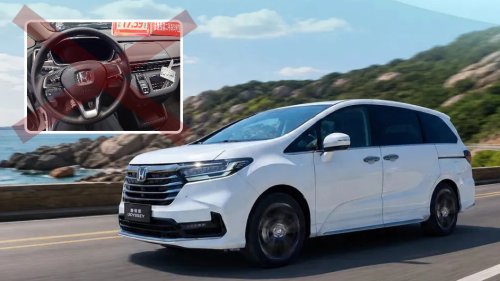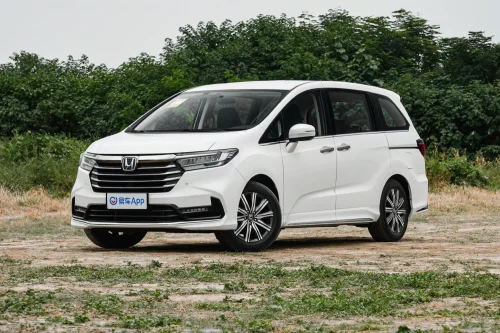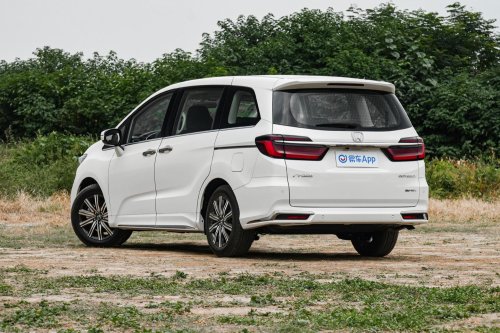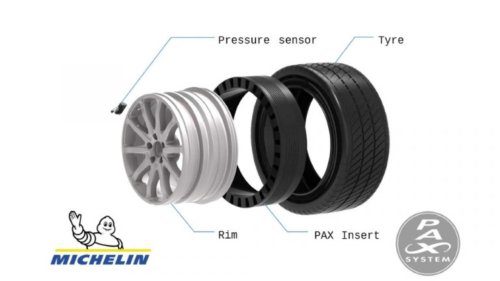


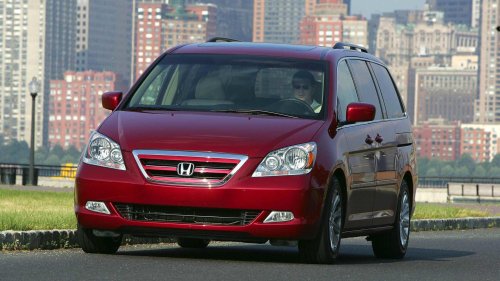




















You wouldn't automatically mention the Bugatti Veyron and the Honda Odyssey in the same breath, as they are very different automobiles indeed. One is a supercar, capable of doing 250 mph and costs a small fortune to buy, while the other one is good for hauling around the kids and their gear, as you head off for some soccer practice. But strangely, those two vehicles do have something in common in that they once shared a special kind of tire technology developed by Michelin.As it turns out, designers had different reasons for installing this rubber on each vehicle, related more to safety and performance on the one hand and practicality on the other. And while Michelin's PAX run-flat system was certainly ingenious, it wasn't really a commercial success as it could turn into a real-world headache when it came time to pay the bill. What Michelin Was Trying To Do With PAX Runflat InternationalAt the end of the last century, the idea of run-flat tires was nothing new, but most of them were based on the concept of extra stiff sides. The basic idea was that when air leaked out, the rigid sidewalls could still stand up to the task for a while and carry the vehicle’s weight for a limited distance. However, Michelin decided to take a very different approach to the general problem and instead of just beefing up a normal tire, it completely redesigned the whole wheel and tire package as one system.With the PAX approach, the rim becomes a special asymmetric design, with a thick supporting ring mounted inside the tire and the tire specifically tailored to that rim. Essentially, there's a hidden and rigid emergency donut inside the regular tire and when the tire loses its air, the weight of the car can settle on to that inner ring. The tire doesn't collapse onto the rim anymore and this means that it behaves more like a comfortable and conventional tire instead. While the tire performs conventionally in normal driving, the ring can quietly take over in the event of an emergency.A car with PAX tires can essentially keep on going at a little less than highway speed for quite a long distance after a puncture. This means that the unfortunate driver does not have to pull over to the shoulder immediately and can navigate their way to a tire shop instead. A pressure monitoring system alerts the driver via the dashboard to tell them that there’s something wrong, as otherwise, the vehicle would still feel pretty normal. But the most important upside for an everyday driver would be peace of mind, as they wouldn't have to deal with any dangerous roadside tire changes anymore. Why The Veyron Needed PAX Bugatti While Michelin was trying to sell the concept of PAX to everyday manufacturers, it was also talking closely with Bugatti. This company was working on its 1,000 hp hypercar that could quite realistically see speeds of 250 mph, and needed to ensure that its tires could stand up to the job. Certainly, those speeds were never going to be an option on US roads, but Bugatti was worried about its tire tech for drivers who wanted to push the limits on racetracks or European autobahns.Bugatti worked closely with Michelin to create a tire specifically for the Veyron. This was to be a PAX-based Pilot Sport tire, which would be able to cope with brutal heat, incredible centrifugal force, and mammoth speed. The Veyron had very large, unusual wheels, and it required bespoke tire designs in any case. And with the PAX structure incorporating the tire plus a special rim and inner support ring, this combo would give engineers the stability and strength that they were looking for. They'd be able to turn the car over to its buyers, who could then push to the limit knowing that there was a built-in safety net if something went wrong.Onboard a Veyron fitted with PAX tires, everything seemed very calm and controlled at high speeds, with that very carefully engineered tire doing the heavy lifting. Those drivers felt more confident to push well into three-digit speeds and Bugatti was less worried about tire strength or failure modes along the way.Neither Bugatti nor its clients were really looking for any run-flat convenience here, but they were certainly happy to see that these tires could keep their ultra-high-speed car safe and comfortable right at the edge of performance. However, those buyers may not have been particularly happy when it came to replacement or service, as they’d typically have to take the car into just one or two specialized facilities. And while they were presented with some eye-watering bills at the end, that may have been part of the expected pain for this type of demographic. The Honda Odyssey Ended Up With The Same Core Idea Honda You’d really have to push on if you wanted your Honda Odyssey Touring to creep over three-digit speeds, as, after all, this was a people carrier with sliding doors and a third row that was typically full. However, Honda had taken a close look at PAX tire technology and thought that it could pitch this rubber as an added value in its marketing programs. Honda therefore introduced PAX on its Odyssey Touring initially in 2005, and it remained available on Touring models late into the 2000s.The Japanese company was leaning heavily on the family dynamic here and suggested that parents would never want to be stuck on the side of a dark road with their kids, wrestling with a jack should they pick up a nail. Those families would simply be able to keep on driving at moderate speed if they had an Odyssey Touring with PAX tires, so they could find a safe and well-lit place or get home without having to touch any tools.Honda carefully tuned the steering and suspension of the Touring around the PAX setup as well. This translated into a fairly settled ride during day-to-day driving and gave the Touring some better performance in everyday situations, with less of that float and wobble that you would ordinarily associate with softly sprung minivans. As the tire and wheel are basically one unit, the engineers could dial in the ride and handling quite well. So, the same type of technology that could keep the Veyron safe and composed at crazy speeds could make a minivan safer, calmer, and more convenient in suburban America. What It Was Like Living With PAX Honda New Odyssey owners may have been quite attracted to the idea of PAX motoring. They'd never have to change a wheel at the roadside again, and they wouldn't have to carry a spare tire either, so there would be more cargo space out back. They'd get that warning on the dashboard when the pressure dropped and could plan accordingly so they’d now have another safety layer to help them with their everyday lives. And unlike other run-flat ideas with their rock-hard side walls and uncomfortable rides, PAX was much easier to live with when out on the road. It had that inner ring for support if things went wrong but would typically produce a softer ride than some other run-flats, with fewer sharp jolts from potholes and other imperfections.However, the big catch revolved around serviceability and cost, and an issue which might annoy a Veyron owner could prove to be much more consequential at Odyssey level. The big problem here was that you couldn't replace PAX tires at any regular corner shop, as that facility would need special equipment and training to be able to mount and balance the rubber. Odyssey owners therefore had far fewer choices and would always have to deal with higher prices, and they also didn't appreciate that some PAX tires appeared to have shorter tread lives than others.Many Odyssey Touring owners eventually decided to opt out and fit after-market wheels and regular tires to their vehicles instead. As the years went by, people turned their noses up at PAX in the mainstream world, while other manufacturers started to create better run-flat tires and came up with more puncture-resistant designs. Eventually, and after some class-action in the courts, Michelin phased out PAX and Honda reverted to regular wheel and tire setups. The Takeaway From This Odd Pairing Bugatti The strange tale of the Michelin PAX tells us that fancy tech is not necessarily a better solution for real-world owners. Certainly, this type of tire tech could help the Veyron set mind-bending performance benchmarks, but it turned out to be far too complicated and expensive at ordinary minivan level. And this realization should certainly focus the minds of people who are looking at a specialized wheel or tire set up on a particular car before they purchase. They'd need to know where they can take that combination for servicing and, crucially, how much it would cost them down the road.That should certainly be something to bear in mind for anyone looking to buy an early-century PAX-era Odyssey Touring. Such PAX vehicles are likely to be few and far between, but they could be a very different proposition if they still featured some of this cool tire tech. After all, that wheel-and-tire combo could eventually represent a serious bill for any new owner in some difficult-to-find and specialized tire service shop.