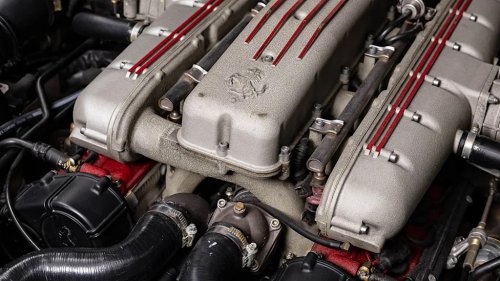
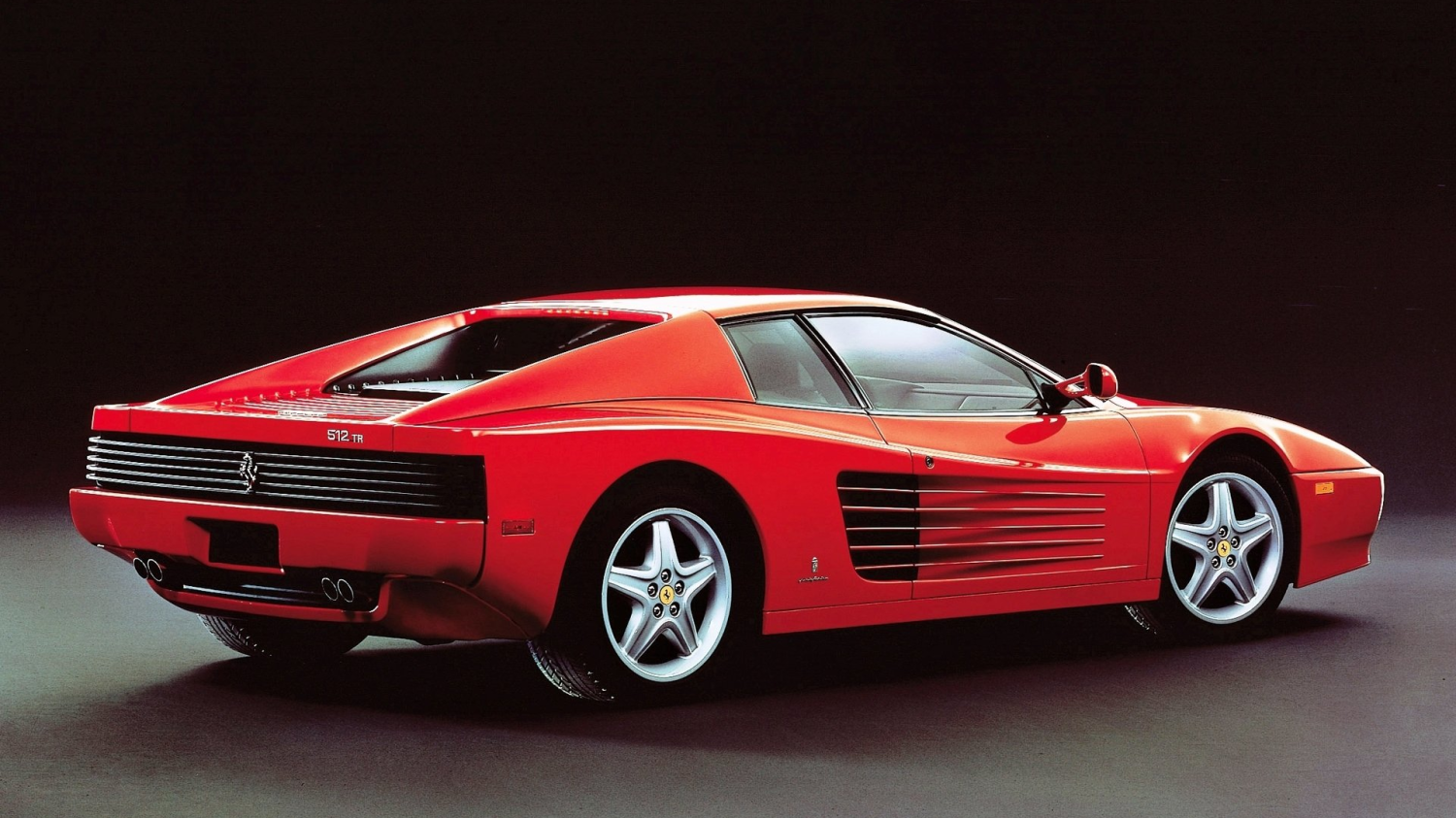
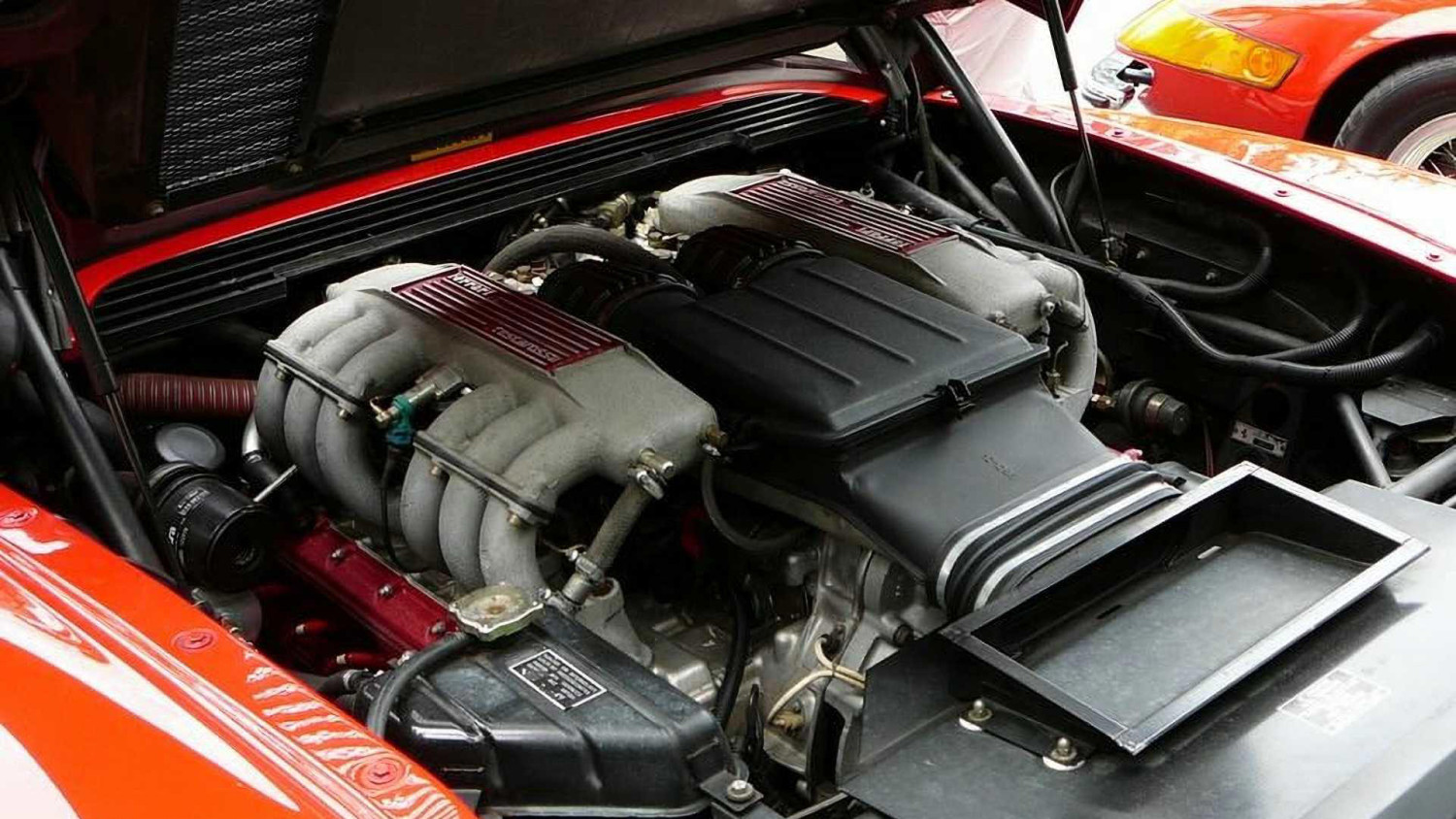
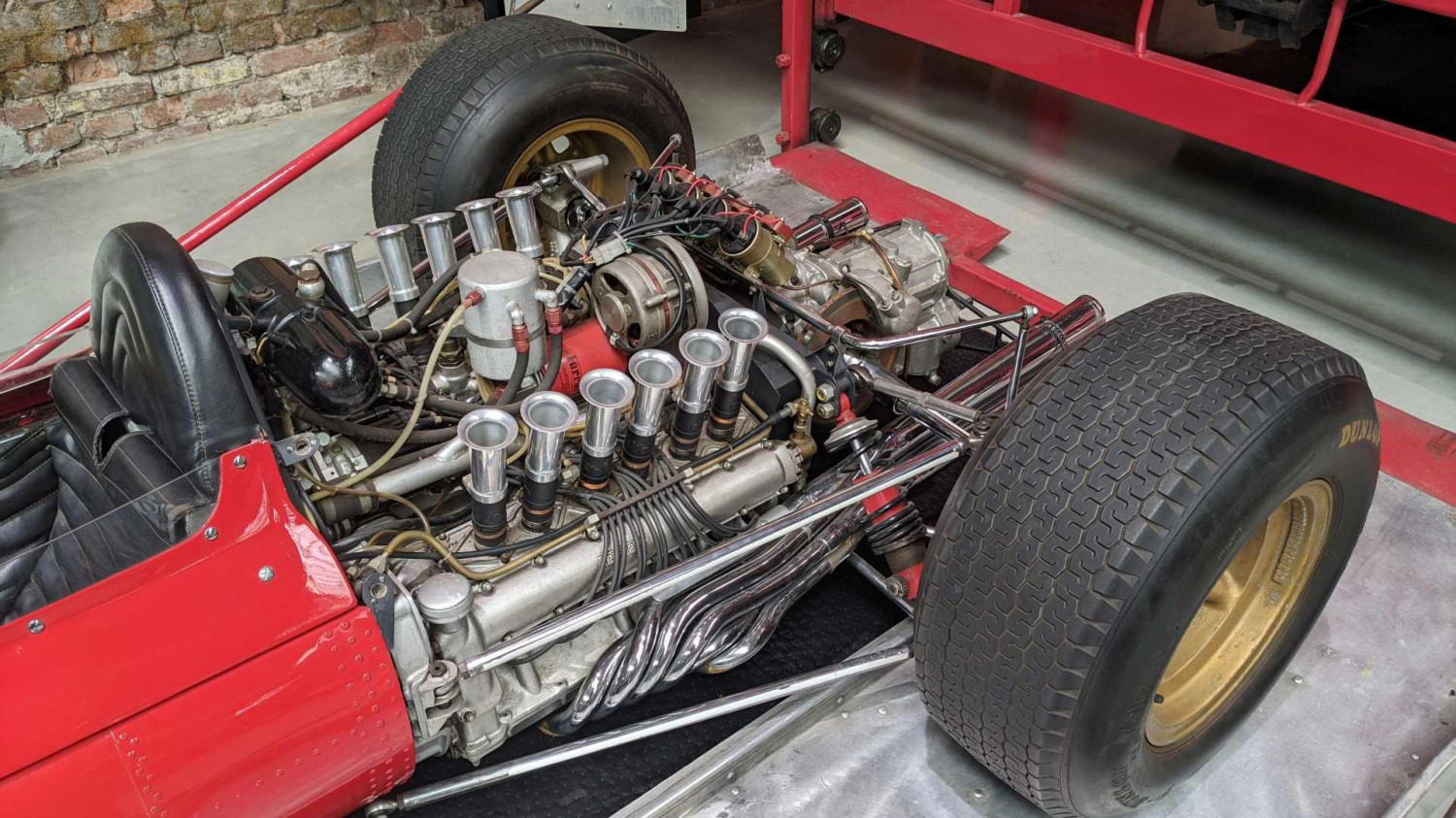
You'd be hard-pressed to come across someone who's never heard of Ferrari. Few carmakers have been able to capture the heart and soul of so many through their near-peerless dedication to beautifully engineered cars. You can even credit the gurus at Ferrari for kick-starting millions of gearheads' passion for cars in general. Not to mention, the Italian supercar maker has been responsible for creating some of the best performing - and sounding - engines to ever grace the world's roadways.Ferrari has created loads of cars, engines, and other innovations that could be considered by some as sublime. One that comes to mind is Ferrari's now-defunct flat-12 engine. It wasn't necessarily a bad idea, but it surely was a strange one. Few have heard of the thing, and even fewer have driven one before. Bearing these facts in mind, CarBuzz decided to pay homage to the quirky motor and the few cars it was installed in. The Innovative Ferrari Flat-12 1991-1994 Ferrari 512 TR Red Rear Angled View A Few Flat-12 Facts Saw use in both racing and civilian applications. It was produced from 1963 to 1996. Ferrari is the only carmaker to produce a flat-12 engine. Normally, when we think of horizontally-opposed engines, we think of the Subaru flat-four or the famous Porsche flat-six. We certainly don't think of the Ferrari flat-12, because, as we touched on earlier, many don't even know of its existence. Because Ferrari is so famous for creating several different V12 engines, the flat-12 is overlooked when it comes to the Italian supercar maker's history. But, because of its uniqueness and colorful history, it deserves to be recognized.The flat-12's story begins in 1964, when Ferrari was designing a new engine for their then-upcoming Ferrari 1512 Formula 1 car. A man called Mauro Forghieri headed up the project, and was successful in designing the world's first flat-12 engine. It carried the denomination "Tipo 207", and sported a 1.5-liter displacement with a power output of 227 horsepower and a redline of 12,000 rpm. Interestingly, Ferrari used two different engines during the 1964 and 1965 seasons. The 158 (1.5-liter V8) was used on tracks where a slower, more nimble car was required. The 1512 was used on circuits where power would be the deciding factor, like Spa and Monza.The Ferrari flat-12 saw use in both racing and road car applications over its 33-year tenure. In total, there were 11 variations of the flat-12, four of which were used in motorsport. Come 1973, the flat-12 saw its first road car application, having been shoehorned into Ferrari's largely forgotten-about 365 GT4 BB. This new road-going version wasn't derived from the Tipo 207, but the Tipo 001, a flat-12 which saw some racing success between the 1970 and 1974 racing seasons.New and improved flat-12 iterations followed that first version, with Ferrari models such as the Testarossa and 512 BB receiving the motor, too. It was heralded for its lightweight design and eagerness to rev, but it lacked the torque seen in other supercar maker's models. 1996 saw the last application of a Ferrari flat-12 in the Ferrari F512 M, after which the engine was laid to rest.It's worth noting that the world doesn't always know a good thing when it's available. Over the last five years, the Ferrari Testarossa's value has held steady at $150,000, but at the 2024 Monterey Car Week, a low-mileage unit sold for more than $200k. The Ins And Outs Of The Flat-12 Wikimedia Commons: Brett WeinsteinIt may not come as a surprise to learn the flat-12 was not a simple piece of engineering. In the beginning, Ferrari was looking for a way to revolutionize the engine, and reinvent the wheel in a way. This was no small task, but Ferrari was determined. The main advantage of the flat-12 engine is its flatness compared to the V-shape of a V8 or V12. This meant it could be mounted lower down in any car, leading to a lower center of gravity.The first version of the flat-12, the Tipo 207, featured seven main bearings, three more than the usual four seen on most racing engines of the time, to help strengthen its bottom end. It also boasted four camshafts, and an aluminum crankcase to help keep engine weight down. Cast iron cylinder sleeves were also pressed into the motor to aid in heat mitigation. To help with race day maintenance, the alternator, fuel pump, and injection pumps were placed right on top of the engine. At the time of its introduction, the flat-12 was the most powerful F1 engine, but its torque band wasn't broad enough to actually provide any sort of meaningful gain over the competition.As time went on and the flat-12 evolved, it became much larger, but to keep weight down, Ferrari used metals like titanium and magnesium. For example, as we mentioned previously, the first version was only a 1.5-liter. The second and third racing versions, the Tipo 232 and Tipo 001, were sized at 2.0 liters and 3.0 liters, respectively. The last racing version, the Tipo 015, was a 3.0-liter, used during the 1979 racing season, after which it was replaced by the Tipo 021 turbocharged V6. The turbocharged era of Formula 1 had begun and naturally aspirated engines were no longer cutting it.As for the road-going versions, they received much of the F1-inspired engineering seen in the racing versions, with some added refinement to increase their driveability. The blocks were made from Silumin alloy, a patented aluminum-silicon alloy, which helped keep the motors lightweight while also increasing their ability to handle high temps. A forged steel crankshaft and Borgo light alloy pistons further aided in the flat-12's endeavor to increase its strength without compromising on its weight and ability to handle high heat.When asked about the flat-12's similarities to the Porsche flat-six boxer engine, chief designer Mauro Forghieri stated that people should not call it a boxer. "Technically, it is correct to say that this engine is a flat-12, or has 12 cylinders with the heads at a vee angle of 180°. The difference between this engine and a true ‘boxer’ is that on the Ferrari engine the corresponding connecting rods of each bank are coupled on the same crankpin, so the two pistons move in the same direction, whereas in a true boxer engine (for example, the flat-six Porsche engine) the pistons move in opposite directions," Forghieri said. He had a point. You can watch the video below and hear a Ferrari Testarossa at full chat. It sounds a lot more like a V12 than a typical boxer engine.By its final year, the Ferrari flat-12 was now a 4.9-liter, 440-horsepower supercar engine installed within the Ferrari F512 M. At this point in time, the engine was largely electronically-controlled, and the carburetors and distributors of old had been long-replaced by direct injection and coil packs. Why Ferrari Axed The Flat-12 Wikimedia Commons: Thomas VogtUnfortunately, the automotive world seems to be unkind to unconventional ideas. Still, the flat-12 had a 33-year run, which is more than most engines get. Only the most reliable engines tend to stay around for that long.One of the main reasons for the flat-12's unfortunate demise was the issue of packaging. Ferraris equipped with the motor had to be exceedingly wide to accommodate the flat-12's wide-reaching footprint. This made cars like the Testarossa and F512 M notoriously difficult to pilot through narrow European streets, and as the flat-12 grew in displacement to remain competitive with other supercars, this problem just got worse and worse.Another reason for its demise was the issue of federal regulations. In 1995, new government-sanctioned emission restrictions were put in place that rendered the flat-12 largely illegal to use in a road car. So, instead of completely revamping the flat-12, Ferrari decided to let it die out. A sad decision, no doubt, but as many of us know, it can sometimes be extremely hard on automakers to have to keep up with fast-changing bureaucratic regulations imposed on carmakers these days, and the flat-12 was just another casualty on this long list.



















 +49 others