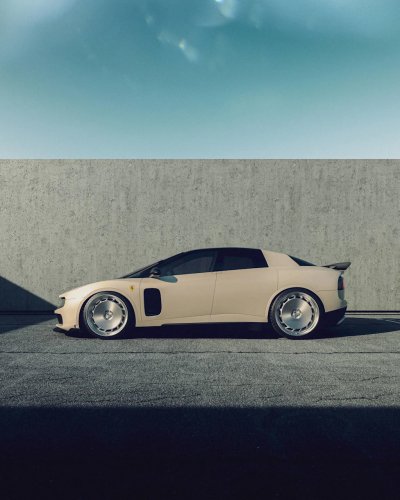
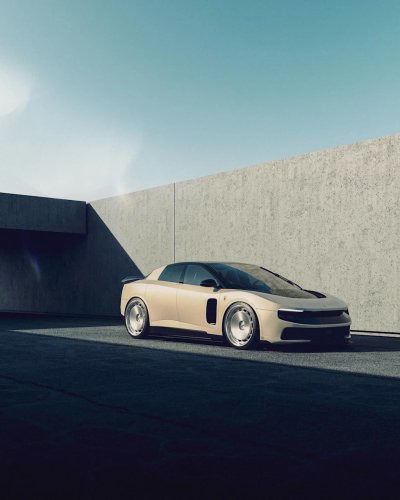
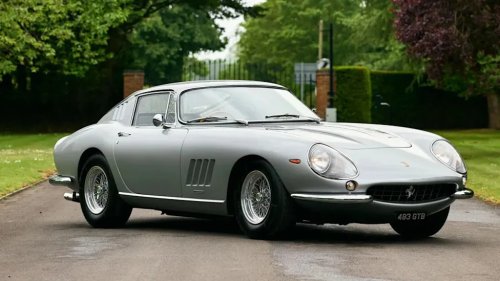
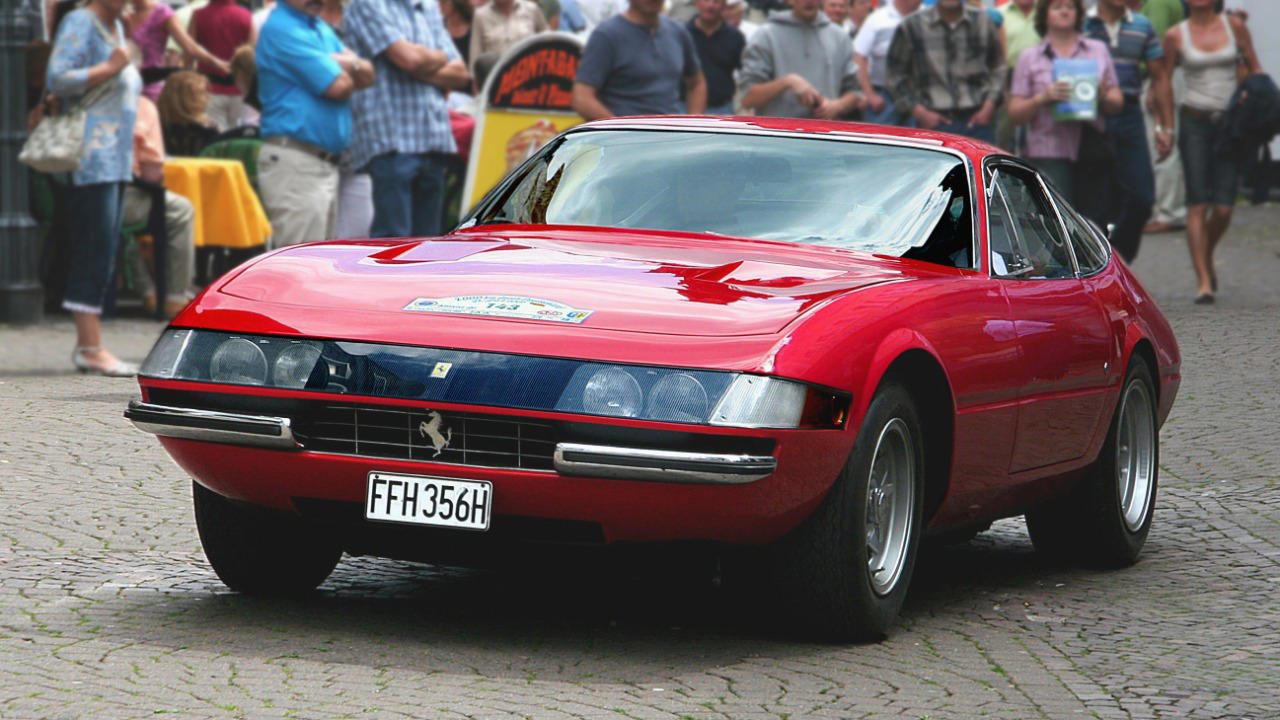
Even today the 1971 Ferrari 365 GTB/4 Daytona carries serious presenceThe Ferrari 365 GTB/4 Daytona arrived in the late 1960s as a front‑engined V12 coupe at a time when rivals were turning to mid‑engine layouts. Decades later, a 1971 example still dominates a street or concours lawn, not through nostalgia alone but through proportions, engineering and a racing backstory that continue to feel assertive. Its presence is not a memory of past glory so much as a live performance every time the starter motor whirs and that long nose rises on its springs. From Paris showstopper to enduring benchmark The model that enthusiasts now simply call the Ferrari Daytona began as the Ferrari 365 GTB/4, revealed at the Paris Show as Ferrari’s front‑engine flagship. Factory retrospectives describe it as the company’s last front‑engine flagship supercar of its era, a car whose legacy still shapes how the brand talks about grand touring performance 55 years after that first appearance. The car’s unofficial Daytona name grew from Ferrari’s success at the 24‑hour race in Florida, where the marque had scored a famous victory shortly before the road car’s launch. Under the long bonnet sat a 4.4‑liter V12 that gave the 365 GTB/4 the speed and stamina expected of a top‑line Ferrari. Period figures and later enthusiast write‑ups describe a top speed that pushed the car into the top tier of its contemporaries, while the chassis combined a transaxle gearbox with independent suspension to keep that performance usable on real roads. The 1971 model year sits close to the heart of production, which ran from the late 1960s into the early 1970s, and captures the specification that defined the car in the public imagination. The design that still turns heads Styling is the first reason a 1971 Daytona still commands attention. The body, a Pininfarina design often credited to Leonardo Fioravanti, stretched a long hood ahead of a compact cabin and short tail, a layout that emphasized the front‑mounted V12 and rear transaxle. The official specification tables for the Ferrari Daytona list the 365 GTB/4 and its open‑top GTS/4 sibling together, underscoring how that basic shape worked in both coupe and spider form. Enthusiast descriptions of the 365 GTB/4 highlight a sleek and aggressive silhouette, with smooth lines and a distinctive front end that made the car instantly recognizable. One detailed account of the 365 G profile stresses the long hood and clean surfaces, which still read as modern compared with the busier surfacing of many contemporary supercars. The original Plexiglas front treatment on early cars, which spanned the headlights behind a clear panel, gave the Daytona a particularly sharp face before regulations pushed Ferrari to adopt pop‑up lamps. Commentary on the model’s styling notes that Ferrari and its design partners considered fixed open headlights and other alternatives before settling on pop‑up units for much of the production run. That choice preserved the low nose and smooth airflow that made the car look fast even at rest, a quality that carries through to any well‑kept 1971 example parked among newer machinery. The absence of large spoilers or vents gives the Daytona a kind of muscular restraint that stands out in an era of aggressive aero add‑ons. Performance that still feels serious Presence is not only visual. The Daytona earned respect for performance figures that remain impressive for a front‑engine GT. Contemporary and retrospective data describe the 365 GTB/4 as capable of reaching 0 to 60 m in about 5.4 seconds, with a top speed that placed it among the fastest road cars of its time. Enthusiast write‑ups of the 365 G emphasize that 5.4 second sprint and its grand touring range, a combination that still feels brisk on modern highways. The mechanical layout helped the car deliver that performance with composure. The V12 sat well back in the engine bay relative to the front axle, while the gearbox and differential were mounted as a rear transaxle, a configuration that improved weight distribution. Four wheel independent suspension and disc brakes all round meant the Daytona could handle demanding roads and high‑speed cruising, not just straight‑line blasts. For a 1971 model, these attributes translate into a driving experience that still demands respect and rewards commitment. Track success reinforced the car’s reputation. Competition versions of the 365 GTB/4 scored strong results in endurance racing, including at the circuit that gave the car its nickname. That racing pedigree, layered on top of the road car’s already serious specification, feeds into the aura that surrounds any well‑preserved example today. When a 1971 Daytona idles through a paddock or pulls into a concours, observers are seeing not only a stylish coupe but also a machine with a history of real competition. Why the 1971 model year matters The 1971 production year sits in the middle of the Daytona story, with the model already established yet still close to its original specification. Listings for a 1971 Ferrari 365 describe how the car had been unveiled at Paris in 1968 as the 365 GTB/4 Berlinetta, with the Daytona name acknowledging Ferrari’s success at the 24‑hour race there in 1967. By 1971, the model’s engineering had settled into a sweet spot before later regulatory changes altered details like lighting and bumpers. Enthusiast groups that focus on early 1970s Ferraris often highlight specific 1971 cars, such as a 1971 Ferrari 365 GTB/4 Daytona Berlinetta by Scaglietti and a 1973 Ferrari 365 GTB‑4 Daytona Supercar, as exemplars of the breed. One community post that features these cars refers explicitly to the 1971 Ferrari 365 and notes the continuity with later 1973 examples, reinforcing how the early 1970s build years capture the model at its visual and mechanical peak. Collectors often regard this period as the purest expression of the design before incremental updates. Individual histories also add weight to specific cars. Some 1971 Daytonas carry notable ownership stories, such as examples associated with prominent collectors like Bill Harrah. Enthusiast coverage of one such car points out that Bill Harrah’s ownership adds significant provenance to that Daytona, reflecting Harrah’s status as a renowned collector and entrepreneur. For buyers and spectators alike, those personal narratives amplify the car’s presence because they connect an already significant model with figures who shaped car culture. Craft, materials and special bodies Beyond the standard steel body with aluminum panels, the Daytona story includes rarer configurations that heighten its mystique. One documented example left the factory in April 1970 and was later rebuilt with an entirely aluminum body after partial fire damage, a process undertaken by a Dutch enthusiast and then refined by Italian specialists. The car’s history file records more than 85,000 € of work in 2013 and 2014 at workshops in the Modena area, including Giusti, Luppi, SG Racing di Gianni Sala and Carrozzeria Cristallo. That car, finished in its original Verde Medio, combines the ultimate expression of a 1970s Italian GT with a lighter body that adds exclusivity and a sharper driving edge. Early Plexiglas front treatment also contributes to the Daytona’s visual drama. Enthusiast commentary on the FERRARI GTB DAYTONA describes how the Plexiglas panel on early 365 GTB/4 “Daytona” cars created a clean aerodynamic front design that remains striking even among modern LED signatures and complex grilles. When a 1971 car retains this feature or has been restored to that specification, it presents a face that feels both vintage and surprisingly current. Inside, the Daytona’s cabin pairs thin‑rimmed steering wheels and gated shifters with supportive bucket seats and clear instrumentation. Materials like leather and aluminum dominate, with minimal plastic compared with later decades. The result is an environment that feels purposeful rather than plush, which suits the car’s reputation as a driver’s GT rather than a soft luxury coupe. Market values and modern context Market data confirms that the Daytona’s presence translates directly into financial value. One analysis of the broader Ferrari Daytona market reports an average sale price of $972,331 across model years 1969 to 1973, a figure that reflects sustained demand for these cars. The same dataset frames the question “What is the average sale price of a Ferrari Daytona?” and answers with that precise $972,331 figure, while also addressing “When was the Fer…” in relation to the model’s production years for collectors. Drilling down further, a focused look at the Ferrari Daytona 365 GTB4 segment gives an average price of $648,683 for that specific variant. The same resource notes that the 365 Gtb4 was produced over a defined run, which helps explain why well documented 1971 cars command strong interest. Limited production, racing heritage and the model’s status as a last front‑engine flagship of its era all feed into these valuations. The Daytona name continues to resonate in Ferrari’s modern lineup. A recent one‑off Ferrari Daytona SP3 sold for an astonishing $26 million at auction, a result that shows how the Daytona badge still carries immense cachet when applied to special projects. Coverage of that sale notes how the Ferrari Daytona SP3 stole the spotlight, reinforcing the idea that the original 365 GTB/4 established a template for front‑engined V12 glamour that Ferrari can still trade on today. From road to screen and back again Cultural exposure has also helped the Daytona retain its presence. Enthusiast histories recall how Ferrari objected to a replica kit used in a popular television series and eventually donated real cars for later seasons, a move that brought authentic Daytonas to a mass audience. A community post that traces this story explains how Ferrari filed suit against the replica manufacturer and then supplied genuine cars from season three onwards. Viewers who saw those episodes associated the Daytona shape with glamour, danger and success, associations that still color public reactions when a 1971 example appears on the street. Modern reinterpretations of the design keep it in front of younger audiences. Digital artists and enthusiasts have created concept images of updated Daytonas, such as a 1972 Ferrari 365 GTB/4 Daytona Spyder conversion rendered with contemporary details. One such project, shared in a community focused on AI automotive art, references a Ferrari GTB Daytona Spyder and shows how the core proportions adapt easily to new materials and lighting. These reimaginings underline how strong the original shape remains as a design foundation. Video coverage of actual cars, including a detailed walkaround of a 1971 Ferrari 365 GTB/4 commonly known as Daytona, introduces the model to viewers who may never see one in person. In that clip, the presenter describes the car as one of Ferrari’s great front‑engine rear drive GT cars and highlights its long hood and purposeful stance. The video’s description explicitly references the 365 GTB/4 designation and reinforces the idea that the car’s layout and character still feel relevant beside modern GTs. Global fascination with the Daytona story The Daytona’s appeal is not confined to one language or region. Multiple international encyclopedic entries document the Ferrari Daytona, including Arabic, Asturian, Bulgarian and Czech versions. These pages, discovered through citation trails from an Arabic overview, an Asturian entry, a Bulgarian summary and a Czech article, all treat the Daytona as a significant model in Ferrari history. The repetition of the story across languages signals how widely the car’s image and achievements have spread. Why it still carries weight on the road More from Fast Lane Only Unboxing the WWII Jeep in a Crate 15 rare Chevys collectors are quietly buying 10 underrated V8s still worth hunting down Police notice this before you even roll window down

















 +42 others