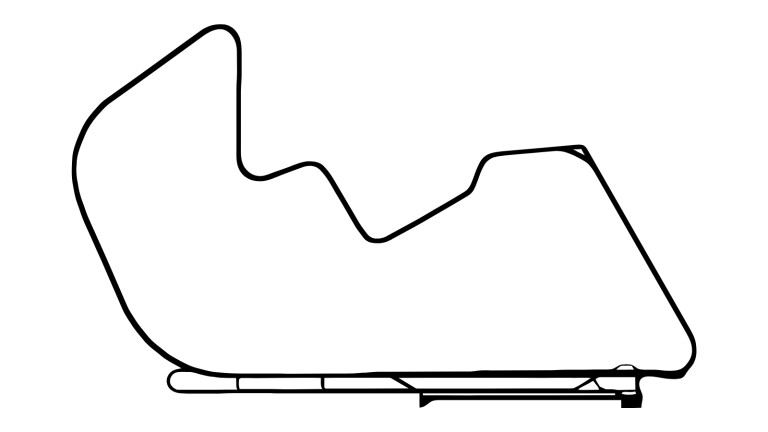
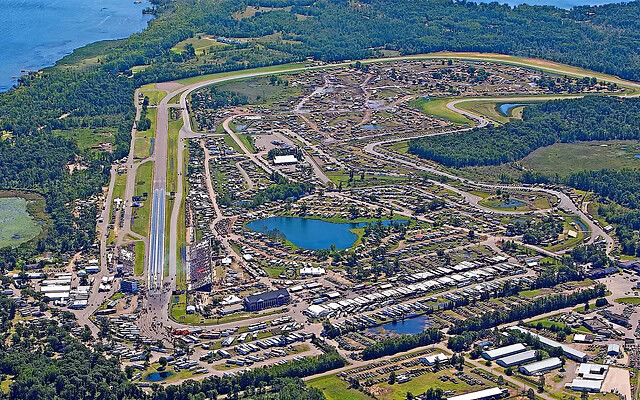
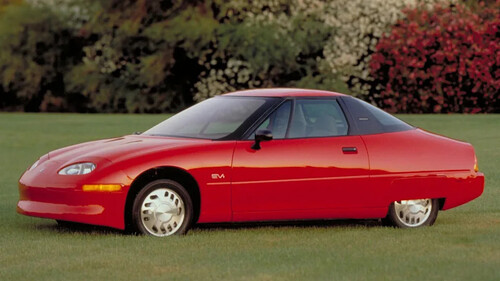
It’s now July, which means schools from around the world are making final preparations for the Electrek American Solar Challenge 2026, and this year is going to be an especially notable one! A record 46 teams from colleges in the US, Canada, Belgium, and the Netherlands are registered to compete in the Formula Sun Grand Prix pre-qualifier track event in less than two weeks. This is a big deal for teams. Apart from FSGP being a competition in its own right, it’s the opportunity for students to prove their hand-built solar car has what it takes to hit the open road and trek 1,500+ miles across the United States for the renowned American Solar Challenge. Here’s everything you need to know about both competitions, the teams, and the schedule. A brief history The roots of American solar car racing can be traced back to 1987, when GM’s Sunraycer solar car won the first World Solar Challenge in Australia. The Sunraycer featured a more rounded, UFO-looking design made of Kevlar for a great strength-to-weight ratio. It was covered in 8800 solar cells capable of generating about 1500 watts of power. It was an impressive feat of engineering at the time and proved to the world that electric drivetrains could be efficient and competitive. Advertisement - scroll for more content Instead of continuing to compete with Sunraycer, GM used its experience in Australia to start an organized state-side collegiate solar car event. Sunrayce USA events were held in 1990, 1993, 1997, and 1999. Around the 2000s, General Motors began to shutter its electric vehicle efforts, partly due to the commercial failure of its first production EV, dubbed EV1. This shift in priorities marked the end of Sunrayce events. In 2001, the cross-country event rebranded to the American Solar Challenge (ASC) following the creation of the Formula Sun Grand Prix (FSGP), all under the leadership of the Innovators Educational Foundation (IEF). Since then, FSGP has acted both as a qualifier for the biannual ASC and as a standalone event in years when the ASC isn’t held. This event setup helps ensure solar cars are roadworthy for long-distance travel across the US, while also giving newer teams a chance to gain racing experience. The Electrek American Solar Challenge was last held in 2024, so this year the Electrek Formula Sun Grand Prix will serve as a pre-qualifier. On-years typically see higher attendance as students seek out the ASC title. A record-breaking 46 teams are registered! ICYMI: In 2023, Electrek announced the signing of a five-year title sponsorship agreement with the IEF, which will guarantee funds to host the yearly races through 2028. Other 2026 FSGP/ASC sponsors include Blue Origin, Tesla, SpaceX, MathWorks, Caterpillar, Generac, Wattch, and others. Electrek Formula Sun Grand Prix 2026 In a thrilling first, this year’s Electrek FSGP is heading to Brainerd International Raceway in Minnesota. This 3.1-mile road course is known for hosting professional racing…of the gas kind. It features sweeping turns and a really long, wide front straight that the raceway typically uses as a drag strip. Road & Track ranked it the second-best racetrack in America behind Talladega Superspeedway. To the relief of teams, the course is also way less hilly compared to NCM Motorsports Park, the previous location, which featured a challenging section students dubbed the “sinkhole,” a steep downhill followed by an equally steep uphill climb. At least a dozen cars got stuck at this point last year. Brainerd’s more straightaways and wider passing room will make this race an exciting one to watch! Brainerd International Raceway track Racing kicks off July 21 and goes through July 23. The event is open to the public and FREE to attend. Come see the solar cars race up close! The track officials will only ask you to sign a waiver at the entrance. These are hand-built experimental solar cars after all. Photos from last year’s event Brainerd International Raceway Electrek American Solar Challenge 2026 main event For the teams that survive FSGP, the real test begins. This year’s Electrek American Solar Challenge sends every qualifying car on a 1,500+ mile trek from Minneapolis, Minnesota, all the way down to Amarillo, Texas. The route follows the Great River Road before hopping onto Historic Route 66, which makes for some pretty great timing. 2026 marks Route 66’s 100th anniversary, and the ASC has been officially named a Route 66 Centennial Project. Event director Gail Lueck said she’s “thrilled” for the students to run the iconic route again, marking 25 years since solar cars first traveled the Mother Road. The Electrek ASC runs an 8-day, 4-stage format with mandatory checkpoints and stage stops along the way, where teams pull in, show off their cars to the public, and get scored on progress. You can see where all the cars will be staged for the public on the official event page here. Like the FSGP, cars compete in one of two classes: Single-Occupant Vehicle (SOV) for pure efficiency, or Multi-Occupant Vehicle (MOV) for a mix of performance and real-world practicality. Winners are determined by total miles completed (MOV teams also earn credit for passenger miles). It all kicks off with a free public Display Day on July 24 at the University of Minnesota, then the cars hit the road on July 25 and roll into Amarillo on August 1. The map below shows the overall journey the solar cars will take. Electrek American Solar Challenge 2026 route. Click image to expend. Stay up to date with the latest content by subscribing to Electrek on Google News. You’re reading Electrek— experts who break news about Tesla, electric vehicles, and green energy, day after day. Be sure to check out our homepage for all the latest news, and follow Electrek on Twitter, Facebook, and LinkedIn to stay in the loop. Don’t know where to start? Check out our YouTube channel for the latest reviews.