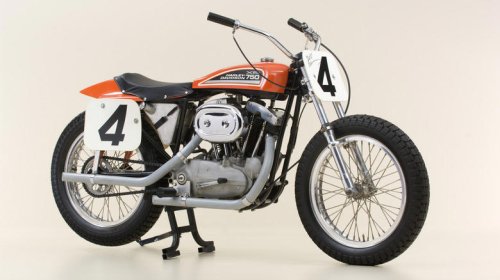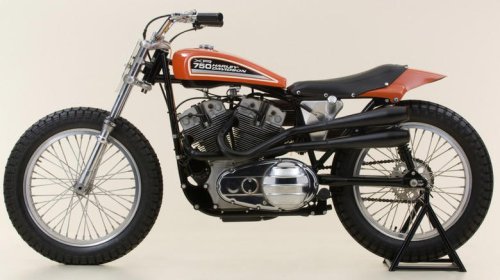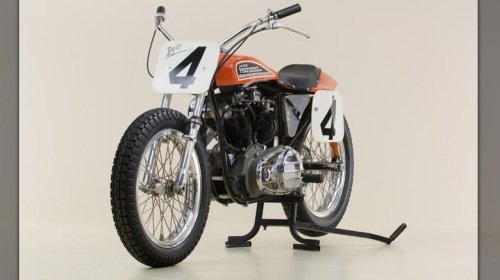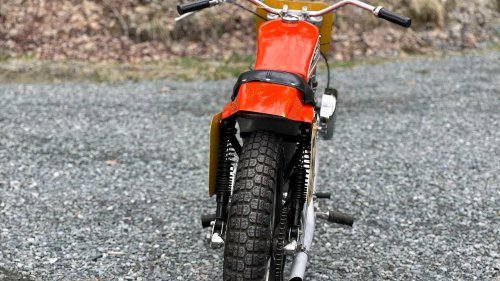
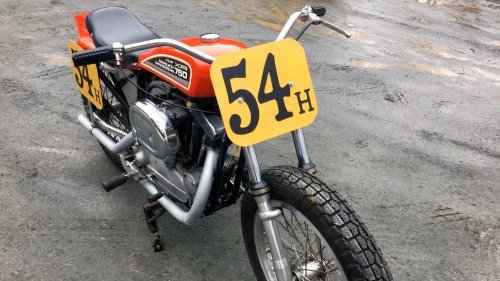
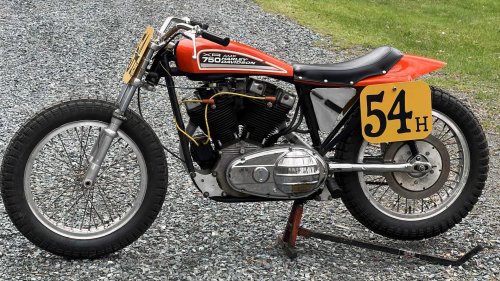
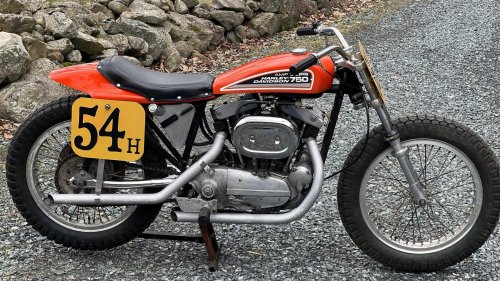
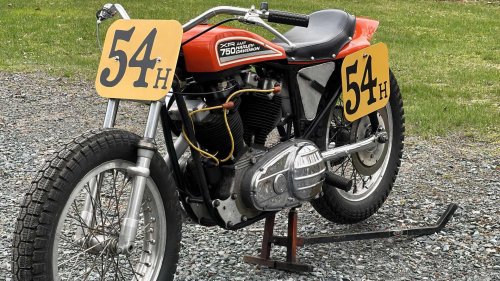
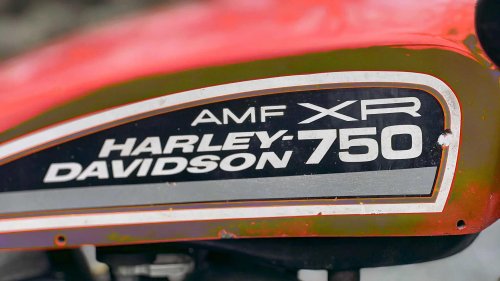
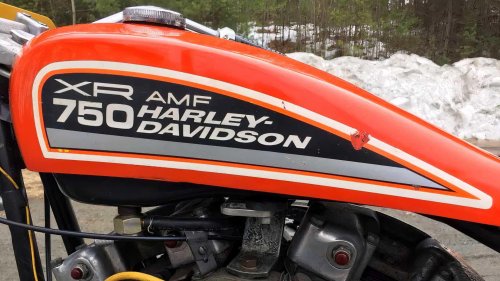



















For a while there, Harley-Davidson was staring at a problem it couldn’t bluff its way past. The rulebook had changed, the old side-valve advantage was gone, and the factory suddenly needed something sharper, lighter, and a lot harder to out-run on dirt. This was a pressure job, the kind that forces engineers to stop talking and start fixing things.What came out of that pressure would go on to feel almost unfair. It took its time, but once Harley got it right, the company ended up with a race bike that fit American flat track so perfectly it might as well have been poured into the groove. Rivals kept showing up anyway, which was brave of them. Harley Suddenly Needed A New Kind Of Winner Bring A TrailerThe whole story starts with the AMA changing the rules. For years, Harley had leaned on the old split between 500cc overhead-valve engines and 750cc side-valve engines. When that setup disappeared and a 750cc limit applied across engine designs, the company could no longer ride into battle with yesterday’s solution and a confident shrug. It needed a new race bike, fast, because the center of American dirt-track racing wasn’t going to wait around out of courtesy.In essence, Harley was trying to stay relevant in the class that helped define its racing image. The old formula had run out of room, and the new competition was quicker, more modern, and less interested in tradition than in getting to the checkered flag first. Harley had to answer with something that kept the brand in the fight instead of turning it into a respected former champion or, if you prefer a more blunt way of putting it, "yesterday's news."So the first mission was pure survival. Harley needed a machine that could carry the company from one racing era into the next without losing its footing, and that meant building a bike around what worked on American half-miles and miles rather than what looked good in a brochure. Dirt track has a way of exposing nonsense in a hurry. If the bike couldn’t hook up, stay cool, and put down drive where it counted, none of the rest of it mattered. The First Version Was Fast Enough To Matter And Fragile Enough To Worry Everyone Bring A TrailerThe first XR750 showed up in 1970, and on paper it made sense. Harley used a destroked iron-cylinder Sportster-based engine, dropped it into a proven KR-style swingarm chassis, and gave itself a serious starting point instead of reinventing every nut and bolt at once. That’s usually the sane approach in racing, right up until the sane approach starts cooking itself, literally.The early iron-head version made competitive horsepower, and it could win, but it also ran hot enough to make mechanics nervous and riders suspicious. Heat became the big enemy, and the bike’s self-destructive habits kept it from becoming the immediate class-killer Harley wanted. It scored victories in 1970 and 1971, but it also broke plenty, which is not the sort of consistency that builds dynasties, obviously. From Promising To Nasty Bring A TrailerHarley tried stopgap fixes. Oil coolers helped, as did reduced compression. Cooler weather also helped, which is useful only if the racing calendar agrees to cooperate. The bigger problem was baked into the package, and the factory knew it. While the iron version was out there doing its best impression of a talented hothead, Harley was already working on the improved engine that would turn the whole project from promising to nasty. The XR750 Turned Harley Into The Benchmark Bring A TrailerThe real turn came in 1972. Harley replaced the cast-iron heads with a lighter, cooler-running aluminum-alloy top end, kept refining the package, and suddenly the bike that had been fighting itself started fighting everyone else instead. That was the version that set the tone for everything that followed, because once the heat problem stopped dictating the conversation, the rest of the XR750’s strengths came through loud and clear.And those strengths were exactly what American dirt track wanted. The XR750 paired compact size with a 45-degree V-twin that delivered the kind of tractor-like drive riders could actually use on corner exit. It was built for half-mile and mile dirt racing in the U.S., and that focus made it brutally effective. This bike felt targeted, like a hammer that somehow kept finding nails for decades.A few numbers to reinforce all that ability: it packed 45 cubic inches, or 750cc, around 90 hp, a 4-speed transmission, a 56.75-inch wheelbase, and a claimed weight of 295 pounds. That describes a very lean, serious dirt-track tool that had little patience for wasted mass or wasted motion.Once Harley got there, the wins piled up in a way that turned success into expectation. From 1972 through 2008, the XR750 won 29 of 37 AMA Grand Nationals, and that long stretch of authority is the heart of this story. Why The XR750 Worked So Well Where It Counted Bring A TrailerWhat made the XR750 special was function. Its 45-degree V-twin delivered usable low-end drive, and in flat track, usable matters more than flashy. Riders needed something that could dig, hook up, and launch without turning every corner exit into a negotiation. The XR750 gave them that. It had the kind of power delivery that felt like a firm handshake from a guy who already owns the room.Harley also kept the package light and focused. Changes like a small 2.5-gallon fiberglass fuel tank, aluminum-spoked wheel rims, and a low fiberglass seat were made as part of the effort to trim weight and sharpen the bike. None of that sounds glamorous in isolation, but these small details ruin everyone else's race weekend.Just as important, Harley didn’t lose the thread while refining it. The bike evolved over time, but the essential formula stayed recognizable because the original idea was right. That’s why later XR750 racers were described as being very similar to the first alloy versions from 1972. The company kept polishing the weapon instead of wandering away from what made it lethal in the first place. The XR750 Still Looms Over Harley’s History Bring A TrailerPart of the XR750’s legend comes from how long it lasted. It was manufactured for five decades, and even though the original series of racers stopped being produced in '85, the legend stayed on well after that. Very few racing machines hang around that long without turning into ceremonial relics. The XR750 kept its gravity because it had already earned a reputation as the bike that understood American dirt better than just about anything else on two wheels.Also worth noting: the alloy version became the stunt bike of choice for Evel Knievel through 1976, largely because it was lighter than the first version and better suited to the kind of airborne decision-making most sane people would describe as an unnecessary amount of commitment. Rewriting The Balance Of Power Bring A TrailerToday, the market still treats the XR750 like something important. Average sale price for the XR750 sits at a very healthy $29,000, with recent results including a $47,500 sale for a 1972 XR750 in 2026 and a $30,800 sale for a 2005 XR750 in January. There’s also a 1970 XR750 currently listed at $50,000, so the range being displayed is pretty incredible to see.And that’s why the XR750 still casts such a long shadow. Harley needed a new kind of winner, built one the hard way, and ended up with a race bike that rewrote the balance of power in American dirt track. All in, the XR750 is still the bike that makes Harley’s racing history feel a little louder, sharper, and ridiculously hard to top.Sources: Cycle World, National Motorcycle Museum, Old Bike Barn.