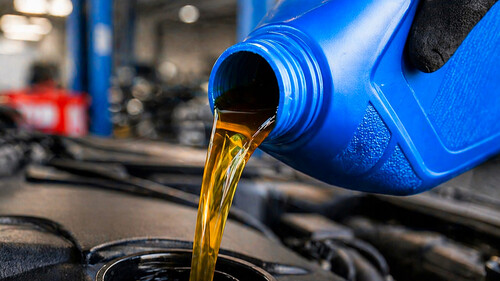
Motor Oil Could Get More Expensivedeepblue4you - Getty Images (deepblue4you - Getty Images)The war in Iran has already driven fuel prices higher in the U.S. and rattled global supply chains across a wide range of industries. Now, the lubricant sector warns of a potentially far-reaching motor oil shortage that could affect millions of mainstream passenger vehicles on American roads.Nearly half of the high-quality Group III base oil used in U.S. synthetic motor oils originates in the Persian Gulf, and a substantial portion of that supply is effectively cut off amid the escalating regional instability. Another roughly 30 percent comes from South Korea, whose refiners depend heavily on Middle Eastern crude and feedstocks. As a result, the conflict has disrupted both the primary supply chain and one of its most important backup sources.Some of the world’s largest Group III suppliers, including Shell’s Pearl GTL plant in Qatar, Bahrain Petroleum Company (BAPCO) in Bahrain, and Abu Dhabi National Oil Company (ADNOC) operations in the UAE, have either sustained physical damage or faced severe export disruptions due to the war. The interruptions have sharply curtailed production; shipment of the premium base stocks used in many modern ultra-low-viscosity synthetic motor oils has been greatly reduced.Photo credit: Cravetiger - Getty ImagesPhoto credit: seksan Mongkhonkhamsao - Getty ImagesPhoto credit: Kittikorn Nimitpara - Getty ImagesNormally, supply disruptions in premium Group III oils can be partially offset by shifting some formulations to lower-tier Group II stocks. This time, however, refiners are diverting much of that material into diesel fuel production, where profit margins have surged amid the broader energy crisis. The result, according to the Independent Lubricant Manufacturers Association (ILMA), is a tightening squeeze on the U.S. motor oil supply chain.AdvertisementAdvertisementHolly Alfano, CEO of ILMA, told MotorTrend that the market is already showing signs of acute strain, with some suppliers reportedly paying double for certain base oil stocks. “A lot of times, if the suppliers can’t get base oils, they draw from the inventories they already have,” Alfano said. “But once those are depleted, according to industry analysts that we’ve been talking to, we’re going to have real issues by mid-June.”Alfano added that newer passenger vehicles such as the Toyota Camry or Honda CR-V could be especially vulnerable because many engines built after 2013 rely on low-viscosity synthetic oils that depend heavily on high-quality Group III base stocks. Older vehicles and many heavy-duty diesel applications, by contrast, can often tolerate a wider range of lubricant formulations and viscosity grades, giving suppliers and service centers more flexibility if shortages worsen.If traffic through the Strait of Hormuz remains severely restricted, Alfano said consumers could begin seeing meaningful price increases within roughly a month, as lubricant manufacturers and retailers work through existing inventories and replacement base oils become more expensive and harder to secure. The first consumer impact, she suggested, may be higher prices rather than empty shelves, as low supply collides with steady demand for routine oil changes.ILMA has been in contact with the U.S. Department of Energy as the industry searches for ways to mitigate the growing supply crunch, but Alfano cautioned there is no immediate fix in place. Among the options under discussion are regulatory and permitting adjustments that could accelerate new domestic Group III production facilities planned for Texas and Mississippi. Even under optimistic timelines, however, those plants are not expected to come online until 2027 or later. “We’re still very reliant on products coming out of the Middle East when it comes to lubricants,” Alfano told MotorTrend. “It’s a global market, and we’re not completely energy independent when it comes to lubricants.”AdvertisementAdvertisementIn the near term, consumers may begin seeing engine oils with temporarily revised formulations as manufacturers adapt to constrained supplies of Group III base stocks. According to ILMA, however, those products would still be required to meet all applicable performance standards set by automakers and the American Petroleum Institute, even if their compositions differ slightly from the formulations customers are accustomed to buying. The changes would likely be invisible to most drivers, but they underscore how deeply the supply disruption is reverberating through the lubricant industry.For now, the more immediate threat is likely to come in the form of higher prices, tighter availability for certain lubricants, and temporary substitutions where automaker specifications allow. But ILMA’s warning is clear: the modern lubricant supply chain is far more global, fragile, and specification-dependent than most drivers realize.Whether the worst-case scenario ultimately materializes will depend largely on how long disruptions in the Strait of Hormuz persist and how quickly alternative sources of Group III base oil can come online. Even if the Strait of Hormuz reopened immediately, Alfano said it could take roughly 45 days for shipments leaving the Persian Gulf to reach the U.S.In the meantime, consumers are wise to follow the oil specifications outlined in their owner’s manuals and stay informed about potential supply or formulation changes that could affect their vehicles.