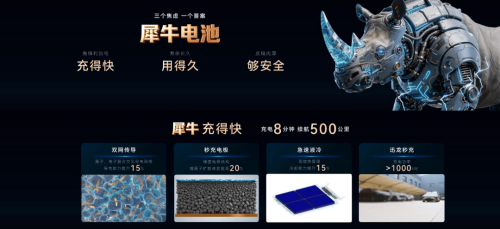
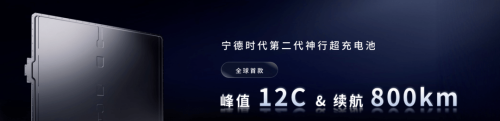
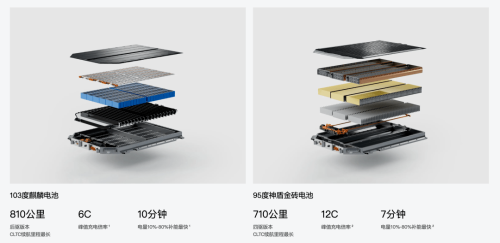
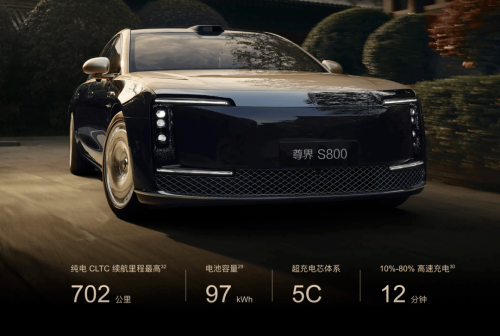
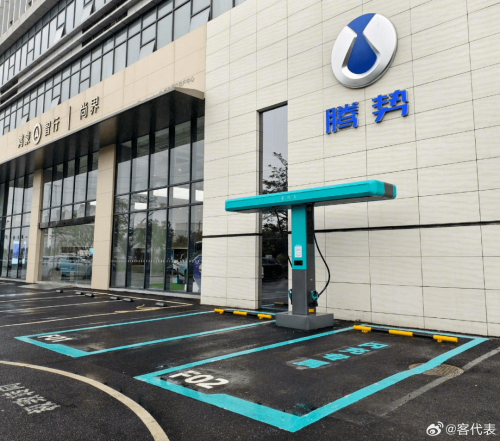
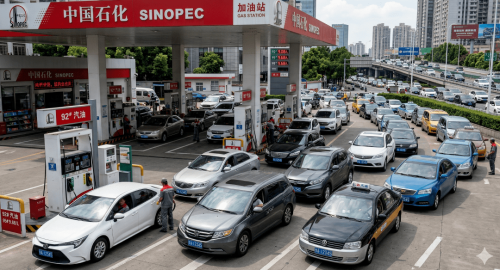
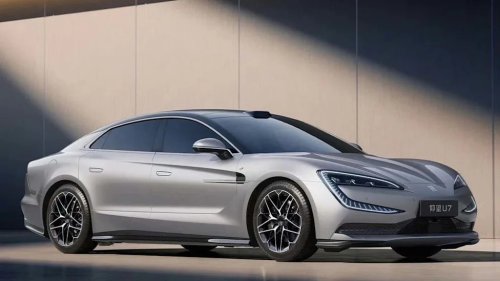
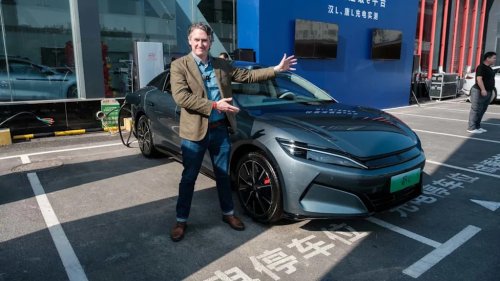
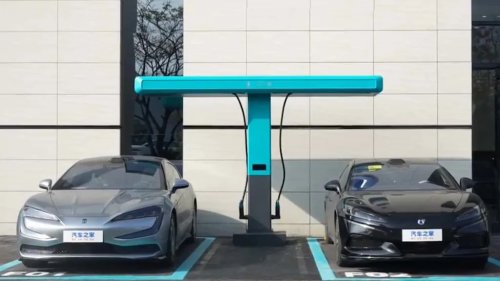
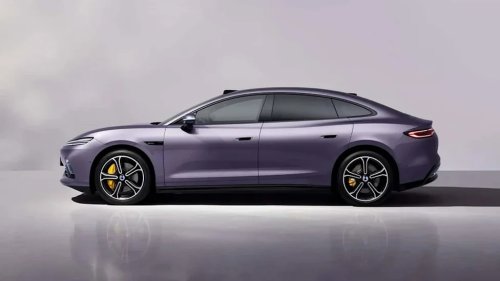
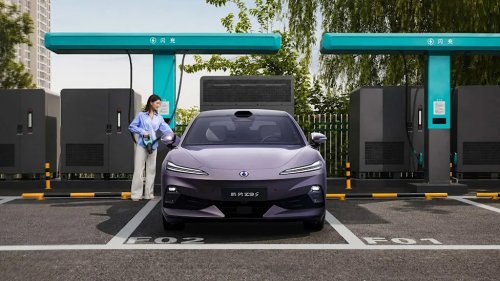
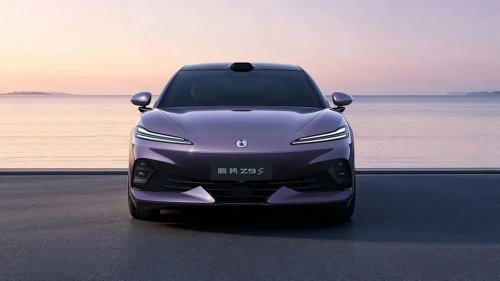
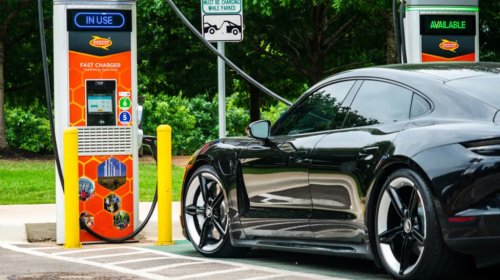
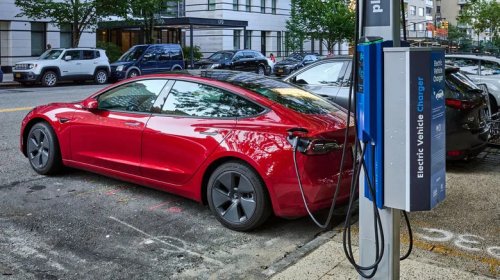
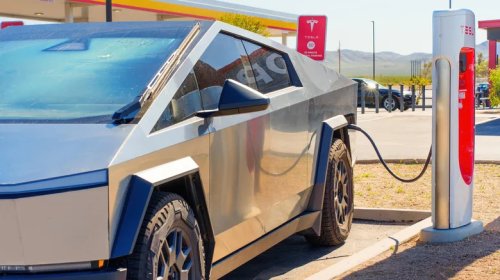
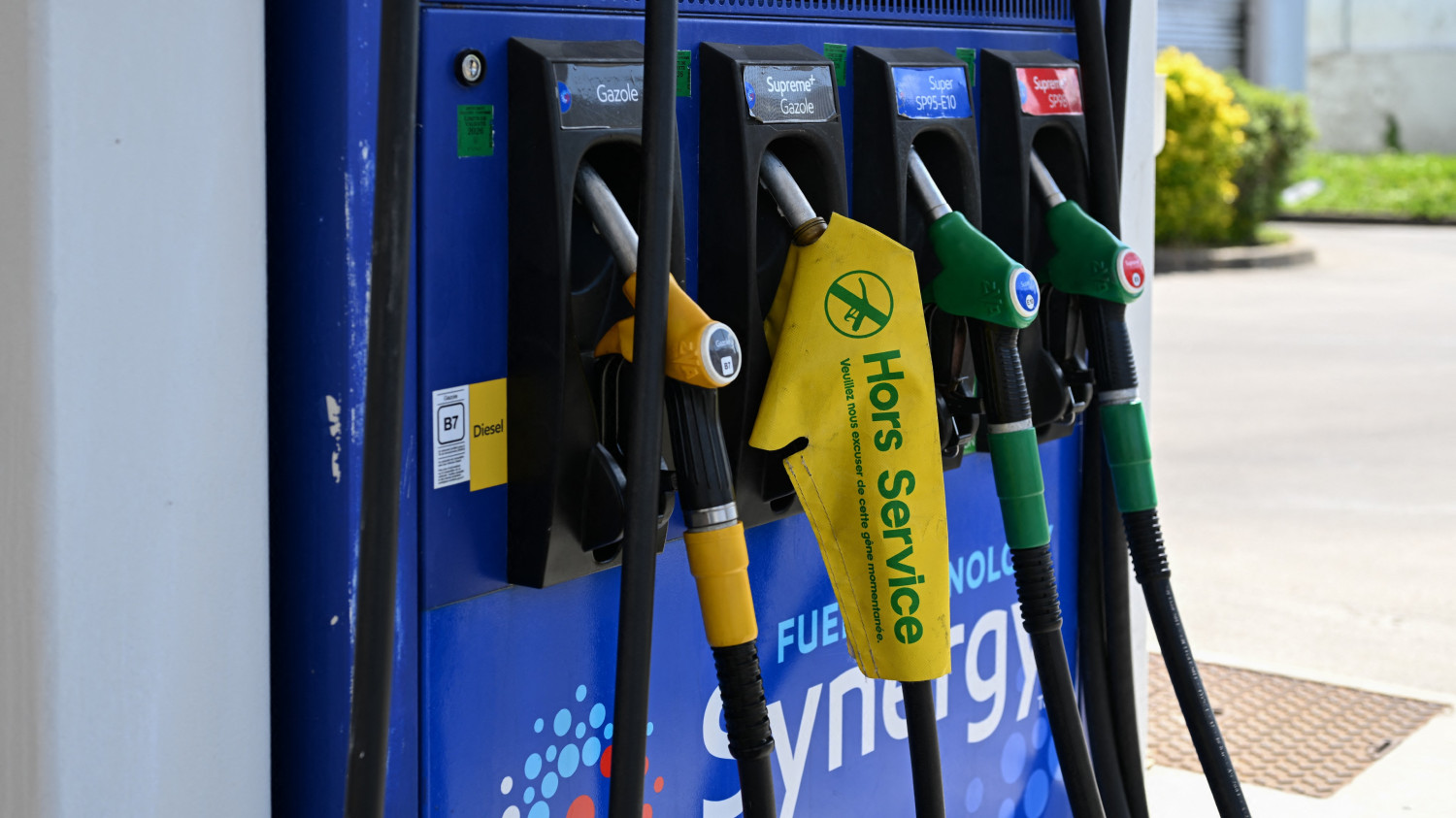
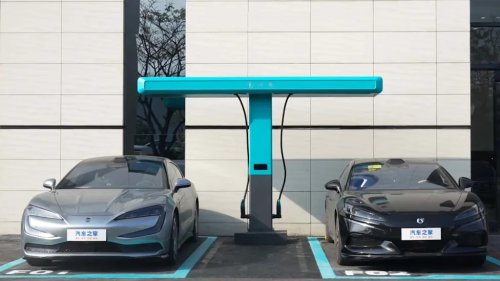
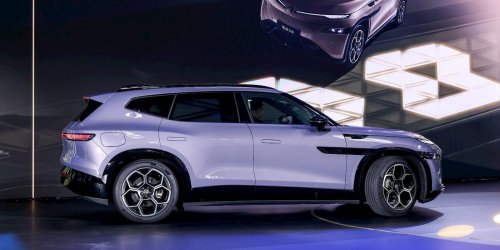
One of the most amusing things lately has been the skyrocketing oil prices amid ongoing international conflicts—there were even rumors that 92-octane gasoline would break the 9-yuan mark. Before the price adjustment took effect, fuel cars queued up in long lines at gas stations, recreating the famous scene of electric cars waiting to charge at highway service areas. Amusing Thing Long lines of fuel cars waiting to refuel are just one snapshot of the situation. How big an impact has the rising oil price had on fuel car owners? The headline of a Titanium Media article says it all: “Fuel Car Owners Finally Admit They Envy Electric Car Owners.” Titanium Media Another sign of its impact is that ‘super-fast charging’ technology, which had cooled down slightly, is now heating up rapidly again. Some netizens believe that ‘with oil prices rising, megawatt ultra-fast charging technology has won big.’ Supporters of the technology argue that with such a drastic reduction in refueling time, the charging experience of electric vehicles can match that of fuel cars refueling. What’s more, charging costs are much lower than refueling, making it an even more decisive win against the backdrop of rising oil prices. But is that really the case? Before diving into the discussion, we should first briefly review what ‘megawatt ultra-fast charging’ technology is. Back in 2025, BYD introduced a charging technology with a power output of over 1,000 kW, naming it ‘Megawatt Ultra-Fast Charging’. On March 5 this year, BYD launched ‘Megawatt Ultra-Fast Charging 2.0’, raising the maximum single-gun charging power to 1,500 kW. Under ideal conditions, new models equipped with this technology can charge from 10% to 70% in just 5 minutes, and from 20% to 97% in under 9 minutes. What makes supporters even more confident is that some carmakers have begun to follow BYD’s lead and launch battery products with better charging performance—it seems a trend has emerged. For instance, on the evening of March 18, Chery held its ‘2026 Battery Night’ event, focusing on introducing its ‘Rhino Battery’ brand. The company claims that the Rhino Battery has a peak charging power of up to 1,200 kW, and with supporting charging equipment, it can add 500 kilometers of range in 8 minutes. Rhino Battery Could this mark the beginning of a ‘charging speed arms race’ in China’s auto industry, and a golden opportunity for new energy vehicles, especially pure electric vehicles, to completely revolutionize the charging experience? Before looking ahead to such a future, judging from user comments, ‘megawatt ultra-fast charging’ technology still has to answer a series of questions from consumers. For example, ‘Is BYD the only player in megawatt ultra-fast charging?’ Or ‘Is the threshold for experiencing this technology high?’ To answer these questions, we need to look at the fundamentals of the industry: what exactly is the current ‘charging speed arms race’ in the Chinese market focused on? From 5C to 12C Before 2025, across the global new energy vehicle market, achieving fast-charging rates of 4C, 5C, or 6C was already an absolute leading edge. Take a mainstream 60 kWh battery as an example. At a 4C charging rate, the peak charging power is roughly 240 kW—factoring in handshake efficiency and charging pile losses, it would almost require access to a 480 kW charging station, and could only reach full power under ideal conditions. Unsurprisingly, even if carmakers pushed battery fast-charging rates to 5C or 6C, it would be meaningless for users without supporting charging infrastructure in place. This is the direct reason why power battery charging rates had stayed around 5C for a long time. For this reason, before BYD pushed for megawatt ultra-fast charging, power batteries exceeding 10C were extremely rare on the market. That said, they were not entirely non-existent. For example, CATL launched its second-generation Shenxing Battery in April 2025, which supports a maximum charging rate of 12C. Shenxing Battery According to CATL, thanks to its core ‘self-generated anode’ technology, the second-generation Shenxing Battery, made of lithium iron phosphate, significantly improves the ion migration speed of anode materials during charging, effectively boosting charging speed. In more specific terms, the second-generation Shenxing Battery can achieve ‘5 minutes of charging for 520 kilometers of range’. The awkward part, however, is that BYD’s first batch of 8 models equipped with Megawatt Ultra-Fast Charging 2.0 was already considered ‘too few’ by some voices. When it comes to which models on the market are fitted with CATL’s second-generation Shenxing Battery, there is hardly any accurate information available. The closest connection is found in some materials describing Geely’s ‘Shield Gold Brick Battery’ pure electric lineup as ‘carrying Shenxing technology genes’. The 2026 Zeekr 001 equipped with this battery, with a 95 kWh capacity, also supports 12C fast charging, claiming to charge from 10% to 80% in 7 minutes. Geely’s ‘Shield Gold Brick Battery Previously, some owners of the new Zeekr 001 shared their charging interfaces online, showing a peak power of over 1,200 kW, matching the product specification of ‘maximum 12C rate’. That said, despite the consistency in several details—both lithium iron phosphate, supporting 12C rate—Zeekr’s official website has not explicitly confirmed whether the Shield Gold Brick Battery truly ‘carries Shenxing technology genes’. It is hard to find through public information which specific models from which carmakers have actually adopted CATL’s second-generation Shenxing Battery. Other Zeekr models have charging rates ranging from 5C to 6C. For example, Zeekr and CATL jointly launched a hybrid-dedicated battery with a 6C charging rate, which is already used in the Zeekr 9X and 8X. Taking the Zeekr 9X as an example, its 70 kWh ternary lithium hybrid-dedicated battery takes 9 minutes to charge from 20% to 80% SoC, indicating a decent performance. The Zeekr 007/7X is equipped with ‘Gold Brick Battery 2.0’ with a 5.5C charging rate, while the 100 kWh Qilin Battery only supports 4C. Most other mainstream pure electric models have battery fast-charging rates between 5C and 6C. For example, the newly launched Xiaomi SU7 Max, fitted with a 101 kWh CATL Qilin Battery, supports a 5.2C charging rate. The Xpeng P7 supports 5C fast charging, and all Li MEGA/i8/i6 models support up to 5C. The pure electric version of Maextro S800 is equipped with a 97 kWh ‘Huawei Whale’ battery pack that supports 5C fast charging, taking 12 minutes to charge from 10% to 80%. Its extended-range version carries a 65 kWh battery pack with an increased rate of 6C, charging from 10% to 80% in 10.5 minutes. The Zunjie S800 A quick overview shows that the mainstream of the current market still centers on charging rates of 4C to 6C. While models with charging capabilities above 10C are not necessarily hard to buy, they remain few in number across the market. Of course, before considering these ultra-high charging rate models, there is a problem that even BYD cannot avoid: are the supporting charging facilities sufficient? Has BYD’s Megawatt Ultra-Fast Really Landed? The numbers speak for themselves: the supporting charging stations that can fully unleash the performance of ‘megawatt ultra-fast charging’ are still insufficient. Both BYD’s Megawatt Ultra-Fast Charging 1.0 and the newly released 2.0 require dedicated supporting charging equipment to achieve the expected results. Similarly, the Zeekr 001’s ‘1,200 kW’ charging performance can only be realized on the ‘Zeekr V4 Liquid-Cooled Ultra-Fast Charging Station’. In terms of quantity, let’s start with Zeekr: the first Zeekr V4 ultra-fast charging megawatt station was completed in Hangzhou in April 2025, and the official stated that it would accelerate promotion starting with pilot projects in ‘core cities’ such as Shenzhen. According to the Zeekr App, there are currently only 3 V4 ultra-fast charging megawatt stations in Shenzhen, and none have been built yet in nearby Guangzhou. On the other side, BYD has taken a very proactive stance in station construction, announcing at its launch event that it would build 20,000 ultra-fast charging stations by the end of 2026. Some netizens have even set up a webpage that tracks the number of ultra-fast charging stations in real time, similar to the NIO Power homepage, claiming the data is pulled from BYD’s official Megawatt Ultra-Fast Charging App. As of the latest update on the webpage at 8 PM on March 13, it showed 2,561 stations built and 5,304 charging poles installed, covering 276 cities. However, this figure differs somewhat from the data BYD disclosed to The Beijing News. As of the same date, March 13, BYD’s official statement was ‘a total of 4,597 ultra-fast charging stations completed’, covering 279 cities. In terms of numbers, BYD’s station construction has indeed advanced rapidly, boosting outside confidence in its promise to build 20,000 stations by the end of the year. There have also been multiple reports that state-owned enterprises such as Hunan Expressway Group are in discussions with BYD on megawatt ultra-fast charging cooperation, greatly raising expectations for the accelerated rollout of the technology. Nevertheless, BYD’s charging station construction has not escaped criticism. One view is that each newly built BYD ultra-fast charging station only has one megawatt ultra-fast charging pile and two ultra-fast charging guns, which is quite different from traditional ‘super charging stations’. DENZA Taking Zeekr as an example again, a traditional Zeekr ‘ultra-fast charging station’ (non-V4) usually has 4 to 8 charging piles, with one gun per pile. More common super charging stations have over 20 charging piles, each equipped with two charging guns. Another criticism is that, according to BYD’s official App, a considerable number of the completed ‘megawatt ultra-fast charging’ stations are located at its own 4S stores. Such a layout is clearly inconvenient for daily use—unavailable when the 4S store is closed—and differs from the practice of most brands, which build super charging stations in public areas. In reality, then, users who buy cars specifically to experience ‘megawatt ultra-fast charging’ may inevitably face an ‘expectation gap’. Although the vehicles support outstanding charging capabilities, the lack of matching charging infrastructure means ‘megawatt ultra-fast charging’ cannot perform at its full potential most of the time. The good news is that these models supporting higher charging rates have stronger compatibility than lower-performance ones. Even if they cannot charge at over 1,000 kW, they can adapt downward to 800 kW, 600 kW, and 480 kW charging stations, resulting in a better charging experience. Moreover, the commitment of leading carmakers to massive investment in charging infrastructure will undoubtedly provide a huge boost. Chery’s quick follow-up is a typical example. At the event launching the ‘Rhino Battery’, it announced plans to build 20,000 V2G super charging stations by 2029, with the first batch covering 10 cities and 100 stations. Other mainstream carmakers such as NIO, Xpeng, and Li Auto have also been continuously building charging stations. Coupled with the efforts of third-party charging providers, China had more than 20 million charging infrastructure units by early 2026, forming the world’s largest charging network. As charging performance continues to improve, even though the charging infrastructure still needs time to catch up, leaving the experience of the new generation of pure electric vehicles ‘incomplete’, it only means the experience is ‘diminished’ rather than non-existent. Users who buy these ‘ultra-fast charging’ new energy vehicles are by no means on the losing side. So who will be? Whose Revolution Is It? Since BYD unveiled Megawatt Ultra-Fast Charging 2.0 in early March, painting a picture of ‘5 minutes of charging for 500 kilometers of range’ under ideal conditions, some voices have claimed that when charging becomes this fast, the ‘battery swapping’ route can be abandoned. NIO, a strong advocate of battery swapping, naturally disagrees. In mid-March, William Li responded on multiple public occasions, stating that the two routes are not contradictory, each serving to solve different problems, and there is no need for a life-or-death competition. He also believes that as new energy vehicles gain more forms of fast refueling, the real impact should be on fuel cars, as well as extended-range and plug-in hybrid models with small batteries that rely mainly on fuel power. Especially amid frequent international conflicts and rising oil prices lately, a small number of fuel car owners have indeed told ChinaEV Home that they are considering replacing their fuel cars with new energy vehicles, or buying a new energy vehicle for their next car. Objectively speaking, however, in terms of absolute convenience of refueling, neither battery swapping nor ‘ultra-fast charging’ can yet match fuel cars due to the disadvantage in the number of charging facilities. Fuel car owners may complain about increasingly expensive gasoline, but they will never deny the advantage of fuel cars in refueling convenience. Are they really going to switch cars because of this round of oil price hikes? Unless oil prices keep rising beyond what ordinary people can afford, most are probably just venting. Gas Station What is certain now is that spending a lot of time looking for a fast charging station or battery swap station, and then taking more than 30 minutes to fully charge, is still the most common real experience for most new energy vehicle users, especially pure electric vehicle owners—and this will not change anytime soon due to the rollout of ‘megawatt ultra-fast charging’ technology. Overall, the launch of ‘megawatt ultra-fast charging’ technology by leading brands such as BYD is essentially a self-revolution within the electric vehicle sector, aimed at fixing current shortcomings so that they do not fall behind in market competition. Before quantitative change turns into qualitative change, it can only serve as a way to improve the ‘driving happiness’ of pure electric vehicles on specific occasions, and remains far from becoming a basic feature that users can experience freely. With this reality in mind, returning to the question of ‘whose revolution it is’, the conclusion is: in the short term, pure electric vehicles still cannot revolutionize anyone. Fuel cars, extended-range, and plug-in hybrid models still have their own suitable niches, especially as the battery capacity of extended-range and plug-in hybrid models continues to increase. In the long run, of course, once supporting charging facilities reach an ideal scale, pure electric vehicles may indeed deal a significant blow to market demand for fuel cars. Until such a future arrives, however, carmakers are faced with a clear requirement: they can ill afford to break their promises on station construction. Building a sufficiently large and widely covered ultra-fast charging network is the major prerequisite for pure electric vehicles to surpass fuel cars in all aspects of the driving experience. Furthermore, solving the charging pain point is only the first step. New energy vehicles still have much homework to do, such as ‘actual range achievement rate’, ‘energy consumption’, as well as battery lifespan and crash safety. In other words, as a breakthrough technology, ‘megawatt ultra-fast charging’ has only achieved ‘stage-wise’ success, not a permanent victory. As for pure electric vehicles, patience is still needed before the moment they truly ‘win big’.