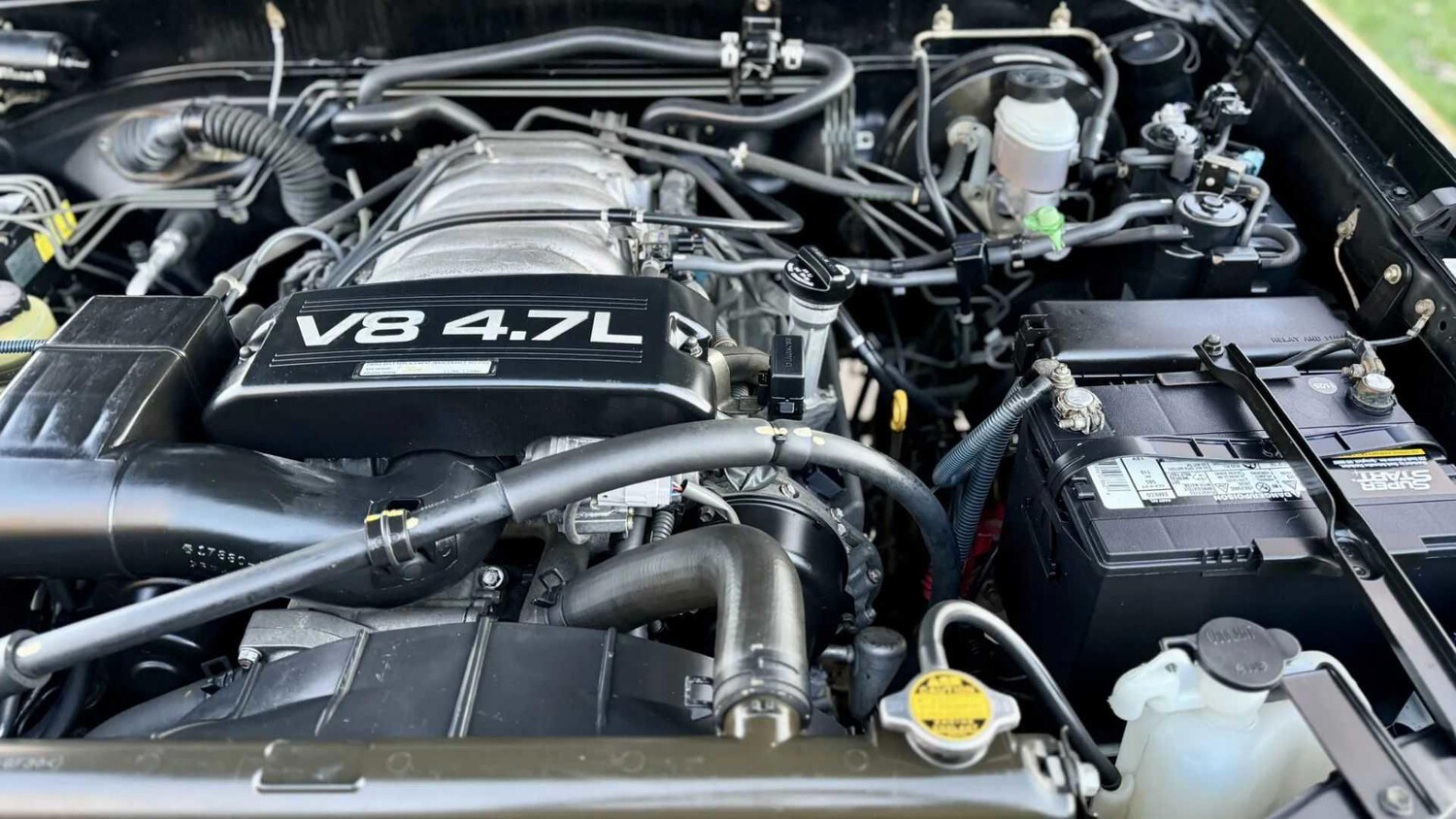
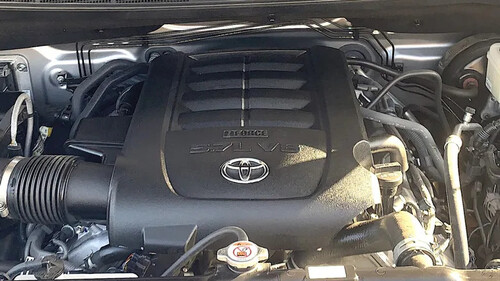
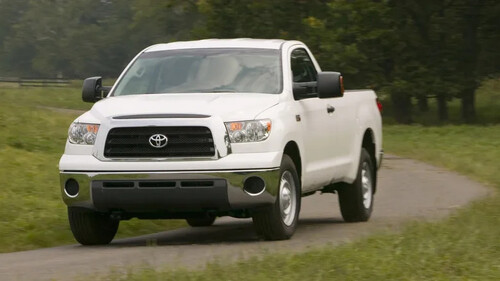
Jump LinksIn the world of engineering, the pursuit of longevity often begins and ends with the basics. And if a company wants to build a truck engine that performs day in and day out for an indefinite period, the engineers really need to get those fundamentals right.This is definitely the approach Toyota took when it designed the 4.7-liter 2UZ-FE V8 engine. The powerplant came to epitomize what an under-stressed gasoline V8 should be in a pickup. Other engines have a good reputation for longevity, but few have the level of respect that truck enthusiasts give to the 2UZ-FE, especially in the Toyota Tundra. While this V8 was never the most powerful option in the class, many now consider it a gold standard for dependability. The 2UZ-FE Became Famous Bring a TrailerToyota wasn't interested in creating a highly strung engine when it dreamed up the 2UZ-FE. It set out to build something with tremendous strength and capability for trucks and SUVs, with lots of margin from the outset. In the first-generation Toyota Tundra, the 2UZ-FE was a 4.7-liter, 32-valve DOHC V8, producing 245 horsepower and 315 pound-feet of torque. The engine featured a cast-iron block, aluminum alloy heads, conservative tuning, and torque available low down in the rev range, making the powerplant feel very relaxed in everyday work.The engine earned a sterling reputation through its fundamental design features. While the cast iron block added weight, it was also strong and durable. With that robust bottom end in place, Toyota added a modern valvetrain on top. The dual-overhead camshaft, 32-valve cylinder heads meant the 2UZ-FE was both old school and advanced at the same time.The powerplant was very heavy-duty in its basic architecture but refined in execution. And it was also deliberately modest in horsepower output to make sure that nothing was ever overstressed. This combination is a recipe for longevity, which is why this engine has earned trust over time. The Overbuilt Concept Became The Whole Philosophy Bring a Trailer Enthusiasts often bandy the word “overbuilt” around, but with its 2UZ-FE, Toyota placed that concept front and center. The technical team focused on a compact but sturdy cylinder block and used a 90° V8 layout with dual overhead cams and four valves per cylinder. There was nothing exotic about that approach, but it was still quite refined in the early 2000s for a truck engine, and, crucially, the powerplant gave Toyota a lot of capacity to play with.The 2000 Tundra only turned out 245 hp from that 4.7-liter engine, which was certainly not a radical state of tune. It was nevertheless very capable of delivering useful torque and smooth operation, and it never felt as if it were under strain. Even when Toyota updated the Tundra's 4.7-liter V8 with VVT-i (Variable Valve Timing with intelligence), the output only rose to 271 hp. That was still a very conservative state of tune, with durability the intent rather than power.On the road, owners knew that they could rely on their 2UZ-FE-powered machine. Folks came to realize that they weren't dealing with a highly stressed engine when drivers asked the machine to tow, commute, haul, or idle through years of ordinary abuse. Owners gradually discovered that Toyota had built a redoubtable engine with exactly that kind of life in mind. The Tundra Proved That Durability Didn't Have To Feel Dull Toyota The Toyota Tundra is the 2UZ-FE's most visible American showcase partner. On the market, Toyota branded the 2UZ-FE as the 4.7-liter i-FORCE V8. Initially, the eight-cylinder came with a four-speed electronically controlled automatic transmission in the first-gen Tundra. With the proper configuration, a vehicle could tow up to 7,200 pounds, making it a genuine work truck, not just a niche lifestyle pickup.Independent tests showed that this Tundra could reach 60 mph in 7.9 seconds in its two-wheel-drive Access Cab SR5 with the V8, and the four-wheel-drive version was almost as quick. Testers noted the engine's seamless rush of power and felt that the truck had real-world pace and capability with smooth, linear, and strong delivery from low RPMs.Toyota was also quite sensible with its packaging approach. Even though the first-generation Tundra wasn't as large as some of its direct competitor models from that period, the combination seemed to work well. The company showcased a powertrain that felt polished and capable without ever sacrificing utility. The Ownership Story Underlines The Engine's Legend Toyota Plenty of engines look good on paper and seem impressive in testing, but the real story is out in the field. And the reality is that plenty of people have championed the 2UZ-FE through a couple of decades of daily use and maintenance. Toyota was very confident in its product back in 2003 and, in its Tundra sales information, openly invited owners to contact the company if they could log 100,000 or 200,000 miles with the original engine, transmission, and drivetrain.The Japanese company was clearly bullish about its creation and wanted to build a strong ownership reputation around its truck and V8 motor. The confidence was clearly well-placed, given the 2UZ-FE's refreshing simplicity. That simplicity feels even more attractive today. After all, engines like that typically need to lean on turbocharging and denser packaging to be effective in the modern world.While these engines may seem bulletproof, they do, of course, need their fair share of attention. The early 2UZ-FE engines feature a timing belt rather than a timing chain, so belt service is part of responsible ownership, and you can't simply ignore the engine simply because it is a famous Toyota V8. While the engine's reputation depends just as much on care as on design, the maintenance burden remains predictable and understandable. But it's definitely worth paying attention to detail for those who champion longevity.For those who do look after their vehicles, the market is beginning to recognize this solid combination of Tundra and 2UZ-FE. Clean examples from the first-generation Tundra era can command strong money, with one recent example of a low-mileage 2000 Tundra Limited Access Cab V8 trading for $32,000. That doesn't mean first-generation Tundras are automatically collectible, but it does mean some collectors are looking for well-preserved trucks with that 2UZ-FE at their heart. Looking At The 2UZ-FE In Context Toyota The 2UZ-FE may be the hero of the story, and the early Tundra its natural companion, but if you’re in the used-vehicle market, it's important to look closely at those early Tundras. Sadly, many of these first-generation trucks suffered badly from structural corrosion, and NHTSA documents show a frame-related recall and service campaign for 2000 to 2003 Tundras. It mentioned severe corrosion risks around the rear crossmember and spare tire carrier, as well as possible brake line damage under certain conditions. This means that it's very important to make sure that any strong 2UZ-FE engine is not sitting in a compromised truck.It's also vital to remember that the Tundra wasn't the standard-bearer in its class and certainly didn't dominate every towing, payload, or horsepower chart from its era. However, the rig might have been a little more manageable or polished than some of the rivals from that time. Many satisfied buyers seemed to prefer a well-built machine that did its work without complaint.In any case, the 2UZ-FE V8 never became famous for being dramatic; in fact, the opposite was true. The engine earned its reputation for being calm and strong. Today, buyers seem fixated on output, and manufacturers are turning out increasingly complex trucks and SUVs in that landscape. But for those who would rather keep things simple, this old Toyota formula feels rarer and more attractive than ever.