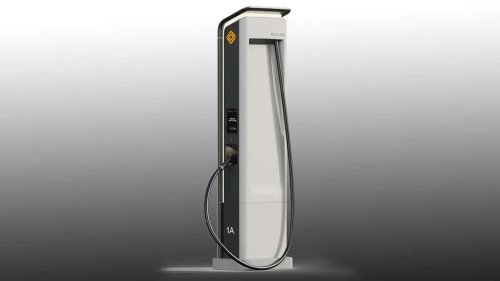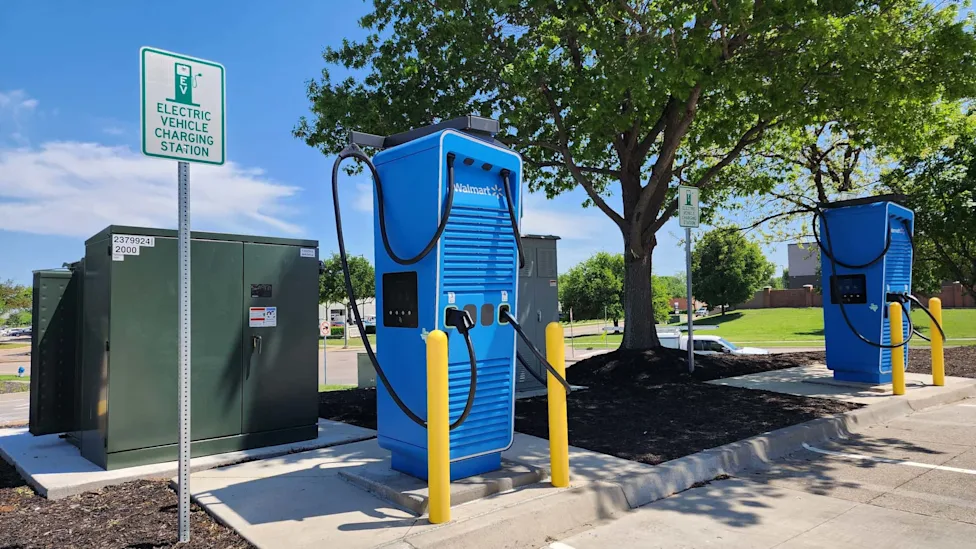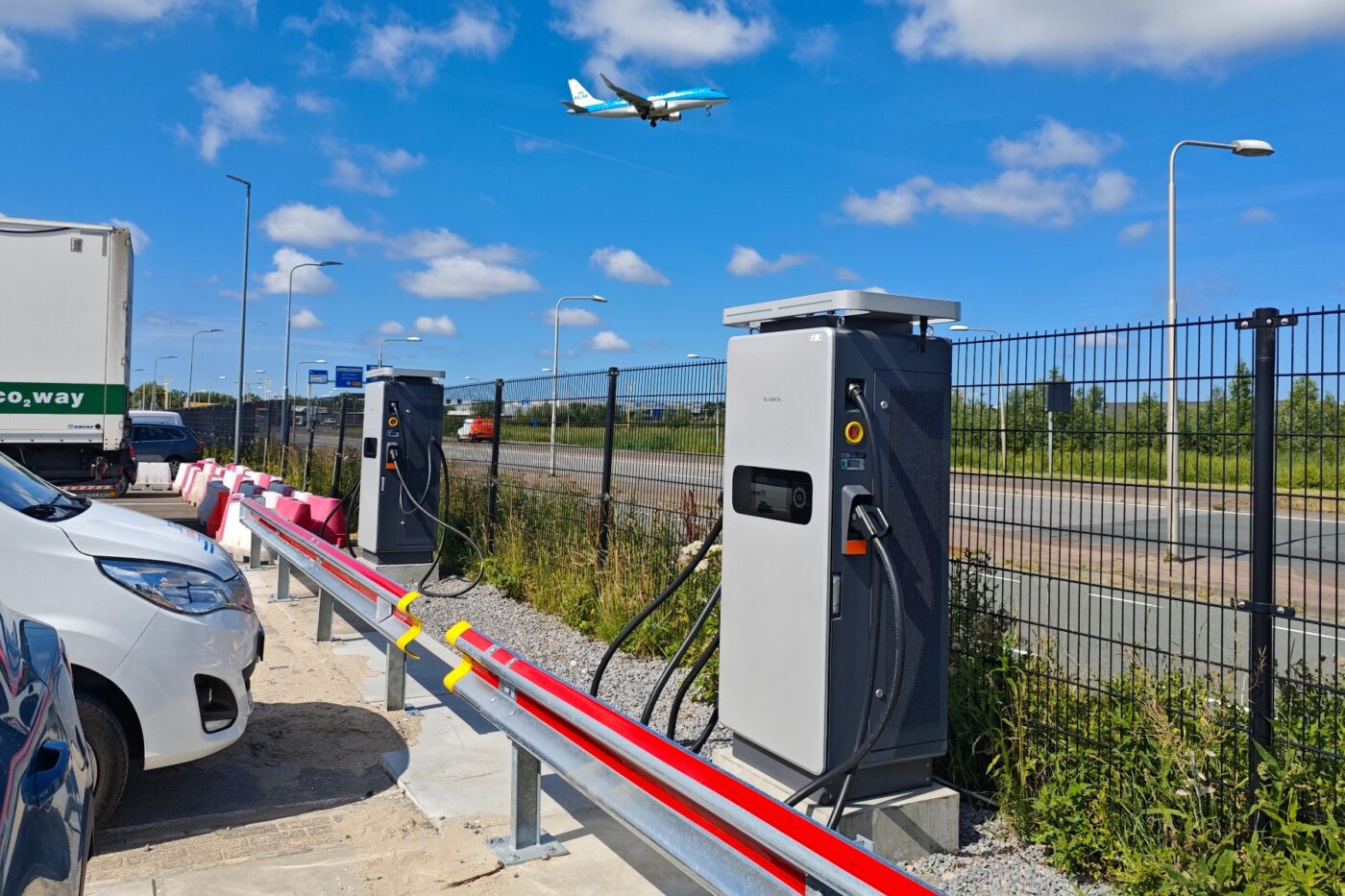
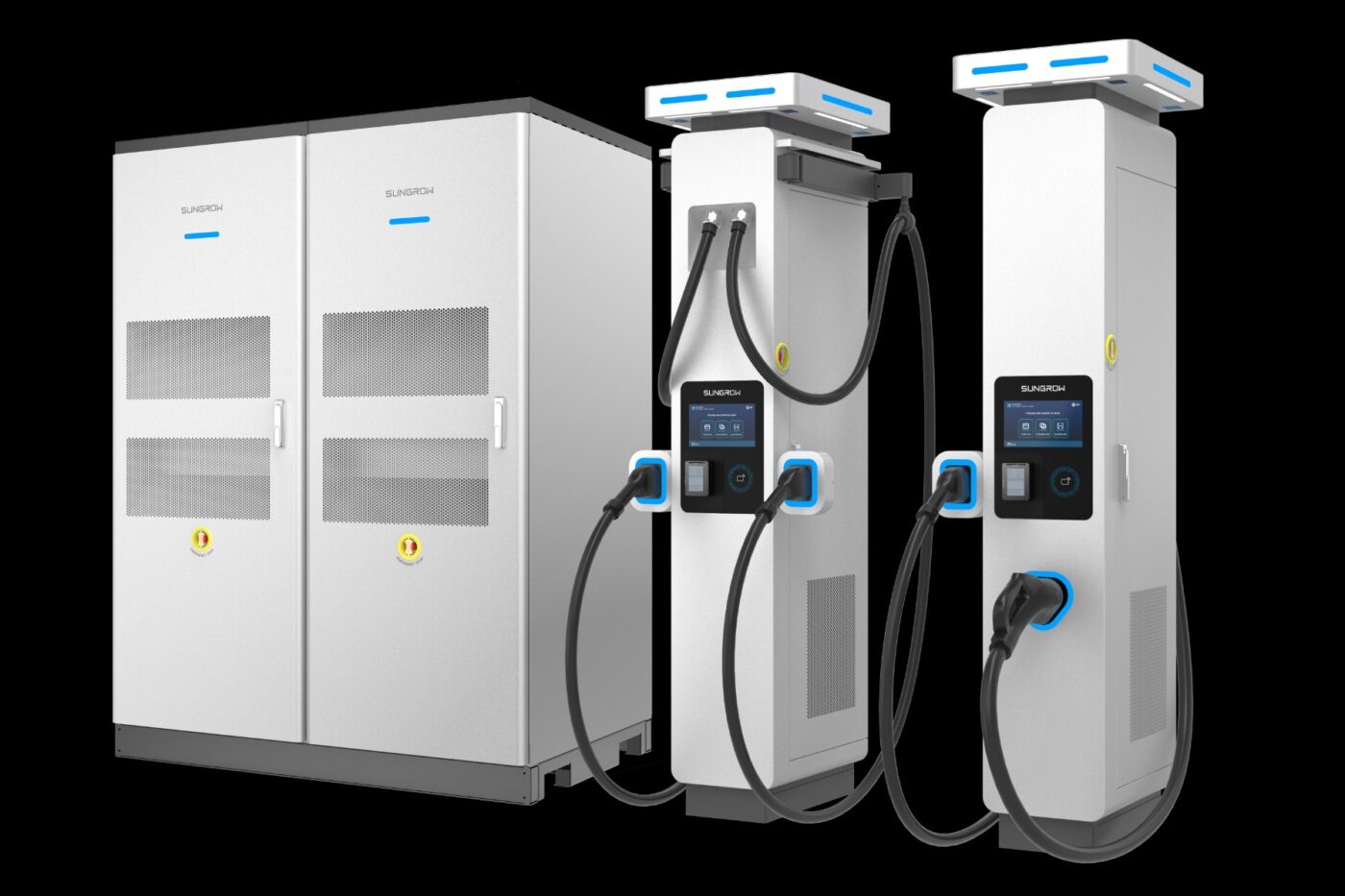





















Christos, Sungrow has recently expanded into the European charging station market. What is your background?Sungrow was founded in 1997 in Hefei, China, with a focus on power electronics, initially for PV systems. Initially, the company exclusively manufactured inverters for PV installations. Today, however, our portfolio is much broader, and we offer energy storage systems and charging stations, among other solutions.How long has Sungrow been active in Europe, and when did you add charging stations to your portfolio?We have had our headquarters in Munich since 2011. As mentioned, Sungrow initially specialised in power electronics, so charging stations were a logical next step. Our core competence lies at the heart of charging stations—namely, the power modules. Our charging stations achieve efficiency rates of up to 97 percent — a performance level that partners and customers across Europe clearly value.What does your EV charging portfolio look like?We offer a broad portfolio, comprising AC and DC charging stations ranging from 22 kW wallboxes to megawatt charging solutions of up to 3.5 MW for large fleets. Our AC wallboxes are particularly well-suited for integration with inverters and/or home storage systems.So, this is about coupling the charging station with a PV system?Exactly! The market is shifting and more customers want integrated PV systems and charging solutions. Before electric mobility took off, standalone solutions dominated. Today, we deliver both from a single source, including the GHG quota*. A key advantage of this combination is that our iSolar Cloud platform for inverters allows solar energy to be fed directly into the wallbox and then into the electric vehicle.How are you positioned in the DC segment?In our DC portfolio, all our charging stations come with certified metering, which is a key requirement in markets such as Germany and Austria. The range starts with a 30 kW DC wallbox, which doubles as a mobile charging station on wheels—a practical solution for applications such as car workshops. Sungrow will soon launch an 80 kW DC wallbox with two connectors. Beyond that, the portfolio includes multiple solutions in the 100+ kW segment.Aren’t 30 kW and 80 kW relatively low these days? The trend in fast-charging hubs clearly points toward higher-capacity systems, with 300 or 400 kW solutions now dominating installations. Which application scenarios are you targeting with these smaller DC chargers?Both our 30 kW (IDC30E) and 80 kW DC charging stations are aimed, for example, at shopping centres, large car parks, or service departments where vehicles are parked for one to two hours and need to charge around 60 kWh. A smaller DC wallbox is ideal here, as this cannot be achieved with AC charging. Another consideration is the footprint: many companies do not have much space for charging stations. However, our DC wallboxes can be mounted space-efficiently on walls or small pedestals, requiring minimal space.Do such 80 kW wallboxes require a medium-voltage connection?No, a standard low-voltage connection is sufficient. A medium-voltage connection is only required for our ultra-fast chargers.That brings me to my next question: What about significantly higher charging capacities beyond these 30 or 80 kW?First, we have the medium-fast system IDC180E, with 120 to 180 kW. We also offer two products for ultra-fast charging. One is the satellite version IDC480E, a power unit with dispensers, available with either 360 or 480 kW total output, equipped with 30 kW power modules. The other is the compact charger IDC480E-C, which combines everything in one housing, with a total output of 480 kW and 40 kW power modules. This model can initially be installed with a lower capacity, such as 240 kW, and the output can later be expanded by adding more power modules.Your technologies are well-suited for sector coupling, and you already highlighted the combination of PV systems and home wallboxes. At the same time, you support much larger commercial and industrial installations, where battery storage systems add a third component. This ‘triad’ was considered exotic until recently. How strong is the demand for it today?The topic of storage is growing exponentially. We have many projects that combine storage with charging stations, but increasingly, we are seeing projects that integrate PV, storage, and charging stations. The combination of all three is highly attractive, for example, due to GHG quotas. Of course, the initial investment is higher, but the return is definitely greater in the long run. Depending on the scenario, the investment can be recouped within three to four years. Sungrow charging stations in the NetherlandsImage: SungrowLooking at it from a CPO perspective: does it make sense to use a battery storage system to purchase electricity at favourable rates and then sell it as charging power at a good margin?Absolutely, and we already see demand increasing. The setup is easy to implement, especially where a suitable energy market exists. Many partners use storage systems to trade energy on the day-ahead market – a highly lucrative model, particularly in established markets like Germany or Scandinavia.Additionally, battery storage plays a key role in HPC charging. It enables high-power charging in locations without a medium-voltage connection or when grid approval would take years.Which CPOs in Europe are already using your charging stations?In the DACH region, a major project with Energieversorgung Niederösterreich (EVN) has been running since March 2024. As part of this, around 300 Sungrow charging stations have already been installed, primarily in and around Vienna. Due to our strong performance and support, we have since won a second tender from EVN. This demonstrates the quality of our products. Several hundred more charging stations will be installed by early 2028.Are these AC, DC, or HPC charging stations?The EVN projects involve DC charging stations in the 120 to 180 kilowatt range. In recent months, we have also received increasing enquiries for systems in the 400 to 480 kW range.You briefly mentioned your new megawatt charging solution. What is that about?We will present our megawatt system, ChargeStack 1000, at Power2Drive/Intersolar in Munich this June. It is designed as a satellite solution, consisting of at least one power unit and multiple dispensers. We offer two types of dispensers: either with two CCS2 connectors each or one MCS and one CCS2 connector. Scalability is particularly important for us here, as the system can be expanded from 1 megawatt to 3.5 megawatts. Each substack has 500 kW, and up to seven such substacks can be connected in parallel. New megawatt charging system Sungrow ChargeStack 1000Image: SungrowWhat application scenarios are you considering for this product, particularly with regard to the new MCS standard?Demand for dispensers with MCS connectors is not yet very high, as MCS is not yet standard in trucks. However, this will change soon, as we are hearing from various truck manufacturers. In a year, demand for MCS is likely to be significantly higher. Our megawatt system is not just about delivering 1.5 megawatts through a single MCS connector. The system is also exciting for centrally managing a large number of charging points with lower individual outputs. For example, the base output of one megawatt can be dynamically distributed across twelve charging points. With the maximum configuration of 3.5 megawatts, up to 42 charging points can be connected. We achieve this using a matrix architecture.What specific applications are you thinking of for this megawatt system?Primarily logistics, for charging fleets of electric vans or trucks at depots. However, many charging point operators are also showing interest. This is particularly relevant given that the EU is providing €600 million in funding for charging infrastructure under the AFIF.Thank you for the conversation, Christos!*The GHG quota (greenhouse gas quota) is a regulation in Germany requiring fuel suppliers to reduce emissions by a set percentage, often by using cleaner fuels or buying emission credits.