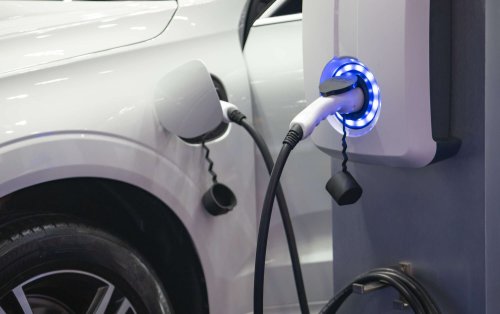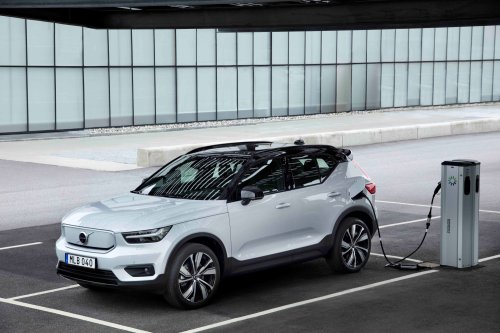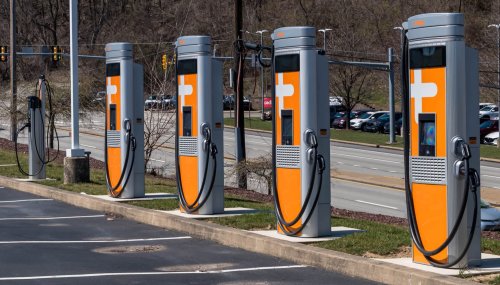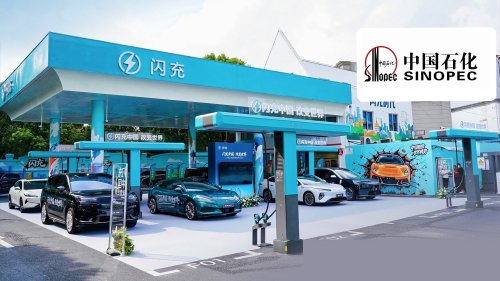
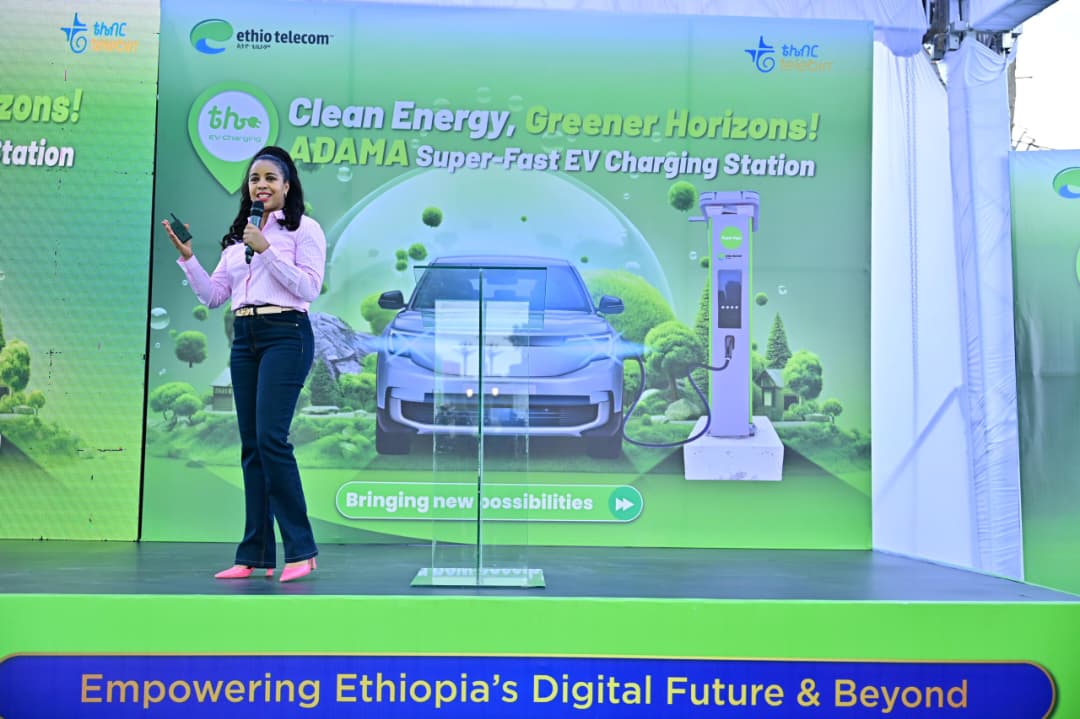




















Ethio Telecom recently launched its fourth public use Super-Fast EV Charging Hub. This new charging hub is located in the city of Adama along Welenchiti Street, past Derartu Square. This station marks a significant milestone as the first of its kind to expand outside of Addis Ababa into regional cities. Let’s revisit the other hubs first. Ethio Telecom’s first hub has: Eight Ultra-Fast Chargers (up to 600 kW each) — the chargers are capable of fully charging compatible vehicles within 15 minutes, enabling rapid recharges for drivers on the go. Twelve Super-Fast Chargers (up to 500 kW each) — delivering high-speed charging with optimal accessibility, and ensuring drivers get back on the road quickly. Smart Pole Chargers — integrated into smart city infrastructure, these Level II chargers provide emergency charging options for drivers in need and are located along various routes. The second hub has: Four Ultra-Fast Chargers (up to 600 kW) — the chargers are capable of fully charging compatible vehicles within 15 minutes depending on the vehicle’s capacity, enabling rapid recharges for drivers on the go. Particularly, for city buses engaged in providing public transport service, rapid charging (refueling) allows them to save time and continue providing their service. Twelve Super-Fast Chargers (up to 500 kW) — Delivering high-speed charging with optimal accessibility, ensuring drivers get back on the road quickly. The third hub can accommodate up to 16 vehicles at a time, ensuring efficient service for drivers. The fourth hub can accommodate up to 12 vehicles at a time. With this commissioning, the company’s total combined capacity now reaches 60 vehicles at a time across the four hubs. Interestingly, Ethio Telecom says the latest hub features super-fast chargers capable of automatically diagnosing and adapting to various vehicle specifications — with specific compatibility for European EV models, addressing a critical market gap. That means the first three hubs had GB/T, as most EVs coming into Ethiopia had been from China, and now the fourth hub adds CCS2. This combination will probably be the default combination for charging infrastructure for most African countries going forward, as supply will continue to be predominantly from China and Europe. Let’s look at data recently published by Ethio Telecom on the performance of the first 3 charging hubs. These hubs are capable of serving up to 48 electric vehicles at a time along both directions of the Bole–Megenagna corridor and around the Summit-Fyel Bet area of Addis Ababa. Since launch, on February 11, 2025, these three hubs have served over 284,032 electric vehicles, dispensing 7,159,066.88 kilowatt-hours of energy. This initiative has successfully prevented the emission of 10,028,363.32 kilograms of carbon dioxide into the atmosphere — an environmental contribution equivalent to planting more than 49,559 trees. So in just over a year, Ethio Telecom’s network has dispensed over 7,000 MWh of electricity for over 280,000 charging sessions! That just shows you how Ethiopia’s electric vehicle scene is scaling given that this is just one of the charge point operators and also does not include those charging at home or at the office. Two years ago, Ethiopia made the bold step of becoming the first country in the world to totally restrict the import of internal combustion engine vehicles. When the initial restrictions were announced, only the imports of semi knocked down and completely knocked down kits of internal combustion engine (ICE) vehicles destined for local vehicle assembly plants were permitted. There was no special treatment for anyone and even embassies and diplomats had to comply. Earlier this year, Ethiopia moved to further restrict imports of ICE vehicles by including SKD and CKD kits of ICE vehicles. There are now over 120,000 electric vehicles on the roads in Ethiopia. Last year, more than 60% of all new vehicle registrations were electric, and this share will certainly be much higher in 2026, as Ethiopia has since added more restrictions for ICE trucks. This uptake of EVs is supported by Ethiopia’s growing renewable energy powered electricity generating plants, such as the Grand Ethiopian Renaissance Dam. The 5,150 MW Grand Ethiopian Renaissance Dam (GERD) contributes 15,500 GWh per year of clean electricity to the country’s energy mix. Now that the GERD has been successfully completed, Ethiopia is also working on the 1,800 MW Koysha hydropower plant that is expected to generate around 6.4 GWh per year. It is already under construction and is set to be completed by 2029. Ethiopia’s energy mix is already over 90% sourced from renewables. Ethiopia recently announced plans for a further 10 GW of new hydropower plants. That means in a relatively short space of time, Ethiopia would have added about 17,000 MW of renewable energy capacity to support not only its electric mobility plans but also increase access to electricity along with modernisation and industrialisation of the overall economy. Images courtesy of Ethio Telecom