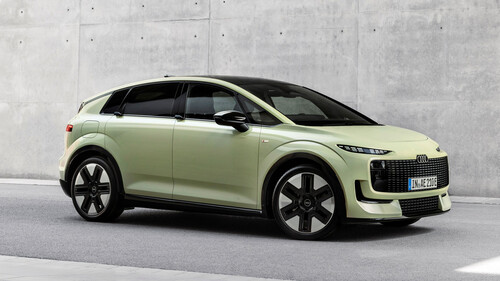
When March ends next week, we'll get a glimpse of how the auto industry is doing on the sales front – which brands are up, which brands are down, and how tariffs and war with Iran are affecting consumer purchase decisions. Cox Automotive has already done a fair amount of homework on all those fronts and shared insights earlier this week, giving us a pretty clear picture of what to expect when official first-quarter sales figures drop. And the picture doesn't look so rosy for most brands.Some of the highlights: New car sales are on pace for 15.8 million units in 2026, down 2.6% from last year, tied to higher vehicle prices and interest rates and the loss of EV tax credits. Every major automaker, save for Mercedes-Benz, is likely to post a year-over-year drop in Q1 sales. Volkswagen leads that drop at nearly 20%, making the forthcoming debut of the new Atlas especially critical for the German brand. Even Toyota, which is gaining market share on GM, is expected to dip slightly in sales.Cox AutomotiveLow-income consumers face continued strain, and it's a brutal market for job seekers. Inflation is peaking and was not as acutely impacted by tariffs as feared. The White House is actively engaged in industrial policy, so expect the unexpected. Electrified vehicles reached a record-high 26% of the US market, on the strength of hybrid-electric powertrain growth. Resonating With 'Mainstream Buyers' Jared Rosenholtz / CarBuzz / Valnet"Consumers are gravitating toward hybrids as a lower‑cost, lower‑commitment entry point into electrified driving, especially amid affordability pressures."–Stephanie Valdez Streaty, Cox AutomotiveToyota continues to dominate, accounting for about 43% of HEV sales, followed by Honda, Ford, Hyundai, and Kia, Stephanie Valdez Streaty, director of industry insights for Cox Automotive, says during the presentation. "Traditional hybrids are well positioned to remain the primary driver of electrified growth in 2026, as affordability, ease of ownership, and a wide range of hybrid model options continue to resonate with mainstream buyers," she says.Cox Automotive Be sure to read the chart above closely, especially the vertical Y axis. True, US sales of vehicles powered solely by internal-combustion engines fell from 85% in early 2023 to 74.3% at the close of 2025. But note that the Y axis starts at 60%, which creates the illusion that hybrids are taking over. Combining hybrids, plug-in hybrids and ICE means about 94% of the US vehicle market remains powered by gasoline. The 5.9% share for EVs reflects the sharp drop in fourth-quarter sales after the EV tax credits ended Sept. 30.Toyota As Cox analysts crunch the anticipated first-quarter US sales numbers, they expect light vehicle deliveries will fall 9.7% from Q4 2025 (4 million units) to Q1 2026 (3.7 million), as well as a 6.5% drop compared with Q1 2025, when automakers sold 3.9 million units. General Motors should be No.1 in first-quarter US sales, at more than 624,000 vehicles, but that's down about 10%, resulting from relatively weak sales for Cadillac and Buick, says Cox Senior Economist Charlie Chesbrough.And Toyota is closing in on the lead, boosted by Tacoma and 4Runner sales. Cox says the Japanese automaker should gain 1.0 point of market share, reaching 15.5% of US sales, while GM will likely lose 0.6 points to settle at 17.0% of US sales. If each automaker stays on the current trajectory, it's quite possible Toyota will enter 2027 outselling GM in the US for the second time ever – and the first time since 2021, when the COVID-19 pandemic affected supply chains. Ford, Hyundai Battle; VW, Subaru Struggle Subaru While General Motors and Toyota duke it out for No.1, Ford and Hyundai are battling for No.3. Cox projects Ford's first-quarter sales falling significantly to about 452,000 units, which translates into 12.3% market share (a drop of 0.4 points). Meanwhile, Hyundai is projected to have sold more than 418,000 vehicles in the first quarter, good for 11.4% market share, a gain of 0.7 points."A couple other OEMs are seeing signals of a better year ahead," Chesbrough says. "Nissan will see their Q1 sales rise 17% over Q4 thanks to robust activity from Rogue and Pathfinder," he says, noting Stellantis sales down only 1.9%, much less than the national average, with help from sales of Ram pickups and Promaster vans."Of manufacturers having a challenging Q1, Subaru and Volkswagen lead the way," Chesbrough says. "VW sales are expected to be down nearly 20%, leading to 0.6% loss of market share." Cox is anticipating sales dips of more than 30% for Volkswagen Jetta and Taos, two of their most affordable products. As for Subaru's five biggest nameplates, only Forester is showing gains this year, Chesbrough says.In the overall search for more market share in Q1 2026, only three automakers are expected to join Toyota with growth: Hyundai (+0.7 points), Mercedes-Benz (+0.5 points), and Stellantis (+0.4 points).