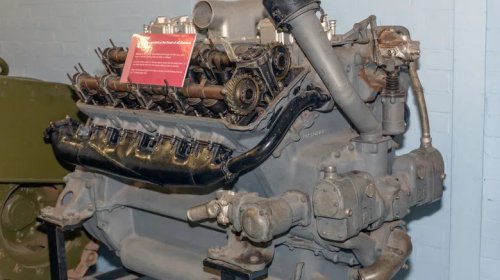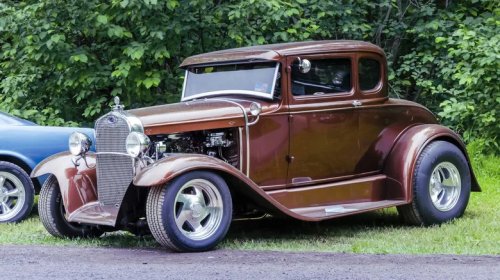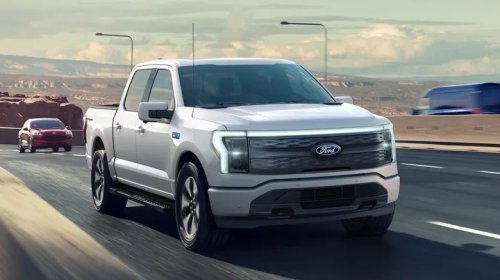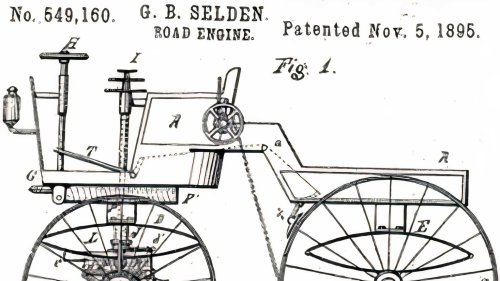
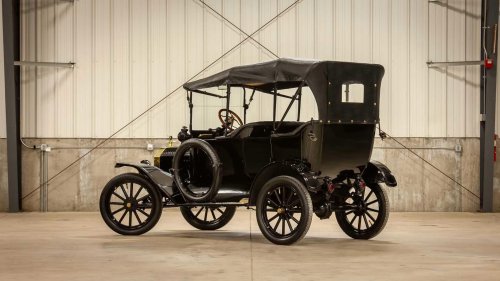
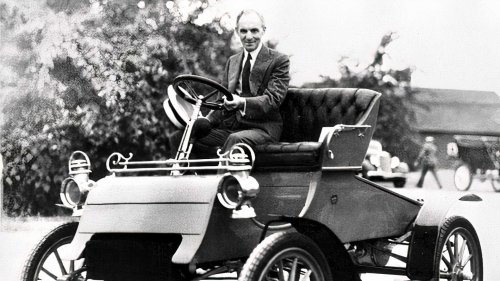
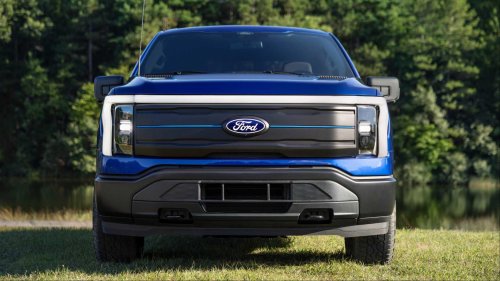



















In the early 1900s, cars were still rare sights on American roads. They were noisy, expensive, and mostly for the wealthy. But what really threatened their future wasn’t unreliable technology or bad roads. It was a patent. One man’s legal claim to the very idea of a car.If Ford hadn’t refused to play along, that single piece of paper could have stalled the entire industry. Before the assembly line, before the Model T, Ford’s biggest fight was about freedom. This is how he took on America’s first patent bully and changed history. The Patent That Claimed Every Car In America The InventorsIt all started with George B. Selden, a patent lawyer who filed paperwork in 1879 for what he called a “road engine.” He never built a working car, but the patent described a motorized carriage powered by an internal combustion engine. The description was so broad that almost any automobile could be linked to it. Selden's Chokehold On An Entire Market Selden’s patent sat unused for years. When cars started catching on, he suddenly decided to cash in. He joined forces with several major manufacturers to form the Association of Licensed Automobile Manufacturers, or ALAM. Together, they demanded that every carmaker in the country pay Selden for the right to build vehicles. The fee was roughly fifteen dollars per car, which was a serious expense back then.Smaller automakers didn’t stand a chance. Anyone who refused to pay faced lawsuits that could wipe out their entire business. ALAM controlled the market through fear and paperwork. The system worked smoothly until Henry Ford showed up and refused to play along. Ford Refused To Play The Game iStock ImagesWhen Ford applied for a Selden license, ALAM rejected him, saying he wasn’t an established manufacturer. That rejection became a turning point. Ford decided he didn’t need anyone’s approval to build cars.In 1903, ALAM sued Ford Motor Company for patent infringement. The group demanded that Ford stop producing cars and pay damages. It could have been the end of his company, but Henry Ford stood firm. He told newspapers that the Selden patent was a fraud and that no one could own the idea of an automobile.That defiance made Ford a household name. To independent builders, he was suddenly a hero. He wasn’t the richest or most powerful, but he had the nerve to challenge the group everyone else feared. Many small manufacturers quietly supported him, even sending letters of encouragement or financial help. They saw Ford as their only shot at survival. His fight was a battle for every small automaker trying to break into the business, so clearly the stakes were pretty high. The Legal Fight That Liberated The Automobile IntellepediaThe lawsuit dragged on for eight long years. Ford kept building cars while the case moved slowly through the courts. ALAM’s lawyers argued that any vehicle powered by an internal combustion engine fell under Selden’s claim, no matter the design. If that had held up, every carmaker in America would have been legally tied to Selden forever.In 1909, the first ruling went against Ford. The court said the Selden patent was valid, and Ford had infringed it. Many thought it was all over. Some rival manufacturers even started paying ALAM again, afraid the court would shut them down next. But thankfully, Henry Ford wasn’t the kind of man who accepted defeat quietly.He appealed immediately, gathering technical experts to prove that Selden’s invention wasn’t relevant to modern cars. Selden’s patent described a compression engine invented by George Brayton, a design that operated on a constant pressure cycle. It was slow, inefficient, and not practical for lightweight vehicles. Ford’s cars, by contrast, used a four-stroke Otto cycle engine that delivered more power and efficiency. How A Technicality Freed Every Carmaker In America The distinction was technical, but it changed everything. In 1911, the appellate court agreed with Ford. The judge ruled that Selden’s patent applied only to vehicles using the Brayton-type engine, which was already outdated. That decision instantly dismantled ALAM’s control over the industry. Ford saved his company, sure, but the bigger picture was that he freed every carmaker in America.The victory also changed how courts viewed patents in technology. It showed that innovation couldn’t be locked up by someone who never built or developed anything practical. Ford’s win was a signal that progress belonged to the builders, not the bureaucrats. How Ford’s Win Changed The Game Forever Mecum AuctionsFord’s victory came at the perfect time. The Model T was just beginning to take off, and without ALAM’s monopoly, nothing could slow him down. The decision gave Ford and others the freedom to experiment, compete, and grow.Freed from licensing fees and restrictions, Ford scaled up production and cut prices dramatically. A Model T that cost around eight hundred and fifty dollars in 1908 was selling for less than three hundred dollars by the early 1920s. That price drop changed America. Ordinary people could finally afford cars, not just the wealthy.It wasn’t just Ford who benefited. New carmakers popped up across the country. Companies like Buick, Cadillac, and Oldsmobile thrived in this new open market. Innovation exploded because builders no longer feared being sued for every new idea. America’s entire industrial base gained momentum, and the nation’s identity as a car-loving country took shape.In short, the court ruling freed Ford and unlocked a century of progress. The auto industry transformed from a niche business to one of the backbones of the American economy. The same energy that made Ford fight in court went straight into his factories, where he figured out how to make cars cheaper, faster, and better. The Rebel Who Wouldn’t Back Down Public DomainThe ALAM fight was crucial. It secured Ford’s place in the market and made Henry Ford a legend all the same. Newspapers portrayed him as a tough-talking rebel who stood up to the old guard and won. He became the public’s favorite industrialist, a man who represented progress over greed.The win gave Ford massive confidence. He focused on efficiency, introduced the moving assembly line, and doubled worker pay to five dollars a day. That move shocked his competitors but worked brilliantly. Ford could keep workers happy and maintain the fastest production pace in the country.This shift created something much bigger than just affordable cars. It built a new American mindset. People started to see cars not as rich men’s toys, but as tools of independence. Families could live farther from cities, workers could commute longer distances, and rural towns could connect to the modern world. Ford’s stubborn refusal to bow down made that lifestyle possible. Ford’s Fight Still Reverberates All These Years Later FordMore than a hundred years later, Ford’s battle against the Selden patent still feels like a warning from history. The names and industries may be different, but the core issue hasn’t changed. Companies still try to use vague patents to control entire markets. Selden’s tactics live on in modern “patent trolls” that sue innovators just for existing.In many ways, Ford’s victory set the standard for how to deal with that problem. He proved that ideas only matter if someone has the guts to build them. That principle is the backbone of every major technology revolution since. From Silicon Valley startups to renewable energy companies, innovators still face versions of the same fight Ford took on more than a century ago.Every car we drive today carries a small piece of that legacy. Whether it’s a Mustang, an F-150, or even an electric Lightning, they all trace back to one moment when Ford refused to pay a man who had never turned a wrench or built a car. The day Ford won that appeal in 1911, the automobile became truly free.Sources: Forbes, Baker Hostetler, National Museum Of American History.