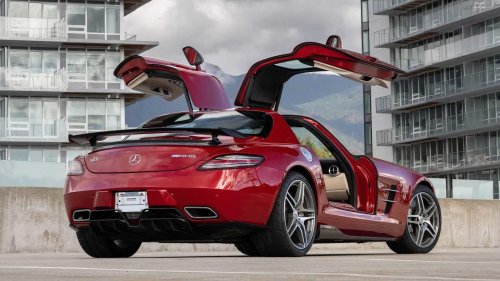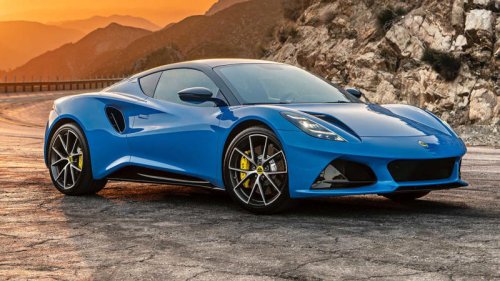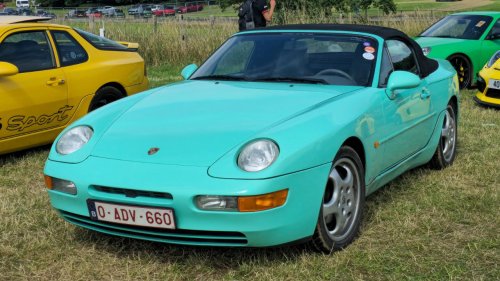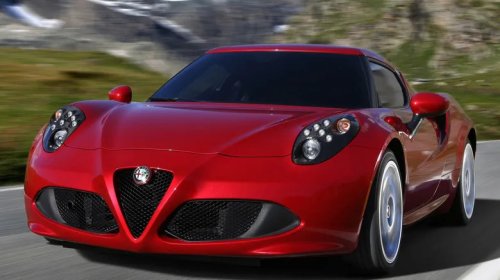
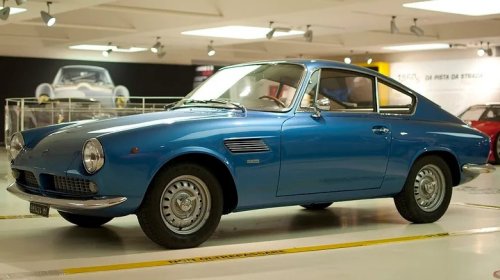
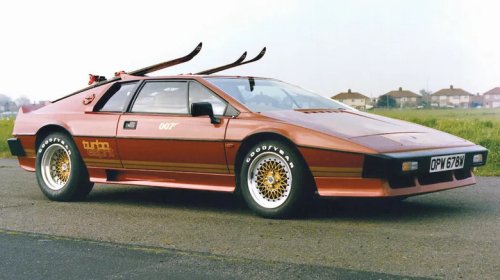
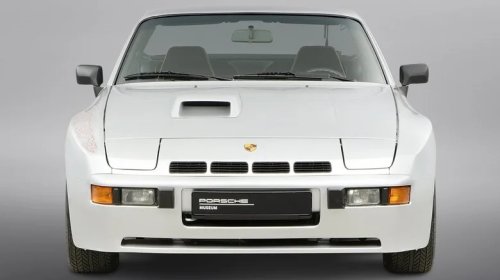
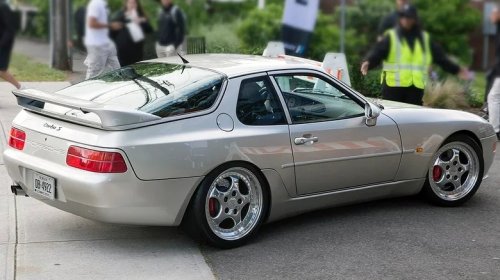
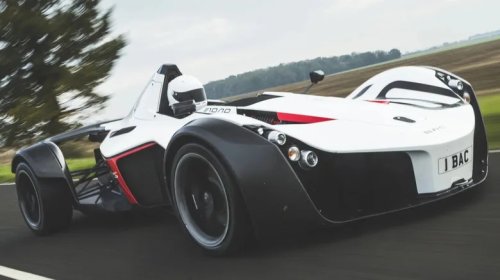
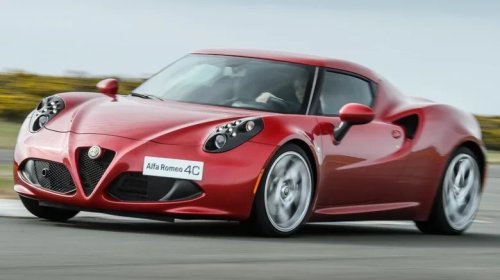
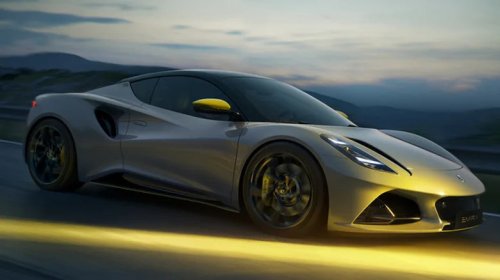



















StellantisWe all have different ways of interpreting how to define a supercar, but generally speaking, most of us will picture something mid-engine and technically impressive, with a properly powerful engine at its disposal. Something like a V8, V10, or even V12.There are exceptions to the rule, of course. The Lexus LFA and Mercedes-AMG SLS Black Series show that supercars can be front-engine, or at least front-mid, and Ford's 2017 GT proved a V6 engine was more than capable of replacing engines with higher cylinder counts. Well, it's about time another exception was made, for a small grouping of forward-thinking four-cylinder supercars.Cars like the old Lotus Esprit, which combined raked styling with turbo technology to produce a sleek coupé which could even rival Ferraris for performance, and Alfa Romeo's marvelous 4C, which packs F1-grade technology into a four-pot-powered carbon-fiber monocoque chassis. Here are seven four-cylinder-powered models from across decades, in chronological order from oldest to newest, that cross the line between sports car and supercar.ASA 1000 GTRahil Rupawala/Wikimedia CommonsThis pretty little sports coupé from the 1960s, penned by Giorgetto Giugiaro, flies far under the radar today. However, the humble 1.0-liter ASA 1000 GT began life as a potential four-cylinder Ferrari. At the tail end of the 1950s, Enzo Ferrari revealed plans to develop an entry-level sports car that would take its power from a third of his successful Colombo V12 engine. He never brought the design to production, but in the early 1960s the lesser-known firm Autocostruzioni Societa per Azioni, or ASA, did.ASA's dinky 1000 GT boasted a spaceframe chassis cloaked in steel and aluminum bodywork. In its final guise, the inline-4 sported a 1,032-cc capacity and was fed by a pair of sidedraft Weber carburetors. It packed around 95 horsepower alongside 75 pound-feet of torque, tackled the 0-60 sprint in 13 seconds, and could make it all the way up to 113 mph. Power was delivered to the wheels via a four-speed overdrive gearbox, while Dunlop disc brakes in all four corners dished out the stopping power.Inside, a Ferrari-like Nardi steering wheel and Jaeger instruments headlined the dashboard, while other Prancing Horse adornments helped justify the unfortunately high asking price — a factor that would eventually be the ASA's undoing. Essentially, the 1000 GT delivered everything that's so special about the raciest of '60s Ferraris, just in a pint-sized package. Genuine Colombo DNA, a striking Giugiaro design, performance-first underpinnings, and all the cabin trimmings one would expect from a '60s Lusso.Lotus EspritLotusIt's impossible not to bring up the Lotus Esprit when four-cylinder supercars are the topic. This rakish wedge of English engineering excellence enjoyed a lengthy career, with two dozen versions across 28 years. The earlier cars, produced between 1976 and 1987, were designed by Giugiaro, while later models – '87 through 2004 — were the work of Peter Stevens.The earlier cars' performance was modest. With just 160 hp and 140 lb-ft to play with, 60 mph from a standstill would be met in 8.4 seconds, with a top speed of 124 mph. Later revisions saw output grow along with the inline-4's capacity, but it was when Lotus introduced a boosted mill that performance really caught up with the Esprit's supercar styling. The first Turbo cars kicked out 213 hp alongside 200 lb-ft — enough to see the Lotus cut its 0-60 time by over 2 seconds, while its top speed swelled to a genuinely impressive 150 mph.The later Stevens-designed cars built on this success, with the most potent four-cylinder cars delivering in the region of 300 hp alongside 290 lb-ft in the S4 S guise. By this point, 0-60 was down to 4.6 seconds, and at full-chat, the four-pot Esprit knocked on the door of 170 mph. That's not far behind what the V8-powered Ferrari 348 could do at the time, demonstrating why Lotus' four-cylinder supercar deserves a spot on this list.Porsche 924 Carrera GTPorscheThis is specific to the 924 Carrera GT, as the standard 924 barely earns a sports car classification, let alone passing for a supercar. It was powered by a van engine, and early versions didn't even kick out 100 horsepower. Whether the 924 was a success is up for debate, as while it was underwhelming, it sold well. But one thing is for sure: The Carrera GT rendition of this easily overlooked coupé is a gem.The Carrera GT (and the ever-more-hardcore GTS and GTR variants) were based on the 924 Turbo, although key tweaks were made to see its output rise from 168 hp to 210 in the GT. It sported a top-mounted intercooler, digital ignition, and a higher compression ratio, while GTS cars (identifiable by their fixed, Perspex-covered headlights) ran an extra 3.6 pounds per square inch (psi) of boost. That saw the 924 GTS deliver a peak of 245 hp in road trim, or, for the uber-rare GTS variants specified in Clubsport guise, 275.Porsche kept the Turbo's interior as-is in the GT, although GTS models had weight pulled out of them, and Clubsport cars sported a roll cage, too. The whole point of the Carrera GT was to compete at Le Mans — these were homologation cars — and the plucky Porker actually returned a class win. So, a race car for the road with huge, blistered arches, and over 2.5 times the base 924's output? Sounds like a supercar to us.Porsche 968 Turbo SMr.choppers/Wikimedia CommonsIt was clear to Porsche that the four-cylinder recipe had some legs, so in the 1980s, it developed the 968. Under the hood of 968 models sat a huge 3.0-liter inline-4 engine that kicked out 240 horsepower. Certainly decent, and one of Porsche's most important engines, but definitely no supercar.That's where the Turbo S variant comes in. Like with the aforementioned 924 Carrera GT, it was homologation that called the Turbo S into being. It was instantly recognizable thanks to hood vents, an enlarged bumper vent, and 964-Turbo-sourced three-piece Speedline wheels. Under the hood, the addition of a water-cooled turbocharger with boost pressure set to 14.5 psi saw output rise from 240 to 305 horsepower. That was enough to see the 968 tackle 62 mph from a standstill in just 5.0 seconds, and it could manage 174 mph at the top end.The 968 Turbo S is also hypercar levels of rare, with only 14 road-going examples ever produced. As a result, the boosted 3.0-liter engine under its hood is seriously scarce, and collectors will pay crazy amounts to claim one when an example actually appears for sale. The last to appear saw bids reach $775,000, although with an estimated price of $900,000 to $1.2 million, the current owner apparently values it even higher.BAC MonoBACThe sheer amount of super-impressive technology wrapped into the Mono is enough to embarrass the spec sheet of many a so-called thoroughbred supercar. The BAC Mono seats only one, nestled into the center of a carbon-fiber tub, wrapped in graphene panels instead of carbon ones. Graphene – a material BAC was the first to develop for use in a production car — is lighter than carbon, so 20 pounds were shaved by making the shift. This matters given that the Mono only weighs between 1,224 and 1,279 pounds, depending on the model.Then there are the Sachs suspension, AP Racing brakes, Oz Racing alloy wheels, and specially designed Kuhmo tires. In Mono R trim, BAC tells us, its creation laps the Red Bull Ring a full 6 seconds faster than a Ferrari LaFerrari. Forget supercar territory, this windshieldless roller coaster for the road is quick enough to see even the most celebrated of hypercars take a back seat in its (non-existent) rearview mirror.It would be easy to assume that some hybridized turbocharged V6 or V8 lurks somewhere below the Mono's minimalist lines, but instead, motivation is provided by either a 2.3-liter or 2.5-liter inline-4 engine — both naturally aspirated. Power from the smaller engine comes in at 280 horsepower, while the larger brings 305 to the party, or 343 in "R" guise.Alfa Romeo 4CStellantisMuch like the BAC, but in a slightly more road-friendly manner, Alfa Romeo's little 4C boasts an impressive spec list, with features and components typically more at home on something with a prancing horse on the hood. Part of the 4C's appeal is its low dry weight of just 1,973 pounds, achieved using an impressive spread of lightweight materials more typically found in the supercar segment.At the very core of its design sits a 143-pound carbon-fiber monocoque, developed using F1-inspired "pre-preg" technology – that is, pre-impregnated with resin and a curing agent. Accompanying this tub are aluminum subframes front and rear, which nets the 4C more valuable weight saving, as do its composite — sheet molding compound and injected polyurethane — body panels and bumpers. Even the window glass is 10% thinner and 15% lighter than what's typical. Alfa Romeo went to such extremes in keeping the 4C's weight down, you'd almost feel bad driving it after a big lunch.With such a lightweight construction and dinky footprint — its wheelbase measures only 93.7 inches, although it's wide, at 73.5 inches — Alfa Romeo felt a punchy little four-cylinder was more than up to the task of motivating the 4C. A turbocharged 1.7-liter inline-4 with 237 horsepower and 258 lb-ft is what the automaker opted for, which isn't very supercar-like on paper, but its 4.2-second 0-60 time demonstrates just how capable it is when coupled to such a well-engineered, technically impressive chassis.Lotus EmiraLotusThe latest four-pot sports car worthy of crossing over into supercar territory is the Lotus Emira. It arrived for the 2024 model year and, despite original plans for it to be discontinued around 2027, new power trains are coming the Emira's way, which should see it live on for a few more years.Those two new power trains are yet to be confirmed — reportedly, one will be a plug-in hybrid, with the other an upgrade to the model's current Toyota-sourced V6 — but none of these is the engine in the spotlight here. Instead, it's the Emira's entry-level turbocharged 2.0-liter Mercedes-AMG inline-4 that fits this article's bill.Currently, the "four" is available in two states of tune: a 400-horse and a 414-horse guise, the former in the Emira SE, the latter powering the Emira 420 Sport. For reference, the supercharged V6 kicks out 400, so it's actually the Sport's AMG-sourced inline engine which that's most potent, despite its lower cylinder count.The Sport's four-pot-powered Lotus speeds to 62 mph from a standstill in 3.9 seconds and boasts a top speed of 186 mph. It should be a riot to pilot on track, too, thanks to a lower ride height and significant cooling improvements. There's even an optional Lightweight Handling Pack, which sees Michelin Pilot Sport Cup 2 tires, two-way adjustable Multimatic dampers, a titanium exhaust, lighter lithium-ion battery, and carbon-fiber louvered tailgate join the mix. A compelling list of ingredients that truly helps the Emira be as quick as it looks.Want more like this? Join the Jalopnik newsletter to get the latest auto news sent straight to your inbox, and follow us or add us as a preferred search source on Google.