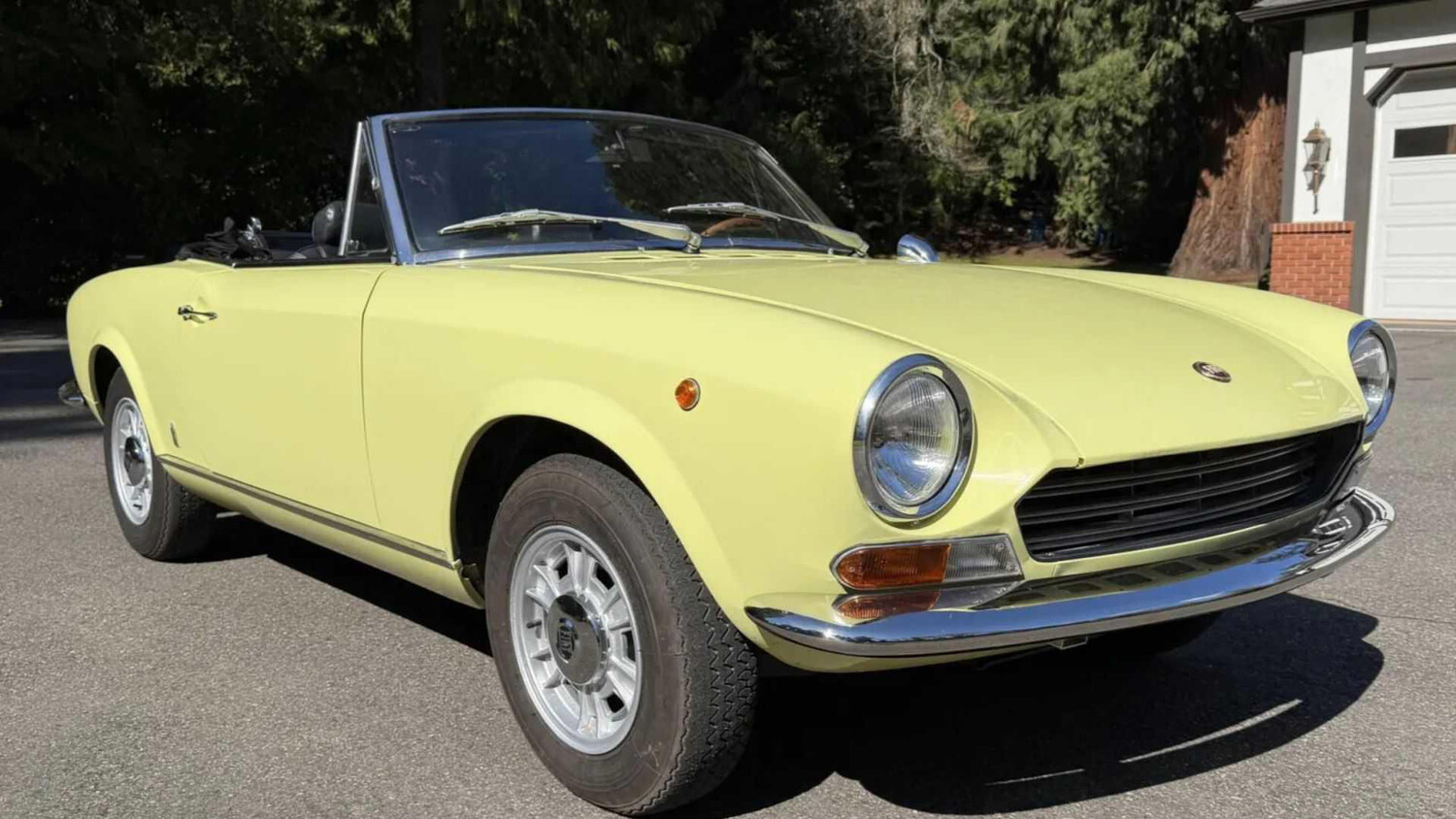
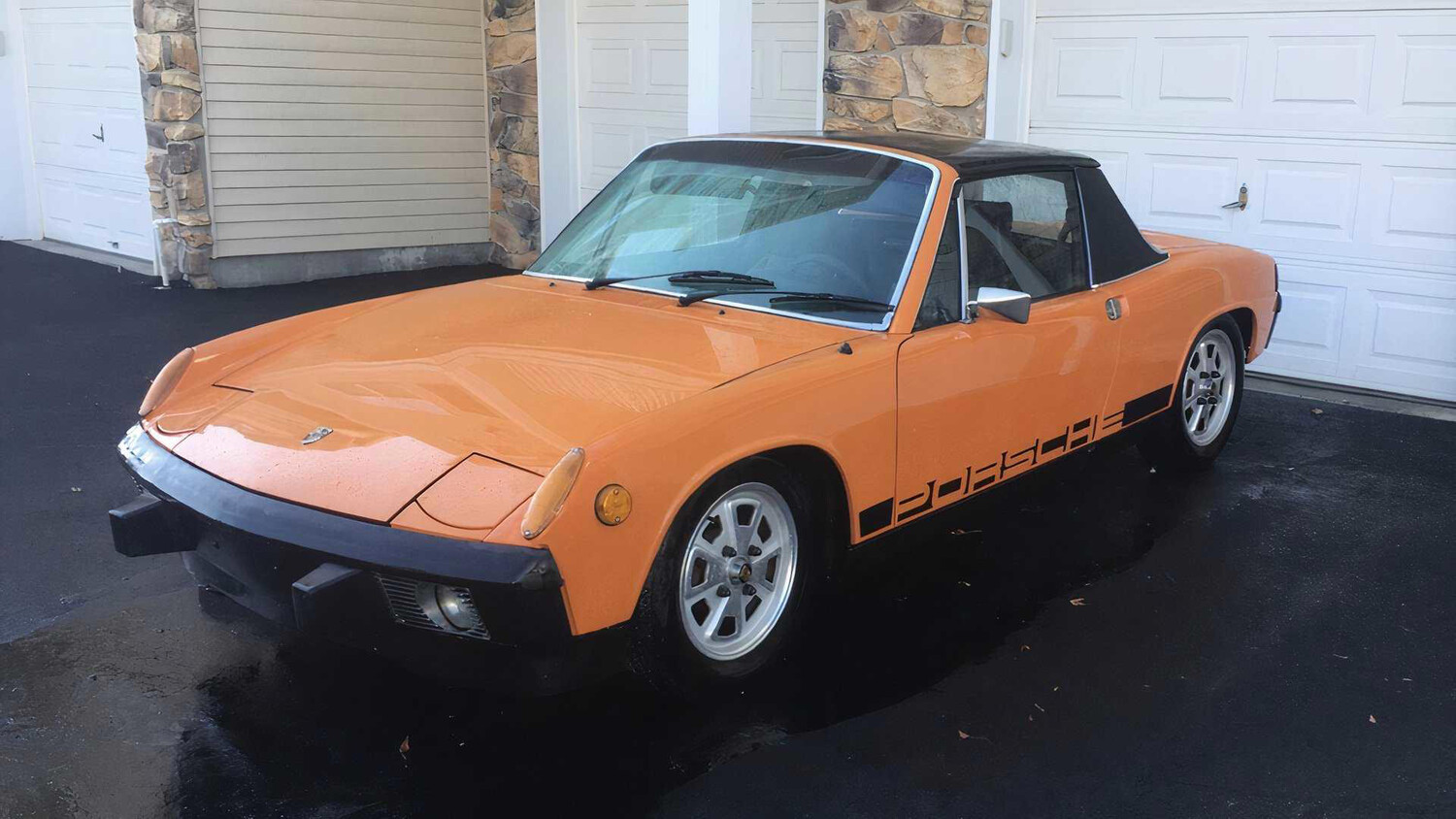
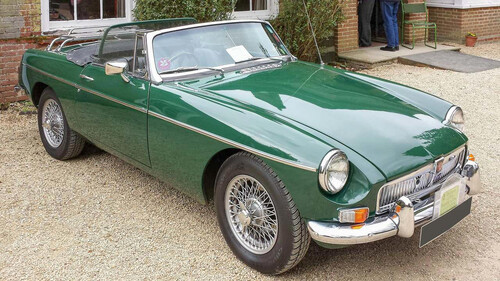
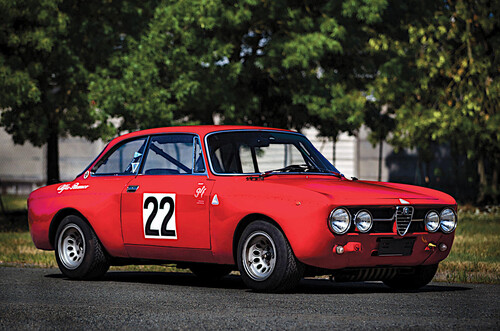
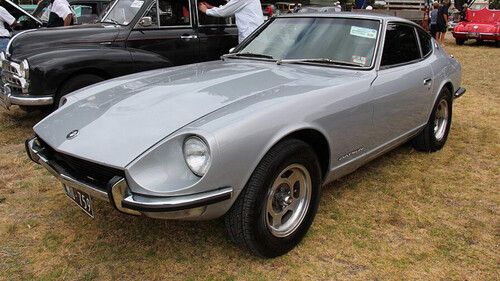
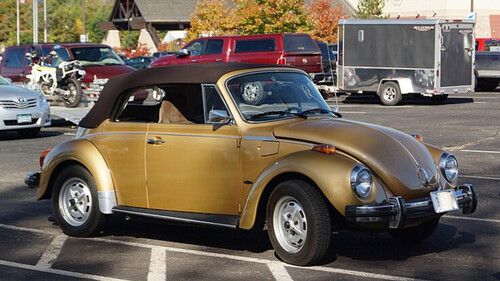
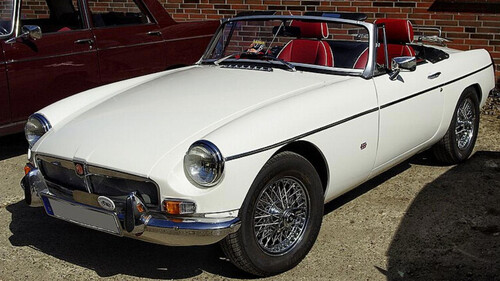
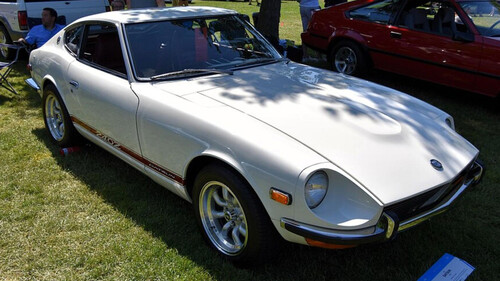
After the collector market’s 2024 peak, Hagerty’s Affordable Classics Index continued the gradual cooling, slipping another 1% from the end of last year. Experienced enthusiasts still don’t think that softness is a collapse; for them, it’s a narrowing window. In the years before the 1975 emissions regulations changed sports cars forever, lightweight roadsters and coupes with minimal insulation, almost no electronic interference, and mechanical personalities were the norm—shaped entirely by camshafts, carburetors, and steering feel. Algorithms or efficiency targets didn't dictate the engineering of these pre-1975 sports cars. The plan was to build cars purely for driving.For those decades, the conversation about affordable collector cars has revolved around a familiar group of European icons, from the MGB to the Triumph Spitfire, all the way to the Alfa Romeo Spider. These analog sports cars don’t need exotic-car budgets to deliver genuine collector ownership. However, the values of these legends are quietly starting to move again. 1966–1974 Fiat 124 Sport Spider Entry-Level Price: $8,000–$14,000 Bring a Trailer If you’re looking for the best value proposition left in the affordable Italian sports car market, the Fiat 124 Sport Spider may be your best bet. Compared to early Alfa Romeo Spiders, whose values have climbed aggressively in recent years, the Fiat offers much of the same open-top Italian charm while remaining surprisingly attainable. Fiat designed the 124 Spider to be mechanically sophisticated from the beginning. Aurelio Lampredi, a legendary Italian automobile and aircraft engine engineer, designed the Fiat with a twin-cam inline-four, a five-speed manual gearbox, and four-wheel disc brakes, even when rivals were still using simpler hardware. Decades later, this makes it far more advanced than its entry price suggests.Today, a pre-1975 Fiat example of good driver quality can comfortably cost between $8,000 and $14,000, but restored auction cars tend to cost much more. However, an Alfa Romeo Spider equivalent can sometimes cost more than double. As is the case with old cars, rust remains the unavoidable caveat, and those buyers who ignore it can quickly spend more on repairs than the car's actual value. So, the 124 Spider quietly looks like the Italian segment’s last major bargain for collectors chasing affordable analog European roadsters. 1962–1974 Triumph Spitfire Entry-Level Price: $7,000–$15,000 Bring a Trailer The Triumph Spitfire remains one of the purest, lightweight, simple, and gloriously analog affordable classic sports cars ever built. The Spitfire left the path of larger British grand tourers and focused almost entirely on driver engagement. Its eager little four-cylinder engines, unassisted steering, and featherweight body-on-frame construction prioritized feel over outright speed by making the car communicate constantly through the pedals, the wheel, and the chassis in ways modern sports cars fail to replicate. That personality appealed to enthusiasts instinctively. Today, project examples can cost approximately $7,000, but units with proper maintenance history generally sit closer to the $12,000–$18,000 range.Early chrome-bumper cars with Giovanni Michelotti's original, lightweight Italian design are being separated from later emissions-era versions more aggressively. Today, a lot of enthusiasts pay more than many assume. For instance, the provenance and condition of television personality Simon Cowell’s 1970 Triumph Spitfire helped him sell it for nearly six times the value of an ordinary example. This may not be the experience of every collector, but it sends a market signal. Preserved early Spitfires cost significant premiums, and those premiums keep widening quietly. 1962–1974 MGB (Chrome-Bumper Models) Entry-Level Price: $8,000–$15,000 Bring a Trailer The best car to define entry-level British sports car ownership is the MGB. MGBs produced between these model years totaled approximately 300,000 units, with most of them being the roadster trim. It was the everyman’s roadster of the 1960s and early 1970s. The vast number of examples that rolled off production lines has created such an unmatched ecosystem of restoration knowledge, parts support, and enthusiast communities that still exists today. This makes ownership more attainable. Today, driver-quality chrome-bumper MGBs typically cost between $8,000 and $15,000, making them a safe entry point into the classic sports car world.Pre-1975 chrome-bumper cars with the original proportions and mechanical simplicity typically attract collectors’ attention more because this was before rubber bumpers and emissions compromises altered the formula. In Hagerty's 2024 index data, the Mk I MGB's values rose measurably, followed by another modest increase in early 2025. Many collectors are paying more attention to it now because of this, but as clean chrome-bumper cars keep disappearing faster than people realize, the prices will keep rising, meaning those early MGB collector cars will continue to be increasingly difficult to obtain affordably. 1970–1975 Porsche 914/4 Entry-Level Price: $12,000–$22,000 Bring A Trailer The Porsche 914’s identity crisis fought against it for decades. The four-cylinder version of the 914 quietly became one of the best-driving bargains in the entire Porsche world, overshadowed by the six-cylinder 914/6 and too strange-looking for traditional Porsche purists. However, it may not be that bargain for much longer. With the rare 914/6 already exploding into the six-figure territory thanks to its tiny production numbers and 911-derived flat-six engine, the conversation about affordability focuses on the four-cylinder cars. The Porsche 914/4 offers genuine Porsche DNA, analog driving feel, and excellent handling at prices still accessible to ordinary enthusiasts.Built between 1970 and 1975, the 914/4’s mid-engine layout delivers superb balance, phenomenal steering, and the removable Targa roof that adds open-air character without sacrificing rigidity. Additionally, rebuilding the desirable 2.0-liter versions is relatively inexpensive compared to traditional 911 engines. While its value has stayed strangely flat for years, appreciation has begun to accelerate, with some cars that sold close to $15,000 just a few years ago now costing substantially more. Alfa Romeo Spider (Series 1 & 2) Entry-Level Price: $14,000–$22,000 Bring a Trailer Styled by Pininfarina, the Series 1 and 2 Alfa Romeo Spiders had such effortless visual elegance that it was hard for modern sports cars to achieve. Alfa Romeo’s legendary twin-cam four-cylinder engines made the experience even more distinctive. Most enthusiasts have described its character as musical, with the engine’s rev and the induction noise feeling visceral, and the steering communicating constantly. The Alfa feels more sophisticated and emotional compared to British rivals.Today, the 1966–1969 Series 1 “Duetto” cars command serious premiums in the auction market, with some units selling for up to $60,000 or higher for excellent examples. However, the 1970–1974 Series 2 Kamm-tail cars remain the smarter value play, with some solid driver-quality examples trading roughly between $14,000 and $22,000. Alfa Spider values have stabilized since the sharp appreciation cycle they underwent between 2015 and 2019. However, this explosive growth phase may just be temporary, so for buyers who want a genuinely beautiful pre-1975 Italian sports car without six-figure pricing, this current pause may be an opportunity rather than a warning. 1970–1973 Datsun 240Z Entry-Level Price: $15,000–$25,000 Nissan Now, the Datsun 240Z demands the strongest sense of urgency from collectors. Although the market is a bit volatile, the long-term direction is becoming more obvious. Today, project-grade Series I cars trade near $6,000, but for a restored or highly original 240Z, a few examples trade in the $30,000–$40,000 range. Many exceptional examples cost significantly more. It's easy to understand why, as the 240Z represented a significant milestone historically.Nissan effectively embarrassed much of Europe’s affordable sports car market when it launched the Z car. This genuine sports car delivered sports car performance and visuals that undercut many European rivals, with its smooth inline-six, razor-thin pillars, long hood, and clean proportions. This formula blew away a lot of enthusiasts. Compared to the rest of the affordable classics whose values have softened recently, the 240Z is actively moving upward. This “undervalued classic” has shifted to being a “rapidly disappearing bargain,” as it is rapidly aging out of affordability entirely.Sources: Hagerty Media, Sports Car Market, The Drive, The Porsche Club of America, Classic Motorsports, Western Driver