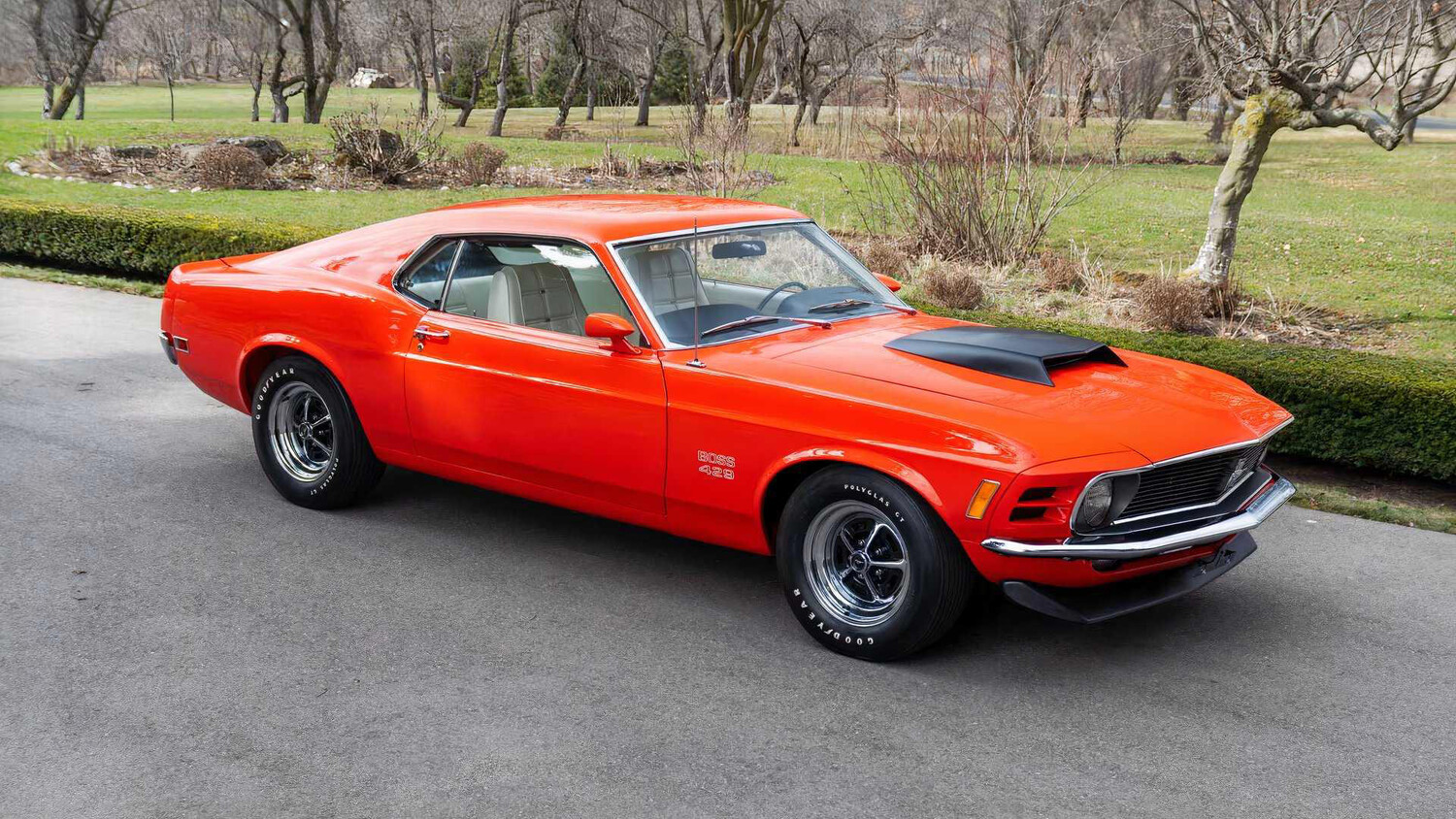
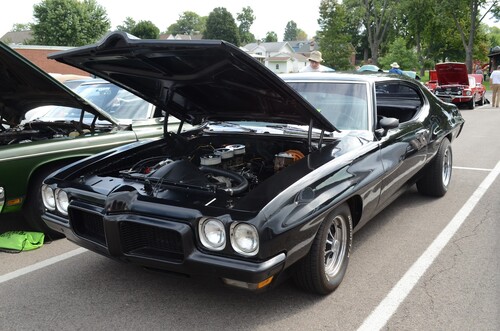
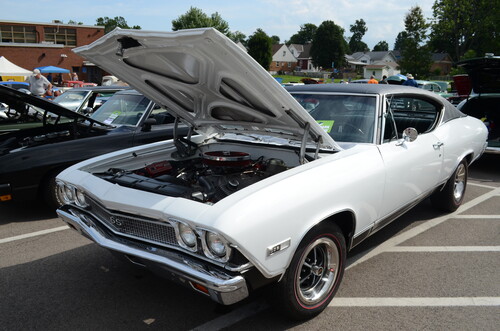
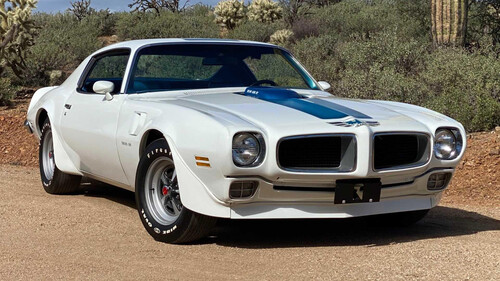
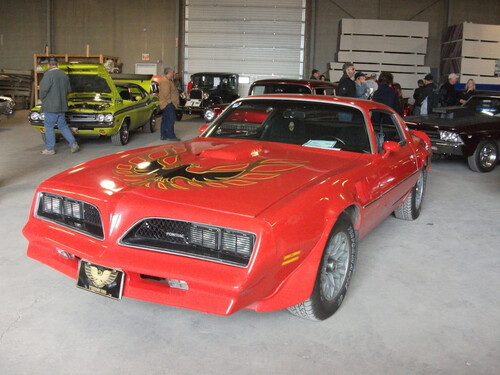
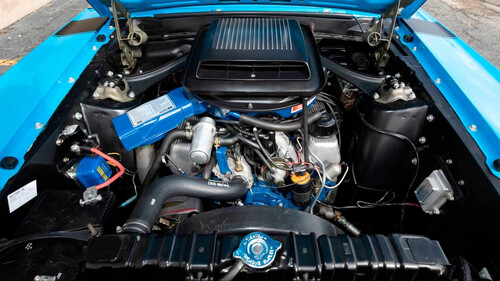
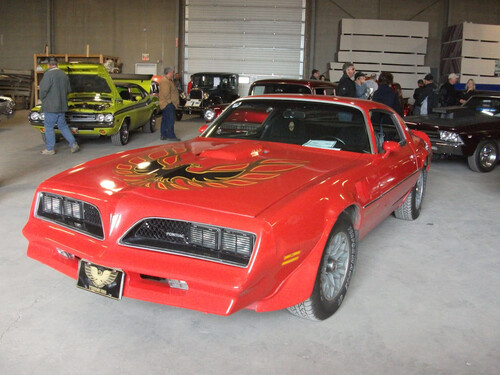
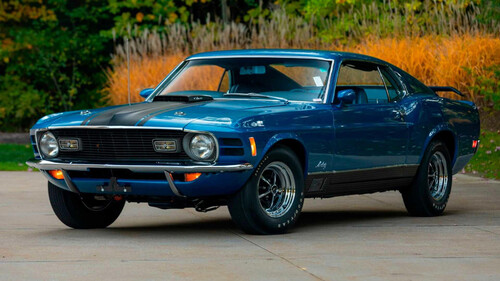
In the brutal world of car collecting, seemingly innocuous decisions buyers made years ago can easily result in thousands of dollars lost or gained in value. When buying Classic Cars produced over several years, one key detail collectors pay close attention to is the model year. Different model years can have different designs, engines, transmission options, interior technologies, production numbers, and other things that affect value significantly, but even when all model years are identical, choosing one or the other can have serious implications on value.Savvy collectors often skip the hype of the debut model and hunt down the final model year instead. By the time the final year rolls off the assembly line, the factory has already ironed out all the annoying rattles, leaky seals, and mechanical gremlins over a vehicle's lifespan, packing the car with the most durable parts and the tightest quality control possible. Beyond the better build quality, owning the definitive "end of an era" version creates a different experience at a local car meet and establishes an emotional connection that often results in higher hammer prices down the road. We did some research and found five swan-song machines that smart money is quietly targeting before mainstream awareness sends their valuations completely out of reach. 1976 Cadillac Eldorado Convertible Estimated Value: $27,500 Via Mecum AuctionsProduced for 12 generations and almost 50 years, the Eldorado is one of Cadillac's greatest models, which is why many gearheads rushed to buy the 1976 model when its future seemed to be in danger. See, in the mid-1970s, the NHTSA proposed strict new crash safety regulations that were expected to outlaw convertibles. Realizing it was the only domestic automaker left still building a factory convertible, Cadillac declared the 1976 Eldorado to be the "Last of the Convertibles," encouraging buyers to purchase an instant piece of American history. While the feared federal rollover standards never actually passed into law and convertibles ultimately survived, the 1976 Eldorado eventually became the definitive final classic-era factory convertible from Detroit, capturing a level of automotive luxury that will never be replicated.MecumThe 1976 model year also marked the peak of Eldorado land yachts and was the last true full-size luxury cruiser built before downsizing initiatives forced GM to shrink its premium vehicle platforms. Offering features like automatic climate control, real leather upholstery, a chrome-trimmed front grille, and self-leveling suspension. Beneath its hood lived a massive 500 cubic-inch V8 engine, providing smooth, effortless torque that defined the classic Cadillac driving experience.Speculators and savvy collectors have hoarded the 1976 Eldorado convertible for decades, recognizing its massive heritage appeal. This high preservation rate means that low-mileage examples frequently surface on auction platforms, making them highly accessible yet steadily appreciating assets. While the average 1976 Eldorado Convertible trades for roughly $32,982, several low-mileage examples have sold for over $70,000 in 2026. 1972 Oldsmobile 442 W-30 Estimated Value: $47,600 MecumThe Oldsmobile 442 W-30 needs no introduction: it's arguably the greatest muscle car built by GM's fallen division and one of the most famous "gentleman's Muscle Cars." But that's the 1970 model, which marked the peak of the legendary nameplate and earned a cult following as a result. The 442 W-30 versions that came after the 1970 model year were ignored for years by collectors largely due to the compression ratio drop that reduced power in 1971, but we're here to make the case for the 1972 version.MecumThe 442 reverted to an option package for the third-generation Cutlass's final year in 1972, but it retained much of the same overall design language and fiberglass ram air hood as the popular 1970 model, which makes it instantly recognizable to Oldsmobile fans today. As usual, ticking the W-30 box on the order form unleashed the high-performance (L77) variant of the 455 rocket V8 with a high-flow performance camshaft, specialized cylinder heads, and an aluminum intake manifold. Due to industry-wide shifts to SAE net horsepower rating systems, the factory rating was recorded at 300 net horsepower and 410 lb-ft of torque, but the 1972 442 W-30 remained a formidable performer on the strip.The 1972 model is the final model year built before the 442 crossed the threshold from the golden era into the Malaise Era, as the Cutlass evolved into a heavier, luxurious grand tourer with severely restricted power when the fourth generation launched in 1973. This last-year status and the fact that only about 772 W-30 units were built in 1972 are some of the reasons why the average price of $47,600 for the coupe and $68,900 for the far rarer (113 built) convertibles is arguably a steal. 1974 Pontiac Firebird Trans Am SD-455 Estimated Value: $73,000 Bring a TrailerWhile the rest of Detroit had already surrendered to the fuel crisis and strict smog regulations by 1974, Pontiac staged a legendary final rebellion with the 1973-1974 Pontiac Trans Am SD-455, which stood out as a spectacular anomaly. What makes the SD-455 special is its hand-assembled 455 V8, which had roots in Pontiac's legendary Super Duty racing programs of the 1960s.Bring a TrailerEssentially a street-legal race motor, the SD-455 featured a reinforced block, heavy-duty internals, a dry-sump capable oiling system, and high-flow cylinder heads. Rated at 290 net hp and 395 lb-ft of torque, the Trans Am SD-455 was a mechanical masterpiece wrapped in an iconic body featuring the 1974-only "shovel nose" front end, a functional rear-facing shaker hood, and the iconic "Screaming Chicken" graphic.With only about 943 units built in 1974, the SD-455 is a rare piece of Pontiac's history that's attracting collector interest. Insiders are actively cornering the market on these rare 'Birds because they represent the final gasp of true 1970s performance, and average prices are fast-approaching six-figure territory. 1970 Ford Mustang Boss 429 Estimated Value: $177,000 MecumIn the late 1960s, Ford was getting battered by Hemi-powered Mopars on NASCAR speedways. This was during Ford's Total Performance era, when the Blue Oval aimed to dominate all motorsports to maintain its performance image. Tired of losing to the Hemi's superior breathing power, Ford engineers developed a brand-new, high-breathing V8 engine featuring semi-hemispherical combustion chambers and massive valves. The result was the Boss 429 engine, which debuted in the 1969 model year.MecumIn line with NASCAR homologation rules at the time, Ford installed the engine in a limited run of 1969 and 1970 Ford Mustangs. Because the engine was so gargantuan, each car had to be hand-modified by Kar Kraft to fit the motor between the shock towers. Ford ended up building a highly exclusive run of only 859 units in 1969 and 499 units in 1970, turning the Boss 429 into a cult favorite.As one of the rarest Mustangs, the 1970 Boss 429 has entered an elite tier of secondary market valuations. While the average price for one in good condition is still in the $200,000 to $350,000 range, recent auction results reaching as high as $660,000 highlight the immense premium buyers are willing to pay for documented, numbers-matching examples. 1971 Plymouth Hemi 'Cuda Estimated Value: $284,000 MecumBorn out of Detroit's fierce street wars, the 1971 Plymouth Hemi 'Cuda represents the ultimate evolution of Mopar's legendary E-body platform. Plymouth built the Hemi 'Cuda just as insurance companies and environmental agencies were starting to crack down on performance, but instead of falling in line and detuning the legendary Hemi to comply with new regulations, Plymouth decided to end its production after the 1971 model year, but not before creating arguably the greatest model of the muscle car golden era.MecumThe 1971 Hemi 'Cuda had everything. For one, it had a superb Coke bottle design featuring a distinctive "cheese-grater" grille design, quad headlights, bold billboard stripes, and an iconic shaker hood. Even more impressive was the 426 Hemi V8 living under its hood, breathing through dual four-barrel carburetors to unleash a brutal 425 hp and 490 lb-ft of torque.The 1971 Hemi 'Cuda not only marked the end of the 426 Hemi era in mass-production street cars, but it also became the swan song of the muscle car golden era. Because of its scarcity and definitive end-of-an-era status, this model commands astronomical figures on the secondary market, with an average valuation of around $284,000 for coupes in good condition. However, the far rarer convertibles (only about 11 built in 1971) are on a completely different spectrum, with one selling for an eye-watering $3.3 million a few months ago.Sources: Hagerty, Classic.com, Bring a Trailer, Mecum