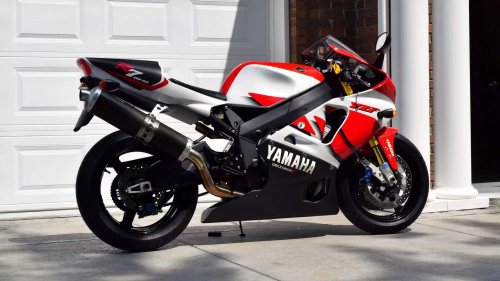
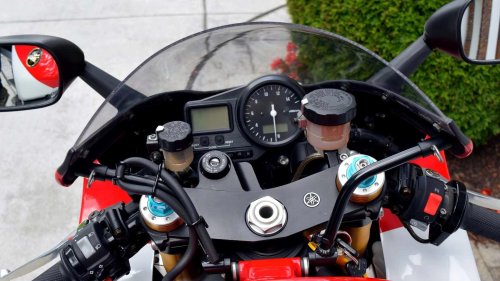
Some collectible motorcycles announce themselves before the garage door even opens. They have wild bodywork, famous race wins, poster-bike fame, or prices that made riders spit coffee across the showroom floor. The 1990s gave the world plenty of those machines.But one of that decade’s most fascinating sportbikes plays a quieter game. At a glance, it looks like just another sharp Yamaha from the golden age of Japanese superbikes. Look closer, though, and the story gets much richer. This was a road-legal excuse to go racing, built in tiny numbers, loaded with serious hardware, and misunderstood by plenty of people who only read the official brochure. The ’90s Were Full Of Sportbikes, But Only A Few Were Built For This Reason Bring a Trailer The 1990s spoiled sportbike fans rotten. Riders had raw inline-fours, sharp two-strokes, booming twins, and European exotica that looked like it had been designed during a shouting match. Today, many of those bikes matter because they come from a more analog time with no big safety net, no endless ride modes, and just throttle, tire, nerve, and maybe a prayer to the brake pads.Rarity helps, but rarity alone does not create obsession. A strange old bike can be rare because nobody wanted it, but that is not always romance. Sometimes it is just inventory with cobwebs. Homologation bikes were a different breed—manufacturers built them because racing rules required a road-legal base machine before a factory could go fight in production-based series. In other words, the bike had to exist in showrooms so the racebike could exist on the grid. Homologation specials gave fans some of the most focused machines ever sold with headlights and license-plate brackets.These bikes often cost too much, asked too much, and explained too little. They used parts ordinary riders did not need and carried compromises ordinary riders did not enjoy. The best ones did not always become the biggest sellers or the most famous bedroom-wall posters. A buyer had to know why the frame mattered, why the engine internals mattered, and why the stock horsepower number told only half the joke. Sometimes this was just too much. The Bike Looked Familiar, But The Details Made It Special Mecum That is what made this machine easy to miss. It arrived in the same visual family as Yamaha’s late-1990s R-series stars, including the YZF-R1 and YZF-R6. Those bikes had already made Yamaha look fast while parked. So, from across a bike meet, a casual fan could glance at this rarer model and think, "Nice old Yamaha," then walk over to whatever had the loudest pipe. Classic mistake.The bodywork looked clean and modern rather than bizarre. Under the skin, though, the parts list told a different story—titanium internals, high-end suspension, a special frame, a limited run. The kind of stuff that makes racers nod slowly and collectors start checking whether their mortgage lender has a sense of humor.All in all, a buyer who judged it like a normal showroom machine could miss the entire point. This was a foundation, not the finished house. Yamaha built it so the right people could turn it into a weapon. The Yamaha YZF-R7 OW-02 Is The Quiet Collectors’ Prize Mecum The bike was the 1999 Yamaha YZF-R7 OW-02. And no, not the modern R7 with the 689cc twin-cylinder CP2 engine that Yamaha introduced decades later. That bike has its own purpose, but the original R7 lived in a very different world. The manufacturer built the OW-02 as a 750cc homologation special for Superbike racing. The company sold only 500 units worldwide, all with a 749cc liquid-cooled DOHC five-valve inline-four, titanium connecting rods, twin injectors, an aluminum Deltabox II frame, and Öhlins suspension.Its official output was 106 horsepower at 11,000 rpm, which sounds modest for something this exotic. Yamaha also listed around 53.5 lb-ft of torque at 9,000 rpm and a 388-pound weight. Those numbers can make the R7 seem almost tame if someone compares it with later liter bikes or even some cheaper sportbikes from the same period. That is the trap. The showroom tune did not tell the whole story. Not at all.The OW-02 existed as a starting point. The bike reached buyers in a detuned state, and its low output underlined its racing purpose, not a lack of ambition. Race kits and proper setup transformed the bike into what Yamaha intended it to be. The stock bike brought the bones: compact engine layout, close-ratio racing attitude, serious chassis parts, and hardware that made sense to teams.That gap explains the R7’s quiet appeal. Casual riders saw a pretty Yamaha with a surprisingly mild power claim. Informed collectors saw one of the last great Japanese homologation specials, built right as the old 750cc superbike era started to fade. It rewarded knowledge back then and still does today. The R7 Became More Valuable With Time MecumThe R7 now sits at the center of several collector sweet spots. It is a 1990s Japanese sportbike and a homologation special. Yamaha built it in tiny numbers. It also packed race-focused engineering that normal road riders rarely needed. That combination made it special. Many old sportbikes are nostalgic, but the R7 adds purpose. It came from a rulebook, and rulebook bikes often age better than showroom fashion.The R7’s subtle look now works in its favor. It kind of flies under the radar in a way only trained eyes could recognize. No “look at me” paint job and no super aggressive body. That makes it feel like insider knowledge. A buyer who understands the bike knows why the frame matters, why the original engine matters, and why a clean one should not get treated like a used track toy with turn signals.Its rarity has become harder to ignore. In 2021, a zero-mile example appeared for sale at £59,995, about $83,323 at early-2021 exchange rates. That price made sense because collectors want original, unmodified examples, and many homologation bikes lived hard lives. Original parts had become difficult and expensive to find, which only makes complete bikes more desirable. The price has never stopped going up since then. The R7 OW-02 Was Never Meant To Be Understood By Everyone Mecum The Yamaha YZF-R7 OW-02 is not the loudest, weirdest, or most famous sportbike from the 1990s—okay, that's true. That easily explains why collectors quietly obsess over it. It looked familiar, but it was not ordinary. It seemed restrained on paper, but Yamaha engineered it for racing potential. It lived near the R1 in the family photo, yet it belonged to a much smaller and more serious club.That is the charm. The R7 asks the viewer to know a little and understand homologation rules, limited production, race kits, and the difference between showroom power and racing intent. It is the motorcycle version of a quiet person at a party who happens to have a championship-level résumé tucked in a jacket pocket.Collectors love machines that make them feel like they found something others missed. The R7 does exactly that. It rewards patience, research, and the kind of nerdy detail hunting that turns a simple garage visit into a 40-minute lecture. That may sound dangerous, but at least it is cheaper than therapy. Well, usually.