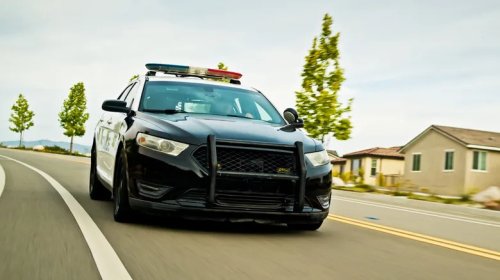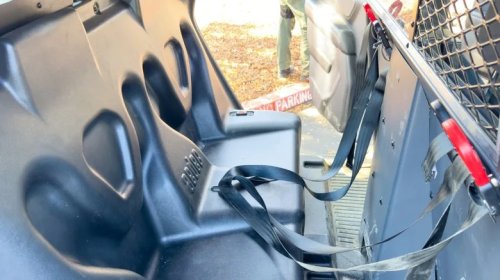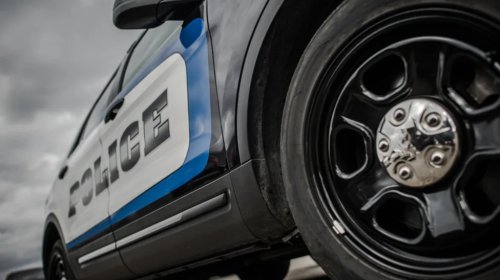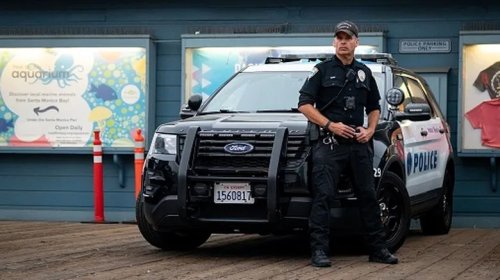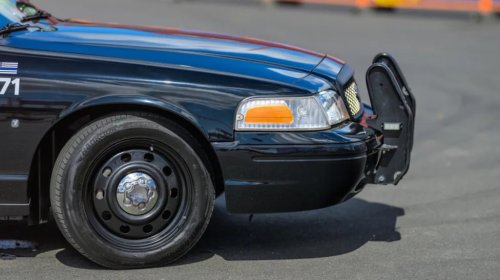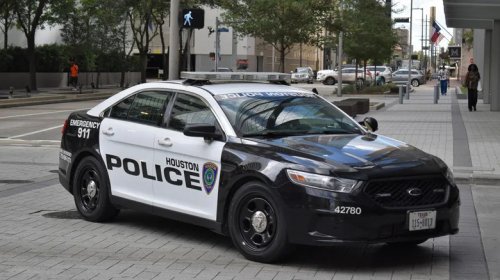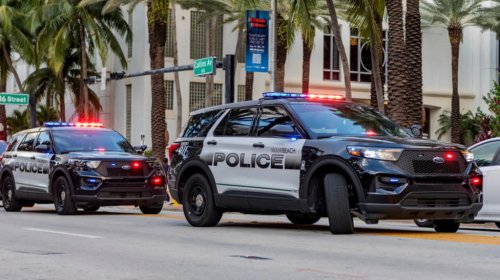
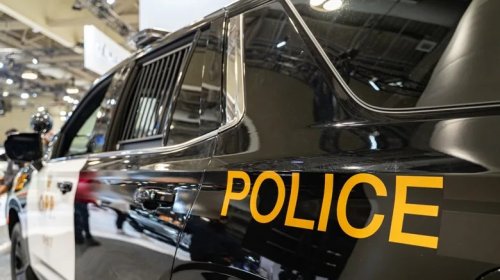
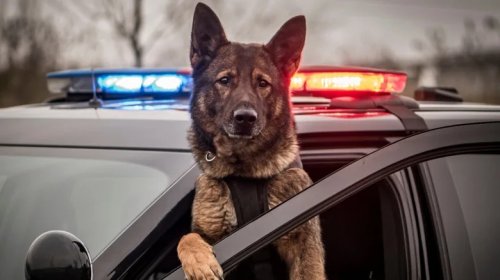
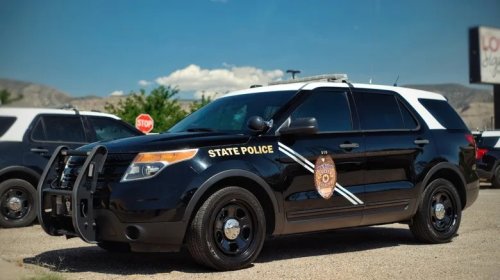
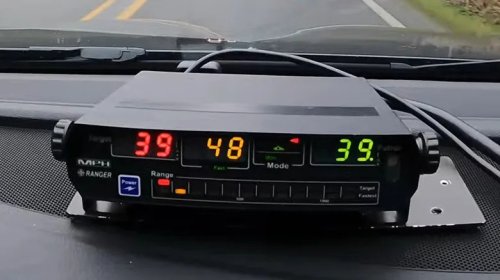
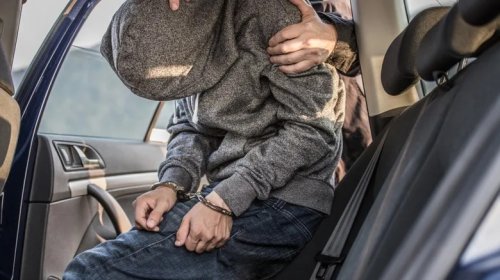












Just dance/Shutterstock Police cars go through a lot over the course of a week. They may have to take part in high-speed pursuits and be put through maneuvers that your Honda Accord wouldn't be well-suited for. Patrol cars also seem to do a lot of idling, since we often pass by them parked in random spots with the engine on, while the officers sit there busy with very important work — we're sure. In any event, that much idling can be hard on most engines. In addition to that, a patrol car has to do things that the average car doesn't — it is basically a mobile office for the cop. It has to transport prisoners. It may have to transport a dog, which, yeah, many of you do as well. But regularly transporting a working member of a K-9 unit is different from taking Scruffles to the vet every now and again. That's why you'll find all kinds of special equipment in and on a patrol car, like a K-9 insert, for instance. There are also all kinds of components added and upgraded to increase the vehicle's performance. There are even parts made specifically to enable PIT maneuvers. Police cars also contain gizmos to help catch speeders and to read plates. Front seat compartments are built out like an office, while the back seats are modified to hold detainees. Performance features Erman Gunes/Shutterstock Contrary to popular belief, police cars do not roll out of the factory with significantly "souped up" engines. Generally, the police versions of vehicles crank out around the same horsepower as their civilian market counterparts. For example, the fastest engine option for the 2025 Ford Police Interceptor Utility is the 3.0L EcoBoost V6, which happens to be the most powerful engine option offered on the 2026 Ford Explorer. That doesn't mean that police vehicles don't get performance upgrades. For example, Ford slaps on police-tuned suspension made for pursuit, and a feature called "AdvanceTrac with Roll Stability Control," which automatically adjusts torque and applies brakes when the vehicle starts to lose traction. It also comes with a heavy-duty cooling system that includes a high-volume radiator, which is important for a police vehicle since one day for a cruiser could involve both a lot of idling and high-speed maneuvers. Heavy-duty brakes, specially designed not to overheat, are also included on the Police Interceptor. It also has heavy-duty front suspension, which comes with front subframe structural reinforcements and other rugged components that are made to take a lot of abuse. In addition to all of that the vehicle features a preemptive full-time Intelligent AWD System. K-9 inserts K9 and photography/Shutterstock Did you know that police departments often consider the dogs in their K-9 units to be officers? The dogs go through a lot of training and sometimes put their lives on the line to save their human partners. For a companion like that, you're not just going to throw a blanket down in your cruiser's cargo area and call it a day. The containment units for these furry cops are specially designed to take the best care of them. The Setina Ultimate K-9 II, for example, is made with the dogs' comfort in mind. It has easy load steps for the dog to get in and out of the vehicle, a solid aluminum frame with plenty of ventilation, a removable rubber floor mat, and an optional fan to help keep it cool. It's an aftermarket unit, but with versions specifically made to fit the Dodge Durango, Ford Interceptor Utility, and the GM Tahoe. The AceK9 Hot-N-Pop Pro is a system with a mix of features to keep the dog safe. It monitors the temperature and will alert the handler if it gets too hot or cold for the canine. It can honk the horn, flash the lights, or activate the siren. It will even roll down the windows if the temperature gets too high. This can be a life-or-death matter for the canine. What if the officer needs help from their canine partner? The door can be remotely opened to release the dog. Equipment for PIT maneuvers and pursuit MICHAEL A JACKSON FILMS/Shutterstock If you're familiar with the old TV show "Cops" or watch a lot of body cam footage on YouTube, you know what a PIT (Precision Immobilization Technique) maneuver is. It's when an officer tries to end a vehicle pursuit by pushing the front corner of his cruiser into the rear corner of the car that's being chased. It causes the pursued vehicle to spin out of control and usually come to a stop. It even works on giant John Deere tractors. What you may not know is that many police vehicles are specifically equipped for this very maneuver, even though you may have noticed the equipment yourself. You know those cowcatcher-looking bars on the front of the police vehicle? They are part of what's called a "push bumper." The Setina push bumper is made of aircraft-grade aluminum or steel and has replaceable mar-resistant push pads on the front. The push bumper can be combined with fender guards that wrap around the front fenders, so that the cruiser's fender doesn't have to make direct contact with the chased car. Hey, no use in both cars getting heavily damaged in a police chase, right? There are even tires made specifically for police chases. In fact, police tires are built to completely different standards than those for civilian vehicles. They're called "pursuit" tires, and they're made to keep from blowing out during high-speed chases. They are often paired with heavy-duty steel wheels. Surveillance and detection technology Vortex Radar/YouTube We've all seen cops pointing those big radar guns at passing cars, hoping to catch speeders. They can also monitor people's speed while on the fly, thanks to dash-mounted radar units. These devices are always on and some of them can measure the speed of multiple cars at the same time. The officer doesn't have to point it or do much of anything. Remember when an officer had to "run your plates" to make sure your car wasn't stolen or to help identify who the owner of the vehicle is? There are now devices that automatically do this for them. Automated license plate readers can automatically detect and check license plates while the officer is driving down the road. Some of them can also detect the color and type of vehicles. The device then runs the plate against databases and alerts the officer if the plate is on what is called a "hot list." Cops like to be sneaky sometimes and would prefer that you not see them until they want you to see them. That's why some patrol cars come with modes that darken the interior so that it's harder to see if a cop is inside. Ford calls this "Dark Car Mode," and it allows the officer to "effortlessly switch off all internal lights and dim the drive console to help keep you and your vehicle safely hidden." Specialized front and back compartments Happy Lenses/Shutterstock You know how a lot of cops have what appears to be an entire office in the front seat of their car, including a big laptop, while, depending on where you live, you could get a ticket just for glancing at your smartphone? Well, all of that equipment requires docks and brackets, which can be purchased as part of an aftermarket package. The seats are sometimes specially made, as well. They're often shaped to accommodate the bulky equipment belt that police officers have to wear. Some seats are even made to prevent stabbing from behind. There are all kinds of high-tech gizmos that can be found in the front compartment. The Ford Interceptor Utility comes with a perimeter alert feature that lets the officer know if a threat is approaching the car. Mobile data terminals that connect to the Internet are also available, allowing the officer to communicate electronically and access databases. The back compartment is designed specifically for transporting prisoners, though not necessarily for their comfort. The seats are usually vinyl or plastic, which is practical since the back of police cruisers is often inhabited by folks who are inebriated. Anyone who drives for Uber at night can tell you how messy that can get. There are cameras and mics inside to monitor both the prisoner and the cop. Just be aware that, should you find yourself in the back of a cop car, you could be recorded even while the cop is away.