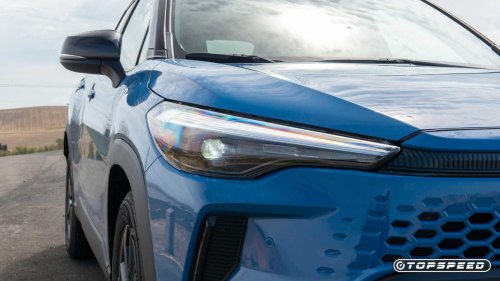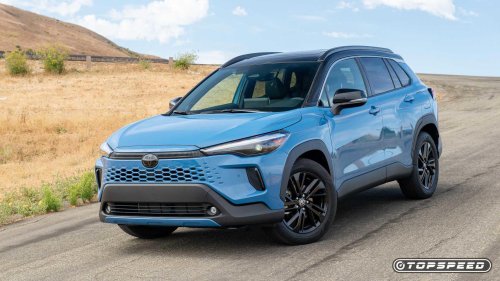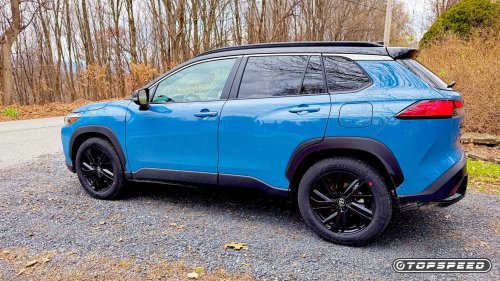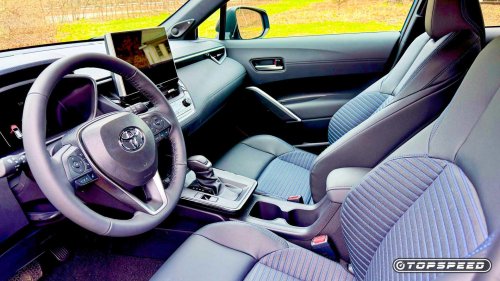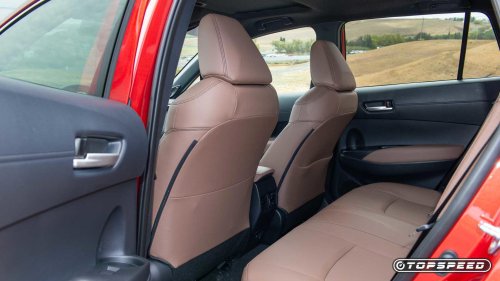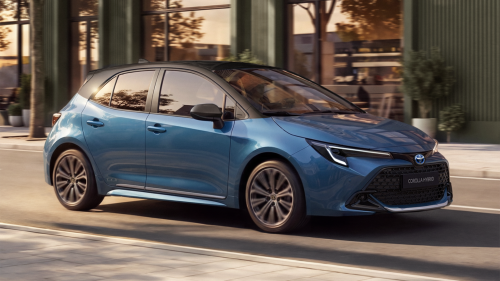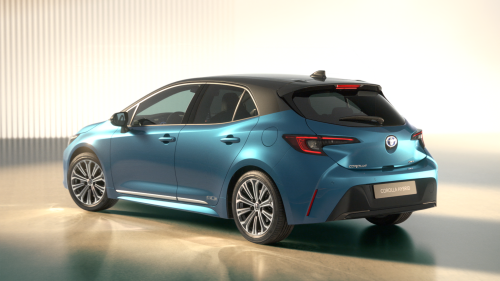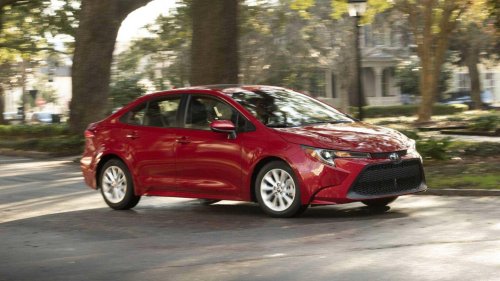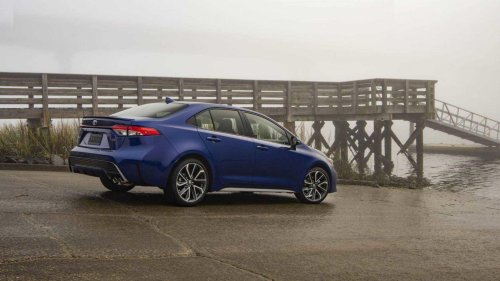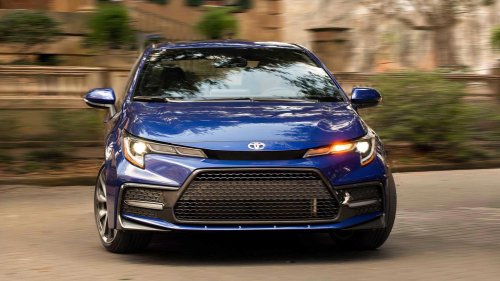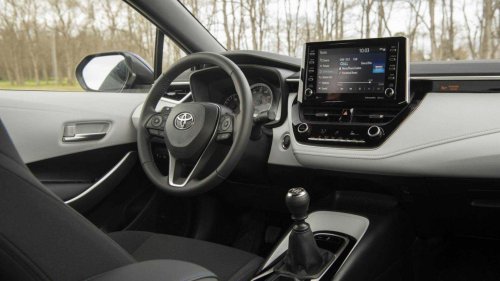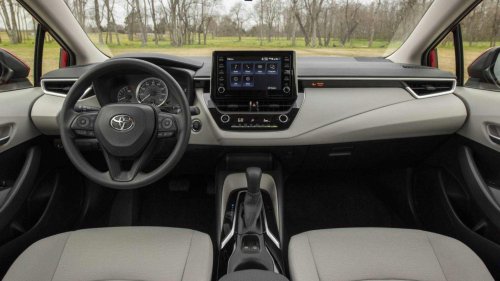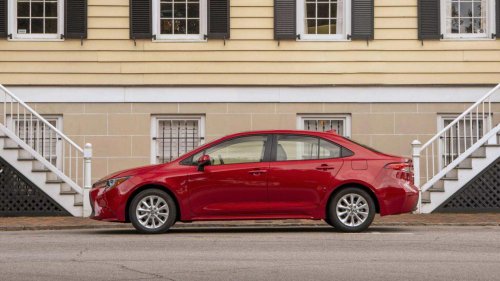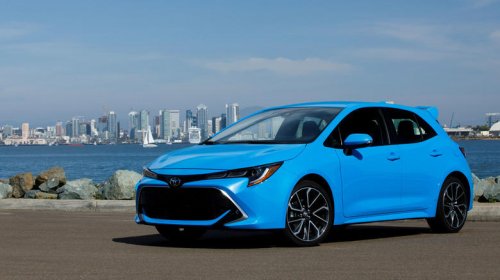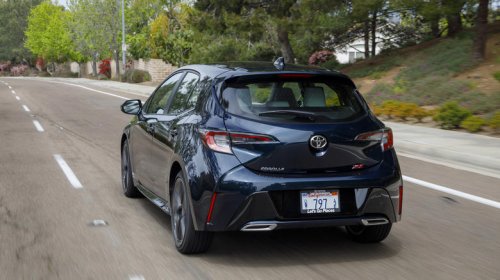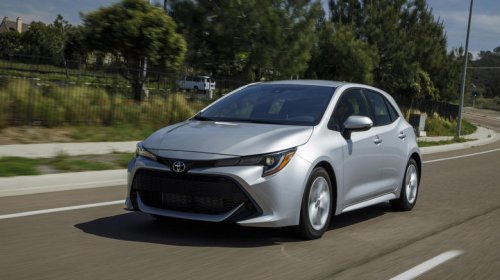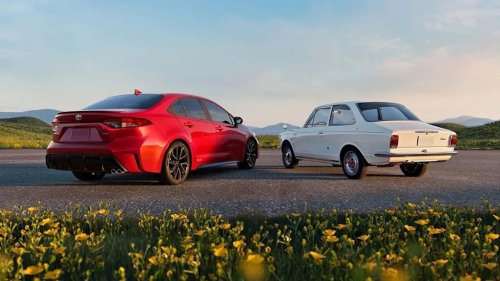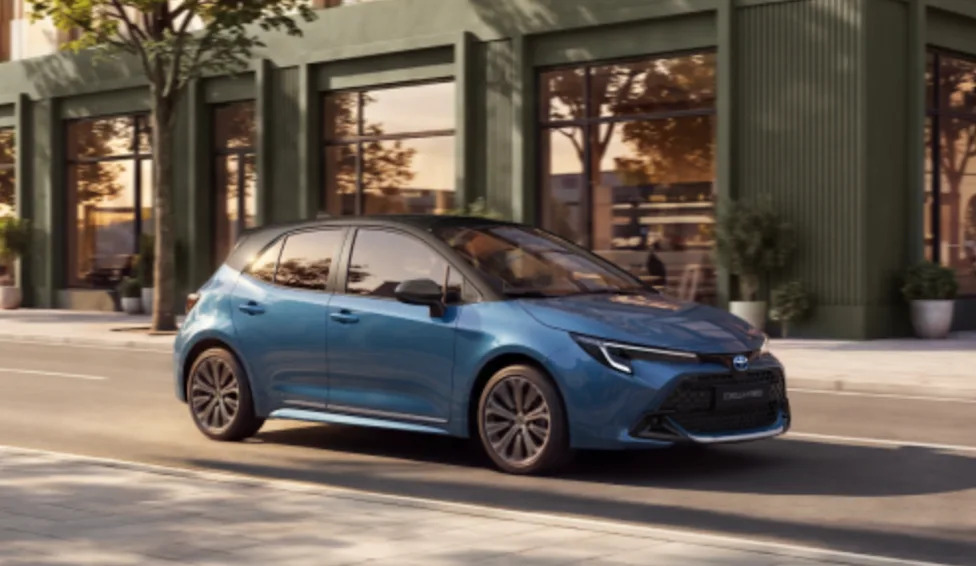



















Corolla's 60th Birthday Trim Is Four Different Cars Depending On Your CountryThe Corolla turns 60 this year, and Toyota is marking it the way Toyota marks everything: with badges, decals, and a paint color you can't get on anything else. Fine. That's the Corolla's whole personality.What's actually interesting is that Toyota has issued at least four different versions of this anniversary car across four markets, and they barely resemble each other. Read the press releases side by side and you get a genuinely useful lesson in how a global nameplate gets sliced up by region.Four markets, four carsAdvertisementAdvertisementEurope gets the widest spread. The European announcement covers Hatchback, Touring Sports and Sedan, with no production cap mentioned anywhere. Hatch and wagon wear an exclusive Boreal Blue metallic in bi-tone with a black roof and pillars; the Sedan gets its own Lunar Sky Blue. All three ride on 17-inch 10-spoke alloys with a matt-and-machined contrast finish and chromed black wheel nuts, plus matt silver bumper and sill garnishes, dark-plated fog light surrounds, 60th Anniversary decals low on the rear doors, and matching scuff plates and mats inside. Orders are open, deliveries start at the end of October.Britain gets a narrower version. The UK release covers the hatchback only, built at Burnaston, offered in "strictly limited numbers," orderable in October, price to follow. It's also 1.8 hybrid only — no 2.0.Related ArticlesGM's Fix for Its Self-Destructing V-8 Was Basically an Oil Change. Nearly 7,000 Owners Say That Didn't Work.Volkswagen's 'New' EV Plan for India Isn't New. It's From 2022 — And a $1.4 Billion Tax Bill Might Kill It AgainHere's a small detail that made me smile: the pan-European release calls the contrasting roof Night Sky Black. The UK release, published the same day, calls it Eclipse Black. Same car, same paint, two names, two Toyota newsrooms. If you're ordering touch-up or booking a panel repaint later, that's the kind of thing that costs someone an afternoon.AdvertisementAdvertisementNorth America went the opposite direction entirely. The US pressroom confirms a 2027 Corolla 60th Anniversary Special Edition capped at 2,500 units, sedan only, based on the SE Hybrid grade. It gets 18-inch machined black-finished alloys, standard SE badging deleted in favor of anniversary badging, black-and-red sport fabric seat inserts, the 10.5-inch multimedia screen as standard, plus commemorative sills and mats. Colors are Ice Cap or Supersonic Red, the latter exclusive to this car and a first for the Corolla sedan in the States. It arrives early 2027, pricing TBA. Canada gets 250.So: Europe treats this as a trim level you can walk in and order. America treats it as a collectible. Neither is wrong, but only one of them is going to have dealers asking for money over sticker.The horsepower numbers don't disagree — the standards doThis trips people up constantly, so it's worth spelling out. Toyota Europe quotes the 1.8 hybrid at 140 DIN hp and the 2.0 at 178 DIN hp. Toyota UK quotes the same two systems at 138bhp and 176bhp. Toyota USA quotes its hybrid at a net combined 138 horsepower.AdvertisementAdvertisementNothing changed under the hood. DIN hp (Pferdestärke) is a metric horsepower equal to about 98.6 percent of a mechanical horsepower, so 140 DIN converts to roughly 138 bhp. The US figure is SAE net, which lands in the same place. If you ever find yourself convinced a European car is more powerful than its American twin, check which standard the brochure is using before you get excited.Also worth noting: Toyota's fifth-generation hybrid system in the US release is badged THS 5, mated to an ECVT with a planetary gearset rather than belts and pulleys. The gas-only US Corolla uses a 2.0-liter Dynamic Force four making 169 hp and 151 lb-ft through a CVT with a physical launch gear — a real gear that handles takeoff before handing over to the pulleys. It's a decent solution to the two things everyone hates about CVTs, and it's the kind of engineering the Corolla never gets credit for because the car is so aggressively unremarkable.The parts of this that will cost you money laterAnniversary trim is mostly cosmetics, and cosmetics have a repair bill attached.AdvertisementAdvertisementBi-tone paint is the big one. A contrasting roof and pillars means a two-stage refinish job on any roof or A-pillar damage: extra masking, extra blending, and a body shop that has to nail two colors at a seam that sits at eye level. Budget meaningfully more than a single-color car for hail, garage-door, or roof-rail damage.The wheels deserve a mention too. Both the European 17s and the American 18s use machined faces — bare turned aluminum sealed under clear coat. Machined-face wheels are among the most annoying wheels to repair, because you can't just scuff and respray a curbed section. The machined pattern has to be re-cut on a lathe or the wheel gets replaced. Painted wheels forgive curb rash. These don't.And the US car's jump to 18s is not free. Larger diameter means shorter sidewall, which means more pothole-induced wheel and tire claims and higher replacement tire cost over the car's life. The Europeans staying at 17 inches is, quietly, the smarter spec.Will any of these be worth something?AdvertisementAdvertisementBe realistic. A capped run of 2,500 on a nameplate that moves that many cars in a good week is a marketing device, not an investment thesis. There's no unique powertrain, no unique chassis tune, nothing mechanically different from an SE Hybrid. What you're buying is paint, badging, seat fabric, and a slightly better standard screen.The one genuine consideration is color. Supersonic Red is exclusive and loud; exclusive-and-loud is great for enthusiasts and historically rough on mass-market resale, where the boring silver car sells faster. If you're buying to keep, get the red. If you're buying with a three-year exit in mind, the math usually favors Ice Cap.Related ArticlesA Cadillac's Brake Complaint Just Became a 1.16-Million-Vehicle Investigation. Two of the Cars Involved Wear Honda Badges.Advance Auto Parts' Profit More Than Tripled. Its Actual Business Barely Grew At All.If a US dealer tries to attach an addendum sticker to one of these, walk. Two thousand five hundred units is scarce enough to create a story and nowhere near scarce enough to create a market.AdvertisementAdvertisementThe 57 million asteriskToyota's headline number is more than 57 million Corollas sold worldwide across 12 generations, built at 12 locations and sold in 150 countries and regions. That's real, and it's an extraordinary run. It's also a nameplate total rather than a model total. The 1966 E10 and a 2026 Touring Sports hybrid share a badge and a philosophy, not an architecture. "Best-selling car in history" is a branding achievement as much as an engineering one.The engineering achievement is the part worth respecting. Europe didn't get the Corolla until 1967, and Toyota didn't build one there until 1994, when the seventh generation started at the Turkish plant, followed by Britain in 1998. Sustaining a car for six decades across that many markets, regulatory regimes and drivetrain transitions is far harder than building something fast once.What to actually do about itAdvertisementAdvertisementIf you're in Europe and you want one, the order book is open now and there's no artificial scarcity to fight — pick the body style you'd have picked anyway and treat the anniversary kit as a well-priced appearance package. If you're in the UK, note that it's hatchback and 1.8 only, so if you wanted the 2.0's extra shove, the anniversary car isn't your car.If you're in the US, the interesting bit isn't the badge. It's that the anniversary car is hybrid-based, and Toyota's own release confirms US gas Corollas are built in Blue Springs, Mississippi while the hybrids come from Takaoka in Japan. In the current tariff climate, where a car is assembled is a more consequential detail than what's written on the door sill.Images Via: ToyotaJoin our Newsletter, follow our Instagram page, and connect with us on Facebook.