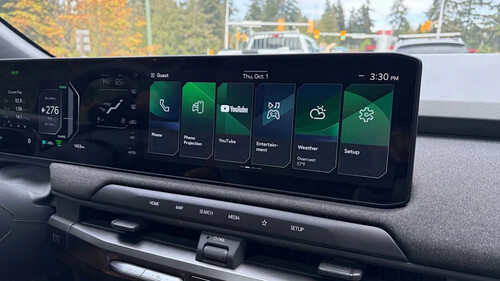
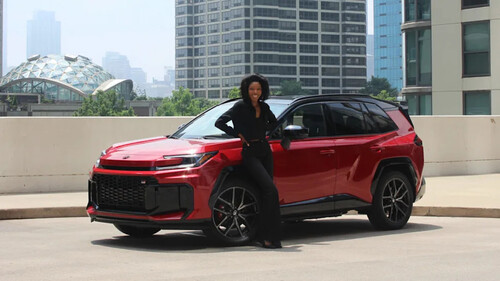
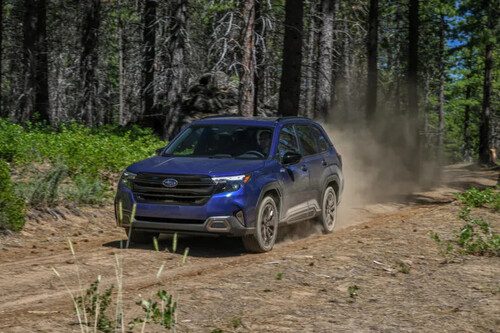
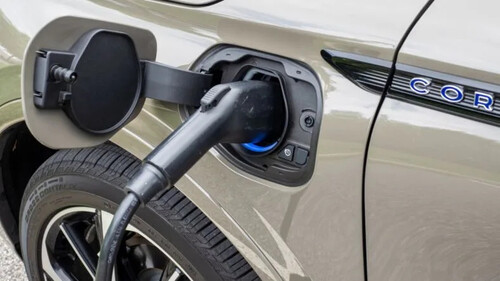
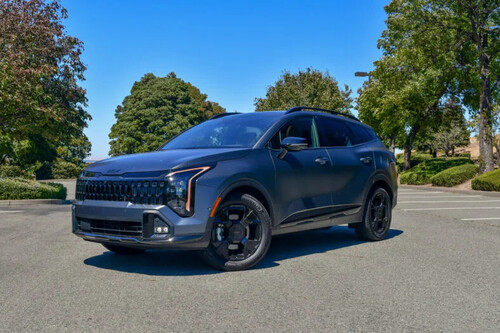
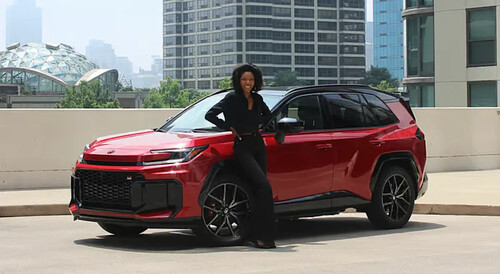
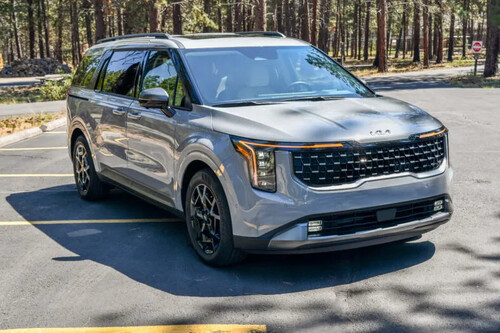
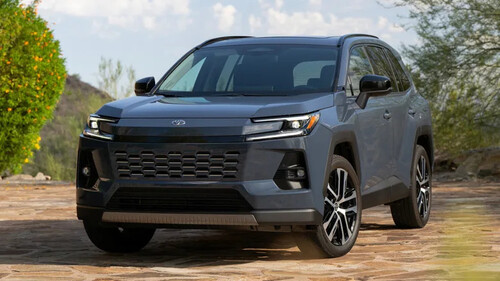
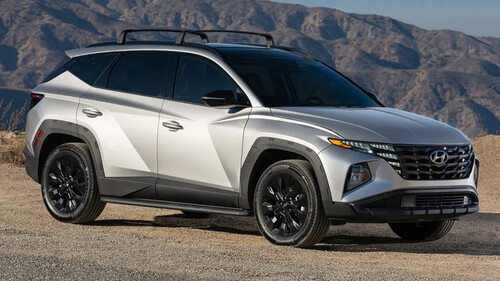
Autoblog and Yahoo may earn commission from links in this article.The Kia Sportage doesn't always get the same spotlight as its flashy siblings like the Telluride or Carnival, and that's a shame. It debuted in 1993, making it Kia's longest-running nameplate—predating driveway queens like the Toyota RAV4 and Honda CR-V. In 1997, it was the first production car in the world with a driver knee airbag, and before that, it was the first Korean vehicle to conquer the grueling Paris-Dakar rally and Baja 1000. Kristen BrownWith that kind of pedigree, it's no surprise the Sportage is Kia's global bestseller, with over 7 million sold. Today, offering gas-only, traditional hybrid, and plug-in hybrid (PHEV) powertrains, there's a Sportage that fits into literally every lifestyle. For 2026, a mid-cycle refresh sharpens its look, refines the interior, and loads up on standard tech. I knew I'd appreciate it as an auto enthusiast, but I didn't expect to love it quite this much as a parent. Here are the 5 things that surprised me most.AdvertisementAdvertisementRelated: Road Ethos Launches: The New Automotive Lifestyle Site You Should Read1. The price is hard to beat, especially compared to the competition Because there are so many options for the Kia Sportage, the price range is very wide. The gas-only version starts at $28,790 and tops out at $39,690; the hybrid version's base price is $30,590 and maxes out at $40,690; and the PHEV is the most "expensive" option with a range of $40,590 to $47,390 across just two trims. Its closest competitor is its industry twin, the Hyundai Tucson PHEV, and the price range is slightly higher: $40,075 to $48,300. The Toyota RAV4 PHEV is close on its heels, with a higher range of $41,500 to $48,500. The 3-row (though I'd argue it's a 2-row with jump seats rather than a full row) Mitsubishi Outlander PHEV is next, starting at $43,245 and topping out at $53,695.Kristen BrownWith all the cards on the table, we see that the Sportage is the most affordable option compared to the SUVs it's up against. The RAV4 puts up a pretty good fight with an insane maximum range of over 50 miles, while the Sportage's range is just 34 miles. But the Sportage has arguably more to offer families, too, in regards to passenger space, comfort, and interior quality. 2. There is so much more space than you'd assume from the outsideWhen the Kia Sportage PHEV arrived, I understood why Kia categorized it as "compact." Next to my father-in-law's 2024 Toyota RAV4, it looked just a tad smaller all around. It looked shorter, taller, and narrower. But I was fooled. When I opened the deep matte gray doors, I was stunned by the visibility, open interior layout, the rich brown and quilted leather seats, and the amount of legroom in the rear seats. I was even more impressed when I opened up the trunk—there was 34.5 cubic feet of space (a bit smaller than the hybrid's 39.6 cubic feet, thanks to the larger battery pack) to use, which is still more than enough for a stroller, the week's groceries, or the family's luggage without issue.Kristen BrownBut the trunk wasn't the most surprising bit. It was the rear seats. There were rear-facing A/C vents, everyone had a USB-C charging port, and the windows were large and tinted—which is a win if you're a parent of kids with queasy tummies. There's 39.5 inches of legroom for rear passengers, which gives taller teens or even adults plenty of room to stretch out. The sunroof was well worth the upgrade, too, since it helped bring in natural light and open everything up a bit. Plus, it helped highlight that gorgeous, nutmeg brown interior. Look at all that legroom, even with car seats installedKristen BrownMy husband, who stands at about 6'1", loved the legroom as the front passenger. He's normally pretty picky about the passenger's seat, as many new cars have a thick, plastic center console that tends to bother his knee. But the Sportage was roomy enough for his lankiness, and I never heard a peep about the console. In short, there was never a lack of space—for anyone, or anything. AdvertisementAdvertisementRelated: Kia Sportage Vs. Hyundai Tucson: Here's Our Honest Comparison3. The onboard technology and interior thoughtfulness make it feel much more expensiveKia and Hyundai have both been doing an amazing job at making their cars feel so much more expensive than they really are. I already talked about the quilted brown leather seats, sunroof, and open feel, but what wrapped everything up with a pretty bow was Kia's tri-screen setup. There are two 12.3-inch screens—one behind the steering wheel for the driver display, and the other as the multimedia touchscreen—with a smaller touchscreen between the two to control the air conditioning. I've always been a fan of Kia's software, because all the settings and menus are sensibly placed and easy to access. Kristen BrownI didn't feel like I had to guess where anything was, unlike Land Rover's or Volvo's system. It all felt incredibly seamless and intuitive. I always feel like if a car company is going to put a bunch of screens in their cars, the least they can do is make them easy to use, and Hyundai Motor Group has done an amazing job with that. Because the screens' resolution was so high, everything was bright, fast, and incredibly responsive; paired with a Harmon Kardon sound system, adjustable front cup holders (which were amazing as a Woman of Many Beverages), coat hangers on the backs of the front seats for purses made the little Sportage feel more like it cost closer to $60,000 instead of just a hair under $50,000. 4. Because it's a PHEV (and a hybrid when the battery's empty), it's pretty darn efficientThe Kia Sportage PHEV, as I mentioned before, gets about 34 miles of EV range. Which, in the land of PHEVs, is a moderate amount. It's perfect for those who have an at-home Level 2 charger (since it's not optimized for Level 3 or a DC fast charger) at home, or don't mind waiting for it to charge overnight on a 120V or 240V standard outlet. Ideally, you'd run your errands (or enjoy a short commute in silence) and then plug 'er in when you're done for the day to do it all again in the morning. AdvertisementAdvertisementWhen the battery ran out (and it did quickly), charging it was a bit tricky for me, but only because I don't have an at-home charger. Like many in the Golden State, I rent, so I couldn't have a charger if I wanted to. Anyway—because it's limited to slower Level 2 charging, finding a compatible charger was a challenge. And, because it takes about 2 hours to charge on said charger, that made it even more challenging. If you're one of the lucky ones who have the means to charge at home, that's not a problem at all. But if you have to rely on public chargers, the slow charging will make you wish you bought the hybrid instead. Kristen BrownAnd, because I didn't get the chance to charge it (even with a 120V or 240V plug), I basically drove it like one. I averaged 35 MPG going between the city and the highway, which was excellent for an all-wheel drive hybrid. By the end of my week with it, I'd barely dropped below ¾ of a tank. With that kind of mileage, and because of its moderate fuel tank capacity, families wouldn't need to fuel up more than once per month, easily.Related: EREV vs PHEV: Which One Is More Reliable In The Real World?5. The list of standard safety features is incredibly longKristen BrownBecause the Kia Sportage X-Line Prestige is the best Sportage you can buy, it comes with every safety and convenience feature the company can conjure up, and that kind of peace of mind is so, so valuable to parents. Of course it comes with the usual, like blindspot detection, lane keep assist, adaptive cruise control, automatic emergency braking in the front and rear as well as braking in an intersection if needed, but there are a few features worth mentioning to parents with kids, especially littles. These features include:AdvertisementAdvertisementSafe Exit Warning—If you forget to engage the child safety lock (which is super easy to do, with a button on the driver's window switch panel), the Sportage PHEV uses the sensors in the rear bumper to warn the driver about a car approaching from behind. If one of the rear doors is being opened as the car gets closer, the door will automatically lock, preventing kids from swinging the doors into cars, cyclists, or scooters.Surround View Monitor—Paired with the high-resolution and wide-angle cameras in the front and rear, it made backing out of the driveway a lot less stressful. The camera was so crisp, I was able to see a stray cat that refused to move out of the Sportage's path, and the sensors were strong enough to alert me. I didn't see it, because it was in the Kia's blind spot—but the Kia spotted it!Parking Collision-Avoidance Assist—This is what kicked on when the stray cat was in the driveway. The brakes were automatically (and gently) applied to avoid the obstacle. That's one lucky cat.Forward Collision-Avoidance Assist with Junction Turning & Cyclist Detection—I, thankfully, didn't have to see this in use, but I think it's a wonderful feature. It's meant to monitor oncoming traffic when making unprotected left turns and detects pedestrians at intersections.Final thoughtsThe Kia Sportage PHEV puts up one of the strongest arguments for value I've seen so far, with enough space for a small family of four, without compromising style, comfort, or efficiency. For the price, it makes it incredibly easy to recommend, especially compared to other PHEVs on the market—but I did often find myself thinking, "Damn, is 34 miles of EV range worth so much more over the standard hybrid?" Unless you have an at-home charger, a PHEV of the Sportage's caliber can be tricky. But an at-home charger would make the PHEV an easy sell for me. The price-to-feature ratio is just too damn good.This story was originally published by Autoblog on Aug 19, 2026, where it first appeared in the Reviews section. Add Autoblog as a Preferred Source by clicking here.