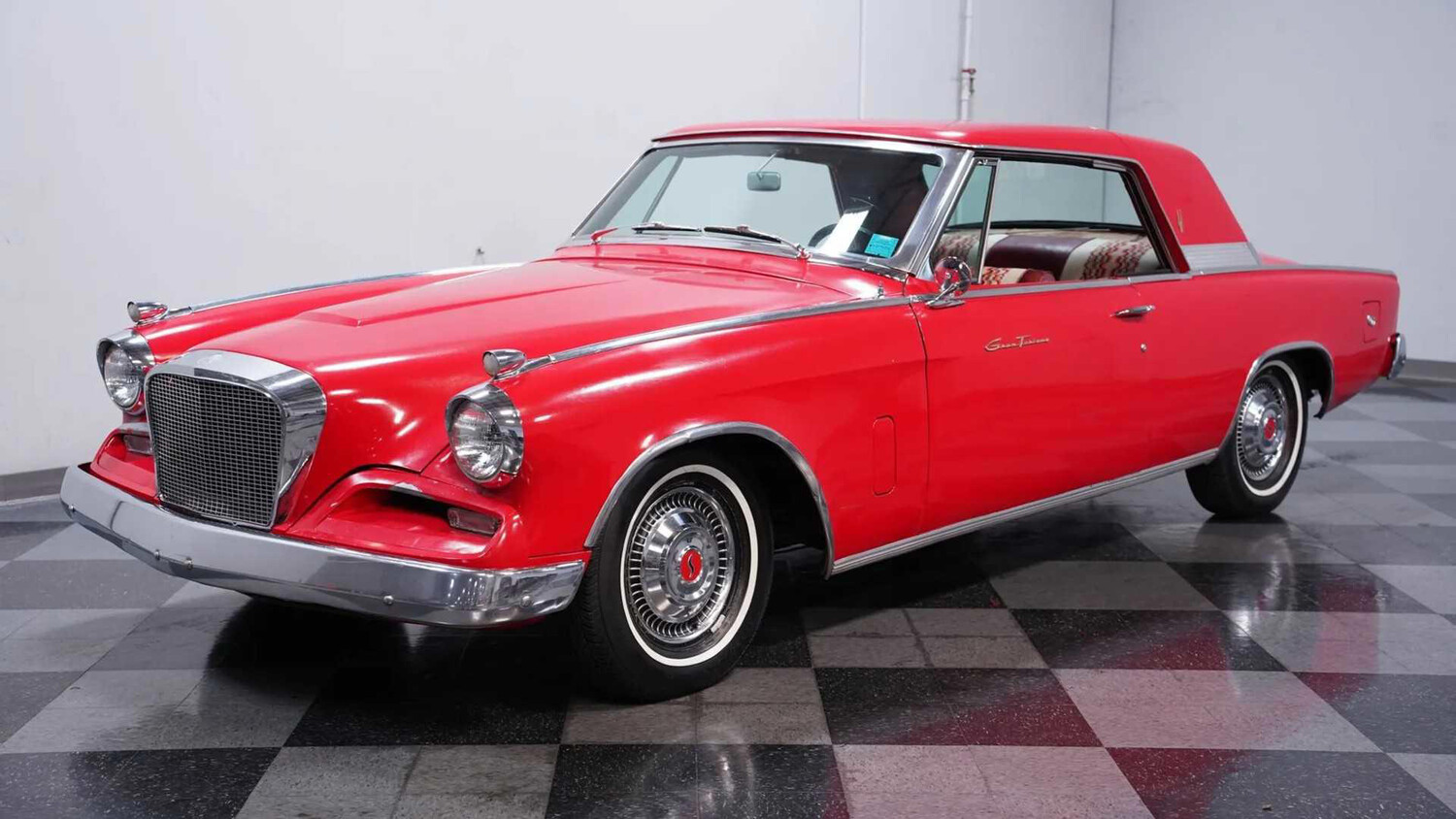
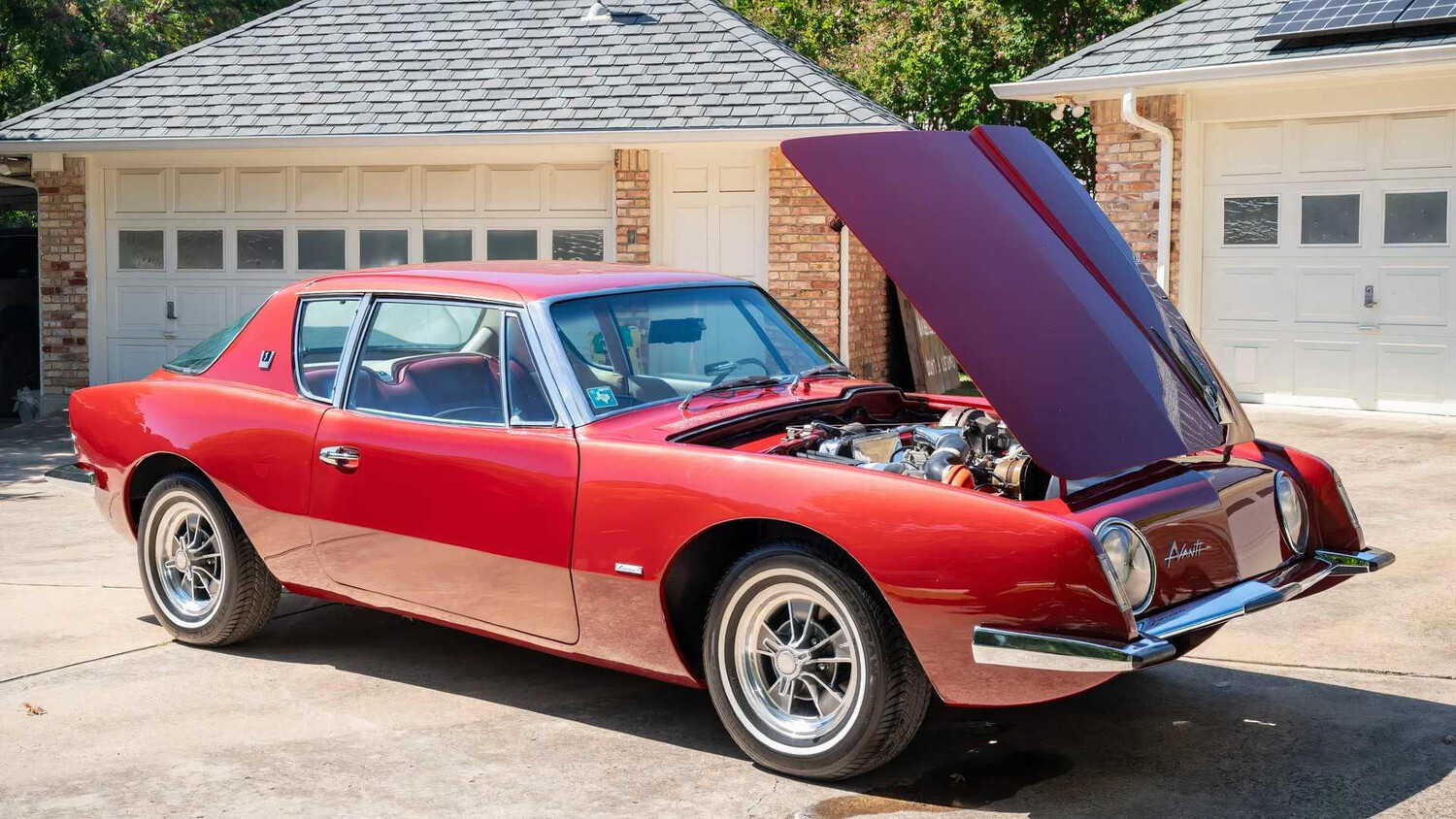
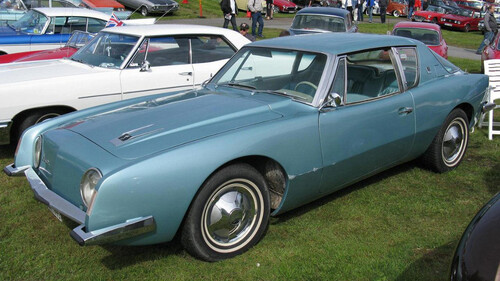
Have you ever looked at a car company and immediately thought they were on their last legs? Pontiac, Plymouth, Mercury, whatever the heck Geo was. Sometimes, it was easy to tell where a carmaker was headed just by looking at the things they park in dealerships lately. At least that's been the case in the last quarter century. In the 1960s, Studebaker managed to fire off one or two real classics in the middle of falling apart. One particular sports car got so mixed in the shuffle, you’d be forgiven for not knowing it existed. Studebaker: An American Love Story From Long Before the Automobile HemmingsStudebaker was one of those brands that had their hands in far more than just building passenger cars. Even before the American Civil War, an industrious family of German immigrants with the Studebaker surname gained fame for building horse-drawn carriages. The firm only started building cars as a complement to the wagon side of the operation, beginning with a small run of 20 EVs in 1902.The group manufactured electric as well as gas-powered automobiles through the 1900s, before settling into a rhythm ofcompeting with what would become the Big 3 Detroit automakers. From their HQ in South Bend, Indiana, Studebaker was comfortably outside of Detroit’s influence, and that must’ve had a profound impact on the way they marketed the lineup.Having survived the Great Depression when so many others didn't, Studebaker attacked the Big 3 with lightweight, efficient cars. You know, the kinds of cars Americans actually want to buy most of the time. Effectively, cars like the 1939 Champion and the 1947 Starlight Coupe were like the Civics and Camrys of modern American roads. Into the 1950s, Studebaker remained a serviceable alternative to Ford, Chrysler, and GM. But as the decade rolled along, cracks began to emerge. Making a World-Class GT In the Middle of Collapsing Via: RM Sotheby'sAfter a prolific post-war boom, it was clear Studebaker would struggle to keep momentum going right around the mid-1950s. The company went from selling in the neighborhood of 400,000 cars in 1950 to just a quarter of that five years later. Brief moments of relief came in the form of the compact Lark, but Studebaker failed to turn a meaningful profit effectively every year from 1953 onward.Of course, that didn’t mean the company didn’t stop innovating. Instead, little curiosities like the Hawk, and its two-door hard top Golden Hawk cousin, proved that Studebaker could still design their socks off. Taking full advantage of Studebaker’s frantic merger with Packard, the desperate attempt to stay afloat gave the Golden Hawk its 352-cubic-inch Packard V8 for a single model year. In a car with reasonable proportions, it gave the Golden Hawk a power-to-weight metric to envy.With its low-slung silhouette borrowed from 1953’s Studebaker Starliner coupe, the Golden Hawk was effectively a Corvette and Thunderbird competitor with seating for four to five adults. The Golden Hawk was an all-time great Studebaker, but it wasn’t the apex of the breed. To get there, you need to skip to 1962. By then, the writing was on the wall all over South Bend. 1962 Studebaker GT Hawk: A Remarkably Capable Flagship Grand Tourer Stateside ClassicsBy 1962, Studebaker’s partnership with Packard had already fizzled into dust. The Packard side of the operation officially went bust that fateful year, with the marquee being taken out of circulation in 1959. By then, Packard was little more than a collection of rebadged Studebakers, and its demise meant Studebaker was all on its own to fend against the Big 3’s hoard.One of the cars Studebaker hoped would turn the tide was the old Hawk’s ultimate evolution. Dubbed the Gran Turismo Hawk, its design was heavily facelifted from the Golden Hawk by the hotshot designer Brooks Stevens. Among other famous creations, Stevenspenned the design for the Willys-Jeep's Wagoneer of the mid-1960s, as well Harley Davidson FL Hydra-Glide motorcycle among others. With his capable hands behind the drawing board, the Gran Tursimo Hawk looked more European than it did a Hoosier.The front fascia was entirely different, it sported more chrome trim in more places, and the styling lines easily look the contemporary of the Ford Thunderbird and Lincoln Continental. In effect, the Gran Turismo Hawk was the bridge between those two Fords. It toed the line between a gentleman’s GT car and a personal luxury car so well, that it effectively competed with both. Inside, the dashboard was rearranged so that important gauges were right in the driver’s line of sight, and the top of the panel was heavily padded for passenger safety. On a shoestring budget, this design was nothing short of a miracle. Studebaker’s Secret Weapon: A Big Old Supercharger Bring a TrailerUnderneath, the Gran Turismo Hawk was fairly similar to its predecessors. Given the stark lack of R&D money, this is to be expected. In truth, the chassis’ heritage stretched back to the early 1950s. You did at least get front disc brakes as an option, something of a nice touch in the early 1960s. But the vast majority of examples used drum brakes at all four corners. So then, definitely not a race car underneath.Even so, Studebaker countered this with an engine so intriguing, Corvette buyers of the era had to have done at least one double-take. In its inaugural year, Studebaker fitted a naturally aspirated 289-cubic-inch V8 to challenge the 283-cubic-inch V8 in the Corvette, and Ford motors like the Y-Block 292. Fed through a two-barrel carburetor, a modest 210 horsepower was produced.The performance-oriented Power Pack with a four-barrel carburetor added 15 horsepower and five lb-ft. But in the years leading up to the muscle car wars that wasn’t going to be enough to keep pace. The solution? That’d be none other than a big old Paxton supercharger. Borrowed from the Avanti sports car, the Jet-Phase R2 options package let the range-topping GT Hawk make 290 horsepower in '63. That was blistering performance for a Studebaker. A Great Car, But Overshadowed By an Icon Bring A TrailerWith a zero to 60 time as low as the low-sevens, the GT Hawk was comfortably quicker than equivalent T-Birds, the Chrysler 300H, and the Pontiac Grand Prix. Ultimately, the GT Hawk was still a flawed car—one whose vinyl seat covers and interior trim pieces were prone to premature wear, even just a couple of years post-sale.In the end, the GT Hawk was completely overshadowed by the Avanti sports car, from which it shared powertrain components on occasion. When Studebaker closed its doors just a couple of years later, the IP rights and factory tooling for the Avanti were purchased by a couple of Studebaker dealers, who continued to manufacture them on a boutique scale.Meanwhile, completely out of money and out of options, Studebaker shut down the South Bend plant in 1964. Its last ever car, a 1966 Cruiser, left the Hamilton, Ontario production floor in 1966. As it turned out, the failure of the GT Hawk was just one of several missed opportunities that led Studebaker to close its doors. Since then, a handful of people have tried to revive the brand, usually with disastrous results. Meanwhile, a working-order GT Hawk is a bona fide collector’s item worth big money on the auction block.Source: Classic.com