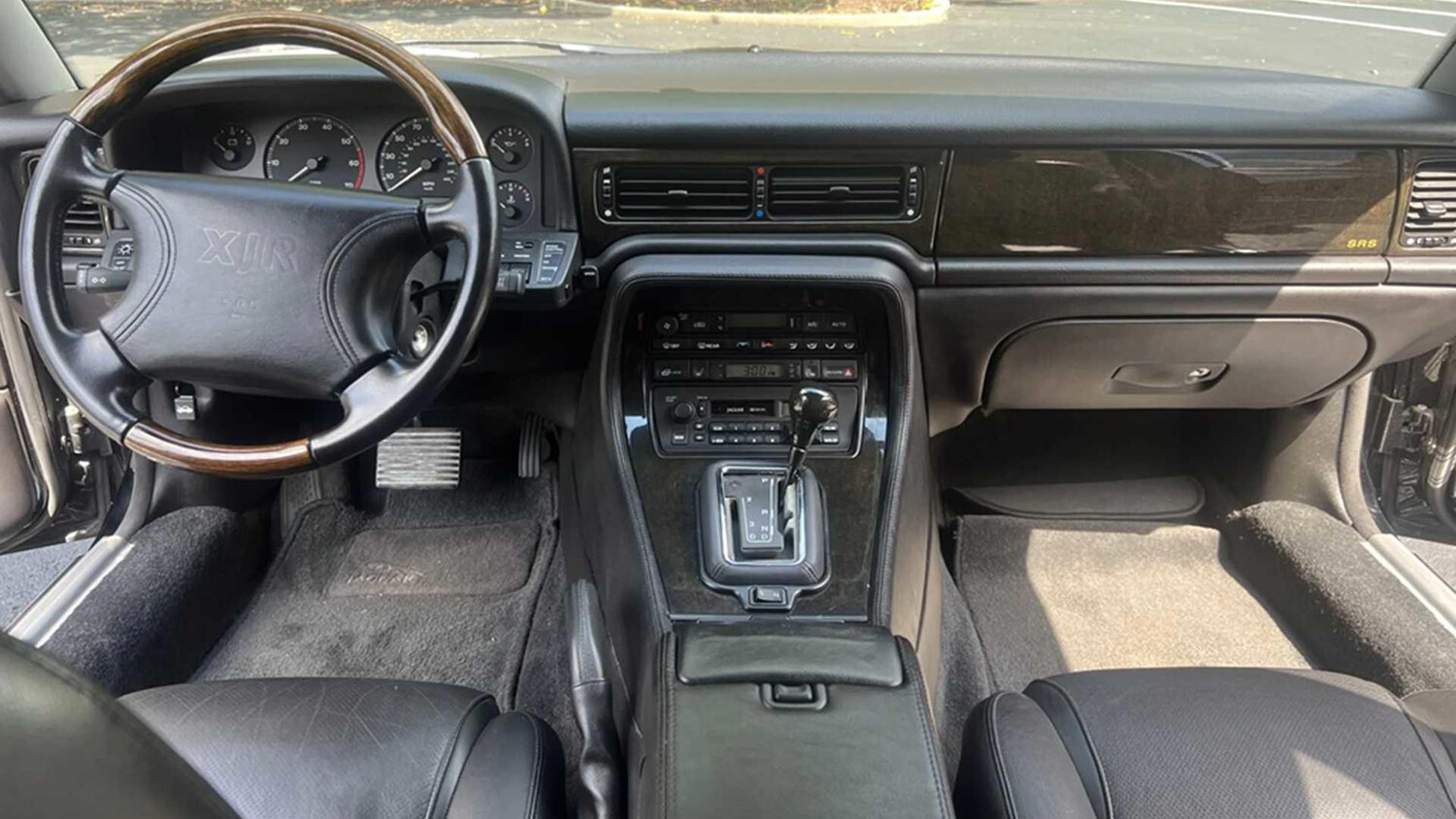
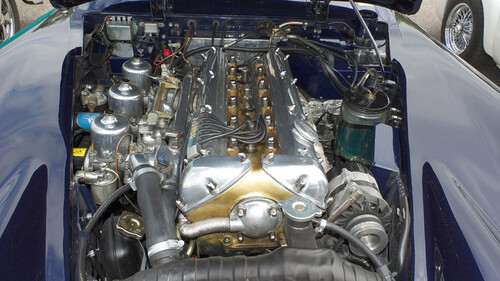
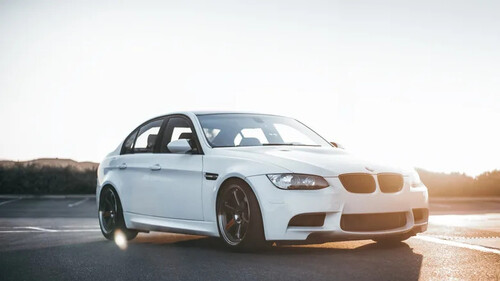
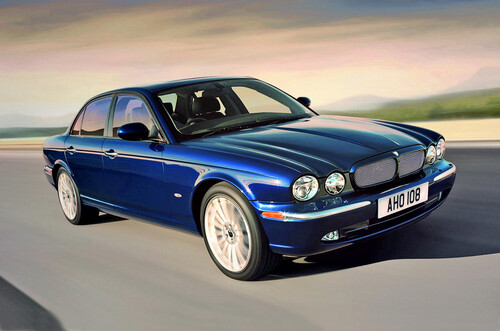
BMW pretty much wrote the entire rulebook when it comes to the full-size sports sedan, thanks to its M5. There was already a spicier version of its 5-Series on the market, the 535i, before that, but the M5 established a new benchmark for midsize sedan performance.Its intoxicating straight-six engine kicked 268 horsepower towards the rear wheels, while its M Division-tuned underpinnings ensured it handled as well as a full-fat sports car.The machine became an instant hit, and its rivals struggled to replicate the magic sauce the M5 provided. Jaguar waded into battle with fresh Ford backing in the mid-1990s with its XJR, which took a different route to performance versus the M5. Rather than use a high-revving I6, the XJRs powerplant instead made use of forced induction to make the difference. And boy, did it. The XJR's I6 Was Treated To A Rabid Supercharger Bring a Trailer Jaguar had struggled to take the fight to its deeper-pocketed competitors throughout the 1980s due to a lack of funds, but a welcome takeover by Ford in 1989 provided the resources needed to resurrect its charge. Its new paymasters wanted to get a new XJ on the market, so they greenlit an evolution of the existing XJ40 platform. A range of improvements were brought to the party, such as more traditional curvy Jaguar styling, revised suspension, and an enhanced range of engines. While tweaked, the base chassis and platform remained vastly the same as the XJ40's.The changes brought a more dynamic driving balance relative to the previous XJ40, alterations which were accentuated by the XJR. This was the mid-range performance model designed to take the fight to the M5, and Jag wasn't messing about. The XJR used a supercharged version of the 4.0-liter AJ16 inline-six engine found on the standard XJ, which was itself an evolution of the AJ6 powerplant used on the previous XJ40. Improvements included revised pistons, a new engine management system, as well as new magnesium valve covers to not only boost performance, but also durability.In supercharged form, the unit provided the XJR a commanding 317 hp, 12 hp more than the M5 could muster. This wasn't even the engine's strong point either, as its meaty 378 lb-ft of torque figure was 112 lb-ft up on the M5. While the M5's 300-lb weight advantage, and manual transmission versus the slower auto units bundled with the XJR, meant it could get to 60 mph a few 10ths of a second faster, the XJR could get moving quicker from a rolling start. Jaguar's Performance Sedan Also Handled Well Bring A Trailer The XJR wasn't simply envisioned to take on the M5 on the straights either, as Jag also wanted it to prove a challenge in the bends. The M5 was still the superior driver's machine, but the XJRs independent front and rear suspension setup ensured it was excellent all the same. Tapping into its heritage, the XJR was more angled towards being a softer and more compliant performance luxury car, whereas the M5 utilised BMW's motorsport pedigree to be the harder and more razor-edged proposition.The XJRs party piece was its exquisite supercharged I6 engine, with the vehicle designed to slay the M5 under sustained acceleration as opposed to the bends. This approach continued when you clambered inside the Jag. The XJR's Cockpit Was Unmistakably Jag Bring a Trailer While the cabin was, for the most part, very similar to that of the XJ40, this wasn't exactly a negative. The changes mainly covered modernizing it to keep up with the developing competition, with the main alterations being more beveled wood trim and smoother seat contours to afford the cockpit a more rounded profile. The plush heated leather seats and upmarket wood trim, versus the cheap fake wood trim used in many cars today, afforded the XJR a premium British feel, as opposed to the sportier cabin found in the M5.The steering wheel was finished in quality leather and wood material, while automatic climate control and an electrically adjustable sunroof were included as standard. Cruise control and traction control were also included for the base price, ensuring this performance sedan could calm as much as quicken your heart rate. The Classic Supercharged XJR Is Stupidly Affordable In 2026 Bring a Trailer Should you fancy getting a slice of supercharged I6 Jag in your life, you'll be glad to learn that the X300 XJR has suffered from a similar level of depreciation seen in the brand's other models. Buying a brand-new XJR would have set you back a cool $65,000 when it reached the US in 1995, which translates to just shy of $140k in today's money. That's not a small amount of cash to say the least, and this figure is scarcely believable when you bear in mind a low-mileage XKR can be picked up in 2026 for around $15,000.This will get you a pretty-much mint specimen with around 50,000 miles on the odometer, which is extremely low for a machine built over three decades ago. You can get higher mileage examples for sub-$10k, though bear in mind that the components in these cars will likely be towards the end of their life, which will land you with a range of hefty bills down the road. Only around 2,000 cars ever reached US shores before the car was replaced in 1997, meaning parts are difficult to get hold of. Getting One That Has Been Lavished With Attention Is Crucial Bring a Trailer As a result, it's critical that you take your time and do your research before splashing your cash on a used X300 XJR. Their extremely low used value means they can land in the wrong hands, which will lead to them being neglected from a maintenance standpoint. Ideally, aim for a higher-priced machine, as this will likely be priced due to being bundled with plenty of service history and frequent maintenance being carried out. That doesn't mean you can't find a cheaper high-mileage bargain that has been lavished by its owner, but the chances of falling into a costly ownership trap are higher towards the bottom end of the market.In terms of things to look out for, ensure that the supercharger has been properly maintained, as a new one will cost you thousands. Rust can also be a problem, so be sure to check the front and rear arches, sills and floor for any corrosion before you buy. Given its age, keep an eye out for any electrical components not working properly, too, as fixtures such as the clock are known to fail. The XJR is solid mechanically for the most part, but make sure its brakes and suspension parts are in good shape, as these will be costly to refresh. The X300 XJR Didn't Last Long Cars & Bids The supercharged I6 XJR was only on sale in the US for three model years before it was replaced by the X308 generation, which was the car Ford wanted from the outset. The American giant felt the XJ should have been available with a V8 engine, but the new powerplants wouldn't be ready fast enough, so the X300 was developed as somewhat of an interim model. The X308 arrived in 1998, and was now only available with the newly available AJ-V8 engine. Lower-end versions came with either a 3.2 or 4.0-liter naturally aspirated version of the engine, but the XJR got a supercharged 4.0-liter powerplant.Peak power increased to 370 hp, which meant it provided a closer fight to the new E39 M5, which kicked out 400 hp thanks to its own V8 engine.While commanding though, the X308 XJR was considerably more costly to run than its I6-powered forerunner, primarily due to its larger and thirstier engine. Find a good one and at a reasonable price, and we reckon the forgotten X300 XJR is the better option if you fancy saving a bit of money on running a high-performance luxury sedan. It still provides excellent pace, and is arguably more balanced due to having a lighter engine sitting proudly out front.Sources: BMW, Jaguar.