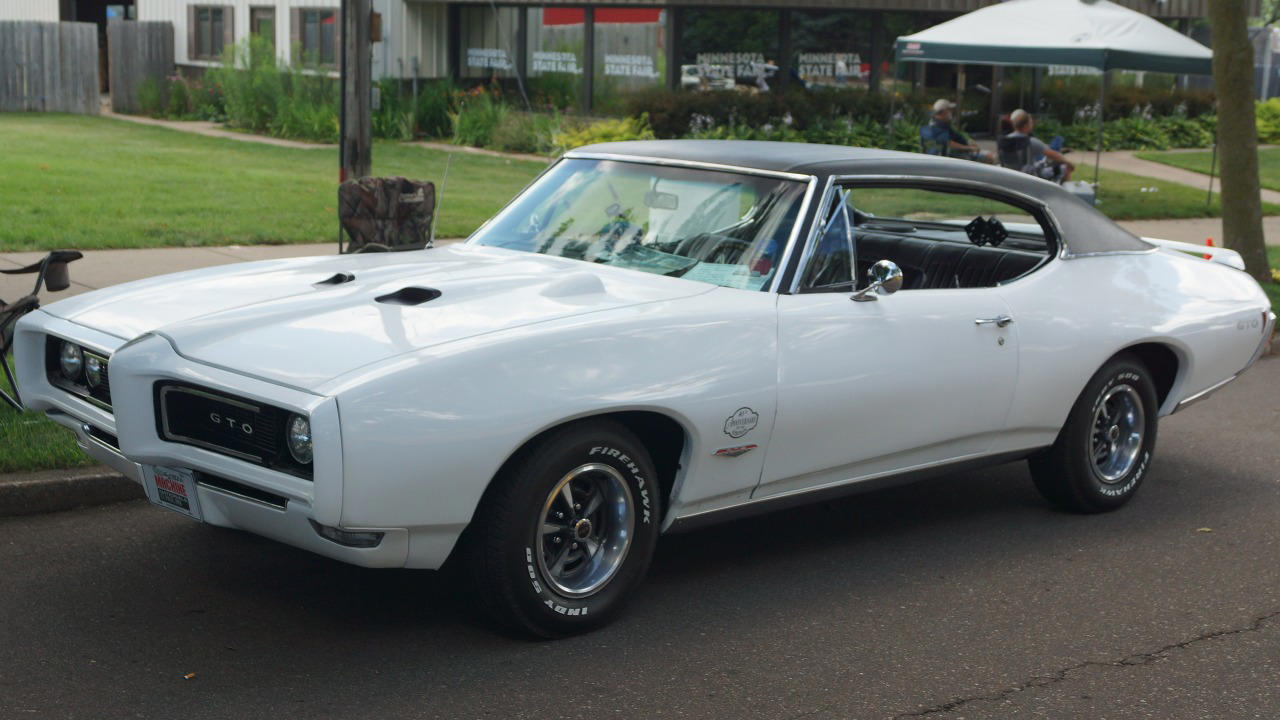
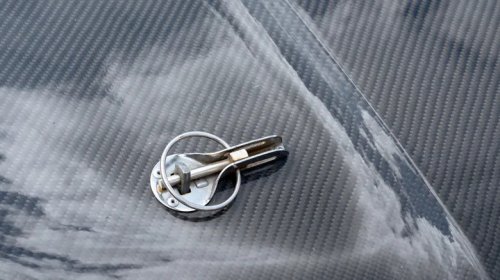
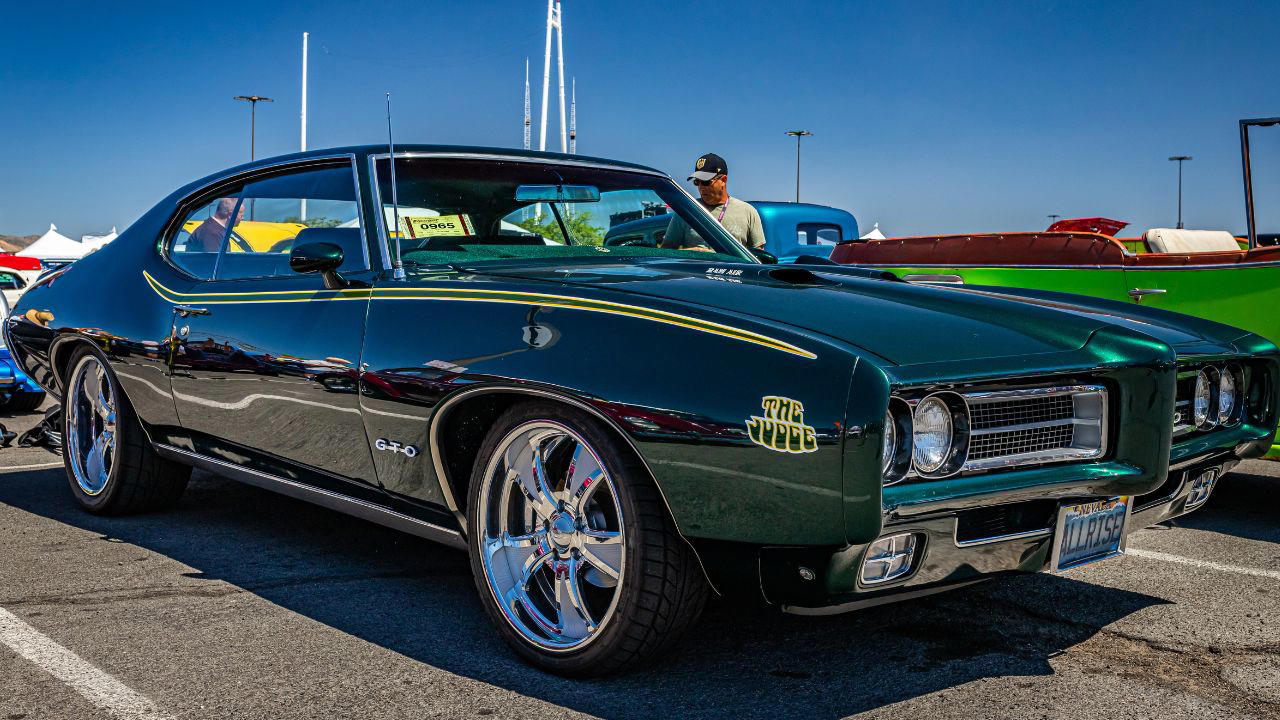
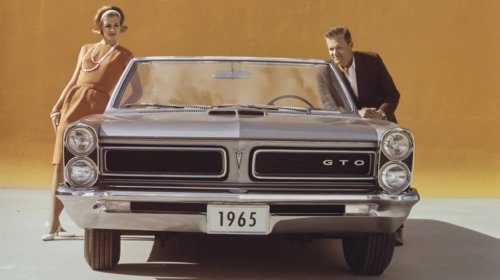
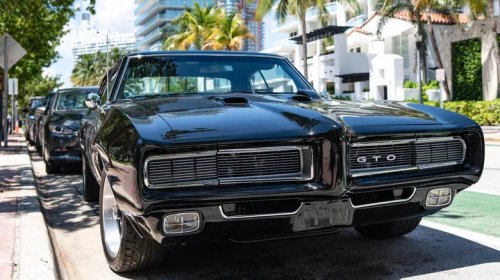
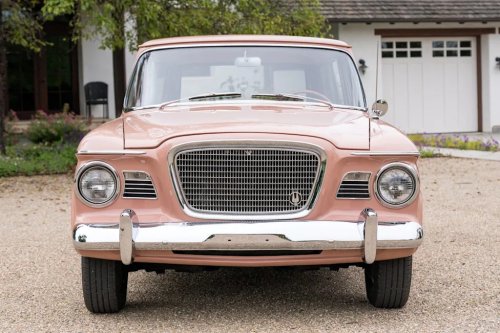
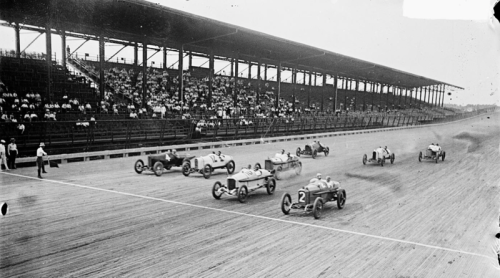
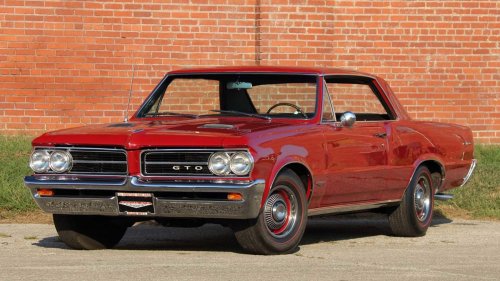
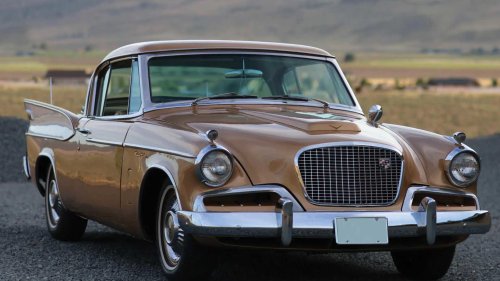
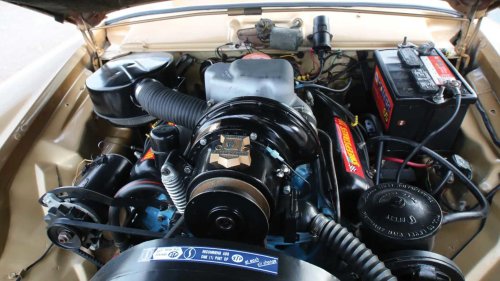
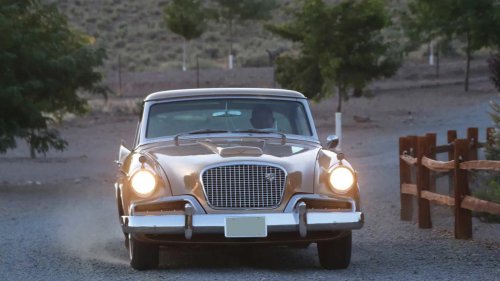
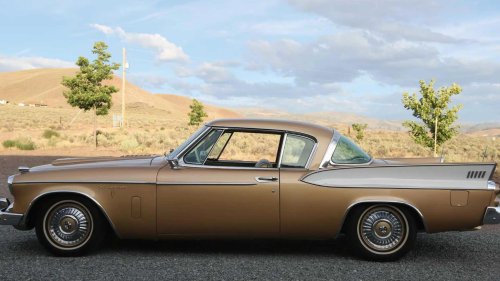
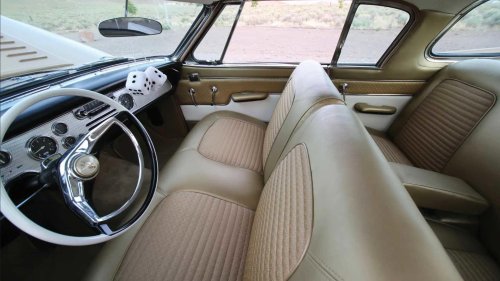
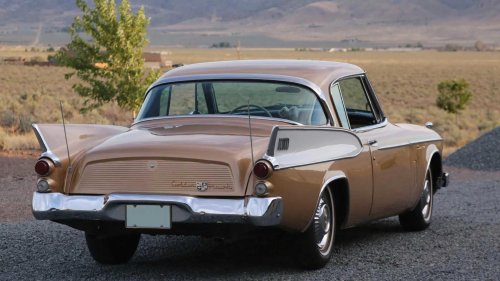
In the summer of 1956, a professional racing driver lined up four of America's fastest cars and ran them head to head. It lined up against the Chrysler 300B, the Chevrolet Corvette and the Ford Thunderbird. The car that posted the best 0–60 time and the highest top speed wore a badge that most enthusiasts today couldn't place in a lineup.The muscle car era is almost universally dated to 1964, when the Pontiac GTO put a name to what American performance could mean. But factory supercharged power was already reaching showroom floors years before that. There was a car doing everything the muscle car formula would later promise — forced induction, real-world grunt, and four seats — built by a company that history largely moved past. The 1950s Performance War Few Remember The Pontiac GTO, introduced in 1964, is considered the first Golden Age muscle car — but there were certainly cars that preceded it which hit all the same parameters. That gap in the record is exactly where this story lives.By the mid-1950s, American automakers were locked in a straight-up performance war. Chevrolet had the Corvette, Ford had the Thunderbird, and Chrysler was winning races with the letter-series 300. Each one was selling the same idea: serious power dressed up in a package refined enough to drive to dinner.These weren't stripped-down drag cars. The operative category was the personal luxury coupe — performance and comfort sharing the same cabin, aimed at buyers who wanted both without compromise.The Studebaker introduced a model in 1956 that represented a drastic departure from the norm of the era — svelte, athletic, powerful, and carrying wholly unique Raymond Loewy-inspired styling. It stepped into that competitive space directly, positioning itself as a genuine American alternative to the Detroit establishment.Studebaker was an independent automaker out of South Bend, Indiana, working with tighter budgets and fewer resources than the Big Three. What the company lacked in scale, it regularly made up for in engineering creativity. One of those creative solutions was about to change what a factory V8 could do — years before forced induction became a mainstream talking point. The Factory Supercharger That Studebaker Built Into Every Golden Hawk Via: RM Sotheby'sA big part of the selling story for the 1956 Golden Hawk was its 352-cubic-inch Packard V8 with 275 hp, which made it one of the most potent cars on the road. But in the Studebaker-Packard alignment for 1957, the Packard V8s and Ultramatic transmission were no longer in production. That left Studebaker's engineers facing a significant performance gap with no straightforward fix.The most powerful Studebaker V8 at the time displaced 289 cubic inches and produced 225 hp — a meaningful step-down in both output and bragging rights. Dropping 50 hp from the flagship coupe wasn't an option. The solution was a McCulloch VS57 centrifugal supercharger, fitted as standard equipment on every Golden Hawk that year.McCulloch Motors manufactured the unit; Paxton Products was the subsidiary brand name applied to the supercharger itself — both terms appear throughout period literature and both are correct references in collector circles today.The VS57 was engineered not for maximum boost but to raise the torque curve throughout the rev range, using a variable-diameter driven pulley to limit boost to 5 psi. This wasn't a drag-strip setup. It was calibrated for real-world driving in a grand touring coupe.Via: RM Sotheby's With compression reduced to 7.8:1 to manage detonation, the supercharged engine produced 275 hp at 4,800 rpm and 333 lb-ft of torque at 3,200 rpm, breathing through a Stromberg WW two-barrel carburetor inside the pressure box. While output matched the old Packard exactly, the robust, cast-iron Studebaker block combined with the heavy supercharger assembly meant the new powertrain saved virtually no weight over the nose, though a revised suspension layout managed to improve handling balance.The Golden Hawk was given new, larger, concave steel fins and a fiberglass hood hump overlay — necessary to clear the hole cut in the standard steel hood to accommodate the supercharger. It was one of the rare cases where an engineering requirement made the car look more purposeful, not less. It Beat The Corvette, The Thunderbird, And The Chrysler 300B In A Straight Line Via: RM Sotheby's In July 1956, Speed Age magazine ran a head-to-head test against Chrysler's 300B, Ford's Thunderbird, and Chevrolet's Corvette. The Golden Hawk outperformed all three in both the 0–60 mph and quarter-mile tests, posting a 7.5-second sprint and a top speed of 125 mph. That test used the 1956 Packard-engined car; the 1957 supercharged model matched it in rated horsepower while carrying less weight up front.At the time, the Golden Hawk held the second-highest power-to-weight ratio of any American car. For context, the 1957 Corvette's fuel-injected 283-cubic-inch V8 produced 283 hp — just 8 hp more — but that was a two-seat sports car at a higher price point. The Golden Hawk seated four and came with the supercharger as standard equipment.Exactly 4,356 units were built in 1957, the model's most prolific year. Across all three model years, the Golden Hawk hardtop moved just 9,305 units total before being discontinued after 1958.Sales were severely hindered by the Eisenhower Recession of 1958, which hit high-priced specialty cars hardest. Only 878 examples were sold in the final model year before the Golden Hawk was discontinued. Nearly seven decades of attrition since then have made clean, original survivors genuinely hard to find. Raymond Loewy's Influence And The Styling That Set It Apart Via: RM Sotheby'sFor the Golden Hawk, Studebaker introduced its low-slung Loewy coupes in 1953 as the Starliner and Starlight variants, with Raymond Loewy overseeing development and designer Robert Bourke executing the actual bodywork. The Golden Hawk grew directly from that lineage, carrying the same long hood, upright grille, and clean roofline into a more overtly performance-focused package.The result had unmistakable European influence — a Mercedes-style front end paired with era-appropriate American tailfins. For 1957, those fins grew larger and were now stamped in steel rather than fiberglass, and the front wore a raised hood and a bold egg-crate grille. Inside, an engine-turned aluminum dashboard, full instrumentation, and a standard tachometer gave it more in common with a European GT car than a typical American coupe of the period.That European flavor was both the design's strength and, eventually, its liability. When the muscle car market shifted toward youth-oriented aggression in the 1960s, the Golden Hawk's refined character put it out of step — and out of the mainstream conversation that the GTO, Mustang, and Camaro came to own. What A 1957 Golden Hawk Is Worth On The Market Today Via: RM Sotheby's Surviving examples of the 1957 Golden Hawk are rare, and the market reflects that. Hagerty values a 1957 Golden Hawk at $31,300 in good condition, while excellent and Concours-ready examples are valued between $52,500-$78,900. Examples with factory AC can pull a 15% premium.The most recent recorded public sale was in January 2026 at Barrett-Jackson Scottsdale, where a 1957 Golden Hawk changed hands for $77,000. Auction results range from a low of $6,600 for a project-condition car to a high of $334,750 (highest recorded sale in 2003) for an exceptional example — a spread that tracks directly with restoration quality, originality, and documentation.Hagerty identifies the Golden Hawk's wholly unique Raymond Loewy-inspired styling as a consistent driver of collector interest. Matching-numbers cars with verifiable history command the strongest premiums. Fewer than 500 were reportedly ordered with the three-speed manual gearbox, making those examples particularly desirable to serious buyers.The Studebaker Drivers Club maintains an active community with parts sourcing and technical resources, which lowers the ownership barrier compared to many other orphan marques of the era. For a car built in the low thousands, with seven decades of natural attrition behind it, that support network matters more than most buyers initially realize. Why The Golden Hawk Is Not Part Of The Muscle Car Conversation Via: RM Sotheby's The Golden Hawk faded because the company that built it ran out of road. Studebaker closed its last North American plant in 1966. With no brand to carry the story forward, there was no marketing legacy, no anniversary editions, and no nostalgia campaign to keep the Golden Hawk in the conversation. The 1957 Chrysler 300C and the Studebaker Golden Hawk hit every parameter of a muscle car — but neither carried a Big Three badge, and history has treated them accordingly.To be precise about what the Golden Hawk was and wasn't: it did not inspire the GTO, and it didn't launch the muscle car movement. The conditions that produced the GTO — a booming youth market, GM's resources, and John DeLorean's calculated rule-breaking — had nothing to do with Studebaker. But the Golden Hawk proved the concept years earlier: factory forced induction, genuine performance, four seats, straight from the showroom floor.



















 +68 others