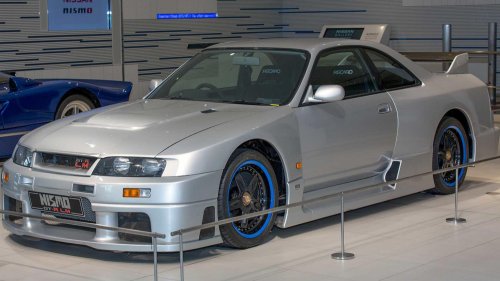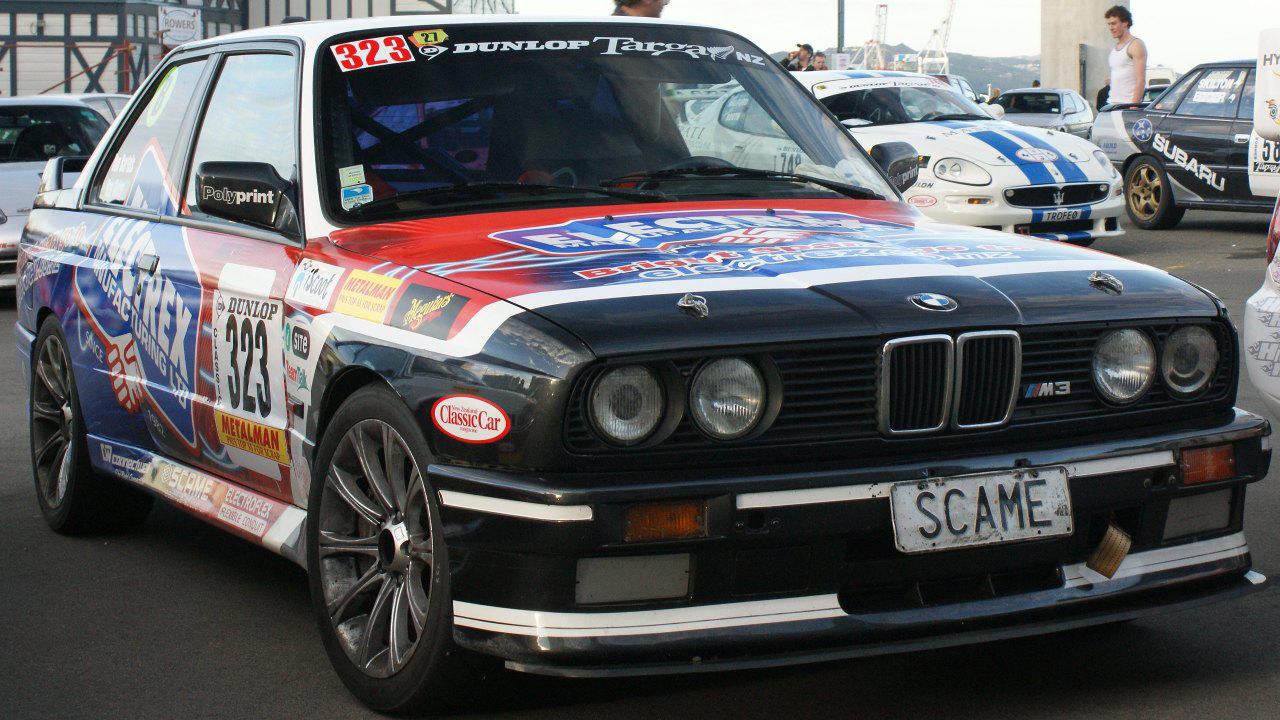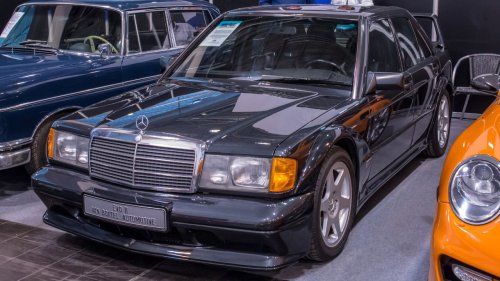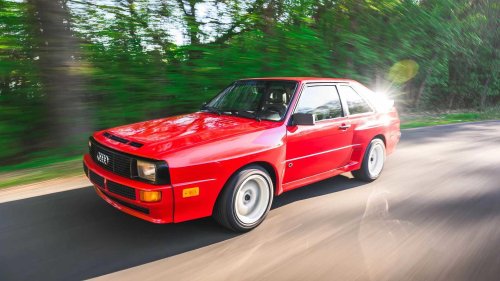
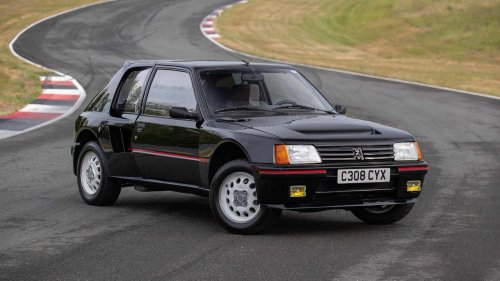
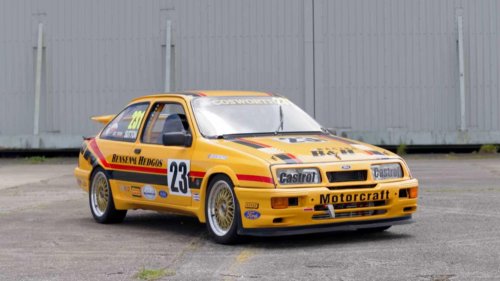
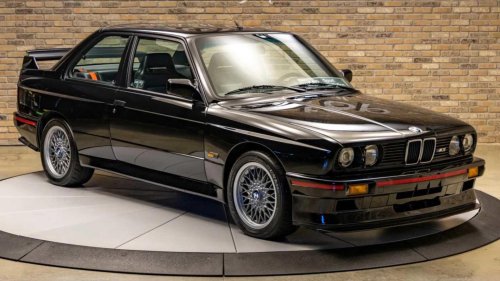
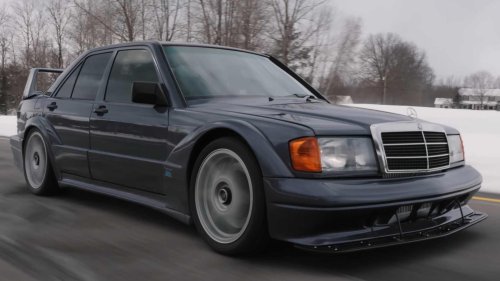
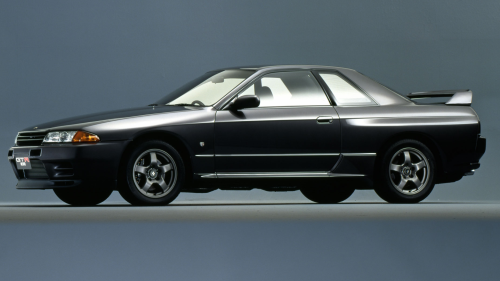
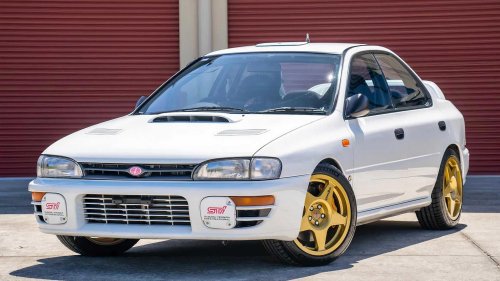
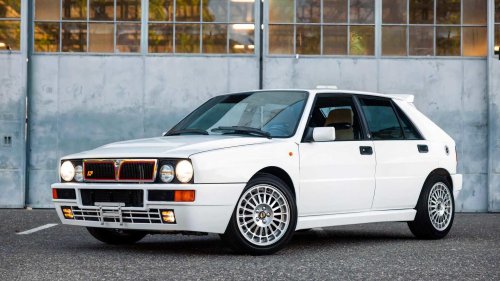
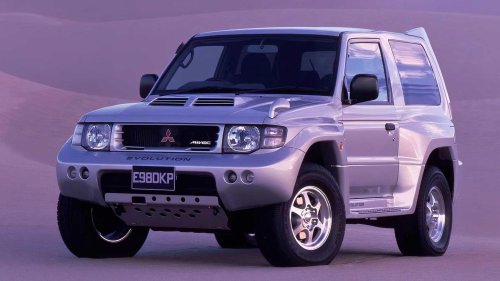
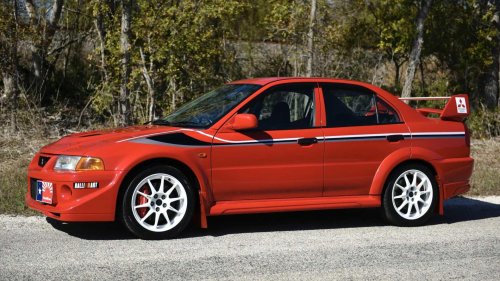


















It doesn't get cooler than a homologation special road car, does it? Motorsport regulations across the globe have often demanded that the cars competing have a road-car basis, leading to some of the most incredible machines that you could walk into a dealership and drive home.It's no wonder that so many of these have found places in the hearts of auto enthusiasts for decades. After all, the chance to drive a vehicle that looks, sounds, and feels like one with a competition history is one that nothing in the automotive world can really level as an experience. As a result, homologation specials have grabbed the attention of collectors in the last few decades. These 10 are among the hottest right now. Audi Sport Quattro Year introduced: 1984 Bring a TrailerWhen it comes to Group B rallying, the Audi Sport Quattro is the car that stands out as the halo of the craziest rallying regulations to ever exist. Early versions of the Audi Quattro (often known as the Ur-Quattro) changed the landscape of rallying with the introduction of all-wheel drive to the category in 1980, taking four World Rally Championship titles. The competition had caught Audi up by 1984, though, and it needed a new competitor in the category. The result of that was the Audi Sport Quattro, arriving with a shorter wheelbase to keep up with the agility of the 205 Turbo 16.Regulations meant that at least 200 road-going examples of the car had to be built, meaning enthusiasts could get their hands on a road-legal Audi Sport Quattro. These used a 2.1-liter turbo five-cylinder, which served as the base for the rally car’s engine, and retained the cutting-edge all-wheel drive system. The competition cars wouldn’t win another WRC title, but the road cars gained legend status. 224 examples were built, and according to valuation data, values sit around a staggering $530,000. Peugeot 205 Turbo 16 Year introduced: 1984 RM Sotheby'sIntroduced at the same time as the Audi Sport Quattro, the Peugeot 205 Turbo 16 was built to meet the same Group B regulations. Despite sharing a name and some styling cues with the 205 GTI, the Turbo 16 couldn’t have been further from its namesake. Along with its more aggressive bodywork gracing a tubular space frame chassis, it featured a mid-mounted 1.8-liter turbocharged four-cylinder engine and a four-wheel-drive system.All that packed into such a compact chassis meant it was agile on the rally stages, taking two WRC titles in 1985 and 1986, as well as spawning one of the most unforgiving and exciting road cars ever produced. 200 road-legal examples were built, meeting WRC regulations, and today are valued at around $260,000. Ford Sierra RS500 Cosworth Year introduced: 1987 Motor Addicts/YouTubeOver in Europe, the regular Ford Sierra was a car that didn’t have much enthusiast appeal. The XR4i (sold as the Merkur XR4Ti in North America) existed to serve those looking for something sportier, but it would really tantalize Ford fans. Introduced in 1987, the Ford Sierra RS500 Cosworth existed to homologate the car for Group A touring car racing. At its heart was a Cosworth-tuned 2.0-liter turbocharged engine, sending power to the rear wheels with a genuine limited-slip differential helping to manage power distribution.Visually, it stood out from any other Sierra with its iconic ducktail wing (said to produce 45 lbs of downforce at 70 mph), flared fenders, and vented hood. Group A regulations required 5,000 road-legal examples to be built, but Ford got around this in a sneaky fashion. A "lesser" RS Cosworth model existed, with 5,000 of those built, and 500 shipped off to Aston Martin Tickford (yes, a division of that Aston Martin) to be built to RS500 spec. All RS500s were built in right-hand drive exclusively for the UK market, with values varying from $75,000 to $220,000 depending on condition. BMW M3 Sport Evolution Year introduced: 1990 Bring a TrailerThe original E30 BMW M3 was a legend in its own right, serving to homologate the BMW 3 Series for both Group A and DTM touring car racing and spawning a whole new line of iconic performance models. The most desirable of all the E30 M3s, though, is the Sport Evolution. This came late in the E30’s life cycle in 1990, allowing the race cars to receive several upgrades to remain competitive. The biggest change was a larger four-cylinder engine, with a displacement increase from 2.3 liters to 2.5 liters, plus improved camshafts.Its aerodynamics were more aggressive, and weight-saving measures came in the form of thinner glass and a lighter trunk lid. Six hundred were built, and prices vary hugely depending on condition. The most affordable models command around $110,000, rising to near $320,000 for pristine examples. Mercedes 190E Evolution II Year introduced: 1990 TopGear/YouTubeGoing toe-to-toe in Germany’s DTM series with the E30 BMW M3 was the Mercedes 190E, and to make that happen, one of the most incredible-looking homologation specials had to exist. In 1990, the 190E Evolution II elevated the W201 190E to another level entirely. A new Cosworth-developed 2.5-liter four-cylinder engine was found under the hood, and was paired with plenty of chassis changes.Self-leveling suspension came as standard, while wider tracks filled out hugely flared arches. Oh, and we don’t really need to say a great deal about that gigantic rear wing when it speaks for itself. Five hundred and two units of the Mercedes 190E Evo II were built and fetch comfortably above $300,000 when they come up for sale today. Nissan Skyline GT-R Nismo Year introduced: 1990 NissanThere have been plenty of incredible versions of the Nissan Skyline GT-R throughout its history, like the R33-based Nismo 400R and R34 Nismo Z-Tune. Perhaps a lesser-known version that deserves more credit is the R32 Skyline GT-R Nismo. Introduced in 1990 to satisfy Group A touring car regulations, which allowed it to eventually dominate Japanese motorsports and gain the nickname Godzilla with success in Australia, the Nismo stripped back the R32 GT-R to the bare essentials.Its RB26 2.6-liter turbocharged inline-six engine officially produced the same power as the base car but features larger turbochargers, while the car’s ABS system was deleted to shed weight. There was no air-conditioning, radio system, or rear wiper either, all in the name of trimming fat. Five hundred and sixty examples were made exclusively for the Japanese market, and finding a clean one today is an incredibly hard task. If you do, expect to pay around $55,000. Subaru Impreza WRX Type RA Year introduced: 1992 Collecting CarsAlthough the 22B is seen as the ultimate GC8 Subaru Impreza in the eyes of many, that wasn’t a true homologation special. Rather, it existed as a tribute to the success the Impreza had on the rally stages through the ‘90s. Those foundations were laid by the early Impreza WRX, with the Type RA serving as the basis for the cars that would become legends of WRC. Various iterations existed, with the first coming in 1993.This used the same EJ20 2.0-liter turbocharged boxer-four as the regular WRX, but with around 100 kg of weight-saving measures to make it easier for rally conversion. On top of that, the RA featured a shorter final drive and close-ratio gearbox, along with a reduction in sound-deadening levels to cut weight. Various versions of the RA would follow in the years after. One thousand one hundred and ninety-three of the first RA were built, all for Japan, and clean examples are hard to come by. Expect to pay north of $25,000 when they do come up. Lancia Delta HF Integrale Evo II Year introduced: 1993 Bring a TrailerAlthough Group B rallying ended in a dramatic fashion in 1986, its follow-up Group A ruleset continued the trend of incredible road-going rally homologation specials. One of the most memorable of all of those is the Lancia Delta HF Integrale. Introduced in 1987, the Integrale went through numerous revisions in its lifespan, with the most sought-after of them all being the Evo II. This was the most powerful version of the Integrale, with 212 horsepower from its 2.0-liter turbo four-cylinder engine.Its four-wheel drive setup was derived from the Group B-era Delta S4 and used a central differential which could distribute power depending on which axle most needed it. Although still rare, the Evo II was one of the more common homologation specials built, with 4,223 built in total, and values today around $95,000. Mitsubishi Pajero Evolution Year introduced: 1997 MitsubishiAh, the Mitsubishi Montero. A dependable 4x4, albeit one that wasn’t exactly designed with motorsports in mind. Well, what if we told you there was a special version built purely for competition? Meet the Mitsubishi Pajero Evolution. Markets outside the US had the Montero as the Pajero, and this one was the result of Mitsubishi’s desire to take the 4x4 to the gruelling Dakar Rally.Based on the short-wheelbase Pajero available in Japan, the Evolution features a stiffer chassis, dual wishbone suspension at the front and a multi-link setup at the rear. Its bespoke bodywork screamed rally raid and allowed for wider tracks. Under the hood, you’d find a 3.5-liter V6 engine paired up to a five-speed automatic gearbox. Two thousand five hundred were built, exclusively sold in Japan, and now command around $32,000. Mitsubishi Lancer Evolution VI TME Specs Year introduced: 2000 Bring a TrailerSeveral versions of the Mitsubishi Lancer Evolution had existed to homologate the model for rallying by the time 2000 rolled around, but it’s this year that brought the most desirable of them all. Built to celebrate Mitsubishi driver Tommi Mäkinen's fourth consecutive WRC title, the Evo VI Tommi Mäkinen Edition served to homologate several upgrades for the rally car. This included a new titanium turbocharger and reworked aerodynamics, while road-specific suspension changes improved its driving dynamics. Don’t forget that iconic decal set, too, designed as a tribute to the famous rally cars.Although never sold in the United States, the Evo VI TME is now a sought-after model with imports recently legalized. Expect to pay around $55,000 for a good one, and double that for near-mint examples.