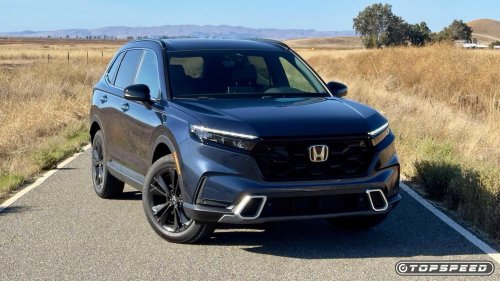
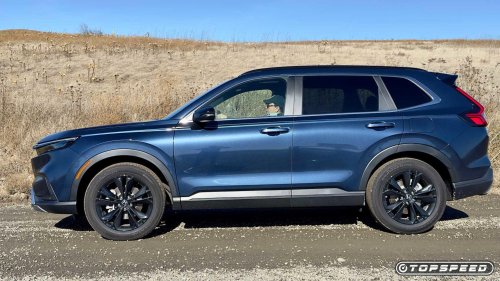
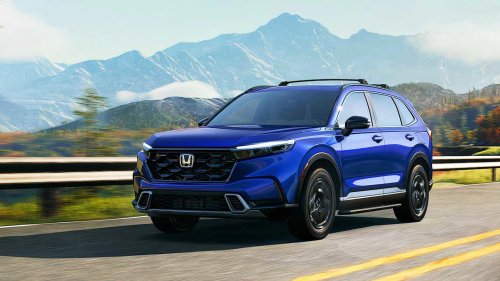
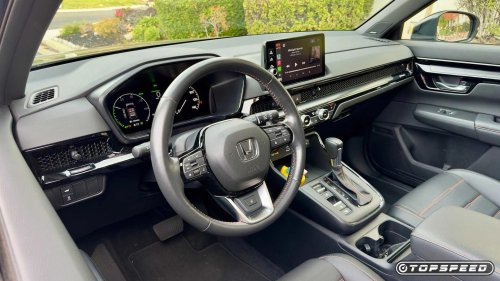
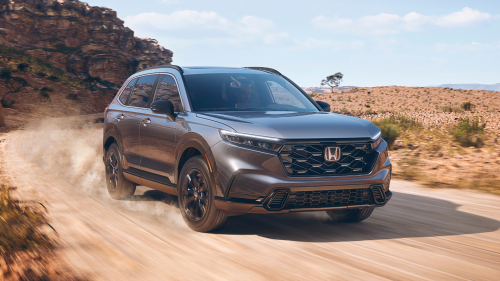
Hybrid SUVs are becoming increasingly popular in the U.S., because they solve the issue of high fuel consumption by merging highly efficient internal combustion engines with compact electric motors. They are also a great alternative to fully electric SUVs because they generally have lower prices and don't rely on the national charging infrastructure.As a result of this increased demand, many brands have entered promising gasoline-electric variations of their existing crossovers into the arena, in a bid to capitalize on the burgeoning gold rush. This benefits consumers, because brands put their best foot forward to attract the biggest market share. It also results in you benefiting from a variety of potential options.Hybrid SUVs are currently the best option you can consider if you are looking for a family vehicle that impressively balances comfort, practicality, versatility, and efficiency at an affordable rate. The hybrid SUV market isn't exactly saturated at the moment, but the segment is filled with a host of incredible and compelling options. One particular model from a very successful Japanese brand stands tall above the crowd, which is exactly why it's one of the best-selling models in its class. For 2026, we really struggle to think of a better family SUV option that offers a better balance than this attractive and competitively priced package. The Honda CR-V Hybrid Is The Most Balanced Hybrid SUV For Families In 2026 Lyndon Conrad Bell/TopSpeed The Honda CR-V Hybrid presents itself as a very comprehensive package for families wanting a balanced hybrid crossover that blends into multiple environments. The current-generation Honda CR-V Hybrid has been enjoying immense success in the U.S. new vehicle market for several valid and convincing reasons.For starters, it represents a fluid evolution of the Japanese brand's electrification strategy that still dedicates itself to multiple fueling sources. This still includes full electrification and hydrogen fuel-cell technology, but it's clear that gasoline-electric hybrid remains its primary focus for the time being. The Honda CR-V has been the Japanese brand's most popular moniker for quite some time, thanks to its dependable and versatile characteristics. Making a hybrid drivetrain with front-wheel drive and all-wheel-drive options available further increases its appeal in the competitive market. 2026 Honda CR-V Hybrid Performance Specifications Lyndon Conrad Bell - PhotoSport Hybrid FWDSport Hybrid AWDPowertrain2.0-liter Four-Cylinder And Two Permanent-Magnet Motors2.0-liter Four-Cylinder And Two Permanent-Magnet MotorsHorsepower204 HP204 HPTorque274 LB-FT247 LB-FTTransmissionDirect Drive eCVTDirect Drive eCVTDrivelineFront-Wheel DriveAll-Wheel DriveBattery1.1 kWh Net1.1 kWh NetRange560 Miles518 MilesFuel Economy44-48 MPG44-48 MPG0-60 MPH8.0 Seconds7.6 SecondsTop Speed111 MPH111 MPHTowing Capacity1,000 Pounds1,000 PoundsHonda offers the CR-V Hybrid with a choice of front- or all-wheel drivetrains, both of which produce a combined 204 horsepower and 247 pound-feet to the wheels via a direct-drive eCVT. Honda claims an 8.0-second 0-60 MPH time for the front-wheel drive model and a 7.6-second time for the all-wheel drive variant.Honda limits both drivetrains to a 111 MPH top speed. The brand opts for a conventional driveline to the rear wheels for its all-wheel drive system. This is opposed to applying an additional electric motor to the rear axle, and explains why the model's output remains the same, regardless of your preferred drivetrain. The CR-V Hybrid's Amazing Efficiency Returns HondaThe Honda CR-V's hybrid system employs a supplementary 1.1 kWh lithium-ion battery pack, resulting in a pretty impressive 40/34/37 MPG EPA consumption estimate on the city/highway/combined cycle for the front-wheel drive option. The all-wheel drive model returns a slightly worse 37/34/37 MPG result.The 14-gallon gasoline tank gets you 560 miles of range in front-wheel drive guise, which the all-wheel drive system lowers to 518 miles. Honda's hybrid system is a series-parallel variation, which means it allows the operation of the electric motor independently. The eCVT runs on a clutch-based system, allowing the motor to act as a generator for auxiliary functions, including the starter and climate control.CityHighwayCombinedAnnual Fuel Cost (est)FWD43 MPG36 MPG40 MPG$1,200AWD37 MPG34 MPG37 MPG$1,300Honda applies this same drivetrain to its other models, namely the . The Accord benefits from higher power outputs, but the Civic is just slightly less powerful. What's also interesting is the fact that the Accord's front-wheel drive and all-wheel drive options feature different combined power output figures. The Honda CR-V Hybrid maintains higher sales figures over its sedan counterparts, because it benefits from improved versatility, capability, and practicality. Crossovers are becoming increasingly popular in the U.S., resulting in many brands starting to outright discontinue their sedan and coupe model lines. How Much A New Honda CR-V Hybrid Costs Lyndon Conrad Bell - Photo The CR-V Hybrid isn't Honda's cheapest car, with its $34,650 starting price, but it is very competitively positioned in its segment. Even at this price point, the base Sport trim is still well-equipped with most of the essential features as standard. The Sport Hybrid-L is $37,650, but if you want either of these trims with all-wheel drive, you'll have to pay an additional $1,500.The flagship Sport Touring costs $41,100 because it's only available with all-wheel drive. These prices exclude Honda's $1,350 destination and handling fees. Options and packages are limited to all-season equipment and some cosmetic alterations for those who want a bit more of a distinctive look. There are also some optional colors available. All cars come standard with a comprehensive level of specification, including front heated seats, dual-zone climate control, a six-speaker audio system, and Honda's 7.0-inch touchscreen infotainment system. 2026 Honda CR-V Hybrid Pricing FWDAWDSport$35,630$37,130Sport-L$38,725$40,225Sport Touring N/A$42,550TrailSport Hybrid$38,800The Sport-L adds a wireless smartphone charger, leather upholstery, more aspirational exterior trimmings, an eight-speaker audio system, and a larger 9.0-inch touchscreen system. The Sport Touring includes a Bose premium audio system, electrically adjustable front seats with memory functions, and a heated steering wheel. You can only have this model with an all-wheel drive system. Honda offers several optional packages, including all-weather trimmings and the HPD performance-inspired visual kit across all trims. You also need to consider the brand's $1,350 destination fee. The CR-V Hybrid's Reliable Reputation HondaThe Honda CR-V has always benefited from a reliable reputation, with the current-generation model being no exception. Admittedly, Consumer Reports gives the model an interestingly low 55/100 predicted reliability rating, but its 4/5 owner satisfaction score and 93/100 road test rating inspires a lot of confidence, which brings its overall score up to an impressive 83/100.J.D. Power issues the entire CR-V range an 84/100 quality and reliability rating, making it one of the most dependable models in its segment. That being said, the CR-V Hybrid is currently subject to two recalls relating to a leaking fuel pump and a bad steering gear spring. The brand replaces both of these faulty parts at no cost to the owner.Full Warranty36 Months/36,000 MilesPowertrain Warranty60 Months/60,000 MilesMaintenance Warranty24 Months/24,000 MilesRoadside Warranty36 Months/36,000 MilesCorrosion Warranty60 Months/Unlimited MilesFederal Emissions Performance24 Months/24,000 MilesFederal Emissions Defect36 Months/36,000 MilesSeat Belt And Airbags120 Months/Unlimited MilesHonda includes its standard three-year or 36,000-mile limited warranty and five-year or 60,000-mile powertrain warranty with every CR-V Hybrid sale. You also get a five-year corrosion warranty over an unlimited mile range. If you have a replacement part fitted, the manufacturer covers this for one year. Accessories get a three-year or 46,000-mile warranty. All hybrid systems are covered for a comparatively short three years or 36,000 miles, but the battery pack gets the market-standard eight-years and 100,000-mile coverage.For peace of mind while on the road, you also get a 36-month or 36,000-mile roadside warranty in the package. There are also in-house extended warranty packages that vary in years and miles, if you plan on keeping the car for longer.



















 +12 others