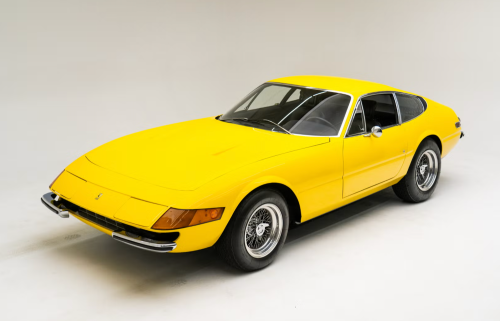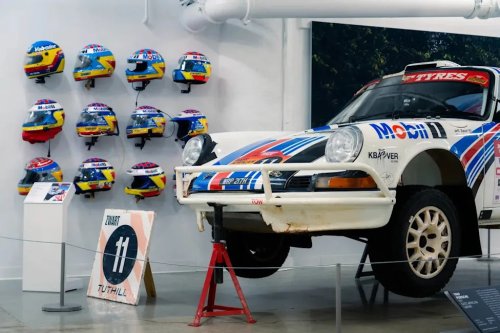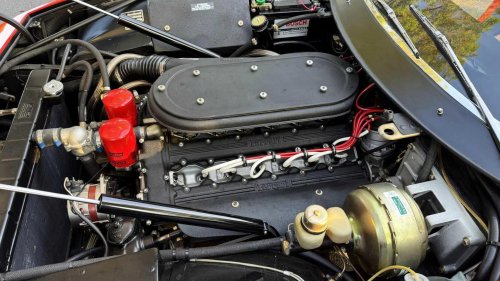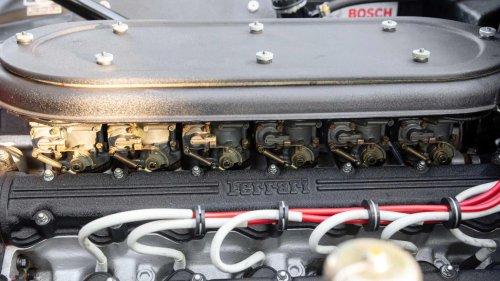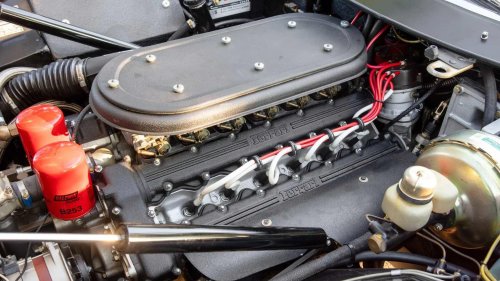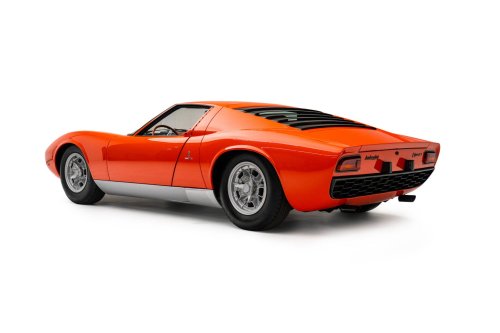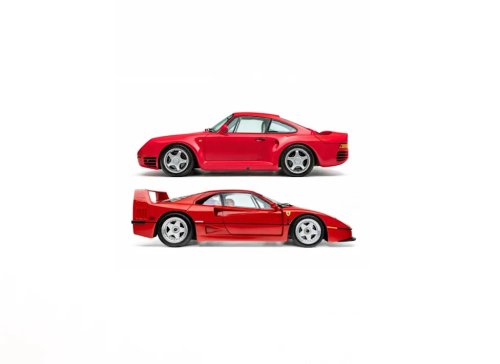
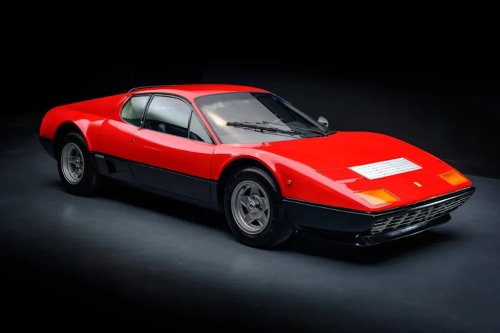
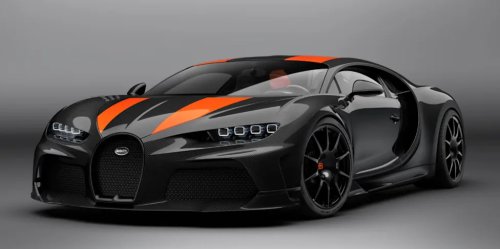
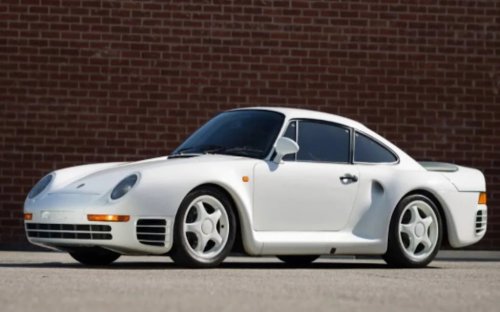
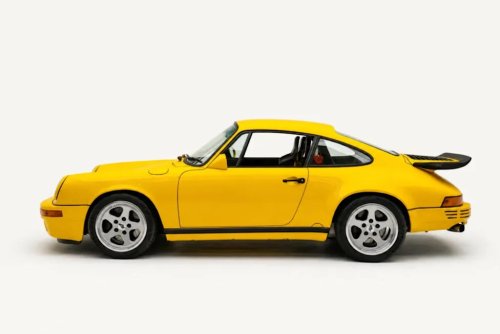


















World's Fastest? Petersen Museum Had to DecidePetersen MuseumWhen the Petersen Automotive Museum in Los Angeles was considering which cars to put into its newest exhibit World's Fastest: A Timeline of Record Setting Automobiles, it had to set some ground rules. It wasn't unlike what some car magazines have to do when considering the outrageous claims of sometimes-delusional supercar makers and whether to publish their "new world records.""As we approach the opening of our newest exhibition, World's Fastest: A Timeline of Record Setting Automobiles, you'll notice that some cars that claimed to hold the title of 'world's fastest production car' won't be present on our list," said Ryan Liddy, who works in the marketing department at the museum.Car makers, particularly supercar makers, are often surrounded by employees who constantly tell them how smart they are, agreeing with every outrageous performance claim of their car, even if the claim is only theoretical, or even just in the mind of the carmaker. So the Petersen, just like some car magazines in deciding what's true and what's hype, had to set some rules for cars to get into the new exhibit.AdvertisementAdvertisement"To qualify for a world speed record, a top speed attempt must be recorded by an independent third party, not by the car maker itself," Liddy said.Petersen Automotive MuseumFor instance, he noted, in 1973, Ferrari claimed its 512 BB was capable of a record-setting 188 mph. But a 1976 test by Autocar magazine measured its top speed at just 163 mph—far off the previous record set by the Lamborghini Miura P400s in 1970."At this speed, the car's electronic speedometer falsely indicated 174 mph, demonstrating why external measurement of speed records by a third-party is essential," Liddy said.A second qualifier: The top speed measurement must be an average over two runs, traveling in opposite directions, within 60 minutes to prevent environmental factors such as wind or incline from affecting the results. That factor disqualified the 300-plus mph runs achieved by the Bugatti Chiron Super Sport 300+ and the Yangwang U9 Xtreme from consideration for the official record.Petersen Automotive MuseumAnd third, the specific parameters that define a production car must also be taken into consideration.AdvertisementAdvertisement"The vehicle must be a road-legal passenger car and the record-claiming speed must be achieved in the same, unmodified configuration in which it can be purchased from the manufacturer."How many Vipers did Dodge make trying to refute Motor Trend tests?Furthermore, the car must have been produced in that configuration by the same manufacturer indicated by its VIN number."Only when a record-setting car has met all these criteria can we officially declare it 'the fastest production car in the world,'" Liddy said.The mythical 200 mph barrier is of particular note."There are numerous debates in the automotive community surrounding production car speed records," Liddy said. "Among the most controversial and misunderstood was the race to 200 mph between Ferrari and Porsche in the late 1980s."Gooding & Co.Anyone remember that? The Porsche 959 was designed as a Group B rally homologation car, filled with cutting edge technology to take on the fastest rally cars in the world. Sequential turbocharging, an advanced all-wheel-drive system, and active suspension made the 959 one of the most technically advanced cars ever produced.AdvertisementAdvertisementOf course, Group B rally was soon canceled because it was crazy dangerous, so Porsche entered the 959 in the Paris-Dakar rally instead and won overall in 1986. That same year, when the 959 was released for the road, it took the crown of world's fastest production car, rocketing to 198 mph, just shy of the unthinkable 200 mph barrier."Ferrari had no choice but to respond with the F40, named for Ferrari's 40th anniversary and directly inspired by Group B rally monsters, just like the 959," Liddy said.But unlike the 959, the F40 had a carbon-kevlar chassis, a 2.9-liter turbocharged V8, and little else. With no all-wheel-drive system and no active suspension, the F40 was essentially a stripped-down race car for the road, Liddy argued. Despite this, the F40 accelerated to 100 mph faster than the 959 and beat it by 0.7 seconds through the quarter mile. Ferrari claimed a top speed of 201 mph, and automotive publications praised it as the first car to break the mythical 200 mph wall.Petersen Automotive MuseumBut then came RUF, a small German manufacturer that beat Ferrari by 10 mph in top speed by going 211 mph. But wait, was RUF a production car? It is by the Petersen's standards.AdvertisementAdvertisement"Because the German government recognizes RUF as an independent automobile manufacturer, and because many of its cars—including the 'Yellowbird'—were built with RUF VINs, the record stands," Liddy said.Rubbing Italian hot peppers into the wound, once the F40 was released to the public, independent tests recorded top speeds ranging from 196-199 mph, with the car never actually reaching its claimed 201 mph top speed. The "Yellowbird" was in a 200 mph class of its own, and in a 1988 test with German publication Auto, Motor und Sport, the RUF beat its own record with a 213 mph run, further cementing its name in the history books and it's place in the Petersen exhibit.Does this have anything to do with the fact that major Petersen Museum backer and everybody's best pal Bruce Meyer owns a RUF Yellowbird? Coincidence!Go see for yourself which supercar made the cut when the new exhibit opens July 18.