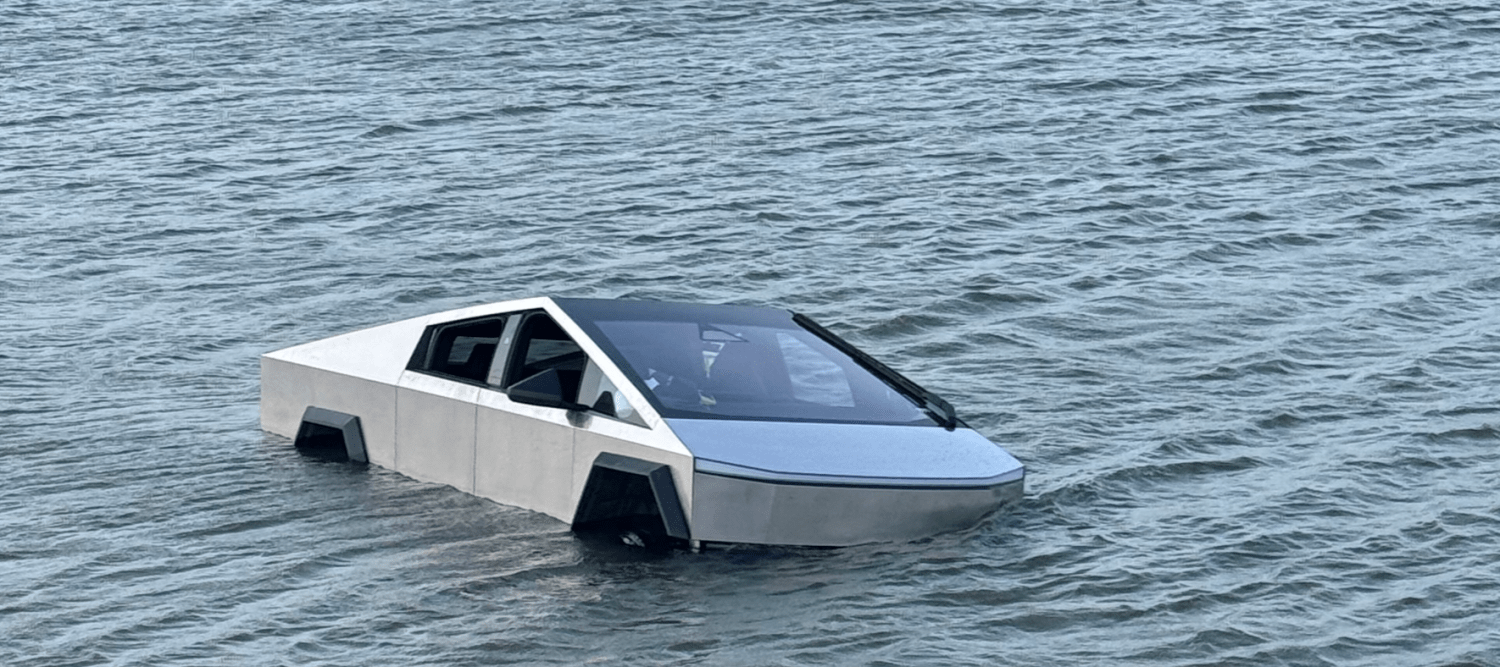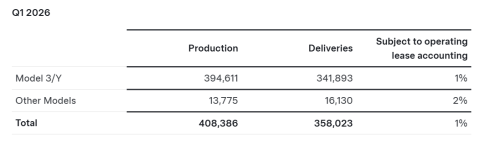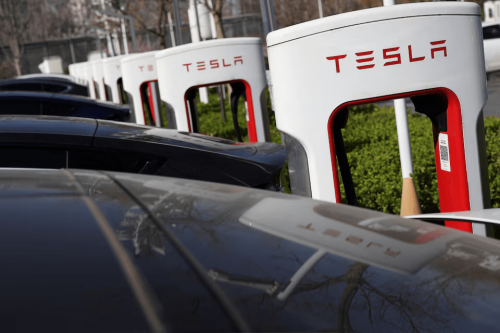



















Let’s start with the hard numbers on this one. The Q1 2026 delivery numbers are officially out, and Tesla managed to deliver 358,023 vehicles. If you’re keeping track at home, that’s a pretty rough drop compared to the 386,810 cars they moved back in Q1 of 2024. Zach already put up the raw numbers and charts yesterday, so I won’t rehash all of that here. If you spend any time on Bluesky, a lot of folks over there are already doing a victory lap, attributing the entire sales slump strictly to Elon Musk’s political activities and toxic posting habits. But reasonable analysts like my friend Lora Kolodny are pushing back on that narrative, even though they aren’t exactly huge fans of his antics either. I’m sure that on Twitter (or “X” or whatever Elon’s website identifies as these days) there are plenty of fanboys who think that the politics don’t explain any of the lost sales. It must all be interest rates, ending the tax credits, etc. Who’s right here? Is there any way to know? I decided to dive into the available numbers to see if I could find a real answer. Before we get into the weeds, I need to remind you that I have publicly stated you should never come to me for stock tips. I’m an idiot when it comes to high finance. Take this back of the napkin math with a grain of salt. Better yet: take what I’m about to present and do a better job with it. A Yale Study’s Big Claims A recent working paper from Yale economists claims that the “Musk partisan effect” cost Tesla 1.25 million vehicle sales between October 2022 and April 2025. This would mean Tesla’s sales were cut as much as almost in half, and it’s all attributed to politics. Obviously, this is way, way outside of reality. But what the researchers got right is that the partisan effect is absolutely real. Musk alienated a massive chunk of his core buyer base by wading so aggressively into politics. This effect can be measured to some extent by looking at county by county sales and comparing to voter registrations and other data. How did they arrive at such an insane number? They forgot to really consider a few important things. Let’s walk through what’s missing from their basic assumptions and adjust the numbers for the real world. Assumption 1: The Forever Growth Curve The biggest flaw in the Yale math is that they assume Tesla would just keep growing at its explosive pandemic era rate indefinitely. That ignores the reality of their actual hardware. The Model 3 and Model Y are ancient in car years. You simply cannot expect a nearly decade old design to maintain exponential sales growth forever. If we flatten out that growth curve and assume demand naturally plateaued due to an aging lineup, I’d estimate that about 750,000 of those “lost” cars instantly vanish from the equation. Assumption 2: The Macro Penalty The study also vastly underestimates the damage done by high interest rates. Between late 2022 and 2025, auto loans got incredibly expensive. Financing a $50,000 car got hundreds of dollars more expensive per month, which hammered the entire premium auto segment. Applying a conservative 10% market contraction just due to borrowing costs removes another 200,000 cars from the “Elon tweeted” bucket. Assumption 3: The Tax Credit Cliff Here is a massive factor the original math completely glossed over. On January 1, 2024, the Model 3 lost its $7,500 federal tax credit entirely due to strict new battery sourcing rules. Losing a massive government discount overnight on your highest volume sedan is going to obliterate a chunk of demand. People didn’t just stop buying the Model 3 because they were mad at the CEO. They stopped buying it because it effectively got $7,500 more expensive. We can safely pull another 75,000 to 100,000 cars out of the tally (again, my best estimate). Assumption 4: The Competition Reality Check The researchers found that competitor EV sales jumped and assumed almost all of it was one-for-one protest shopping. But this was the exact window when Hyundai, Kia, Ford, and GM finally started putting genuinely good electric cars on dealership lots. If we assume even half of those buyers chose a competitor simply because they liked the car better, we have to pull roughly another 100,000 to 125,000 cars out of the protest bucket. The Bottom Line Estimate When you stop pretending Tesla exists in an economic vacuum, that massive 1.25 million figure crumbles pretty fast. A reality based estimate puts the actual political damage somewhere between 75,000 and 125,000 total lost sales over that two and a half year period. Obviously, you can come up with your own estimates for the effect of the above, but this is what I’d estimate based on what I’ve seen other automakers go through and other factors. If we divide that 75,000–125,000 figure out into the ten quarters the Yale study covered, the political penalty comes out to about 7,500 to 12,500 lost sales per quarter. So let’s look back at this current quarter. Out of the 28,800 fewer cars Tesla delivered in Q1 2026 compared to two years ago, Elon’s political baggage is likely responsible for roughly 7,500 to 12,500 of that gap. That means the Musk Effect accounts for roughly 26% to 43% of the current sales slump against Q1 2024. That is still a huge anchor dragging the numbers down. Losing over a quarter of your sales gap just because the CEO cannot stop posting is a wild unforced error. But the majority of the drop is just the basic reality of selling an aging car in a high interest rate market without a $7,500 tax credit while other automakers finally eat your lunch. If I’m right, that’s also a significant (greater than 25%) figure, so the phenomenon is real. But, tell us in the comment where you think I’ve gone wrong. On the other hand, this shows that even with all of the insane things Elon Musk has drug his name through, the situation may still be salvageable without him stepping down. We just need to undo the political crap Elon Musk contributed to (getting Trump into office, ending EV tax credits, and more). Depending on how important you think Elon Musk was to getting Trump elected, he could be responsible for some of the rest. If this conclusion sounds wishy-washy, you’re right. We’re looking at a complex situation that we know was at least partly Elon’s fault, but we don’t know exactly what his contribution was or how important it was. So, I’m going to hand this off to readers. How would you estimate all of the above? Featured image by Kyle Field, CleanTechnica.