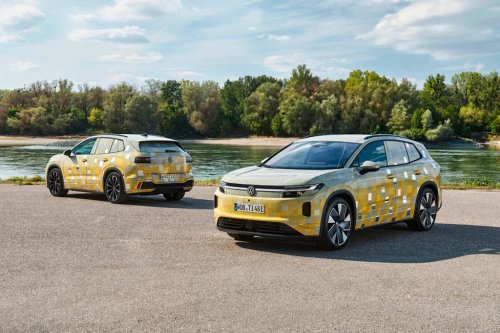
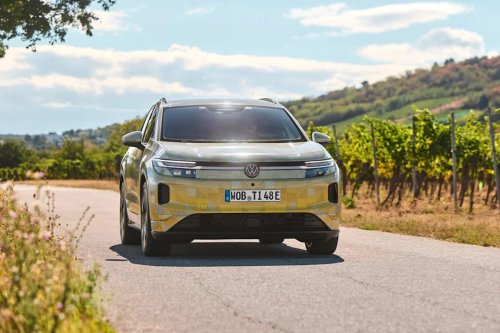
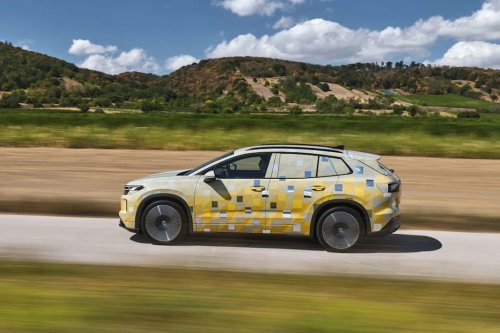
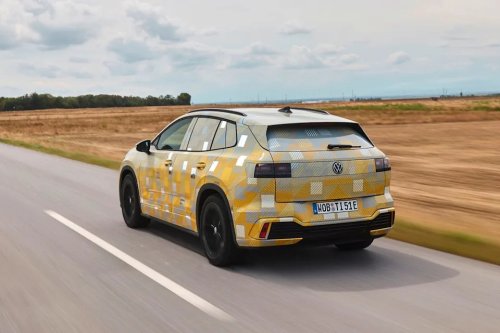
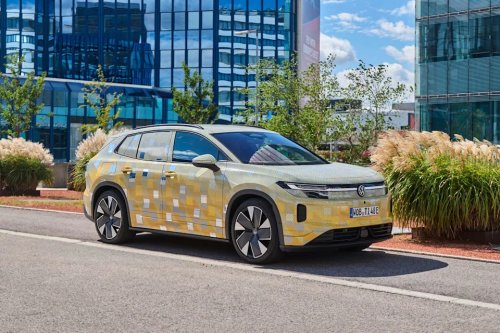
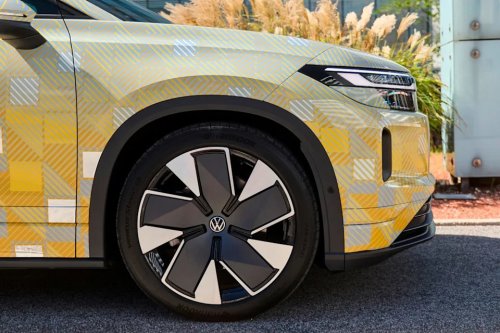
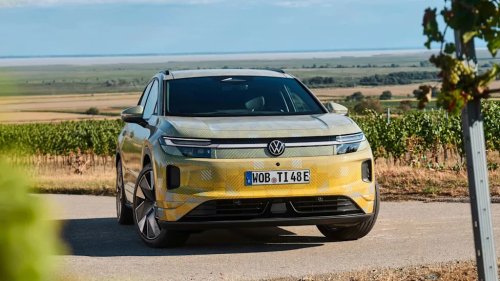
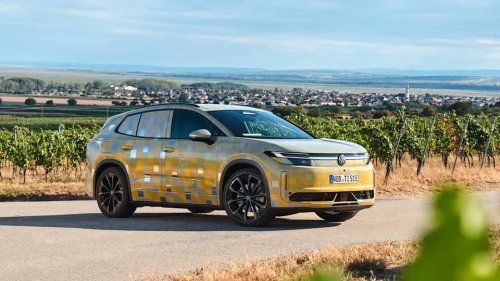
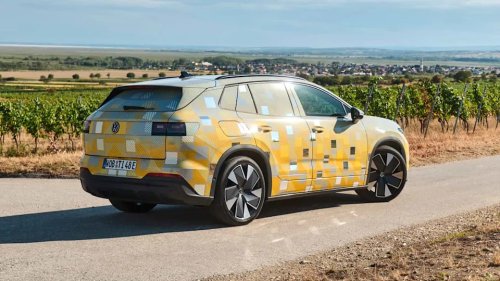
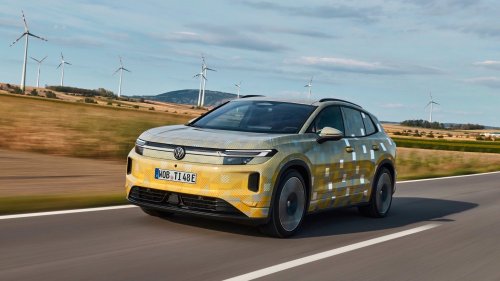
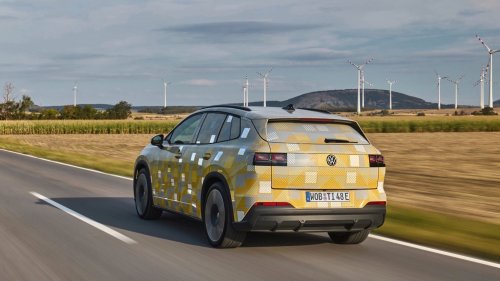
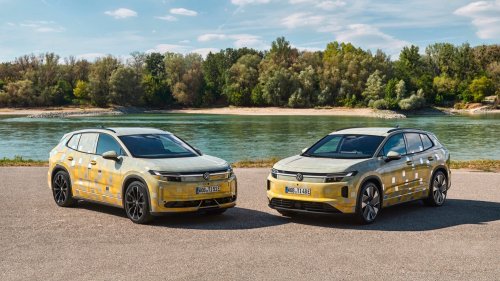
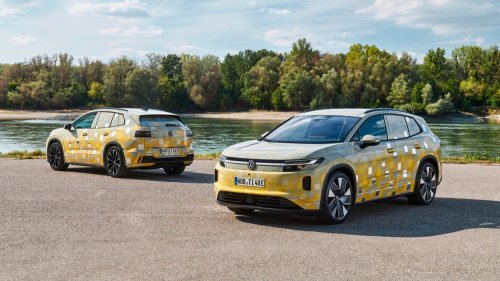
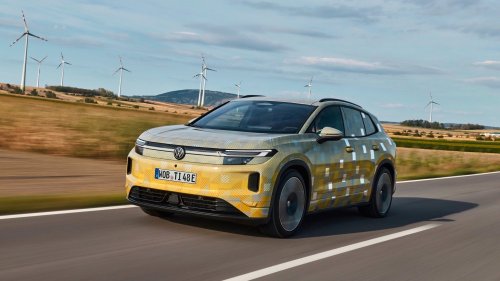
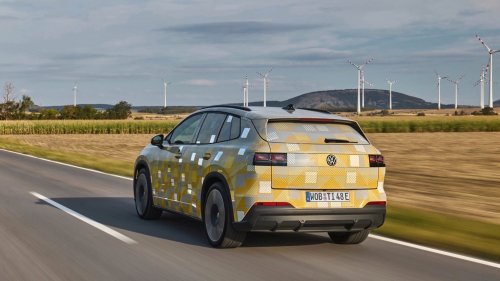
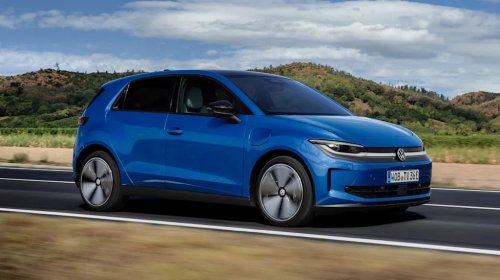
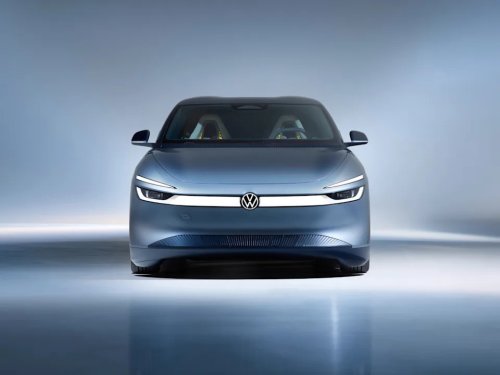
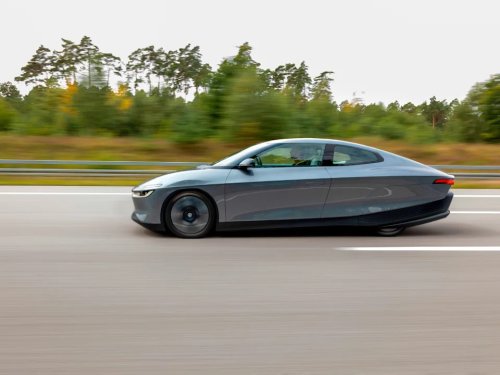
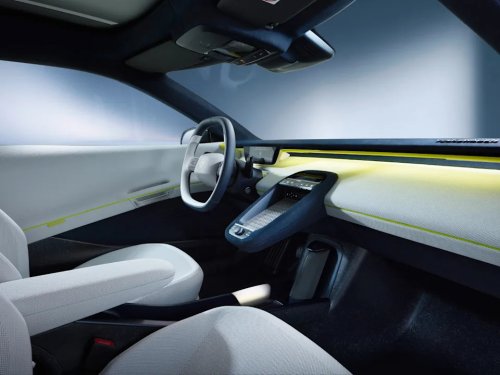
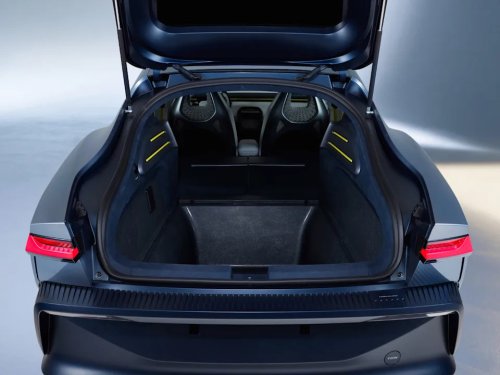
Volkswagen's EV Prototype Covered 794 Miles With One Charging StopAutoblogRex SanchezTue, September 15, 2026 at 10:58 AM UTCAdd us on GoogleAutoblog and Yahoo may earn commission from links in this article.Designed to Slice Through AirVolkswagen has unveiled the Mission Efficiency, and as expected, the near-production electric vehicle prototype boasts extreme aerodynamics. So much so that the German marque said the Mission Efficiency sets the record for the lowest drag coefficient of any road-approved car, at 0.158.That figure beats the 0.197 Cd of the Lucid Air, one of the most aerodynamic cars in the world. The Mercedes EQS sedan and the now-discontinued Tesla Model S are also in this club, with drag coefficients as low as 0.20 and 0.208, respectively. Moreover, VW claims two other records: a consumption of 6.48 kWh/100 km (about 6.48 kWh/62 miles or 323 MPGe) in an idealized constant-speed test at 68 km/h and 7.51 kWh/100 km (about 7.51 kWh/62 miles or 279 MPGe), including charging losses, in a real-world setting. The real-world test covered a 794-mile trip from Wolfsburg, Germany, to Vienna, during which the EV needed only one charging stop and arrived with 164 km (102 miles) of range remaining. Just note that these are not EPA-rated figures.VolkswagenView the 3 images of this gallery on the original articleEfficiency Has Always Been the PointThis isn't the first time Volkswagen has developed a highly aerodynamic and efficient car. In 2013, the automaker unveiled the XL1 plug-in hybrid, which was one of the most economical production cars in the world at that time. Now, with the industry moving toward electrification, the Mission Efficiency is a fitting follow-up, especially considering its use of the brand's mass-market technology.AdvertisementAdvertisementThat's because the EV prototype uses MEB+ front-wheel-drive technology rather than an entirely bespoke powertrain architecture. The same technology underpins the ID. Polo and ID. Cross – EVs designed to be affordable, though they won't likely make their way stateside given the market preference for larger vehicles. The 99-kW (133-horsepower) motor and high-voltage battery have been adopted from the ID. Polo.VolkswagenView the 3 images of this gallery on the original articleWhat sets the Mission Efficiency apart is its aero-focused design, including a low-drag teardrop coupe body, a compact front profile, active cooling shutters, and a fully enclosed underbody. It also has covered rear wheels, which may look like an aesthetic addition that gives it futuristic appeal, but they help reduce turbulence and aerodynamic drag.Volkswagen said the EV prototype consumes more than 30% less energy than the standard ID. Polo at speeds above 80 km/h (50 mph). At 140 km/h (87 mph), it requires about as much energy as the aforementioned small electric hatchback at 100 km/h (62 mph).AdvertisementAdvertisementSpecs-wise, the Mission Efficiency measures 4,775 mm (188 inches) long and 1,392 mm (55 inches) tall, while offering a 2+2 seating configuration that, like the Toyota GR86's, doesn't leave much room for rear passengers. It is also equipped with a MacPherson front axle and hydraulic front brakes from the ID. Polo, along with new electromechanical rear brakes.VolkswagenView the 4 images of this gallery on the original articleFrom Wind Tunnel to Showroom?Volkswagen didn't announce any production plans for the Mission Efficiency. But because it's near production, road-approved, and uses affordable technologies from the ID. Polo and ID. Cross, the aerodynamic EV prototype may already have the qualities needed for a market launch.Given that range sells, VW might have an enticing proposition with a production version. That may be more crucial in the U.S., where the brand's EV lineup appears to be in limbo following the end of ID.4 production in Chattanooga, Tennessee. What seems clear for now is that the new prototype shows promise for future EV products.VolkswagenView the 4 images of this gallery on the original articleAdvertisementAdvertisementThis story was originally published by Autoblog on Sep 15, 2026, where it first appeared in the News section. Add Autoblog as a Preferred Source by clicking here.



















 +35 others







![Volkswagen, Volkswagen ID.4, Volkswagen ID.5, Volkswagen's best-seller is going electric in 2027 to replace the ID.4 and ID.5 [Images]](https://cdn.topcarnews.net/thumb/id/aHR0cHM6Ly9pMC53cC5jb20vZWxlY3Ry-ZWsuY28vd3AtY29udGVudC91cGxvYWRz-L3NpdGVzLzMvMjAyNi8wOS9Wb2xrc3dh-Z2VuLUlELVRpZ3Vhbi1JRC00LmpwZWc_-dz0xNTAwJmFtcDtxdWFsaXR5PTgyJmFt-cDtzdHJpcD1hbGwmYW1wO3NzbD0x/aed2aa2870791850c8e69c5fc3a0ed85.jpeg?t=20261006&post_id=66267)
![Volkswagen, Volkswagen ID.4, Volkswagen ID.5, Volkswagen's best-seller is going electric in 2027 to replace the ID.4 and ID.5 [Images]](https://cdn.topcarnews.net/thumb/id/aHR0cHM6Ly9lbGVjdHJlay5jby93cC1j-b250ZW50L3VwbG9hZHMvc2l0ZXMvMy8y-MDI2LzA5L1ZvbGtzd2FnZW4tSUQtVGln-dWFuLUlELTQtZnJvbnQtcXVhcnRlci5q-cGc_c3RyaXA9aW5mbyZhbXA7dz0xMDI0/97fb00cd3919b8d0dc36440715039e6e.jpg?t=20261006&post_id=66267)
![Volkswagen, Volkswagen ID.4, Volkswagen ID.5, Volkswagen's best-seller is going electric in 2027 to replace the ID.4 and ID.5 [Images]](https://cdn.topcarnews.net/thumb/id/aHR0cHM6Ly9lbGVjdHJlay5jby93cC1j-b250ZW50L3VwbG9hZHMvc2l0ZXMvMy8y-MDI2LzA5L1ZvbGtzd2FnZW4tSUQtVGln-dWFuLUlELTQtc2lkZS5qcGc_c3RyaXA9-aW5mbyZhbXA7dz0xMDI0/ed240b20e8275f3af4b904f46ebb5fb3.jpg?t=20261006&post_id=66267)
![Volkswagen, Volkswagen ID.4, Volkswagen ID.5, Volkswagen's best-seller is going electric in 2027 to replace the ID.4 and ID.5 [Images]](https://cdn.topcarnews.net/thumb/id/aHR0cHM6Ly9lbGVjdHJlay5jby93cC1j-b250ZW50L3VwbG9hZHMvc2l0ZXMvMy8y-MDI2LzA5L1ZvbGtzd2FnZW4tSUQtVGln-dWFuLUlELTQtcmVhci1xdWFydGVyLmpw-Zz9zdHJpcD1pbmZvJmFtcDt3PTEwMjQ/436c7979cf5b947053f7f0bf39ff94bc.jpg?t=20261006&post_id=66267)
![Volkswagen, Volkswagen ID.4, Volkswagen ID.5, Volkswagen's best-seller is going electric in 2027 to replace the ID.4 and ID.5 [Images]](https://cdn.topcarnews.net/thumb/id/aHR0cHM6Ly9lbGVjdHJlay5jby93cC1j-b250ZW50L3VwbG9hZHMvc2l0ZXMvMy8y-MDI2LzA5L1ZvbGtzd2FnZW4tSUQtVGln-dWFuLUlELTQtZnJvbnQuanBnP3N0cmlw-PWluZm8mYW1wO3c9MTAyNA/ec2e4ca027ccbfb42942abe523f3acf7.jpg?t=20261006&post_id=66267)
![Volkswagen, Volkswagen ID.4, Volkswagen ID.5, Volkswagen's best-seller is going electric in 2027 to replace the ID.4 and ID.5 [Images]](https://cdn.topcarnews.net/thumb/id/aHR0cHM6Ly9lbGVjdHJlay5jby93cC1j-b250ZW50L3VwbG9hZHMvc2l0ZXMvMy8y-MDI2LzA5L1ZvbGtzd2FnZW4tSUQtVGln-dWFuLUlELTQtcmVhci5qcGc_c3RyaXA9-aW5mbyZhbXA7dz0xMDI0/668525889dc433b0fd0e166fd5bd8366.jpg?t=20261006&post_id=66267)