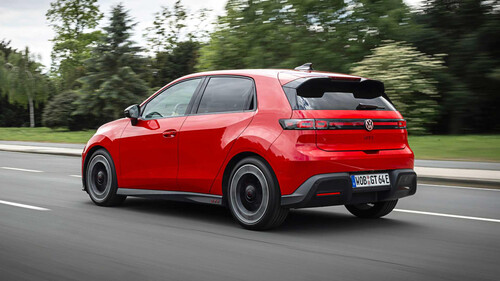
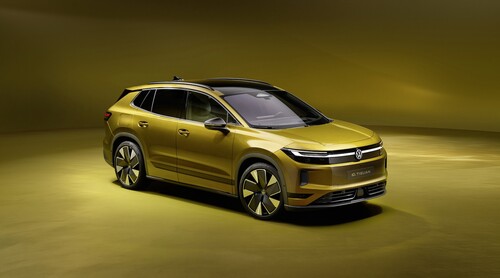
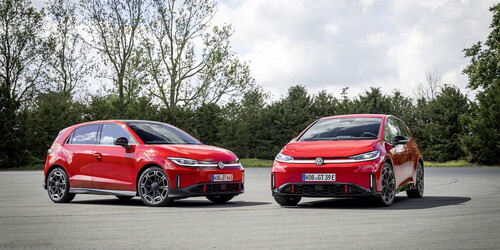
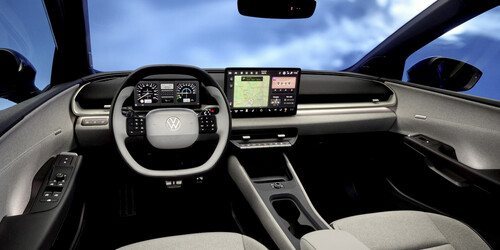
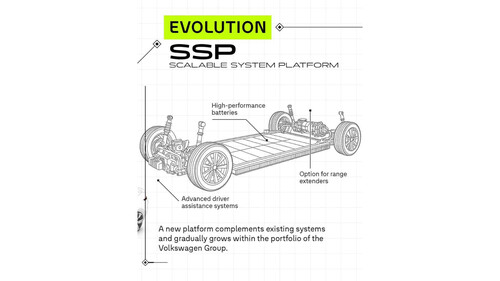
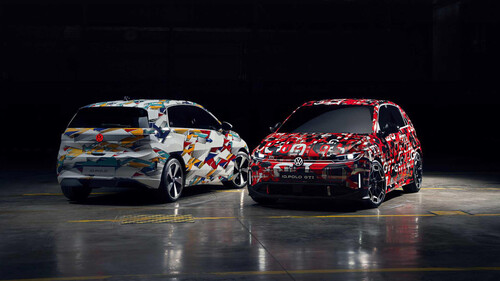
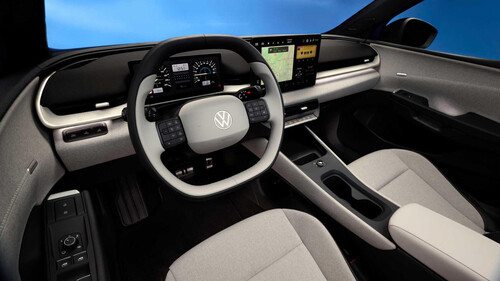
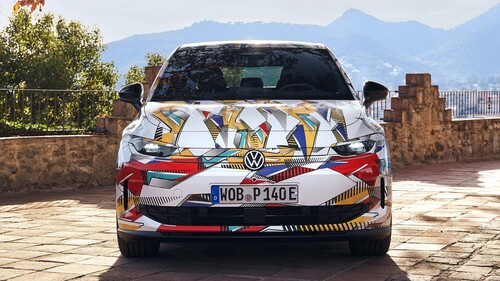
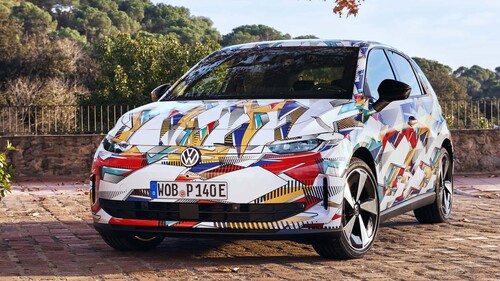
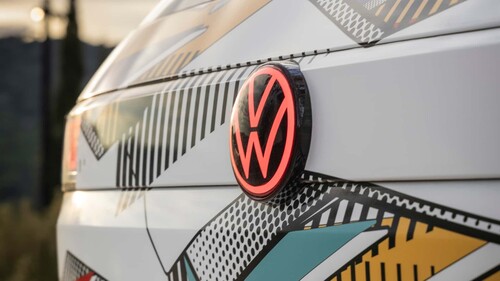
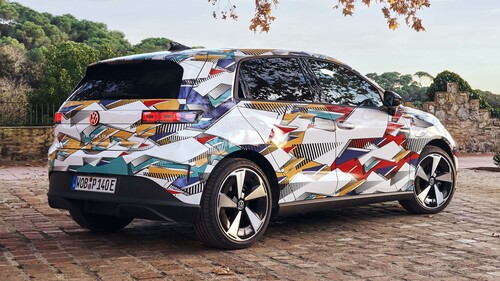
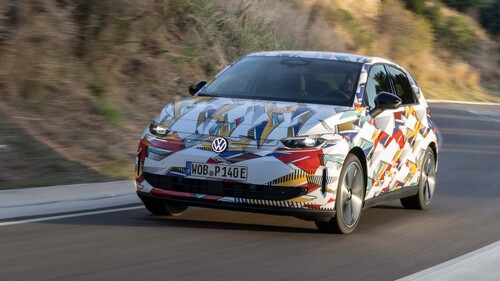
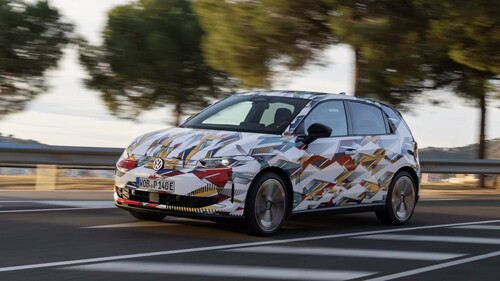
2026 VW ID.Polo: A Fun, Familiar, Flawed EVVolkswagenThe Volkswagen ID.Polo is not coming to America. But America should take note of this cute little hatchback, because it shows how Volkswagen is moving the design and execution of its EVs away from the soulless, low-rent futurism of the original ID electric cars (the retro-hip ID.Buzz excepted) and toward vehicles that have presence and character. It also shows how VW's electric powertrain vehicle architecture is beginning to evolve into lighter and simpler formats.The first thing you notice about the ID.Polo is that it looks, er … normal. Although it's been engineered from the ground up as an electric vehicle, it has a familiar form language, one we've come to know and love over the years through successive generations of the Golf hatchback. While the lumpen ID.3 attempted to reinvent the Golf for the modern electric age, the cheerful ID.Polo reassures us the iconic spirit of the Golf is still alive and well in Wolfsburg. The only obvious visual clue that it's powered by electrons rather than hydrocarbons is the charge-port flap on the right front fender.The Polo nameplate first appeared in 1975 on a sub-Golf-sized hatchback that shared key design cues with its larger sibling. As the Golf has grown over the decades, so too has the Polo, though it has always remained a size class below the car that saved Volkswagen in 1974. This electric-powered Polo blurs that boundary. Volkswagen might call it a B-segment car, but the ID.Polo is 1.1 inches wider and 2.5 inches taller than the current-generation Golf GTI and rolls on a wheelbase that's just 1.1 inches shorter. At 159.6 inches from bumper to bumper, the ID.Polo is a massive 9.3 inches shorter than the GTI, however. Those dimensions help trick the eye, making the ID.Polo look—in isolation—like a more compact car than it really is, especially on the optional 19-inch alloy wheels fitted to the top-spec Style model you see here.VolkswagenThe Hardware Gets Smarter, TooThe ID.Polo is built on a new variant of Volkswagen's MEB electric vehicle architecture called MEB+. In simple terms, MEB+, which will arrive in the U.S. underneath the coming new 2028 ID.Tiguan, is less complex and less expensive, and it enables Volkswagen to build front-wheel-drive electric-powered vehicles. It also allows for the use of lower cost—though heavier—lithium iron phosphate (LFP) battery packs on entry-level models in addition to the nickel manganese cobalt (NMC) batteries previously used exclusively across the company's EV lineup.The ID.Polo also debuts Volkswagen's new APP290 motor, which has been designed specifically for compact front-drive EVs. Although similar in concept to the 282 hp, 402 lb-ft APP550 motor that has powered the ID.4 since 2024, the APP290 has lower power and torque outputs (114–222 hp and up to 214 lb-ft of torque) and has a simpler, lower-cost water cooling system instead of the APP550's water and oil cooling setup. The APP290 weighs 55 pounds less than the APP550 and is also paired with a new disc-shaped silicon carbide inverter that sits flush with the motor housing rather than in a separate box.VolkswagenTwo Batteries, Two PersonalitiesThe ID.Polo is available with either a 37-kWh LFP or a 52-kWh NMC battery pack. In the base Trend trim level, which is only available with the LFP battery, the APP290 motor's outputs have been dialled back to 114 hp and 195 lb-ft. In LFP-equipped Life and Style models, the motor's output is upped to 133 hp, though torque remains 195 lb-ft. Order a Life or Style model with the bigger NMC battery, and you get an APP290 motor that develops 208 hp and 214 lb-ft. That, and the fact the bigger but more energy-dense NMC battery adds only 18 pounds to the curb weight, drops the claimed 0–62-mph acceleration time to a decent 7.1 seconds compared with 10.6 seconds for the base Trend model and 9.9 seconds for the LFP-equipped Life and Style models.The NMC battery delivers more range, too—about 282 miles on the WLTP test (equivalent to about 240 miles on the tougher EPA test), compared with up to 206 miles (about 175 miles under the EPA test) for the LFP-equipped cars. But there's no such thing as a free lunch. Going for the NMC battery option adds the equivalent of $5,250 to the price of an LFP-equipped Life or Style model, 15.7 percent and 14.2 percent increases, respectively.Our top-spec Style test car, which has not only the big battery and more powerful motor but also the 19-inch wheels, metallic paint, the premium navigation, and a Harman Kardon audio system, costs the equivalent of $46,000 in Germany, or 38 percent more than the entry-level ID.Polo Trend. In a U.S. context, our ID.Polo Style would cost more than the Chevy Bolt RS or a fully loaded Nissan Leaf and is about the same money as the all-wheel-drive Kia EV3 GT.VolkswagenThe Cabin Gets the Basics RightIs it worth the money? In terms of the basics, the ID.Polo looks the part of an appealing small hatchback. The characterful and confident exterior is paired with an interior that features upscale fabrics and that new luxury-car must-have—physical controls for oft-used vehicle functions. "It's not a phone; it's a car," VW Group design chief Andreas Mindt said of the decision to have buttons and switches in the ID.Polo to control audio volume, temperature, fan speed, and hazard lights, as well buttons rather than touch pads on the steering wheel for functions like cruise control. Amen to that. There are even little tabs on the dash vents that allow you to move them with your fingertips to direct the airflow rather than having to take your eyes off the road and hunt-and-peck around a menu on a screen.There are screens in the interior, of course, the 13.0-inch center touchscreen augmented by a 10.0-inch instrument display behind the steering wheel. But the ID.Polo's sense of fun has seeped into the digital realm: One of the instrument panel's four configurations reproduces the look and layout of the analog dash used in 1970s Volkswagens. What looks like an old-school tach is in fact the power meter, the needle swinging to show the amount of power used or recaptured and sent back to the battery under regenerative braking.Slide behind the wheel, put your foot on the brake, and the ID.Polo wakes up. The high seating position betrays the fact there's a battery underneath you, but otherwise it feels as if you're in a regular Golf or Polo in terms of your relationship to things like the dashboard, the A-pillars, and the roof.VolkswagenFinally, an ID That's Fun to DriveIt only takes a couple of miles to realize the ID.Polo feels a next-generation car in the context of the current ID lineup. It's a more sophisticated and more resolved EV than any of the original ID models. With 208 hp under your right foot and sharp steering, the little ID.Polo nips and darts through traffic like a minnow through a shoal of sharks. And with all the electronic nannies switched off, it's fun on a winding road, the near-Golf GTI power under the hood underpinned by a solid foundation of instant-on torque that helps get it to 100 mph with surprising ease, and a front end that responds with the alacrity of a old-school Mini Cooper to commands from the steering wheel.But the ID.Polo Style isn't quite the electric-powered Golf avatar its first impressions promise. The problem is the ID.Polo's chassis doesn't quite have the expressive fluidity that has long been the hallmark of the best Golfs. The steering is accurate, but you feel a slight change in its weighting as you move the wheel through the on-center position, and like other punchy front drive EVs, there's noticeable torque steer when you get aggressive with the accelerator on less-than-ideal roads. Worse, the ride is way too stiff, the tires chattering over broken pavement at low speeds and the tightly wound suspension uncomfortably amplifying vertical motions over humps and heaves in the road.Those issues aside—and the too-stiff suspension can be easily fixed with more sensible spring and shock rates—the ID.Polo suggests Volkswagen, which in the aftermath of the Dieselgate scandal rushed to be among the first of the legacy automakers to pivot to electro-mobility, has rethought its approach to EVs. It's not so much the technology, though like all automakers, VW will continue to iterate and improve its EV hardware and software. No, this little hatchback is more about upping the emotional quotient of its EVs, to make them more approachable and desirable. And in that context, while it's not perfect, the ID.Polo is a big step in the right direction.Photo credit: VolkswagenPhoto credit: VolkswagenPhoto credit: VolkswagenPhoto credit: VolkswagenPhoto credit: VolkswagenPhoto credit: VolkswagenPhoto credit: VolkswagenPhoto credit: VolkswagenPhoto credit: VolkswagenPhoto credit: VolkswagenPhoto credit: VolkswagenPhoto credit: VolkswagenPhoto credit: VolkswagenPhoto credit: VolkswagenPhoto credit: VolkswagenPhoto credit: VolkswagenPhoto credit: Volkswagen