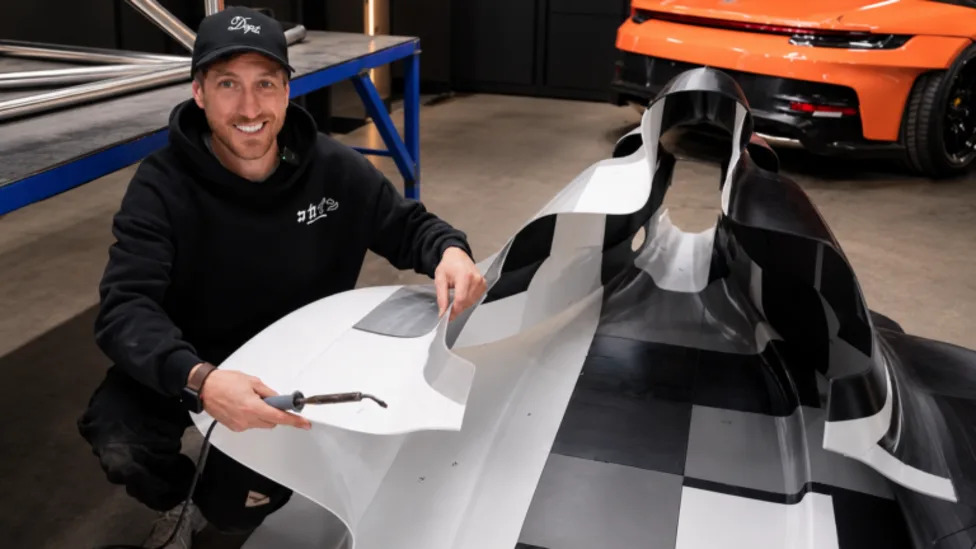
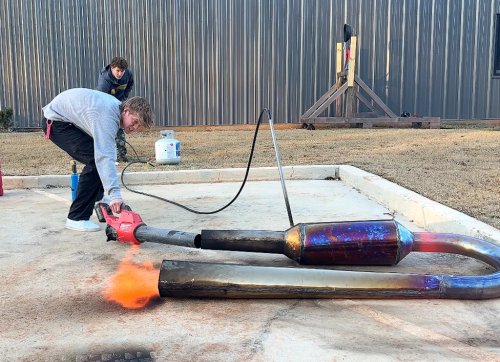
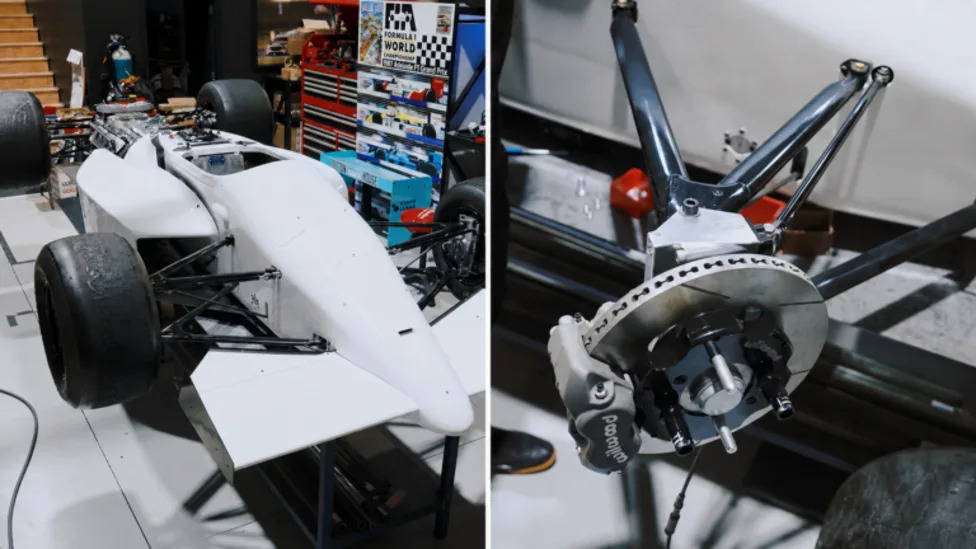
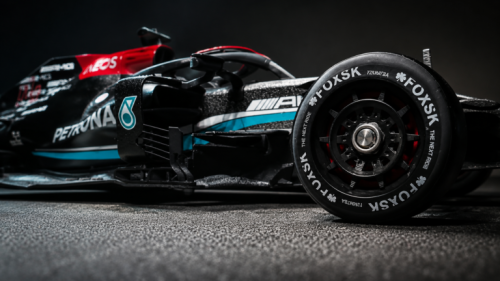
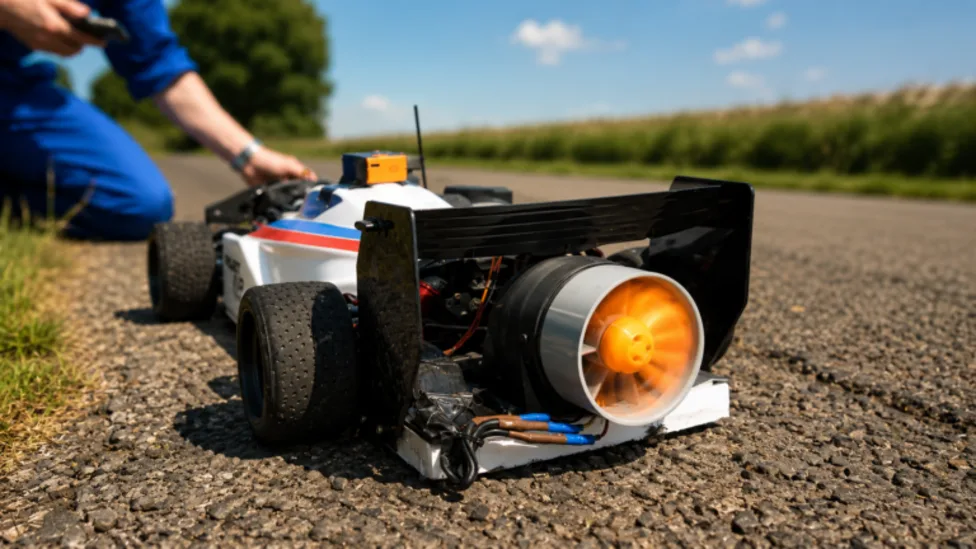
This YouTuber Strapped a Brabham-Style Fan to a 100mph RC Car and It Actually WorkedThe Brabham BT46B competed in exactly one Formula 1 race. It won by over half a minute. Then the sport's governing body quietly moved to prohibit such cars in future – though designer Gordon Murray has spent decades correcting the record on this point: "the one thing that's been completely misreported in all the books and magazines is that the car was banned. It was never banned." The Swedish Grand Prix result stood, and the BT46B remains the only F1 entrant with a perfect winning record.That 1978 concept – a large rear-mounted fan actively evacuating air from a sealed underfloor to pin the car to the road – has now been transplanted, with impressive fidelity, onto a 1/7-scale RC car by the YouTube channel ProjectAir.The Build, the Numbers, and Where It Got ComplicatedThe starting point was an Arrma Limitless, a vehicle ARRMA bills as the world's fastest production-ready RC car straight out of the box, with top-end speed gearing capable of pushing it past 100 mph. It tips the scales at more than 6 kg, and that heft translates into persistent understeer when cornering at speed – precisely the handling deficit that additional downforce could address. ProjectAir host James stripped the chassis back and bolted a flat aluminium floor underneath it, creating a sealed low-pressure cavity. The fan assembly itself was engineered by team member Emma, combining 3D-printed parts with a high-KV brushless motor sourced from RC aviation – the whole unit designed to draw air out from beneath that floor.AdvertisementAdvertisementThe fan development alone went through several iterations. An initial six-blade prototype fitted with foam-board skirts managed just 1.8 kg of downforce on the test bench – measured using a homemade manometer filled with tea, food colouring being unavailable at the time. Emma reworked the design, increasing the blade count and refining the aerofoil geometry; the resulting eight-blade version produced 6.4 kg of downforce, approximately equal to the car's own weight. Stepping up to ten blades pushed the peak figure to 10.09 kg, but the motor began giving off an ominous smell in the process. The team settled on eight blades and a fresh motor.On the road, the results split neatly depending on surface quality. The rough test corner proved deeply problematic for the ground effect system – the rigid wooden skirts skipped and rattled across the uneven tarmac, repeatedly breaking the seal, and the car's best lap through that section clocked 4.97 seconds, actually worse than the unmodified car's 4.75-second baseline."I think what we discovered here is one of the fundamental flaws of ground effect cars," James said. "Unlike with winged cars where the downforce is fairly consistent, these ground effect cars don't work if they're not touching the floor at the perfect ride height." Gordon Murray reached the same conclusion forty-seven years earlier. "The biggest problem by a mile was sealing the skirts," Murray told Motor Sport Magazine.The smooth straight told a different story. Stock, the Limitless runs 0–60 mph in 2.9 seconds. With the fan at maximum power on a flat surface, the modified car ran 2.28 seconds on one pass and eventually posted a best of 2.2 seconds – quicker than a current Formula 1 car off the line. "The fan has clearly helped with the 0 to 60," James added, with some understatement. As he put it: "We've built one of the fastest ground effect RC cars in the world with a ridiculous 0 to 60 time."AdvertisementAdvertisementThe BT46B faced the same fundamental sensitivity. Niki Lauda could exploit the fan car's grip because the 1978 Swedish Grand Prix circuit happened to suit it. Put it on a rougher surface, and the skirt sealing problem that Murray called his biggest engineering headache would have compounded quickly. ProjectAir found this out the hard way on a public road in Britain, which is a reasonable stand-in for any circuit that wasn't Anderstorp.What the project demonstrates, beyond the impressive straight-line numbers, is that the physics haven't changed. Active ground effect is extraordinarily powerful when the seal holds, and completely useless when it doesn't."This one being on an actual road surface, it made the whole thing way harder," James said. A 1978 Formula 1 team with unlimited resources and Niki Lauda in the cockpit managed one race before the concept was retired. The fact that a YouTube channel with a 3D printer got within touching distance of the same engineering conclusions is a reminder of just how elegant the original idea was.



















 +63 others