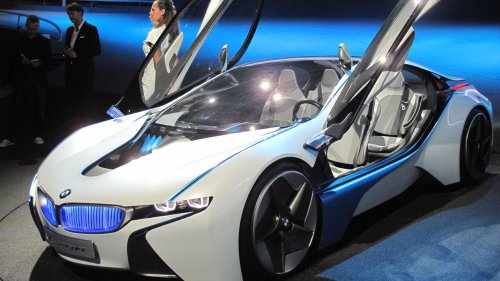




























In the world of automobiles, prototypes often serve as the testing ground for innovation. While many never make it to production, some forgotten prototypes were not only functional but also ahead of their time. Let’s explore these unique creations that, although overlooked, demonstrated remarkable engineering prowess.GM Firebird SeriesThe GM Firebird Series, introduced in the 1950s, was a set of experimental cars that looked like they belonged in a sci-fi movie. Designed to resemble jet aircraft, these gas turbine-powered vehicles were a part of General Motors’ vision for the future. They featured bubble canopies, tail fins, and an innovative control system that mimicked flight controls. Although these prototypes never reached production, they showcased advanced technologies that would later be incorporated into GM’s production models. The Firebird Series remains a testament to the company’s commitment to pushing the boundaries of vehicle design and innovation.Ford NucleonThe Ford Nucleon was an ambitious concept car from the 1950s, envisioned to be powered by a small nuclear reactor. This futuristic vehicle aimed to eliminate the need for traditional fuel, promising a range of up to 5,000 miles before requiring a reactor change. Its design included a sleek, forward-thinking aesthetic. While the idea of a nuclear-powered car captivated imaginations, the practical and safety concerns of housing a reactor in a vehicle led to the project’s cancellation. The Nucleon remains a symbol of the optimistic vision of the atomic age and a reminder of the challenges in balancing innovation with practicality.Fiat Abarth 1500 BipostoIn the late 1950s, the Fiat Abarth 1500 Biposto made its debut as a sleek, lightweight racing prototype. Designed by Carlo Abarth, this vehicle combined a Fiat engine with a lightweight, aerodynamic body, making it competitive in racing circuits. Its streamlined form and powerful engine allowed it to achieve impressive speeds. Although it was successful in races, the 1500 Biposto never went into mass production. However, its influence on racing car design and performance is undeniable. The vehicle’s legacy lives on in the Abarth brand, known for producing high-performance cars with a focus on agility and speed.Lancia Stratos ZeroThe Lancia Stratos Zero, introduced in 1970, was a striking concept car that pushed the boundaries of automotive design. Its wedge shape and low profile were revolutionary at the time, setting the stage for the design of the production Lancia Stratos. The Zero’s futuristic look made it an icon of car design. Despite being a concept, the Stratos Zero’s influence on the automotive world was significant. It demonstrated the potential of radical design in mainstream vehicles and inspired a generation of sports cars. The Zero remains a celebrated piece of automotive history and a testament to innovative design.Toyota EX-IIIThe Toyota EX-III, introduced in the 1969 Tokyo Motor Show, was a concept car that showcased Toyota’s vision for the future. It featured a sleek, aerodynamic design with advanced safety features, including airbags and radar systems. The EX-III was a glimpse into the future of automotive safety and technology. While it never went into production, the EX-III influenced the development of safety technologies in Toyota’s later models. The concept’s focus on safety and innovation paved the way for the brand’s reputation for producing reliable and secure vehicles, illustrating the long-term impact of such prototypes.Mazda RX-500The Mazda RX-500, unveiled at the 1970 Tokyo Motor Show, was a futuristic concept car with a rotary engine. Its lightweight design and innovative use of color-changing lights made it a standout. The RX-500 was designed to explore the potential of rotary engines and advanced aerodynamics. Although it never entered production, the RX-500’s design and engineering influenced Mazda’s future sports cars. The concept demonstrated the capabilities of rotary engines and highlighted Mazda’s commitment to innovation. The RX-500 remains a cherished example of Mazda’s engineering prowess.BMW TurboThe BMW Turbo, introduced in 1972, was a groundbreaking concept car that featured a turbocharged engine and a host of advanced technologies. It was designed to showcase BMW’s engineering capabilities and included features such as gullwing doors and a safety-focused interior. The Turbo’s influence on BMW’s future models was profound, leading to the development of the iconic BMW M1. The concept’s focus on performance and safety set a new standard for sports cars, and its legacy can be seen in BMW’s continued commitment to high-performance vehicles.Alfa Romeo BAT SeriesThe Alfa Romeo BAT Series, developed in the 1950s, consisted of a series of concept cars designed by Franco Scaglione. These vehicles featured dramatic, aerodynamic designs aimed at reducing drag and increasing stability. The BAT series was a study in the art of automotive design. Despite never reaching production, the BAT Series influenced Alfa Romeo’s approach to vehicle design and aerodynamics. The concepts demonstrated the potential of combining art and engineering, and their striking appearance continues to captivate enthusiasts and designers alike.Aurora Safety CarThe Aurora Safety Car, introduced in 1957, was an American prototype designed with a focus on passenger safety. It featured a fiberglass body, seat belts, and a padded interior to protect occupants in case of an accident. The Aurora was ahead of its time in prioritizing safety features. Although it faced criticism for its unconventional design, the Aurora Safety Car highlighted the importance of safety in automotive design. Its pioneering features paved the way for future advancements in vehicle safety, and the concept remains a noteworthy step in the evolution of safe car design.