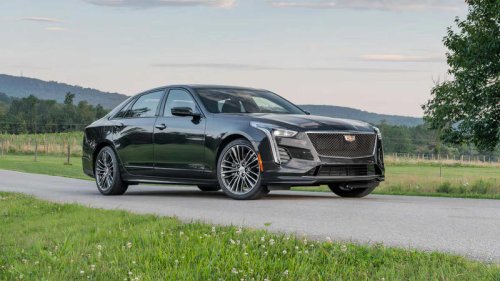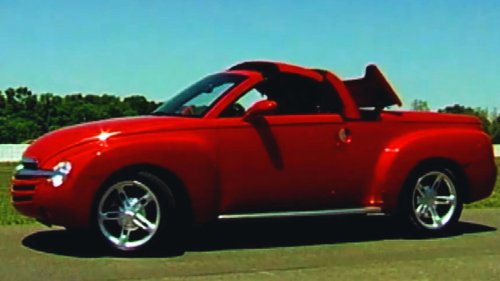


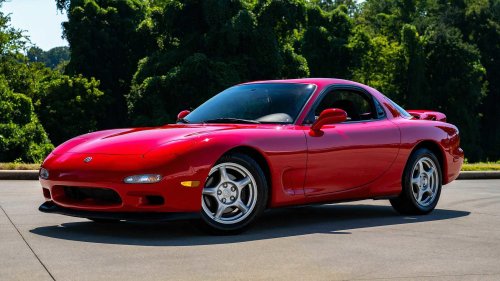
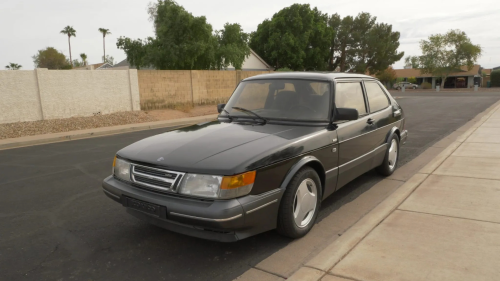





















There have been a lot of times when a car company has gone slightly off the beaten track and made something quirky. While that's admirable and has created some very cool cars, most ended up as commercial failures, forcing car companies to cut their production runs short. There were, of course, some exceptions – weird and quirky cars that ended up becoming a hit with buyers.The quirky cars on this list that did well come from a variety of different brands and in a variety of different body styles. Some of them were ahead of their time, while others had quirky features to solve particular problems or get around certain loopholes. There are also a couple of cars in here that ended up being infamous because of their quirkiness. Austin Allegro Total Produced: 642,350 British Leyland made quite a lot of cars that gained an infamous reputation. The Austin Allegro is perhaps one of the most infamous of them all. Designed as a replacement for the incredibly popular Austin 1100 and 1300, the Allegro was supposed to be innovative. It had a distinctive squared-off body style designed by Harris Mann, who also desiged the Triumph TR7. It used British Leyland's new hydragas suspension system, which replaced conventional springs and dampers with pressurised spheres full of nitrogen gas.Another quirk early Allegros had on the inside was its "quartic" steering wheel. This was a square wheel with rouded-off edges that was intended to give extra room between the base of the wheel and the driver's legs.British Leyland banked heavily on quirkiness and innovation, winning out when it came to the Austin Allegro, but unfortunately for the mega-manufacturer, a lot of people just laughed at it. There were also problems with quality and reliability that the Allegro never broke away from, even after they were fixed. That didn't seem to stop the sales coming in, though. 642,350 Allegros were produced from 1973-1982, making it a relative success for British Leyland. It was also consistently one of British Leyland's best-selling cars while it was on sale. Only the woeful Morris Marina did better numbers. Cadillac Escalade EXT Total Sold (US): 72,351 The luxury pick-up truck is something that's a cornerstone of the market now. But, back in the 2000s, that wasn't the case. It must have seemed very odd when Cadillac decided it would re-badge the already odd half-pickup, half-SUV Chevrolet Avalanche into an upmarket version.This truck was known as the Cadillac Escalade EXT. The first-generation Escalade EXT had the same 5.3-liter and 6-liter Vortec V8 engines as the regular Escalade. The 5.3-liter V8 produced 285 hp in 2002-2003 models, and 295 hp in 2004-2005 models. The 6-liter V8 produced 345 hp throughout its production run from 2002-2006, and was the only engine option after 2005. The second-generation model bumped the engine up to 6.2-liters, like what happened in the regular Escalade, producing 403 hp.The Cadillac Escalade EXT wasn't the biggest sales success in the world, compared to the other cars it shares its platform with. Only 72,351 Escalade EXTs were sold in the US during its production run (2002-2006 for the first generation and 2007-2013 for the second generation). But, considering how other attempts at luxury trucks from that era, such as the Lincoln Blackwood, failed miserably, the Cadillac Escalade EXT actually did pretty well. Citroën DS Total Produced: 1,455,746 Wikimedia CommonsThere aren't many quirky cars that are more famous specifically for being quirky than the Citroën DS. It was an engineering marvel when it first appeared back in 1955. Its hydropneumatic suspension, developed to make the car as comfortable and stable as possible on the poor-quality roads France had at the time, was a total game-changer. While Citroën had sold a variant of the Traction Avant with hydropneumatic suspension on the rear axle, the DS was the first car ever to have it on all-round.One of the most striking things about the Citroën DS is its design. It looked like it had come straight out of the space age, managing to be brilliantly futuristic as well as making the car as aerodynamic as possible.The only real letdown of the DS was its engine. It was originally supposed to have an air-cooled flat-6, similar to a classic Porsche 911. This didn't end up happening, and the DS made do with a series of relatively underpowered 4-cylinder engines. Even the most powerful DS 23 only produced 141 hp at best. The DS was a smash hit pretty much everywhere it was sold! Nearly 1.5 million DSs were produced between 1955-1975, built in various factories around the world. It also held the record for the largest number of deposits for a new car for over 60 years, at 80,000 within the first 10 days of its unveiling. The Citroën DS is prime proof that if a quirky car is good enough, people will take notice. Ferrari FF Total Produced: 2,291 Silver Ferrari FF front 3/4 studio photoFerrari isn't a company that's averse to making quirky cars. Usually, these stayed as concepts or one-off commissions for wealthy VIP customers. The Ferrari FF is a rare example of a quirky Ferrari that was actually intended for proper production!The FF is a V12-powered grand tourer, but that's where the conventional Ferrari things about it end. Firstly, it has a shooting brake-style body, with two doors and a large rear hatchback. Secondly, it has all-wheel drive! This made the FF the first production all-wheel drive car ever made by Ferrari.The FF's V12 is similar to the engine used in the Ferrari F12 Berlinetta of the same era. It's less powerful than the F12's engine, producing 651 hp and 503 lb-ft of torque instead of 730 hp and 509 lb-ft of torque. That power was enough to get it from 0-62 mph in 3.7 seconds, though, and onto a top speed of 208 mph.2,291 FFs were produced between 2011-2016. While that might seem like a small number, Ferrari is a manufacturer that doesn't make its cars in large quantities. Nearly 2,300 cars is actually a sales success for the prancing horse! Fiat Multipla Total Sales (EU): 208,867 harry_nl via FlickrAre there any cars that are more infamous than the Fiat Multipla? It's hard to argue against that. This weird minivan absolutely horrified much of the world when it appeared in 1998. Its bug-eyed design was created in-house by Roberto Giolito, and it was quick to draw some of the most hilarious comparisons any car design has ever had. Perhaps one of the best of these is The Daily Telegraph saying the original design looked like "a psychotic cartoon duck". It was so controversial that the Multipla ended up getting a major facelift in 2004 that gave it a much more conventional appearance.Despite how much it was derided for looking weird, the Fiat Multipla was actually quite popular. It did the best in its native Italy, where you can still see them quite a lot on the roads today. That surprising popularity led to total sales figures of 208,867 across Europe. Perhaps the success of the Multipla is proof that, at the end of the day, functionality wins out over looks. Or maybe a lot of people actually quite liked the weird design? Either way, it sold a lot better than a famously odd-looking car should have done. Mazda RX-7 Total Produced: 811,634 RX-7 FD museum quality 2At first glance, the Mazda RX-7 looks like a fairly normal sports car. But, under the hood, it was one of the main exponents of Mazda's version of the Wankel rotary engine. First-generation RX-7s (produced from 1978-1985) had either a 1.1 or a 1.3-liter twin-rotor engine. The 1.3 was only available in naturally aspirated form. The 1.1 was available both naturally aspirated and, from 1983, with a turbocharger.Second-generation RX-7s (produced from 1985-1992) only had the 1.3-liter twin-rotor engine, which was now offered both with and without a turbocharger. Meanwhile, the third-generation RX-7 (produced from 1991-1997) is the most famous and had a 1.3-liter twin-turbocharged twin-rotor engine.Across all the different versions of the RX-7, Mazda produced 811,634 of them. That makes it an incredible success story, especially considering how weird and finicky the rotary engine could be. Reliant Regal Total Produced: Around 130,000 If anyone ever asks you to think of a 3-wheeled car, the image that'll likely appear in your head is that of one of the classic Reliants. These cheap and cheerful little cars could be found all over Britain during the 20th century. They existed thanks to a loophole in British road laws that meant that you could drive a 3-wheeled car on a motorcycle licence. So, many motorcycle riders opted to switch to these 3-wheeled Reliants. They were cheap, safer than a motorbike, and you didn't need to do all the work to get a car test to be able to drive them legally.As it was such a small and light car, the Reliant Regal didn't need big engines. Their engines were usually between 600-800cc in size, producing anywhere between 25-29 bhp. These were never fast cars, and you'd often struggle to get them up to highway speeds (the Regal 3/30 only had a top speed of 70 mph). But, in the British mining towns and villages where these were used, they typically didn't end up doing more than 30-40 mph anyway.More people know about the Reliant Robin that came after it than the Regal, but Reliant actually sold more Regals than it sold Robins! It's estimated that around 130,000 Reliant Regals were produced, compared to around 63,000 Robins. When you take the reason why the 3-wheeled Reliant existed in the first place into account, it's actually not that hard to see why the Regal was so successful. It perhaps wouldn't have been as successful anywhere else! Britain created a unique motoring niche for this little 3-wheeler to thrive, and the Reliant company did very well out of it. Saab 900 Total Produced: 908,817 via Bring A TrailerYou might think that the Saab 900 is a bit too conventional to be on this list. These cars were everywhere at one stage, after all. But, for a mass-market car, it was surprisingly quirky! It had a very advanced engine for its time - a 2-liter inline-4 descended from an old Triumph unit that used Bosch "Jetronic" fuel injection and an Automatic Performance Control (APC) system developed in-house by Saab. Turbocharged versions of the engine were also made, turning the 900 into a proper performance machine and one of the first desirable turbo cars that most enthusiasts could afford. The "New Generation" 900s that came later added a 2.3-liter inline-4 and a 2.5-liter V6 to the lineup, while the naturally aspirated version of the 2-liter engine was dropped.Saab produced 908,817 900s over its 1978-1998 production run. That makes it one of the most successful cars on this list, and amazingly successful considering how advanced the engine technology it had was for its time. Subaru BRAT Total Sold (US): 92,444 Via Bring a TrailerOut of all the vehicles that would become successful and revered in North America, a small and quirky Japanese pickup truck isn't one that you'd expect. But, revered is something the Subaru BRAT absolutely is. The BRAT name is an acronym, standing for bi-drive recreational all-terrain transporter. Essentially a tiny, go-anywhere version of utes like the Chevrolet El Camino and Ford Ranchero, the BRAT was powered by smaller 4-cylinder engines maxing out at about 94 hp.While a small, Japanese ute would have been quirky enough to North American customers, that's not the quirk everyone remembers. That's actually the pickup bed-mounted jump seats! These were welded into the bed and faced backwards. The reason why North American BRATs had this was to exploit a loophole in America's very punitive Chicken Tax. By having 4 seats, the BRAT could be legally classified as a passenger car instead of a light truck. That allowed Subaru to bypass the Chicken Tax and import BRATs into the US much more cheaply.The BRAT's beloved reputation is reflected in its sales. Just over 92,000 BRATs were sold in the US during the time it was offered there (1978-1987). Unfortunately, many of them haven't survived. The ones that do, though, have become real collector's pieces! People have been known to pay over $30,000 for pristine examples, and that value is only likely to get higher as time goes on.There have been rumours over the past few years that the BRAT could be making a comeback. If that does happen, we hope it's just as quirky as the original one! Toyota Previa (First Generation) Total Sold (US): 171,026 Cars and BidsLarge minivans usually aren't quirky vehicles. In fact, they're often some of the most boring boxes on wheels imaginable. That's not the case when it comes to the first-generation Toyota Previa, though. This version was produced from 1991-1997, and it quickly became a common sight all over the world. It has a rounded, almost egg-shaped design, making it stand out from most of the other minivans it competed with back in the '90s. It also had a slightly odd engine and drivetrain layout for a minivan. The first-generation Previa is mid-engined, with power either going to the rear wheels or all four wheels, depending on what model you went for. The engine was underneath the front seats and mounted at a 75-degree angle for maximum interior space.The first-generation Previa was offered with a 2.4-liter inline-4, in both naturally aspirated and supercharged form. The naturally aspirated version produced 133 hp and 152 lb-ft of torque, while the supercharged version produced 161 hp and 201 lb-ft of torque. It was available with a 5-speed manual or a 4-speed automatic transmission. The 5-speed manual was discontinued in America after 1994.171,026 first-generation Previas were sold in the US alone. While this may not seem that impressive considering it's a mass-market minivan, it was a quirky car in a segment that typically doesn't value quirkness. The fact that it did actually do quite well is a surprise, especially as an imported car in America. Unfortunately, the Previa fell victim to that more conservative mentality, and it lost its quirkness in later generations.Sources: aronline.co.uk, Austin, Cadillac, Citroën, classic.com, The Daily Telegraph, Ferrari, Fiat, goodcarbadcar.net, Hagerty, Mazda, Subaru, Toyota