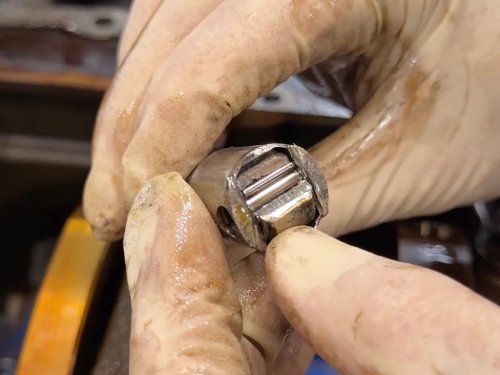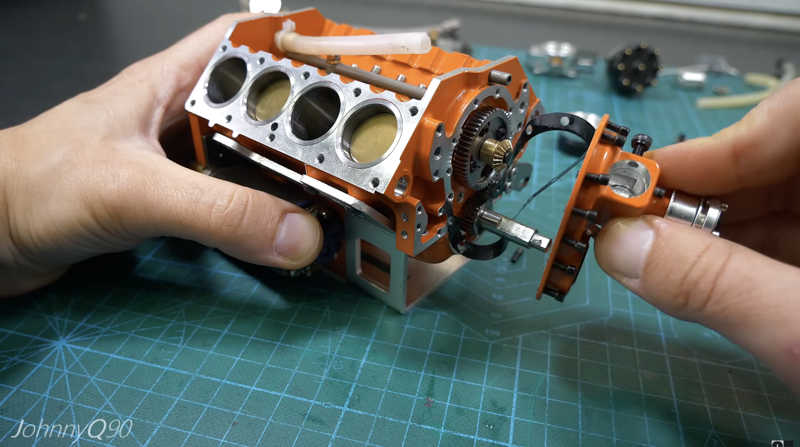
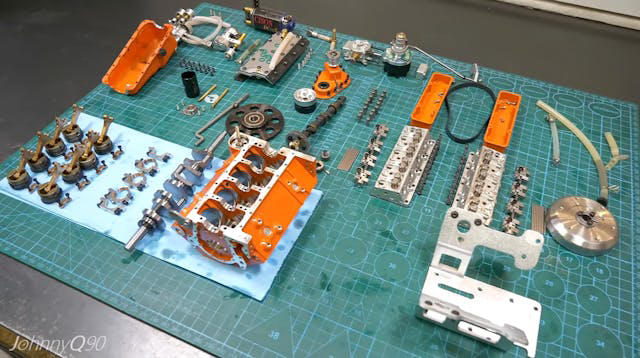
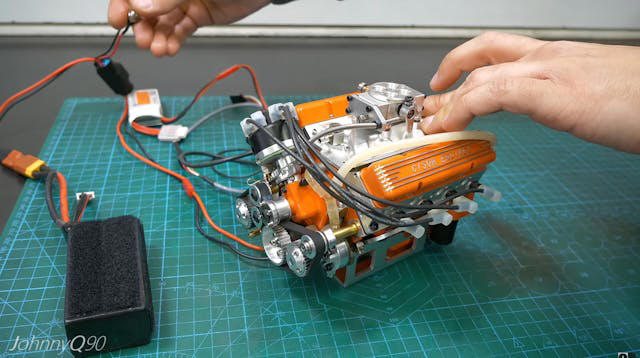



















This Tiny V-8 Engine Has Normal-Sized Problems There is something highly rewarding about building an engine, in that many of them are logic machines: When assembled properly, they work. While taking a break in the shop for a cup of coffee over the weekend, I came across this part-scale V-8 that has full-scale problems. The V-8 is a Cison scale model of an overhead-valve small-block design and features all the main parts one familiar with such designs would expect. The biggest tell about the size of things are the hoses and other fluid-transfer methods, since hoses can only get so small, and this engine does have a water pump to help handle the waste heat of internal combustion. It’s interesting to see how the physics still work at the minuscule scale, especially since this engine was shipped to the YouTube channel JohnnyQ90 not running and in need of repair. Although we don’t get any diagnostics regarding why it didn’t run prior to disassembly, it becomes clear early on that even if the engine had started and run, it likely was not going to function well for long. Any engine is a careful assembly of parts, specifically parts that are generally impossible to gauge correctly with one or both of the eye-crometers sunk into our faces. When things are so small, already-small tolerances disappear and can lead to things like putting the connecting rod caps on backwards. This matters, because the round opening that circles the crankshaft was machined with the rod assembled one way, and if the parts are flipped it cannot be guaranteed the fit is as perfect. Engine failures have happened for lesser reasons. After a what appears to be a quick tear down—and the tear down always goes so much faster than assembly, doesn’t it?—all the tiny parts begin to go back together. Thankfully, assembly is correct this time, and the captions on the video even call out a few of the tricks and tips to assembling these micro engines. I always figured these things had a learning curve, but as with just about anything else that assembles with this much precision, it mainly comes down to simply paying attention and putting things together the right way. After that, the diagnostic processes are pretty similar. Hearing the little V-8 run through open headers at the tail end of the video is a real treat and makes me begin to daydream about building one of these engines for myself, but I am forced to remember that kits similar to the one in this video are easily thousands of dollars. For now I’ll go back to plugging along on my full-sized project and maybe just draw a picture or take in a few broken parts for desk decor. Someday, but not today.