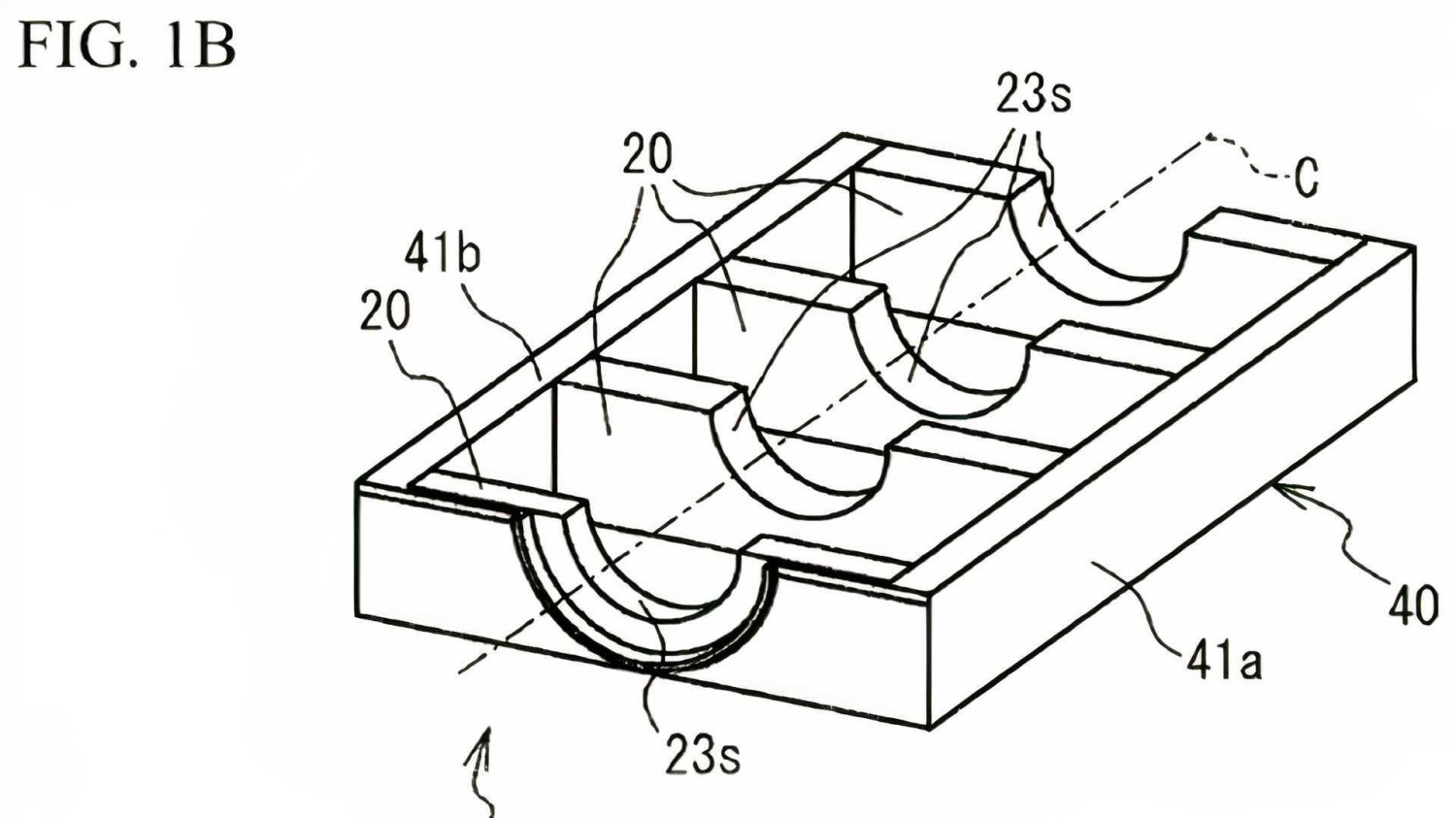
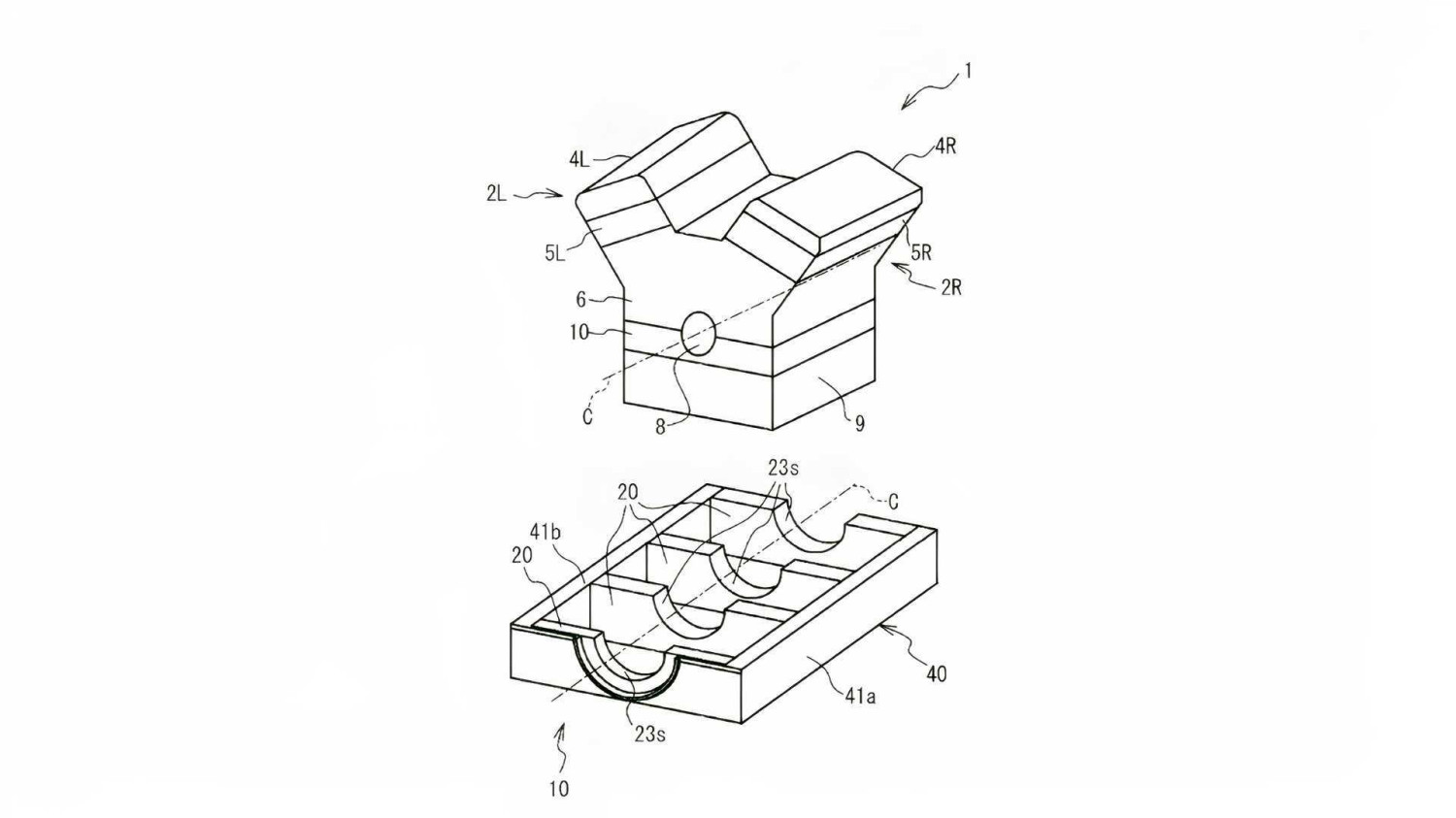
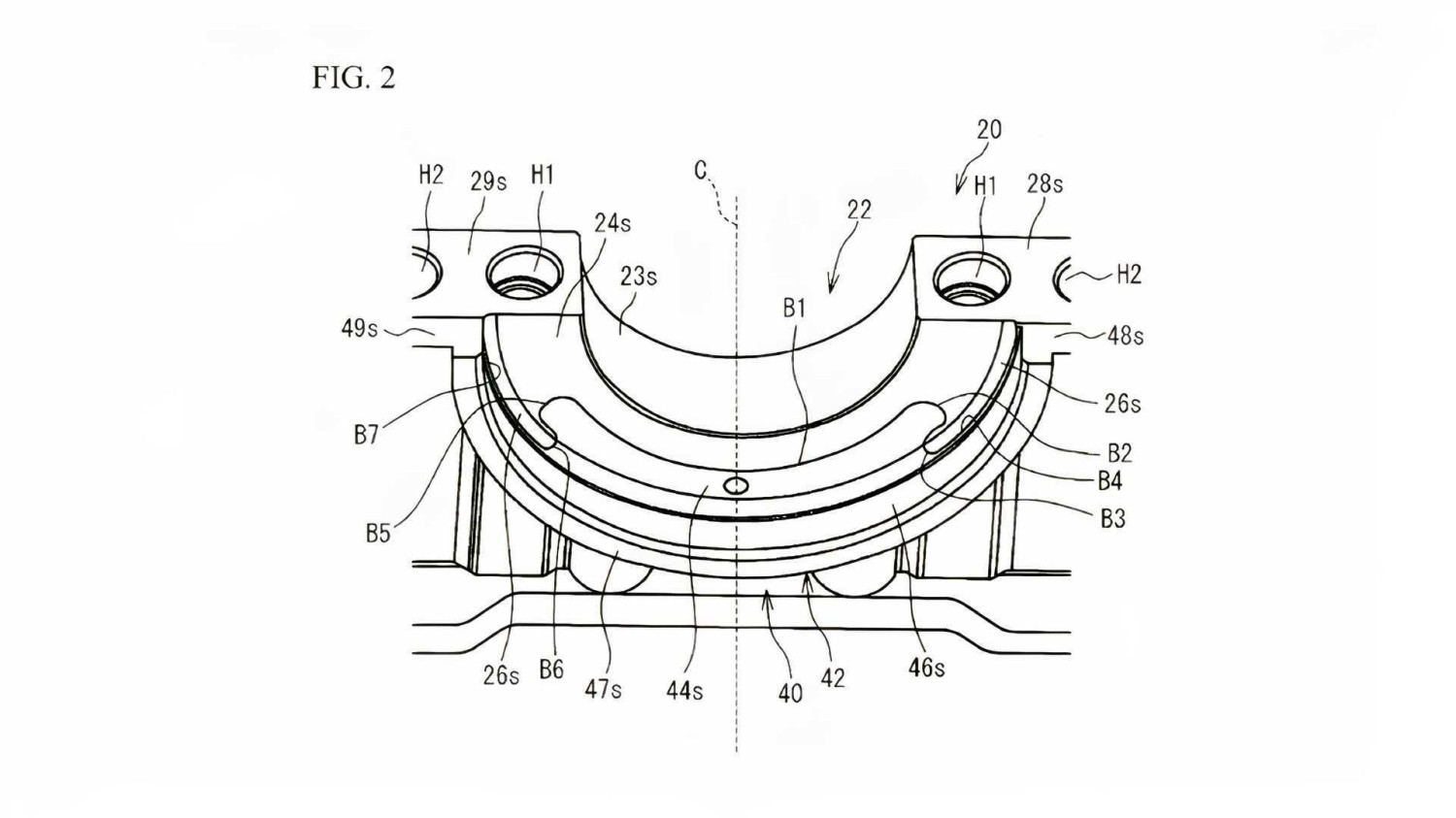



















Toyota has published an interesting patent for a ladder frame, but it's not for a new pickup truck. Heck, it's not even for a new vehicle. This frame has smaller dimensions and will only support one component in the vehicle. But it's a critical component with a very important job.ToyotaPerusing through recent patents, CarBuzz found this Toyota patent for a frame that's the basis for engine block construction. Essentially, the ladder portion of the engine block would house the crankshaft as shown in the patent as a V configuration. It wouldn't work only for a V configuration, but Toyota emphasizes V6 and V8 configurations here.Now, this doesn't mean Toyota is ready to invent a ladder-frame lower block plate, but it's interesting the brand is playing with the idea, as there are good reasons for a ladder frame-based engine block – for Toyota and Lexus. And, the patent specifies the part is integrally formed with the crank cap portion. The Benefits Of A Ladder Frame For An Engine Toyota This ladder frame is generally arranged so the crank caps are molded together with a pair of lateral walls to support the crank. In Toyota's case, it specifies a frame portion made of an aluminum alloy and formed integrally with the crank cap portion, so it's all one piece.There are a few reasons for a ladder design such as this in an engine, but the main benefit is spreading the load so there isn't a specific weak point that can crack. In other words, for engines that are expected to deal with high revving or heavy workloads, a ladder frame supporting the crank should increase longevity.The secondary benefit is distributing the engine's internal load while providing rigidity and reducing vibration. It also ensures more exact alignment of any shafts. Hence, you'll find the concept used in several BMW V8s, including the famed S65 from the E92 generation of M3. However, you'll also find it used in commercial diesel engines. If we're reading this right, though, Toyota is looking at forming the whole piece out of a single block of aluminum, therefore removing any angles that could become weak points. What Is Toyota Planning With This? Toyota Typically, for road cars, the concept is used for aluminum blocks to take advantage of the lighter material while improving strength and minimizing vibration. This likely means tighter tolerances, and more precise engineering and manufacturing, which also means it can get costly. This suggests to us that Toyota is either looking at a truck and SUV engine design to share between Toyota and Lexus, or for a high-performance engine.Toyota has made considerable investments into the high-performance GR badged cars, so it may be looking at a V6 or V8 engine specifically for GR. Of course, the V configuration shown in the drawings could be a red herring, as the ladder frame bottom assembly would also suit a high-revving three or four-cylinder mills. Indeed, Honda's high-revving VTEC engines have been a use case for decades.It is more likely that Toyota will be looking at V6 and V8 engines for its one-piece design, as it has a seemingly happy relationship with Subaru for the GR86's flat-four engine. At the same time, Toyota is working toward making all of its mainstream vehicles hybrid, and the V8 Toyota GR GT has debuted, so a high-performance V6 seems most likely.Patent filings do not guarantee the use of such technology in future vehicles and are often used exclusively as a means of protecting intellectual property. Such a filing cannot be construed as confirmation of production intent.Source: US Patent & Trademark Office