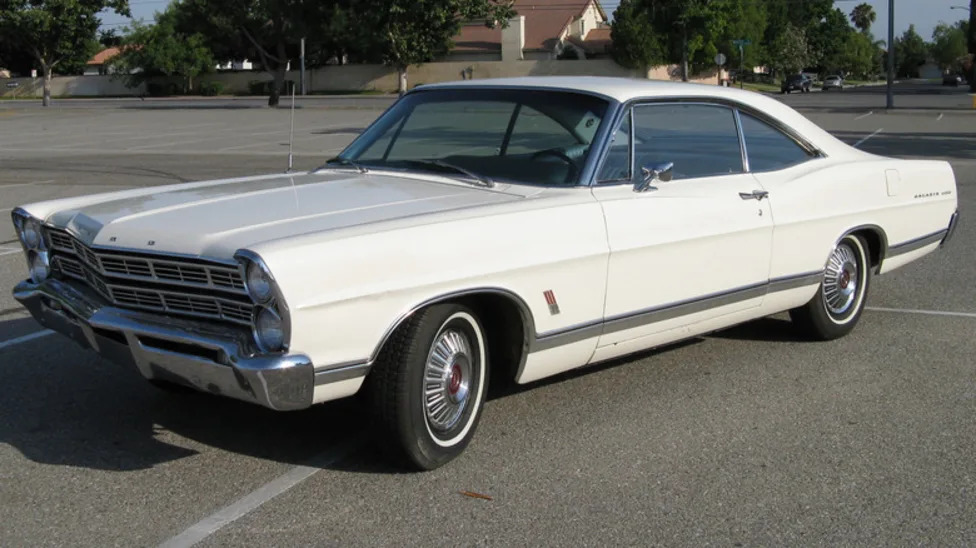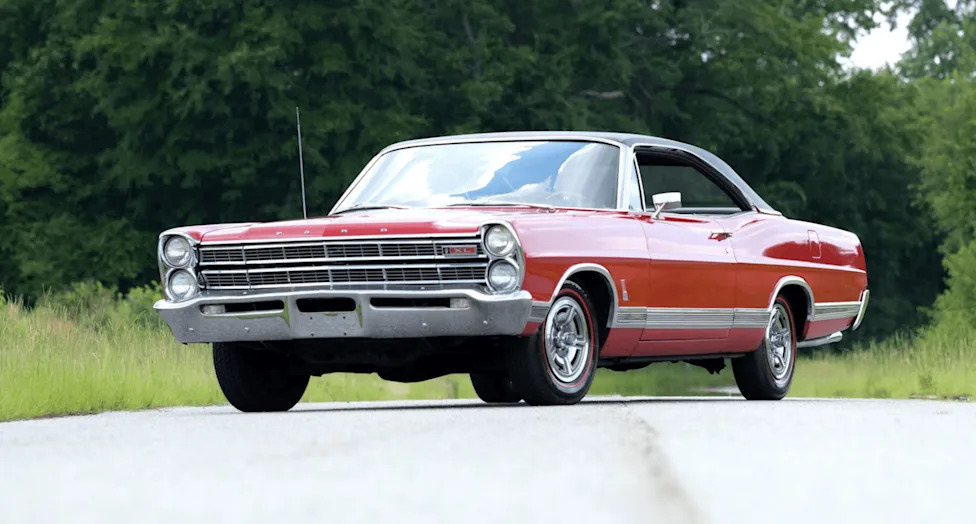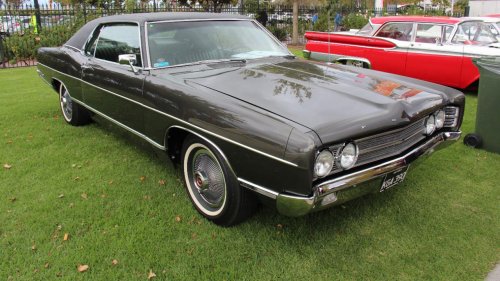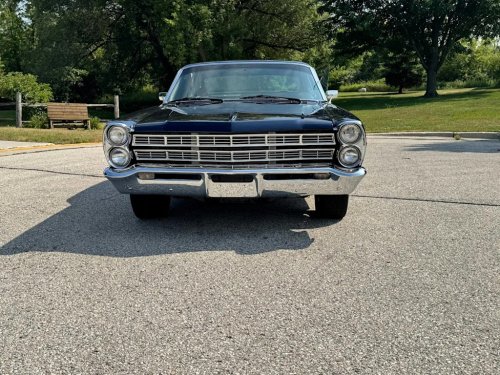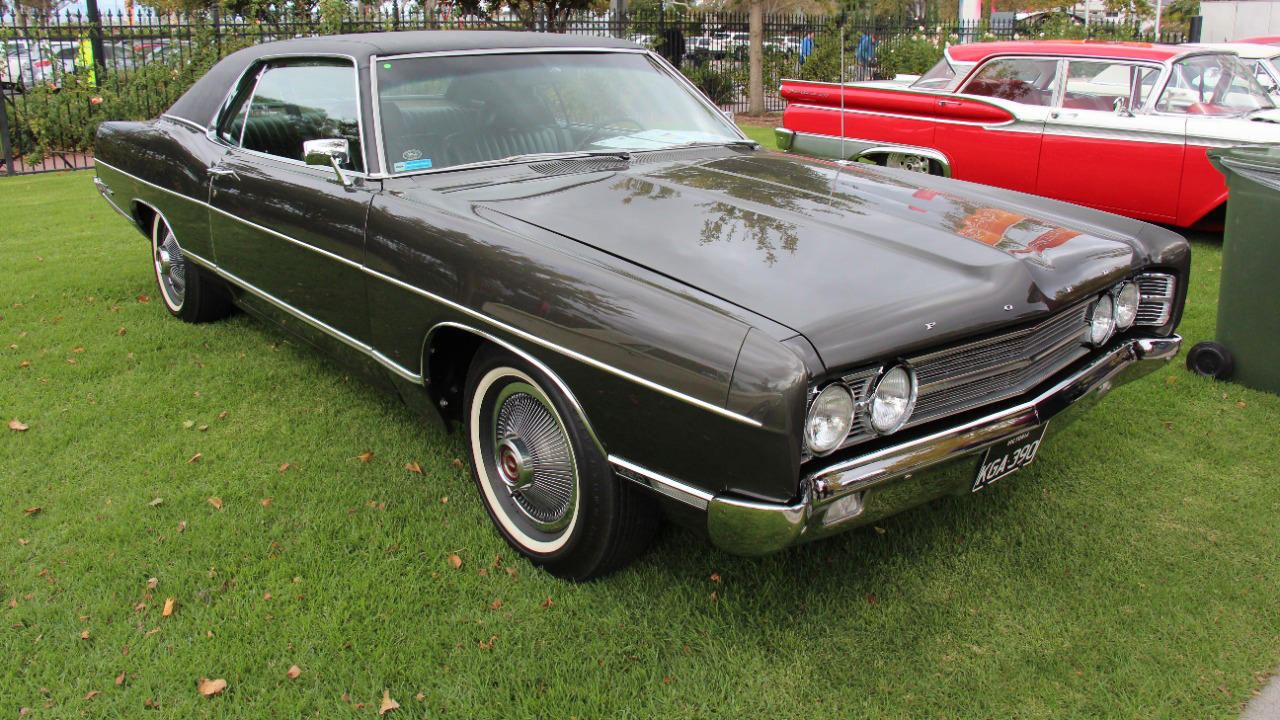



















This 1969 Galaxie 500 was made for distance and it still deliversA 1969 Galaxie 500 is not a car that rushes to the next stoplight. It settles into a long, unhurried stride, the kind of rhythm that once turned interstates into invitations. Built when Detroit still designed full-size sedans for cross-country duty, a well-kept Galaxie 500 was made for distance and, in the right hands, still feels ready to soak up the miles today. What keeps this big Ford relevant is not nostalgia alone. Its generous fuel capacity, relaxed powertrains and stable chassis still line up neatly with what drivers want from a true highway car, even as modern traffic and expectations have changed. The space race sedan built for the open road The 1969 model sits in the Fourth Generation of the Ford Galaxie line, a period when the brand leaned into space-age imagery and big-car comfort. Period specifications list a wide spread of engines, with available displacements that included 240, 302, 351, 390 and 400 cubic inches, giving buyers a choice between thrifty six-cylinder duty and serious V8 power for sustained cruising. Those options helped define the Galaxie as a car that could be tailored to long-distance work as easily as to family errands. Underneath, the car rode on a substantial wheelbase and a wide track that favored stability over quick reflexes. That approach fits the highway mission. On a straight interstate, the Galaxie 500 prefers to settle into a steady lane, the suspension filtering out expansion joints while the body hardly seems to notice crosswinds. The full-size proportions that make it cumbersome in tight city streets become an asset when the horizon stretches far ahead. Ford also reshuffled its big-engine lineup for 1969. Replacing the older 427 as the top performance option, the company introduced the Thunderjet 429 V-8, a new big-block that delivered relaxed torque and effortless passing power at highway speeds. There were two versions of this 429, including a 4V configuration that further boosted breathing and output. In period, that combination of displacement and gearing allowed the Galaxie to cruise at modern freeway speeds with the engine barely working, an advantage that still matters on long trips. Dimensions that favor comfort over drama From the side, the Galaxie 500 looks every bit its era, a long, low sedan with a seemingly endless hood and a trunk sized for serious luggage. Contemporary dimension tables for a 1969 Galaxie 500 with a 6.4L engine, running on Leaded Petrol and paired with a 3 SPEED AUTOMATIC transmission, show just how substantial the car is. The listed Dimension figures, given in both Metric and Imperial units, confirm a curb weight that pushes into the 1830 kg or 4034 lbs range, depending on configuration. That mass is part of the story. On a twisty back road, it demands respect and early braking. On a highway, it delivers the kind of planted feel that modern crossovers often struggle to match. The long wheelbase calms vertical motions, while the sheer length allows a spacious cabin with generous legroom in both rows. For passengers, the Galaxie 500 behaves more like a rolling living room than a cramped commuter pod. The driving position also reflects a time when long-distance comfort took priority. A wide bench seat, a large steering wheel and clear gauges encourage a relaxed posture. Noise levels are not at modern luxury standards, but the combination of thick glass and heavy doors keeps wind and road roar at bay reasonably well, especially compared with smaller contemporaries. Fuel range, then and now Any car built for distance lives or dies by its fuel range. Here, the Galaxie 500 benefits from a generous tank and engines tuned for steady-state cruising. Replacement parts listings for a GAS TANK 1969-70 FORD GALAXIE 500 CUSTOM XL LTD MONTEREY MARAUDER MARQUIS show a capacity of about 24.5 gallons, a figure that places the big Ford well above many modern sedans in sheer volume. That capacity, combined with moderate highway consumption for a carbureted V8 at steady speed, translates into a real-world range that can still cover serious ground between stops. Owners today often turn to reproduction hardware when restoring that long-legged capability. A typical example is a Spectra Premium Fuel Tank offered for a 1969-1970 Ford Galaxie 500 3.9L 6 Cyl, sold under Part Number F27F and identified with Brand labeling as Spectra Premium. The fact that such components remain in regular production speaks to ongoing demand from drivers who want their cars to function as more than static showpieces. Even outside specialty catalogs, the tank and its plumbing have become a small ecosystem of their own. Retailers highlight ATTENTION tags for INTERNATIONAL CUSTOMERS when shipping a replacement GAS TANK across borders, and image listings for 1969-70 FORD GALAXIE 500 CUSTOM parts show multiple angles of the stamping and mounting points. That level of support makes it realistic for an owner to refresh the entire fuel system and restore the car’s original touring range. From boardrooms to back roads The Galaxie nameplate was born into a culture where motorsport and marketing were tightly linked. Period commentary often described a mantra built around Race on Sunday and sell on Monday, a mindset that pushed manufacturers to create full-size cars with genuine performance credentials. While the intermediate muscle cars grabbed headlines, the big sedans quietly benefited from the same engineering attention, gaining stronger drivetrains and improved suspensions. That heritage still shapes how enthusiasts view the 1969 Galaxie 500 today. It is not a lightweight track toy, but the car carries the DNA of an era when domestic manufacturers wanted their highway cruisers to show real speed and stamina. Long gearing, big brakes for the time and stout rear axles all contribute to a sense that the car was engineered to take punishment over thousands of miles. Modern commentators who focus on classic American iron often single out the Galaxie 500 as a symbol of that balance between style, power and practicality. On enthusiast channels such as Top Cars TV the Ford Galaxy 500 is described as a classic American car that defined an era of style, power and presence, underscoring how the model straddles the line between family transport and collectible muscle. A survivor in Clarence, Iowa The difference between a theoretical long-distance car and a real one often comes down to a specific example. At Kenyon Classic Cars in Clarence Iowa, a 1969 Ford Galaxie, 500 has been showcased in a detailed walkaround video that highlights just how usable a well-preserved car can remain. The footage shows straight body panels, tidy chrome and an interior that still looks ready for a multi-state trip, rather than a fragile museum piece. Dealers like Kenyon Classic Cars function as curators as much as sellers. By presenting a Galaxie 500 that starts easily, idles cleanly and drives without drama, they demonstrate that the platform can still deliver on its original promise. The video tour emphasizes practical details such as trunk space, seat condition and underbody cleanliness, all of which matter more to someone contemplating real road use than to a concours judge. That focus on usability aligns with broader market trends. Valuation tools that track collector pricing indicate that a 1969 Ford Galaxie 500 in good condition with average spec typically commands around $14,260. That figure, while not trivial, places the car in a sweet spot where owners can justify regular driving without feeling that every extra mile is eroding a six-figure investment. The Galaxie 500 sits as an attainable classic that invites use rather than hibernation. Engines built for the long haul Under the hood, the 1969 Galaxie 500 could be ordered with everything from a modest six to serious V8 power. The previously mentioned 240, 302, 351, 390 and 400 options covered a wide range of needs, but it was the larger-displacement V8 engines that truly unlocked the car’s highway character. With a broad torque curve and conservative tuning, these engines were happiest at steady rpm, humming along for hours without strain. For owners who want modern reliability without sacrificing character, crate engines provide another path. Suppliers list options such as the Blueprint bp38350ct1 383 crate engine, originally designed for 96-00 GM Vortec truck and SUV applications, as a potential transplant for a 1969 Ford Galaxie 500. While purists may prefer original Ford iron, the appeal of a fresh, warrantied powerplant for long-distance touring is hard to ignore. Regardless of the exact engine choice, the key is how the drivetrain interacts with the car’s gearing and weight. Tall rear-end ratios keep rpm low at highway speed, which reduces noise and fuel consumption. A smooth 3 SPEED AUTOMATIC transmission further eases the workload on the driver, especially in traffic. Together, these elements allow the Galaxie to lope along in a way that still feels surprisingly modern in relaxed cruising. How it stacks up against modern expectations By contemporary standards, a 1969 Galaxie 500 will not win efficiency contests or crash-test comparisons. Yet judged as a distance machine, it still offers several genuine advantages. The cabin space rivals or exceeds that of many current full-size sedans and crossovers. The trunk can swallow multiple suitcases, a cooler and tools without complaint. Visibility is excellent thanks to thin pillars and large glass areas. On the downside, fuel consumption in stop-and-go driving is heavy, and even with a refreshed Spectra Premium Fuel Tank and modern lines, evaporative losses can be higher than in a sealed modern system. Braking distances are longer, particularly for cars that retain original-style drums on the rear axle. Safety equipment is limited to basic belts, with no airbags or electronic stability aids. For drivers willing to accept those trade-offs, the payoff is a kind of motoring that has largely vanished. The Galaxie 500 encourages a steady pace rather than constant acceleration and braking. It rewards planning ahead, reading traffic and letting the car’s momentum work in its favor. That rhythm can make a long journey feel less tiring, even if the trip takes a little longer. Keeping a distance car ready to run Maintaining a 1969 Galaxie 500 as a genuine highway car requires more than cosmetic care. The fuel system, from tank to carburetor, is central to reliability. Replacement GAS TANK listings for 1969-70 Ford Galaxie 500 CUSTOM models emphasize clean internal coatings and correct venting, both of which help prevent fuel starvation or vapor lock on hot days. Matching senders and pickup tubes ensure that the gauge reads accurately across the tank’s full 24.5 gallon capacity. Visual references from parts catalogs and image hosts, where Discovered photos of GAS TANK FORD GALAXIE CUSTOM components show welds and mounting flanges, give owners a clear idea of what a correct installation should look like. That transparency reduces the risk of fitment surprises and encourages thorough replacements rather than patchwork repairs. Beyond the fuel system, long-distance readiness depends on cooling, suspension and electrical health. Radiators must be free of internal scale, fan clutches or electric fans must engage properly, and hoses should be fresh. Suspension bushings, shocks and steering linkages need to be tight enough to prevent wandering at speed. Lighting and charging systems must handle night driving and accessory loads without drama. Why the Galaxie 500 still makes sense for long trips More from Fast Lane Only Unboxing the WWII Jeep in a Crate 15 rare Chevys collectors are quietly buying 10 underrated V8s still worth hunting down Police notice this before you even roll window down